REVIEW · HONOLULU
8 Hour Circle Island Jeep Tour
Book on Viator →Operated by Hawaii Jeep & Specialty Tours · Bookable on Viator
Jeep roads beat a straight-line bus day. This private Oahu circle-island Jeep outing turns Waikiki pickup into a full-day loop with nonstop viewpoints and quick cultural stops.
I love two things right away: the easy hotel pickup in Waikiki and the fact it’s just your group in the Jeep. The main tradeoff is the pace: most stops are short, so you’ll need to move fast and prioritize what you want to linger on.
You’ll also get real value from the day structure: lots of free entry moments and a guide who can put places into context instead of just pointing at them. One possible drawback to plan for is noise and comfort: the Jeep ride can be bumpy and loud, so hearing every word may be hit-or-miss on tougher stretches.
In This Review
- Key highlights you’ll feel right away
- A private 8-hour circle island by Jeep: what you really get
- Price and logistics: is $275 worth a full-day safari?
- The 9:00am Waikiki start: why early matters on Oahu
- Portlock’s sea caves to Koko Crater arches: the day’s first wow factors
- Spitting Cave of Portlock
- China Walls
- Koko Crater Arch Trail
- Lanai lookout
- Halona Blowhole and the windward coast: ocean drama, quick exits
- Halona Blowhole
- Sandy Beach Park
- Makapu‘u Point
- Makai Research Pier and Kane’ohe Bay
- Macadamias and Mokoli’i: Kualoa-area stops with real variety
- Tropical Farms (The Macadamia Nut Farm Outlet)
- Kualoa Regional Park
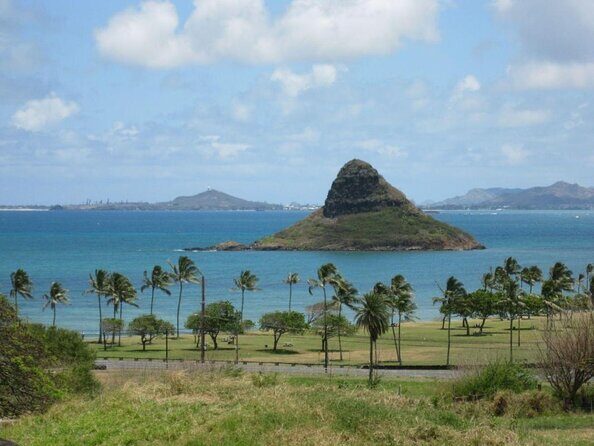
- Mokoli’i Island
- North Shore approach: Kahuku, Laie, Haleiwa, and the beach stops that stack up
- Kahana Bay Beach Park
- Laie Point State Wayside Park
- Kawela Bay and Kahuku Farms
- Sunset Beach Park and Banzai Pipeline
- Waimea Bay and Laniakea Beach
- Haleiwa Beach Park and Haleiwa Alii Beach Park
- Food, coffee, and Shark’s Cove: finishing strong at the end of the route
- Aloha General Store
- Waialua Estate Coffee and Chocolate
- Shark’s Cove
- Guide style: why the best days feel personal
- What to bring and how to handle the stop-and-go pace
- Who should book this Oahu Jeep circle island?
- Should you book this 8-hour circle island Jeep tour?
- FAQ
- How long is the 8 Hour Circle Island Jeep Tour?
- Where does the tour pickup take place?
- Is this tour private?
- Is lunch included?
- What ages can participate?
- Are there weight restrictions?
- What should I bring?
- What if the weather is bad?
Key highlights you’ll feel right away
- Private Jeep for your party (not a mixed crowd)
- Waikiki pickup plus a route that hits both coasts in one day
- 25 scenic stops, most with short entry-free time blocks
- Guide-led Hawaiian history and culture stops instead of a scripted lecture
- Local food culture shows up on many days (malasadas, shaved ice, coffee/chocolate)
A private 8-hour circle island by Jeep: what you really get
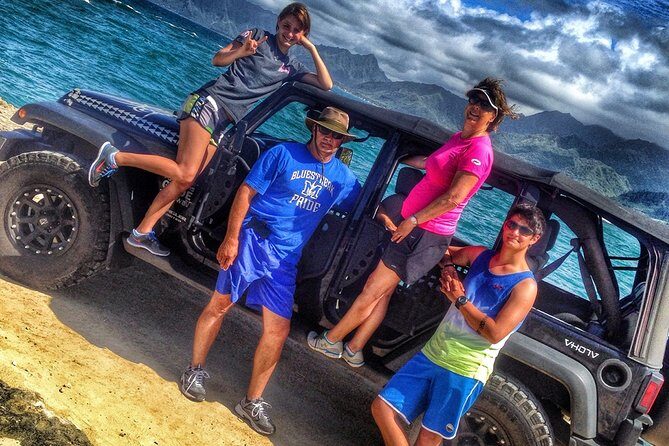
This is the kind of tour that’s built for momentum. You start at 9:00am, then spend the next ~8 hours zigzagging across Oahu’s most famous (and some lesser-seen) areas. Instead of one or two big stops, you get a long list of “look, that’s why people come here” moments.
The private format matters more than it sounds. With only your group in the Jeep, you can ask questions, adjust small priorities, and avoid the awkwardness of waiting for strangers who are still hunting for sunscreen. If you’re traveling as a couple or family, this tends to feel less like transportation and more like having your own local driver.
The flip side is that it’s not a slow scenic drive where you hop out and take your time at every beach. Expect short time windows, especially at trailheads or viewpoints. If you want long hikes or long beach hangs, this might feel like you’re watching the clock.
You can also read our reviews of more tours and experiences in Honolulu.


Price and logistics: is $275 worth a full-day safari?
At $275 per person, you’re paying for two things: a full-day route and a private vehicle (not a shared shuttle). For many visitors, that’s the difference between “we saw some places” and “we covered the island’s highlights without renting a car and getting stressed.”
What you get for that price is fairly clear:
- In-person guide
- Hotel pickup from Waikiki (with the option for an additional service fee if you’re outside Waikiki)
- A mobile ticket and an all-day route that’s already mapped into a smooth flow
What you should plan around:
- Lunch is not included (you’ll want to either bring a strategy or accept a stop-and-snack day).
- You’ll be traveling for hours in a modified Jeep, so comfort matters.
Also, this one isn’t for tiny kids. Children under 7 aren’t permitted, and the age range is 7–70. There are also weight restrictions between 225–250 pounds per passenger, and the day calls for moderate physical fitness. If you’re within those limits, it’s a solid way to see a lot without spending the whole trip driving.
The 9:00am Waikiki start: why early matters on Oahu
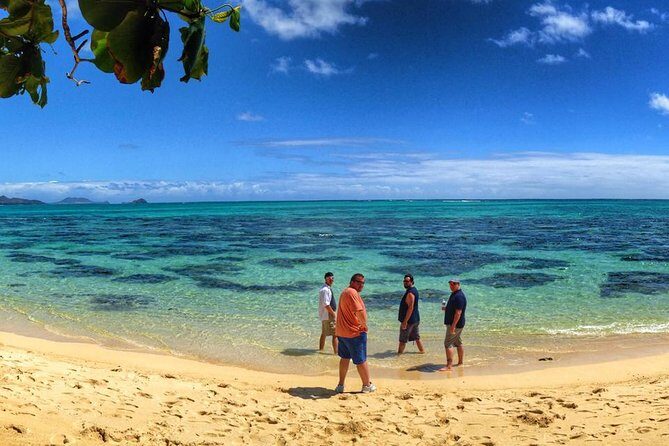
Starting at 9:00am is a big deal on Oahu. Morning usually means steadier light for photos and fewer crowds at the busiest pull-offs. It also helps you hit the North Shore later in the day without feeling like you’re rushing to finish at sunset.
Pickup in Waikiki is described as complimentary, as long as you select the right tour option. This sounds small, but it helps avoid the stress of finding a meeting point after breakfast. If you’re staying outside Waikiki, there’s a service fee for pickup, so it’s worth factoring that into your plan.
One practical note: you’ll be in and out of the Jeep repeatedly. Even if each stop is “only” around 15 minutes, the total rhythm adds up. If you hate stepping out to scramble for a photo, tell yourself that you’re doing a highlights-and-views day, not a museum-with-restroom-break day.
Portlock’s sea caves to Koko Crater arches: the day’s first wow factors
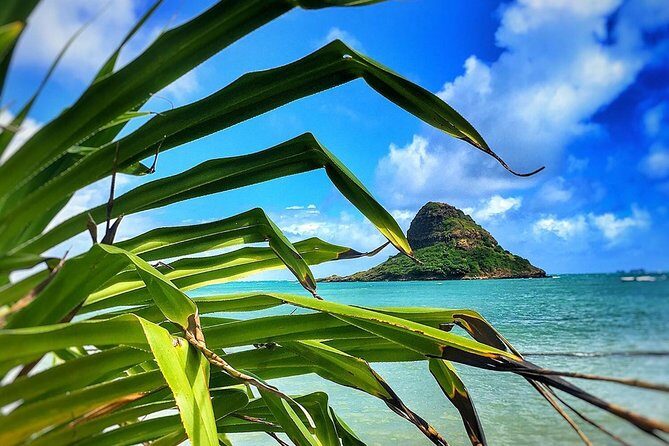
The early stops are about dramatic coastlines and fast perspective shifts, which is perfect for jet-lag minds.
Spitting Cave of Portlock
You’ll get a quick visit to the Spitting Cave, where ocean action creates a show. It’s short, but it’s exactly the kind of Oahu moment that makes the island feel alive instead of postcard-flat. Wear shoes you’re comfortable walking in, because coastal areas can be uneven.



China Walls
Next is China Walls—a coastal viewpoint known for big wave energy and rock formations. This is the part of the day where it helps to step back and watch the ocean for a minute before you start taking pictures. The waves set the mood here.
Koko Crater Arch Trail
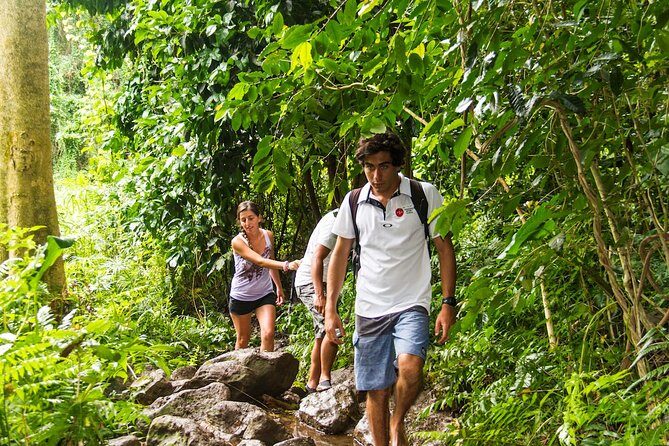
Then comes Koko Crater Arch Trail, which is more active than a simple overlook. Since your time is limited at each stop, you’ll want to treat this like a short hike-to-viewpoint moment. It’s also one reason the tour asks for moderate physical fitness.
Lanai lookout
You’ll also stop at Lanai lookout. This is one of those “cross-channel” breaks where you can reset your eyes and enjoy the bigger scale of the islands. If the weather is clear, these are the stops that make Oahu feel like a chain of real places, not just one island.
Bottom line for this section: you’re front-loading the day with high-impact scenery, then building into the faster-moving stretches after.
Halona Blowhole and the windward coast: ocean drama, quick exits
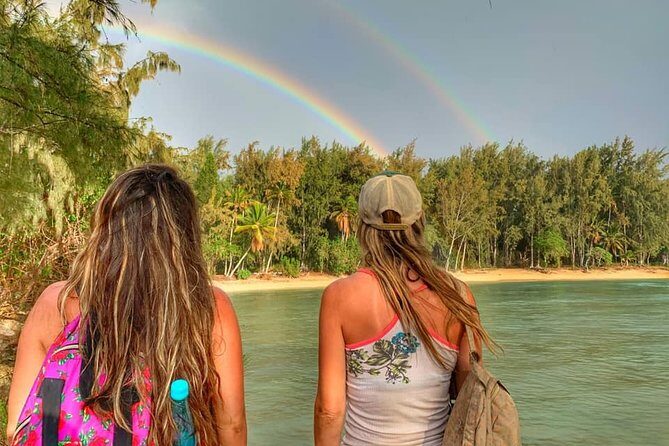
This portion of the route is all about power—water, cliffs, and viewpoints that look best when you pause and let your eyes adjust.
Halona Blowhole
At Halona Blowhole, the main attraction is the ocean pressurizing the coastline and creating that blowhole effect. Since the show can depend on conditions, don’t assume it will happen at the exact minute you arrive. Still, it’s one of those places where even the approach and viewpoint alone feel worth it.
Sandy Beach Park
Sandy Beach Park gives you a classic North Shore-feeling coast even when you’re still on the earlier half of the day. The big practical point is that beach areas can be deceptive—watch where you stand and keep safety in mind near surf zones.
Makapu‘u Point
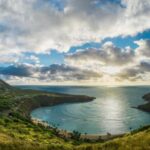
Then you’ll hit Makapu‘u Point for another sweeping coastal view. This is another spot where short time blocks work well: you can get your photos, check the angle of the coastline, and move on.
Makai Research Pier and Kane’ohe Bay
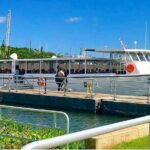
You’ll also stop at Makai Research Pier and then Kane’ohe Bay. These add variety from purely cliff-and-surf views into calmer bay scenery and marine-focused viewpoints. It’s a good mental break before the route shifts toward farming and small-town stops later.
Bottom line for this section: you’ll see plenty of coastline variety without needing to plan your own driving or timing.
Macadamias and Mokoli’i: Kualoa-area stops with real variety
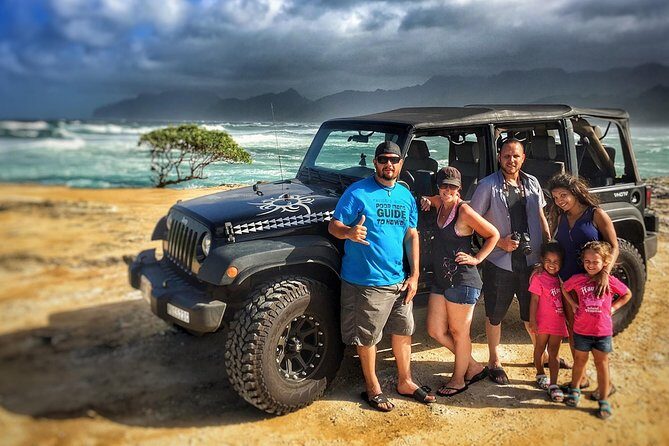
This mid-day stretch shifts from sheer ocean drama to “island life” and calmer scenery. It’s also where the tour can feel the most different from a standard checklist.
Tropical Farms (The Macadamia Nut Farm Outlet)
At Tropical Farms, you’re at the macadamia nut farm outlet. This is a simple stop that can still pay off: it’s a chance to grab snacks and souvenirs tied to local agriculture instead of generic tourist shops. Even if you only spend a few minutes, it breaks up the long drive.
Kualoa Regional Park
Kualoa Regional Park is a reset button. You’ll get greenery, open space views, and a sense of Oahu’s interior edge without committing to a long hike. For many people, this is where the day starts to feel more “Oahu beyond the beach” and less like a coastline sprint.
Mokoli’i Island
Then comes Mokoli’i Island—a small, iconic shape that’s easy to recognize once you see it. This stop works well with the Jeep format because it’s all about quick framing and getting the right angle.
Bottom line for this section: you’re covering scenery plus a taste of how people live off the land.
North Shore approach: Kahuku, Laie, Haleiwa, and the beach stops that stack up
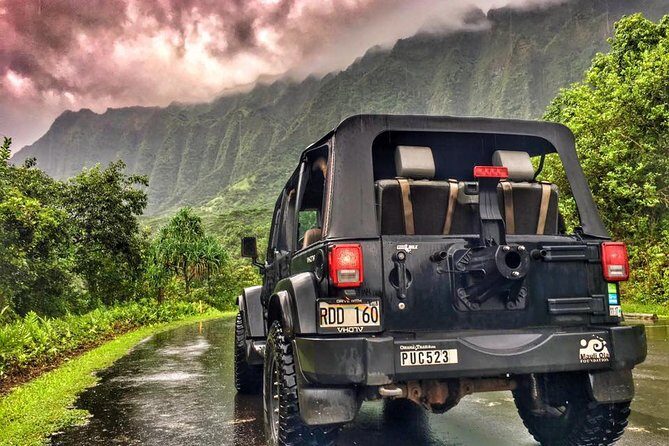
Once you enter the North Shore portion, the route becomes more about rhythm: beach after beach, viewpoint after viewpoint, with small town breaks mixed in.
Kahana Bay Beach Park
Kahana Bay Beach Park is one of the quick beach stops where you can step out, stretch your legs, and get a view that feels more “local coastline” than “resort postcard.” If you want to take photos, this is where the camera gets a workout.
Laie Point State Wayside Park
At Laie Point State Wayside Park, you’ll get another lookout-style pause. These kinds of stops matter because they help you stitch the island together visually. Instead of random dots on a map, you start seeing patterns.
Kawela Bay and Kahuku Farms
You’ll also stop at Kawela Bay and Kahuku Farms. This is where you get variety from rocky coastline vibes to more farm-ish North Shore energy. Even if you don’t buy anything, it’s a good “you are here” moment in the route.
Sunset Beach Park and Banzai Pipeline
Then it’s Sunset Beach Park and Banzai Pipeline. These are famous for a reason. They can look even better when you watch the ocean for a few minutes and let the scale sink in.
Waimea Bay and Laniakea Beach
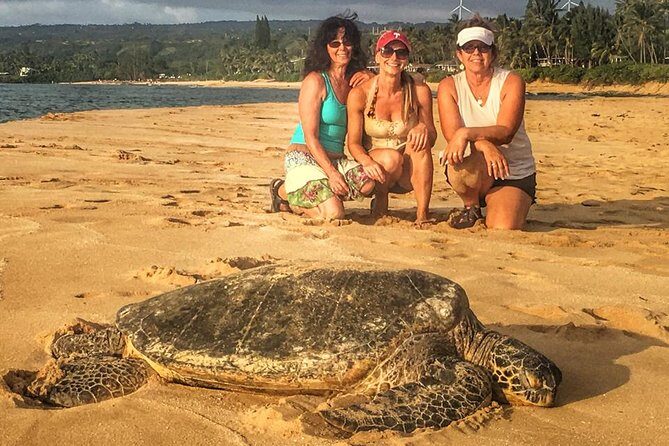
You’ll keep rolling with Waimea Bay and Laniakea Beach. This is a stretch where you might catch wildlife moments depending on conditions. One tour experience included turtle sightings like a turtle passing near a pier stop and another resting on a beach, and this is exactly the kind of day where surprises can happen.
Haleiwa Beach Park and Haleiwa Alii Beach Park
Finally, you’ll get two more Haleiwa-area coastline breaks: Haleiwa Beach Park and Haleiwa Alii Beach Park. These stops help you end the day with a “North Shore feeling” instead of driving straight from one viewpoint to another.
Bottom line for this section: you’re building an island story from repeated coastlines, not just collecting single photos.
Food, coffee, and Shark’s Cove: finishing strong at the end of the route
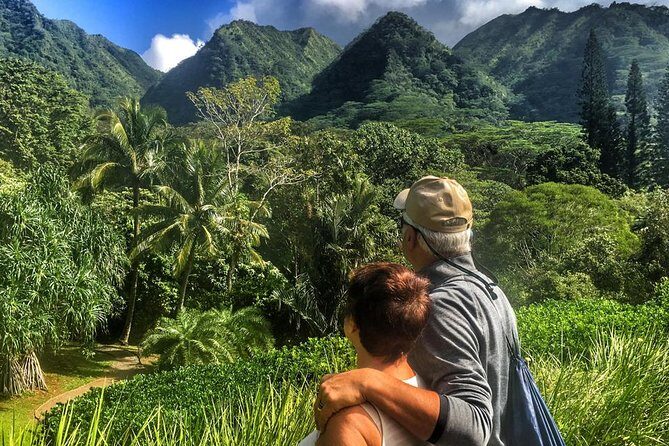
The last part of the drive leans into quick shopping and food culture, then ends with a final ocean payoff.
Aloha General Store
At Aloha General Store, you’ll likely want to treat it like a practical break. If you need snacks, small souvenirs, or just a restroom-and-stretch moment, this is where you’ll appreciate the timing.
Waialua Estate Coffee and Chocolate
Next is Waialua Estate Coffee and Chocolate. This stop gives you a local flavors angle to balance the earlier salt-air scenery. It’s the kind of endcap that turns the day into more than just views.
Shark’s Cove
Then comes Shark’s Cove, a dramatic coastline stop that’s all about ocean energy and rock-and-water contrast. Even if you don’t do anything beyond looking, the place works as a strong final scene before you head back.
Bottom line for this section: it’s a satisfying way to close the loop with tastes and a last big view.
Guide style: why the best days feel personal
A Jeep tour lives or dies on the guide. When the day clicks, you don’t just see places—you understand why those places matter.
From the guide names highlighted in past experiences, you might meet leaders like Wayde, Wade, Ward, or Zach. What stands out from the pattern is how they adjust to the group. People described guides who took them to spots that would be easy to miss if you were driving yourself, and who kept the day moving at a pace that felt right.
Now, the caution: the Jeep can be loud, and some tours include strong music volume. If you really care about hearing every detail, you might bring earplugs. Also, if you want time for questions, it helps to speak up early so the guide knows what you want to focus on—history, culture, viewpoints, or food stops.
What to bring and how to handle the stop-and-go pace
Because you’re hopping in and out all day, pack for movement. The tour info suggests sneakers and flip flops, a backpack, beach towels, and swim trunks. That’s practical because you’ll have enough beach and coastal time to justify being ready.
Here’s the mindset that helps:
- Treat each stop as a “photo plus a quick look,” not a long linger.
- If you know you’ll want a swim or a quick break, plan to do it at the beach stops and keep expectations realistic for time.
Also, the tour’s stated good weather requirement matters. If weather turns rough, the experience can shift dates. So if your trip has only one free day, build in a little flexibility if you can.
Who should book this Oahu Jeep circle island?
This tour fits best when you want maximum coverage without renting a car. It’s especially strong for:
- Couples who want a shared adventure day and don’t want to plan drives
- Families where everyone can manage short outings and light hikes (with moderate fitness)
- People who care about Hawaiian history and culture but still want lots of scenic stops
- Anyone who doesn’t want a cookie-cutter bus day and prefers a private pace
If you’re very sensitive to noise, expect bumpy rides, or want long stops at beaches and trails, you might find the structure too tight. And if you want a calmer, slower “sit and watch” vacation, consider reserving a day for independent exploring instead of stacking everything into one Jeep loop.
Should you book this 8-hour circle island Jeep tour?
I’d book it if your goal is to see the island’s highlights in one shot while enjoying the flexibility of a private guide. The value comes from the combination of Waikiki pickup, a day-long route that covers both coasts, and a format that feels more personal than mass transport.
I’d hesitate only if you know you need quiet, long stop times, or zero mobility demands. In that case, the stop-and-go rhythm and potential loud ride may frustrate you.
If you’re within the age and weight limits and you’re excited by a “many stops, one big story” day, this tour is a smart use of time on Oahu.
FAQ
How long is the 8 Hour Circle Island Jeep Tour?
The tour starts at 9:00am and runs for approximately 8 hours.
Where does the tour pickup take place?
Complimentary Jeep pickup is available from Waikiki hotels. If you’re outside Waikiki, there is a service fee for pickup.
Is this tour private?
Yes. This is a private tour/activity, so only your group will participate.
Is lunch included?
No. Lunch is not included, though beverages are provided for convenience.
What ages can participate?
The age limit is 7–70 years old, and children under 7 are not permitted.
Are there weight restrictions?
Yes. There are weight restrictions between 225–250 pounds per passenger.
What should I bring?
Bring sneakers and flip flops, a backpack, beach towels, and swim trunks.
What if the weather is bad?
The experience requires good weather. If it’s canceled due to poor weather, you’ll be offered a different date or a full refund.