REVIEW · HONOLULU
Bishop Museum General Admission Ticket
Book on Viator →Operated by Bishop Museum · Bookable on Viator
Bishop Museum turns one ticket into a full island lesson. I love how the Hawaiian Hall Complex walks you through Hawaiian history and culture, and I also love the hands-on energy at the Science Adventure Center with its lava-focused learning. The one catch: this campus is big, and you’ll lose time if you show up expecting a quick stop.
Plan on a flexible visit window (about 1 to 8 hours). You can move at your own pace across multiple buildings, and the museum runs in all weather, so it’s a smart choice when Honolulu skies are unpredictable.
In This Review
- Key highlights you should clock early
- Bishop Museum’s $38.95 value: what you really get
- Hawaiian Hall Complex: the building that sets the tone
- Pacific Hall and the migration story you can follow
- Jhamandas Watumull Planetarium: when the sky show is your goal
- Richard T. Mamiya Science Adventure Center and the lava melting show
- Castle Memorial Building: changing exhibits that may be hit or miss
- How long to stay: pace it by interest, not by clock
- Practical Honolulu tips: weather, walking, and getting around
- Who should book this and who might feel disappointed
- Should you book Bishop Museum general admission?
- FAQ
- What is included with the Bishop Museum general admission ticket?
- Is the planetarium show included?
- How long does the visit last?
- Does Bishop Museum operate in bad weather?
- Do I get a mobile ticket?
- Are parking fees included?
- Are service animals allowed?
- What is the cancellation policy?
Key highlights you should clock early
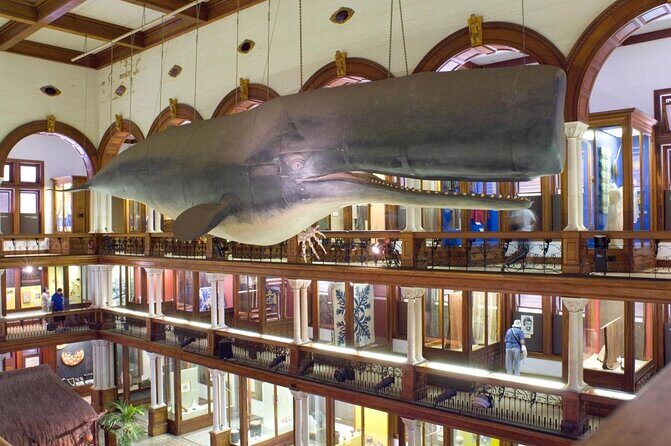
- Hawaiian Hall Complex gives you a guided-feeling path through Hawaiian history and culture.
- Pacific Hall expands the story to Pacific origins, values, and migration and settlement.
- Jhamandas Watumull Planetarium brings Hawaiian and Polynesian sky knowledge to life, with an astronomy educational show.
- Richard T. Mamiya Science Adventure Center focuses on science in Hawai‘i and Pacific environments, including lava learning and a live lava melting show.
- Castle Memorial Building is a changing-exhibit stop, which can be great if you like short, rotating themes.
Bishop Museum’s $38.95 value: what you really get
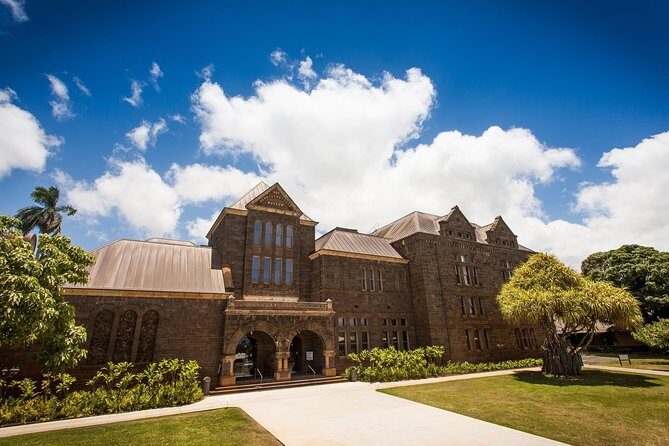
At $38.95 per person, this ticket lands in the category of a “real museum day” in Honolulu. The good news is that general admission is the core of the experience. Once you’re inside, you’re free to spend time across several exhibit spaces, which makes it easier to justify the cost if you care about more than one theme.
What makes the value feel fair is the mix: you get Hawaiian culture and history, plus a Pacific-wide lens, plus science and astronomy. Many museums split those topics up across totally different places. Here, you can do it all on one campus without changing plans.
Two things to keep in mind for planning. First, you may have optional add-ons depending on what’s running that day—parking isn’t included, and the planetarium show is optional. Second, parts of the campus can have closures or limited activity, so build in buffer time and keep a flexible route.
You can also read our reviews of more tours and experiences in Honolulu


Hawaiian Hall Complex: the building that sets the tone
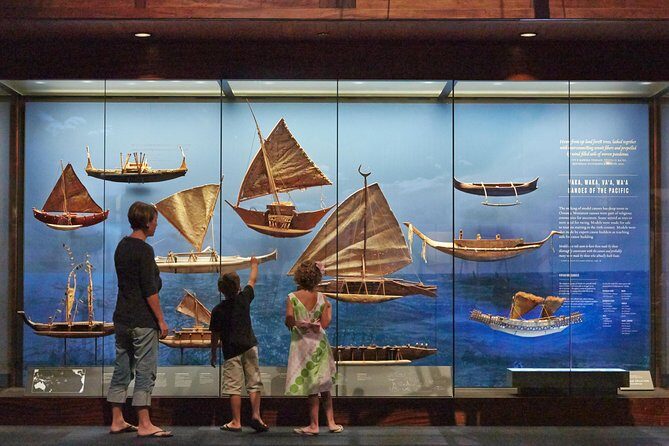
Start with the Hawaiian Hall Complex, because it’s the heart of the Hawaiian story here. This is described as the world’s premier showcase of Hawaiian history and culture, and you can feel that ambition the moment you walk in. Instead of treating Hawaiian heritage as a side exhibit, the space gives it center stage.
If you like learning that connects culture, people, and place, this is the section you’ll want to slow down for. The themes here fit well with a first-time visit because they provide context for what you’ll see elsewhere on the campus later—especially in Pacific migration exhibits and in cultural artifacts scattered through the grounds.
From the way people describe the experience, the standout is that it’s not just display cases and labels. It’s the kind of space where you can keep finding details—things like art and artifacts, plus the feeling that the museum is organized to help you build understanding as you go. Plan for time here rather than trying to race through it.
Pacific Hall and the migration story you can follow
After Hawaiian Hall, the next move is Pacific Hall. This section shifts your perspective outward, covering origins, culture, values, and the migrations and settlement of Pacific Islands peoples.
For me, the value of this stop is that it turns Hawaiian history into part of a broader Pacific picture. Even if you only have a day, this kind of framing helps you connect the dots: where cultural practices traveled, how navigation and movement shaped communities, and how islands were settled over time.
Also pay attention to the large-scale way the story is presented. People often mention migration maps and strong explanations of origins—these are the parts that make Pacific Hall feel like more than a collection of unrelated exhibits.
If you’re short on time, don’t try to read everything cover-to-cover. Pick a route through the big themes first, then circle back for details if you have energy.
Jhamandas Watumull Planetarium: when the sky show is your goal
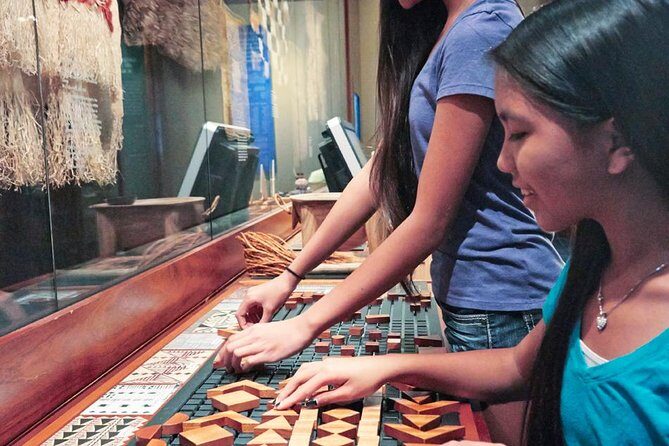
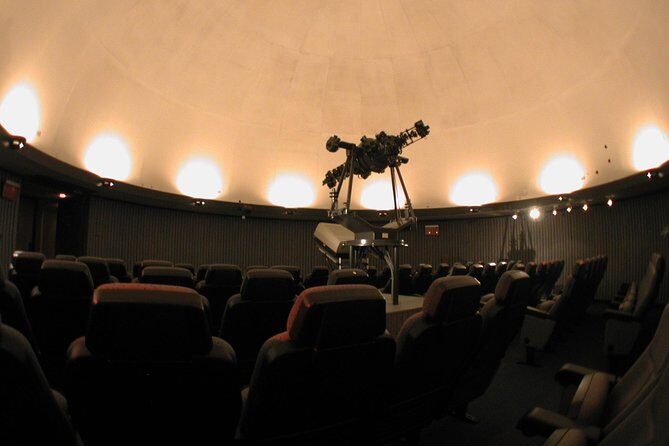
The Jhamandas Watumull Planetarium is one of the main reasons many people put Bishop Museum on their Honolulu itinerary. The idea is simple and powerful: you explore the skies of Hawai‘i and Polynesia in the ways ancient travelers once did, with an astronomy educational experience.
This is also where I’d be a bit cautious with expectations. The planetarium show is listed as optional, and some visits run into limited access when they arrive. So treat it as a high-priority add-on, not an automatic guarantee.
Practical approach: if you care about the sky show, build your day so you can fit it in. Check what’s scheduled once you’re on site, then plan your indoor museum walking around that. That way you won’t spend your morning assuming the planetarium will definitely run the way you pictured.
Richard T. Mamiya Science Adventure Center and the lava melting show
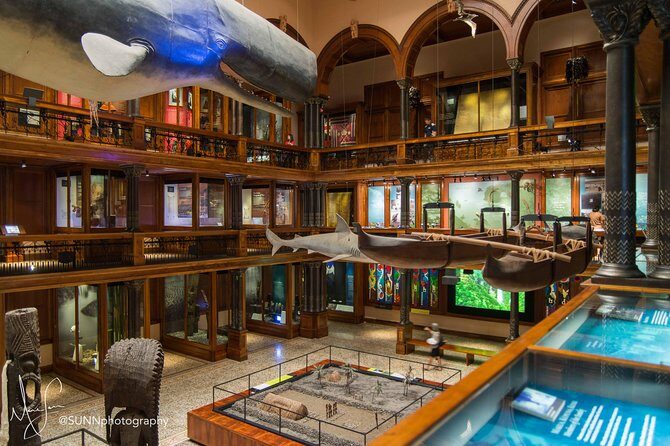
If you want a change of pace from cultural galleries, head to the Richard T. Mamiya Science Adventure Center. This space is built around interactive, exciting learning, with a focus on science as it relates to Hawai‘i and Pacific environments.
The big theme is lava and how the Hawaiian Islands form. The museum highlights both education about lava and the formation of the islands, plus a live lava melting show.
A key planning note: sometimes the live demonstration timing doesn’t line up with your arrival, and not every show session runs exactly when you’d expect. If that happens, don’t treat the day as a bust. The science center is still worth it because the interactive format is what keeps it engaging—especially for kids, and honestly for adults who like hands-on learning.
This is one of the best areas to visit if the weather is turning gray. You’ll still get that “real museum day” feeling, but without the pressure of staying outdoors.
You can also read our reviews of more museum experiences in Honolulu

Castle Memorial Building: changing exhibits that may be hit or miss
The Castle Memorial Building is built for shifting content—changing exhibits for limited time periods. That means it can be a fun stop when your visit overlaps with a strong rotating theme, but it’s also the section most likely to feel lighter if you’re chasing specific topics.
If your goal is Hawaiian culture and Pacific history, you’ll likely spend more time in the Hawaiian Hall and Pacific Hall areas. In that case, I’d treat Castle Memorial as a bonus stop. Give it a look, then decide based on what’s showing that day—don’t overbook it and risk cutting your time in the more consistent sections.
How long to stay: pace it by interest, not by clock
Bishop Museum’s visit window is broad—about 1 to 8 hours. The museum size is the reason. This is not a “see it all in 90 minutes” place.
Here’s the pacing I’d recommend:
- 1 to 2 hours: If you’re strictly focused, prioritize Hawaiian Hall first, then do a quick pass through Pacific Hall, and decide whether the planetarium or science center fits your timing.
- Half-day (around 3 to 4 hours): This is where many people end up feeling satisfied. You can cover the main cultural exhibits plus one major science/sky component.
- 4 to 8 hours: If you’re the type who reads details, takes your time with artifacts, and wants to revisit sections, give yourself the full range. People mention how much there is to absorb, and that the campus can require more time than planned.
One simple tip: go earlier. When you start fresh, it’s easier to find momentum across buildings, and you’re less likely to miss optional programming that can help the day feel complete.
Practical Honolulu tips: weather, walking, and getting around
The museum operates in all weather conditions, but you should still dress for what Honolulu is doing. Wear comfortable shoes because you’ll be walking between multiple buildings, and the experience calls for moderate physical fitness. That doesn’t mean hard hiking, but do expect a real campus walk.
The museum also uses mobile tickets, which is helpful if you’re managing multiple things on vacation. Parking fees are optional (so not automatically part of your plan), and the museum is near public transportation. That matters if you’re trying to avoid parking decisions and costs on a busy day.
Also, plan for a day where you might want indoor options first. If rain or heat pushes your schedule, Bishop Museum is one of the strongest “do it now” indoor plans in Honolulu.
Who should book this and who might feel disappointed
This general admission ticket is a great fit if you want:
- Hawaiian culture and history in a major museum setting
- A Pacific-focused story that goes beyond Hawai‘i
- Science learning that connects directly to Hawai‘i’s environment
- A chance to add an astronomy show if it’s running
It may feel less satisfying if:
- You expect a small, fast, one-building museum visit
- You’re only interested in one attraction and refuse to adjust when the planetarium or demonstrations have limited availability
If you’re visiting with kids, the science center is often the kind of stop that keeps energy up. If you’re there as a history fan, Hawaiian Hall and Pacific Hall are the places that do the most work in a short time.
Should you book Bishop Museum general admission?
Yes, I think you should book it if you want one strong, indoor-friendly anchor activity in Honolulu that covers multiple sides of Hawai‘i—culture, Pacific history, and science—without requiring a complicated plan.
Book it especially if you’re the type who likes to wander at a museum pace and catch details you can’t pick up from a quick sightseeing loop. Just treat the campus size and optional planetarium timing as part of the experience, not as a surprise.
FAQ
What is included with the Bishop Museum general admission ticket?
Your ticket includes general admission to Bishop Museum.
Is the planetarium show included?
No. The planetarium show is listed as optional, so you may need an extra ticket or fee depending on what’s scheduled.
How long does the visit last?
The duration is listed as approximately 1 to 8 hours.
Does Bishop Museum operate in bad weather?
Yes. It operates in all weather conditions, so you should dress appropriately.
Do I get a mobile ticket?
Yes, the ticket is a mobile ticket.
Are parking fees included?
Parking fees are optional, so they are not included in the ticket price.
Are service animals allowed?
Yes. Service animals are allowed.
What is the cancellation policy?
You can cancel for free up to 24 hours in advance for a full refund. If you cancel less than 24 hours before the start time, you won’t receive a refund.