REVIEW · HONOLULU
Hawaii Volcanoes National Park Experience from Oahu
Book on Viator →Operated by Aloha Sunshine Tours · Bookable on Viator
Black sand and crater steam in one long day. This private Big Island trip is interesting because you get round-trip airfare to Kona plus a guided day crammed with real volcanic sights. I like the air-conditioned private vehicle (you’ll feel the long distances less), and I especially like the way the day is stitched together—coffee country, turtles, then the big hitters at Hawai‘i Volcanoes National Park. One drawback to plan for: it’s a long schedule with limited downtime, and high elevation can feel cold fast.
I love how the route mixes “famous” with “I didn’t know that was there.” You’ll hit places like Greenwell Farms and the quieter Manuka Nature Trail before rolling into Punalu‘u for sweet bread and sea turtles. You’ll also ride up toward Mauna Kea’s Access Road, where temperatures drop as the air thins.
The price is steep, but it’s easier to swallow when you remember flights and park admission are built in. Since meals are on your dime and services are limited in places, you’ll want to pack for hunger and for weather. Also, this is a small-group tour with a maximum of 22 people, so you won’t feel like you’re in a cattle chute.
In This Review
- Key points that make this tour worth your time
- Big Island in one day: how the O‘ahu-to-Kona setup works
- Kona coffee and Manuka Nature Trail: a quieter start with real purpose
- Punalu‘u Bake Shop and the black-sand coastline: sweet bread, then turtles
- Hawai‘i Volcanoes National Park: the stops that actually change how you see Hawai‘i
- Mauna Kea Access Road and Kohala Coast: altitude, cold air, and big views
- Hilo: museums, heritage stops, and where the day ends up
- Guide-driven value: narration, private flow, and small-group pacing
- Price and logistics: does $589.99 feel fair?
- What to pack for a volcano-and-altitude day
- Who should book this day trip—and who should rethink it
- Should you book this O‘ahu to Big Island volcano day?
- FAQ
- What time does this tour start?
- Where do I meet if I’m flying into Kona International Airport?
- How long is the tour?
- Is airfare included?
- Is Hawaii Volcanoes National Park admission included?
- Are meals included?
- Does the tour include a pickup?
- Will I have cell service during the day?
- How many people are in the group?
- FAQ
- What should I wear and bring?
- Is this tour suitable for people with respiratory issues?
Key points that make this tour worth your time
- Flights included to Kona International Airport saves you the biggest planning headache
- Private, air-conditioned vehicle makes the drive-heavy day much more comfortable
- Hawai‘i Volcanoes National Park included with time at multiple signature stops
- Coffee + nature + turtles in one run instead of only doing the volcano circuit
- Max 22 travelers helps keep the day moving without chaos
- Weather shifts and no cell service are part of the deal here—plan accordingly
Big Island in one day: how the O‘ahu-to-Kona setup works
If you’re starting on O‘ahu, the smart move is letting someone else handle the inter-island logistics. This experience includes round-trip airfare between Honolulu International Airport and Kona International Airport, so you’re not stuck cobbling flights together at the last minute. Start time is 8:00am, and if you fly into Kona, you meet at the lot behind Alaska Baggage claim B-2.
Once you’re on the Big Island, you’ll spend most of the day in a private, air-conditioned vehicle with an engaging local guide. That matters because Big Island driving eats time. Between elevation changes, slow winding sections, and the fact that you’ll stop for multiple viewpoints, you’ll be glad you’re not navigating and driving yourself.
This also means the day is long—about 8 to 10 hours—and you’ll do a lot of “see it, take photos, move on.” If your ideal pace is short and leisurely, this might feel like a sprint. If you want maximum value for a single day, it’s built for you.
You can also read our reviews of more tours and experiences in Honolulu.



Kona coffee and Manuka Nature Trail: a quieter start with real purpose
The day starts in the Kona region, and the first stop is Greenwell Farms. This is one of the oldest coffee farms in Hawai‘i, established in 1850 by Henry Nicholas Greenwell. You’ll be on the slopes of Mauna Loa, where the coffee-growing conditions are basically the whole story: rich volcanic soil, sunny mornings, cloudier afternoons, and consistent rainfall. It’s not just “look at coffee trees.” The point is understanding why Kona coffee became internationally famous.
Plan on a quick visit here—about 30 minutes—so treat it like an introduction you can taste afterward. If you’ve never visited a working coffee farm, this is a practical way to learn what makes the Kona style different.
Next up is Manuka State Wayside Park, a lesser-known 13-acre spot along Hawai‘i Belt Road (Highway 11). It’s an easy contrast after coffee: a peaceful slice of the forest with a 2-mile Manuka Nature Trail. The trail moves through both wet and dry forest ecosystems, so you get variety without having to hike for hours.
This stop is also a nice reminder that the Big Island isn’t only volcano drama. You’ll see native Hawaiian plants and wildlife, including talk of endemic bird species like the Hawaiian hawk and honeycreeper. The interpretive signs and the volcanic features help tie ecology to geology, which makes the later volcano stops hit harder.
Punalu‘u Bake Shop and the black-sand coastline: sweet bread, then turtles
After a nature-and-history warmup, the tour swings toward food and coastline.
First is Punalu‘u Bake Shop in Na‘ālehu, known for being the southernmost bakery in the U.S. It opened in 1991, and it’s famous for Hawaiian sweet breads in flavors like taro, guava, and mango. There’s also a gift shop and a garden, plus a sustainability focus, which gives you more than just a sugary pit stop.
You’ll spend about 30 minutes here, and this is also where you stop for lunch. The day provides time for you to order options such as sourdough sandwiches, Kalbi beef, and Hawaiian plate lunches, plus baked goods and local treats. Meals are not included, so budget for this stop like it’s part of the tour price you can’t ignore.
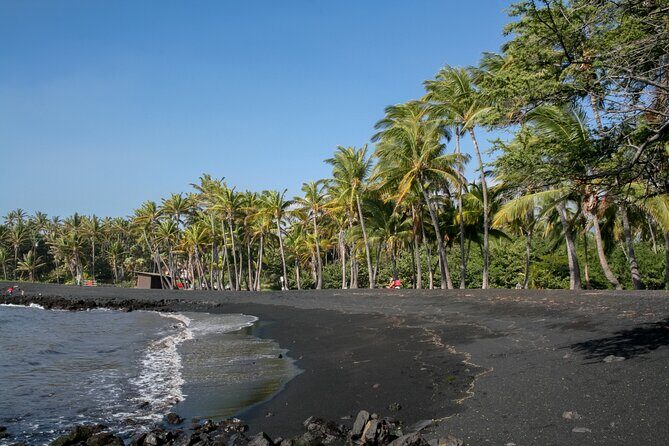
Then comes one of the easiest “wow” stops: Punalu‘u Black Sand Beach. The black sand is basalt from volcanic activity, which is the kind of fact you’ll remember because it looks so different from any beach most people know. The beach is often used for Hawaiian green sea turtle sightings—turtles bask near shore, and you’ll usually feel like you’re witnessing something wild but calm.
Important practical note: the water can be rough, so it’s mainly for viewing, not swimming. You’ll get the natural drama and the turtle factor without needing to test the surf.
Hawai‘i Volcanoes National Park: the stops that actually change how you see Hawai‘i
This is the centerpiece, with about 2 hours inside Hawai‘i Volcanoes National Park (admission included). You start at the visitor center to get oriented—geology, history, and what you’re about to see. That orientation is more than trivia. It helps you understand why the land looks the way it does and why some areas feel active even when you’re not seeing fresh lava.
From there, you’ll visit multiple signature locations, including:
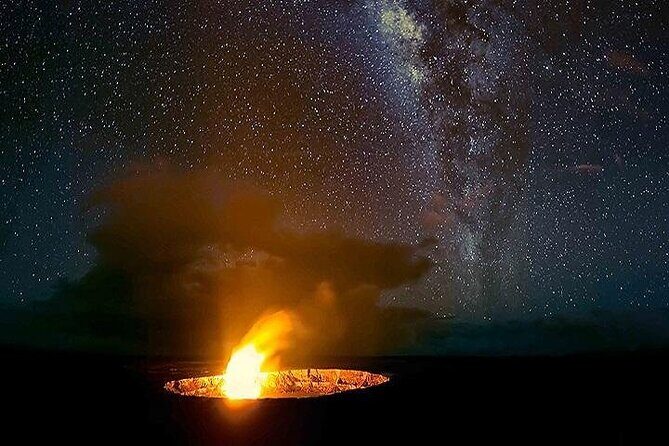
- Halema‘uma‘u Crater: You’re set up to witness the glow of molten lava. You might not get a full eruption, but the glow is the kind of experience you don’t forget, because it turns the idea of a volcano into something immediate.
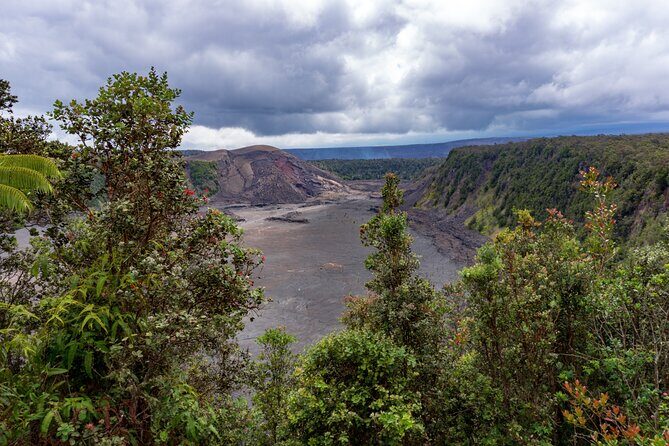
- Kīlauea Iki Rainforest Lookout: This is a contrast stop. You’re looking at a rainforest around a huge crater. It’s a reminder that lava and life keep coexisting here.
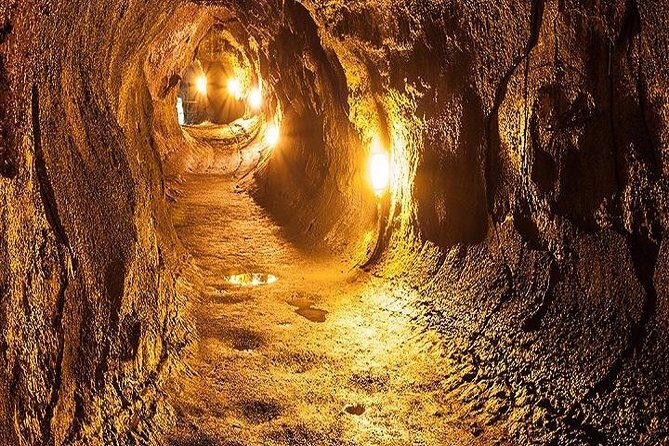
- Thurston Lava Tube: Walking through a lava tube feels like stepping inside the aftermath of a flowing river of molten rock. It’s the kind of stop that makes you slow down and look at the ceiling—no wonder people call it a favorite.
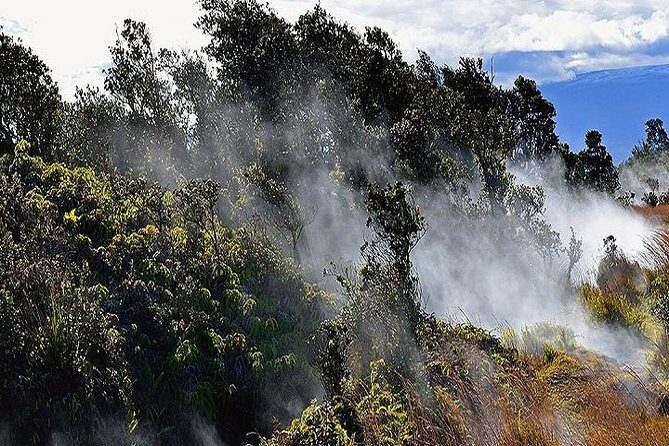
- Active steam vents: You’ll feel the heat rising from the ground and see the geothermal activity. If you’re sensitive to air quality, this is also where you need to pay attention to guidance about volcanic gases.
The park is active volcanic terrain. Follow marked trails, and if you have respiratory issues like asthma, take the warnings seriously—volcanic gases can worsen symptoms. This is one of those “don’t push it” situations.
Mauna Kea Access Road and Kohala Coast: altitude, cold air, and big views
After the volcano park, the day climbs into a different kind of scenery: the road toward Mauna Kea.
The Mauna Kea Access Road is a steep, winding route from the Saddle Road (Route 200). As you go up, you pass through different climate zones—starting with more grassy terrain and then transitioning into barren volcanic landscapes. The air thins and temperatures drop, and you’ll feel that quickly. Even if the forecast says it’s warm near sea level, plan for cool conditions here and bring layers.
Then you’ll visit Kohala Coast, known for scenic views, beaches, and luxury resorts, with a drier climate compared to much of the island. This part of the day is less about structured hikes and more about stopping for perspective—wide angles, coastline shapes, and the feel of how Hawai‘i changes across elevation and rainfall zones.
If you’re the type who loves photos, you’ll get a handful of “frame-worthy” moments here. If you hate slow stops with more standing than walking, you might want to think of this as the photo-and-view segment rather than another long activity.



Hilo: museums, heritage stops, and where the day ends up
The tour also includes time in Hilo on the windward side. Hilo is where the island’s story broadens beyond volcanoes and coffee. You’ll have a chance to see cultural and historical places such as:
- Lyman Museum for natural and cultural history
- Hilo Historic District with preserved early 20th-century buildings
- Pacific Tsunami Museum, tied to the region’s tsunami history
- Liliuokalani Gardens, a quiet place honoring Queen Liliuokalani
- Hilo Farmers Market, which is more local flavor and everyday Hawai‘i than museum time
You should think of the Hilo portion as “heritage and perspective,” not deep study. Still, even short stops can add meaning to the volcanic theme of the day. Living with an active planet shapes everything here, including community memory.
Guide-driven value: narration, private flow, and small-group pacing
The tour is private, which changes the feel from typical bus trips. Your guide provides local knowledge across the day—coffee farms, volcanic sites, and what you’re looking at. Some guides on this route have been described as excellent at explaining the science and Hawaiian context in a way that keeps you engaged.
You can also tell this is built for a smoother flow: the vehicle is air-conditioned, the group cap is 22 travelers, and the stops are planned enough that you’re not guessing what comes next.
That said, one review note I’d take seriously is the idea that some guides use a structured, safety-first style. It’s not automatically bad—volcano days can demand it—but if you need a super-soft, slow pace, you might want to ask the operator how they run the day and how interactive the narration is.
Price and logistics: does $589.99 feel fair?
At $589.99 per person, you’re paying for a package, not just a sightseeing day. The big value driver is round-trip flights from O‘ahu to Kona and back. For many people, flights plus parking plus time lost to travel is the main reason they can’t do the Big Island in a single day.
Then you’re also getting:
- Private, air-conditioned transportation
- Hawai‘i Volcanoes National Park admission included
- A local guide doing narration throughout
- A route that covers Kona, Punalu‘u, Volcanoes National Park, Mauna Kea Access Road, Kohala Coast, and Hilo
Where you’ll still spend money: meals are at your own expense, and lunch is at Punalu‘u Bake Shop. There’s also a reminder to bring cash for roadside stands and local shops, since some places are cash-only.
One more practical “don’t get surprised” note: you may see language suggesting snacks and drinks are included, but at least one person reported that it didn’t match what they received. So I recommend you treat this like: lunch is your planned meal, and snacks are on you. Bring a couple bars or buy snacks at your first chance.
What to pack for a volcano-and-altitude day
This itinerary includes both hot sun and cooler high elevation, plus active volcanic terrain. Pack like you’re going to layers plus one “just in case” item.
Bring:
- Layers and a rain jacket (weather changes fast at higher elevations)
- Sturdy, closed-toe shoes for uneven, potentially sharp volcanic terrain
- Water and snacks (services can be limited, and you’ll want energy)
- Sunscreen and a hat (the sun can be strong)
- Anything you need for comfort if you’re sensitive to air quality
Safety matters here. Volcanic gases can be harmful, especially for those with respiratory problems—so follow park guidance and stay on marked trails. Also, show respect at culturally significant sites in the park area. Don’t touch or remove anything.
And one tech tip: cell phone service can be limited or nonexistent in many parts of the park. Download maps or any useful info before you go, and don’t rely on your signal to guide you.
Who should book this day trip—and who should rethink it
This tour is a strong fit if:
- You’re short on time on O‘ahu and want the Big Island highlights without renting a car
- You want a guided route that takes care of flights, admission, and logistics
- You’re excited by volcano science and want multiple park stops in one day
- You like a mix of nature, food stops, turtles, and a finish in Hilo
It’s less ideal if:
- You hate long driving days and prefer slow pacing
- You’re traveling with someone who struggles with cold weather changes at altitude
- You have respiratory sensitivities and aren’t comfortable with the park’s volcanic gas risk (ask questions before booking)
- You need lots of unscheduled free time; this day runs on stops
Should you book this O‘ahu to Big Island volcano day?
If you want one day that actually feels like you “covered ground” on the Big Island, I’d book it—especially because it handles the hardest part: getting from O‘ahu to Kona and back, plus the park entry. The volcano park time plus the Thurston Lava Tube and steam vents are the kind of experiences that justify a pricey day.
Just go in with the right expectations: it’s long, you’ll be moving most of the day, lunch and snacks are your responsibility, and you’ll need layers for Mauna Kea Access Road weather. If that sounds fine, you’ll have a memorable, well-shaped day.
FAQ
What time does this tour start?
The tour starts at 8:00am.
Where do I meet if I’m flying into Kona International Airport?
Meet in the lot behind Alaska Baggage claim B-2 at 73-200 Kupipi St, Kailua-Kona, HI 96740.
How long is the tour?
It runs about 8 to 10 hours.
Is airfare included?
Yes. Round-trip airfare from Honolulu International Airport to Kona International Airport is included.
Is Hawaii Volcanoes National Park admission included?
Yes. Admission to the park is included.
Are meals included?
No. Meals are at your own expense, and lunch is typically stopped at Punalu‘u Bake Shop.
Does the tour include a pickup?
Pickup is offered.
Will I have cell service during the day?
Cell phone service can be limited or nonexistent in many parts of the park.
How many people are in the group?
The tour has a maximum of 22 travelers.
FAQ
What should I wear and bring?
Bring layers and a rain jacket, wear sturdy closed-toe shoes, and pack essentials like water, snacks, sunscreen, and a hat.
Is this tour suitable for people with respiratory issues?
The park can have volcanic gases, and those with respiratory issues like asthma may be affected, so it’s important to follow safety guidance and consider your condition before booking.