REVIEW · HONOLULU
History & Culture Tour in Honolulu via Segway
Book on Viator →Operated by Segway of Hawaii - Kakaako · Bookable on Viator
Honolulu history, minus the aching legs. This Segway tour is a fast way to see major sites without wearing yourself out, with two-way radio headsets that keep the guide easy to hear. I also like that it runs as a tight group (max 8), so you get real attention instead of a herd. One thing to plan for: it requires good weather, and the Segway experience still depends on you feeling comfortable with balance.
You’ll start in Kaka’ako at 9:00am, then roll through everything from 19th-century missionary-era landmarks to Iolani Palace, Chinatown, the harbor, and the Ala Moana waterfront area. Guides such as Jeanne (and also Michael, Zach, Tyler, and Allen) are repeatedly praised for clear safety guidance and the kind of details that don’t usually make it into generic sightseeing blurbs.
In This Review
- Key highlights I’d build a trip around
- Why a Segway “history loop” beats a long walking day
- Getting rolling at Segway of Hawaii – Kaka’ako at 9:00am
- Mission Houses, Kawaiahao Church, and Honolulu Hale: the early Honolulu story
- King Kamehameha Statue and the Supreme Court: power made visible
- Iolani Palace and Royal Barracks: where royalty becomes museum storytelling
- State Capitol architecture, Hotel Street, and the road to Chinatown
- Bishop Street to Merchant Street: Honolulu’s Wall Street legacy
- Honolulu Harbor and Aloha Tower: skyline drama plus the coral reef side quest
- Kaka’ako Waterfront Park, Point Panic surfers, and the Ehime Maru Memorial
- Ala Moana Regional Beach Park ending: a clean finish along the ocean
- Price and value: what $254.14 gets you (and when it’s a smart buy)
- Who this Segway Honolulu history tour fits best
- Should you book this tour?
- FAQ
- How long is the History & Culture Tour in Honolulu via Segway?
- What time does the tour start?
- Where does the tour start and end?
- What’s included in the price?
- Is transportation from Waikiki included?
- How many people are on the tour at once?
- Does the tour run in bad weather?
- What language is the tour offered in?
Key highlights I’d build a trip around
- Two-way radios and headsets so you can actually follow the story while moving
- Max 8 riders for quieter pacing and more personal attention
- Photo-stop friendly route through major landmarks across downtown and the harbor
- A tight timeline (about 2.5 hours) that covers a lot without long waits
- Waikiki transfers available for an extra $20 per person round-trip
- A 19th-century core (royalty, government, merchants) that connects to modern Honolulu areas
Why a Segway “history loop” beats a long walking day
If your time in Honolulu is limited, this tour is built for efficiency. You cover a big stretch of downtown and nearby waterfront areas in about 2 hours 30 minutes, which means you spend more of your trip actually seeing places and less of it hustling between stops on foot.
The other win is communication. With headsets and two-way radios, you can hear the guide even when you’re rolling past busy streets. It changes the whole rhythm: you’re not constantly shouting over traffic, and you’re not guessing what you’re seeing. It also keeps the tour feeling structured, not random.
The main tradeoff is simple. Segways are smooth and quick, but they’re still a tech device you ride standing up. The tour is noted as suitable for most travelers, and first-time riders in the feedback shared they picked it up quickly. Still, if balance feels like a constant worry for you, you’ll want to consider whether you’ll stay relaxed for the full route.
You can also read our reviews of more historical tours in Honolulu



Getting rolling at Segway of Hawaii – Kaka’ako at 9:00am
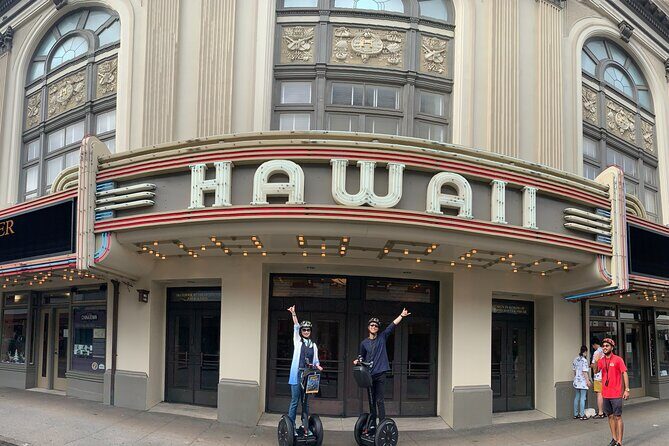
Your meeting point is Segway of Hawaii – Kaka’ako Store Keer Building, 1687 Kalauokalani Way, Honolulu, HI 96814. The tour starts at 9:00am and returns back to the same meeting spot.
Timing matters here. Starting in the morning helps you beat the day’s heat and gives you a calmer start before the downtown crowd thickens. It also sets you up to enjoy the harbor and waterfront segments without feeling like you’re racing the clock.
If you’re staying in Waikiki, you can arrange transfers from Waikiki to Kaka’ako for an additional $20 per person round-trip. The operator notes there are four pickup locations in Waikiki, and you need to contact them to schedule pickup. If you’re prone to transit stress, this extra fee can be worth it because it reduces friction before you even step onto the Segway.
Mission Houses, Kawaiahao Church, and Honolulu Hale: the early Honolulu story
The first stop centers on the Mission Houses, described as austere buildings built in 1820 by Hawaii’s first missionaries. This is a strong opening point because it anchors the day in the “then” of Honolulu—when early institutions were taking shape and when religion and community life were closely linked.
Right next door, you’ll see the historic Kawaiahao Church and graveyard, where many former Ali’i (royalty) are buried. That makes this stop more than a photo moment. It’s a reminder that places of worship and burial sites are also political and cultural records.
Across King Street, you’ll also spot Honolulu Hale (Honolulu’s City Hall). Even from the outside, it helps you connect early governance and community institutions to modern Honolulu’s civic center. The thoughtful part is that you’re not just collecting landmarks—you’re building a timeline as you move.
One consideration: this early section is dense with names and dates, so if you love context, plan to listen closely. If you prefer a lighter, more casual sightseeing flow, you might want to pace yourself and enjoy the visual details as much as the explanations.
King Kamehameha Statue and the Supreme Court: power made visible
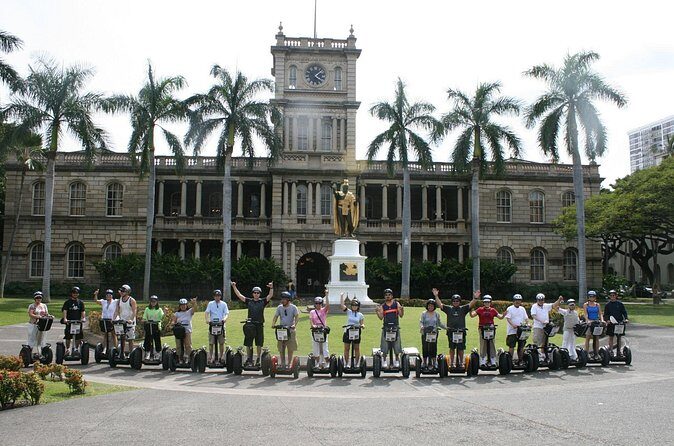
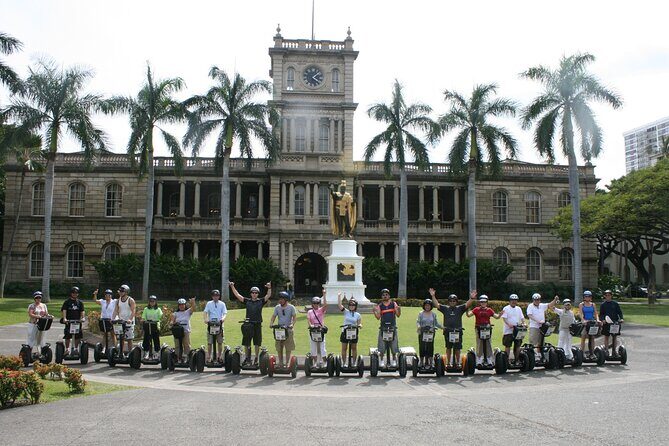
Next, you glide to the gold-encrusted King Kamehameha Statue—one of three in the world—set in front of the Hawaii State Supreme Court building. This is a clever pairing because the statue isn’t just art. It’s a political symbol placed in a setting tied to law and national identity.
Kamehameha is one of those figures who shows up across Hawaii in different ways, so seeing this version in this specific location helps you grasp how the island’s leadership and mythology get physically “stamped” into public space.
The benefit of a moving tour here is pace. You’re not stuck standing still for too long in one spot, but you also get enough time to look and take photos. In feedback, people specifically called out the number of photo opportunities, and this stop fits that pattern: it’s visually bold and easy to frame.
Iolani Palace and Royal Barracks: where royalty becomes museum storytelling
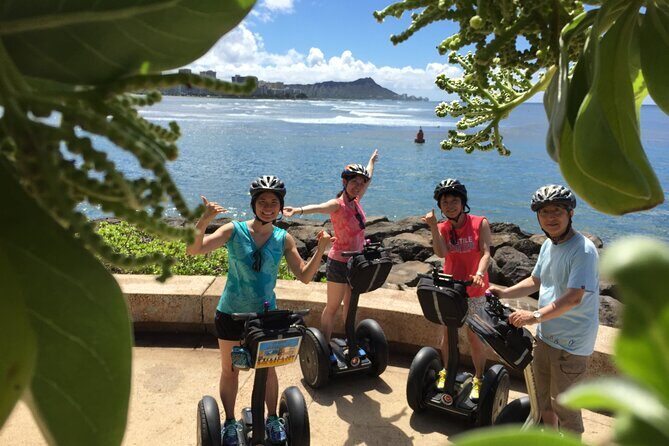
After crossing King Street, you enter the grounds of Iolani Palace and the Royal Barracks. These are described as the only palace on American soil built by King Kalakaua, and today they function as a museum.
Gliding around the palace grounds helps you focus on the physical experience of the space. You get to notice the banyan trees and the overall layout rather than racing through walls and rooms. The route also includes a stop at the Queen Lili’uokalani Statue, who was Hawaii’s last ruling monarch until her government was overthrown and the Hawaiian Nation was disrupted.
This part of the tour tends to land best for people who like human stories—leadership, change, and the cost of political transitions. It’s also a good segment if you want a break from street-level hustle and into something calmer and more reflective.
A small drawback to keep in mind: since this is a major landmark, you may feel more “on display” compared with less famous stops. For most people that’s fine, and it’s usually a trade you make for the payoff of seeing a place this central to Hawaiian story.





State Capitol architecture, Hotel Street, and the road to Chinatown
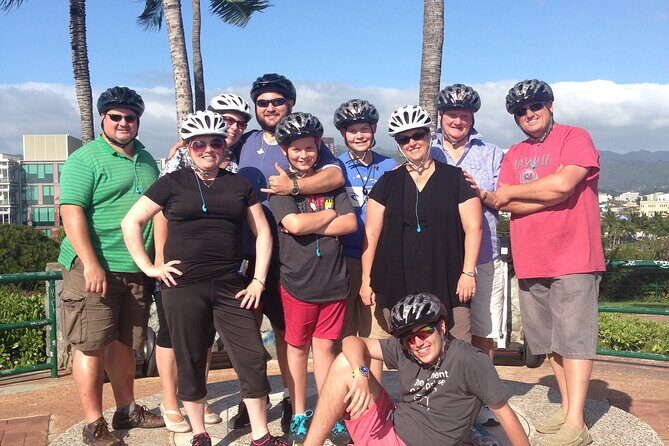
Behind the palace, the tour continues toward the Hawaii State Capitol Building. The building is described as having unique architecture, which matters because it’s a shift from royal symbolism into the way Hawaii presents government through design.
Then you head past the State Art Museum and along historic Hotel Street, known for its colorful past. After that, the tour reaches Chinatown’s Shopping Mall area, where you’ll encounter noodle factories, open markets, and a mix of people from different backgrounds.
This is where the tour earns its “culture” label. You’re not only learning about government and monarchy. You’re also seeing how daily life and immigration patterns shape what a neighborhood becomes. Chinatown in particular works well on a Segway route because you can keep moving while still having enough time to look around.
If you’re hoping for lots of indoor shopping time, plan your expectations. This is presented as an experiential glide and street-based sightseeing route, so the value comes from seeing the area’s energy and layout, not from turning it into a long market detour.
Bishop Street to Merchant Street: Honolulu’s Wall Street legacy
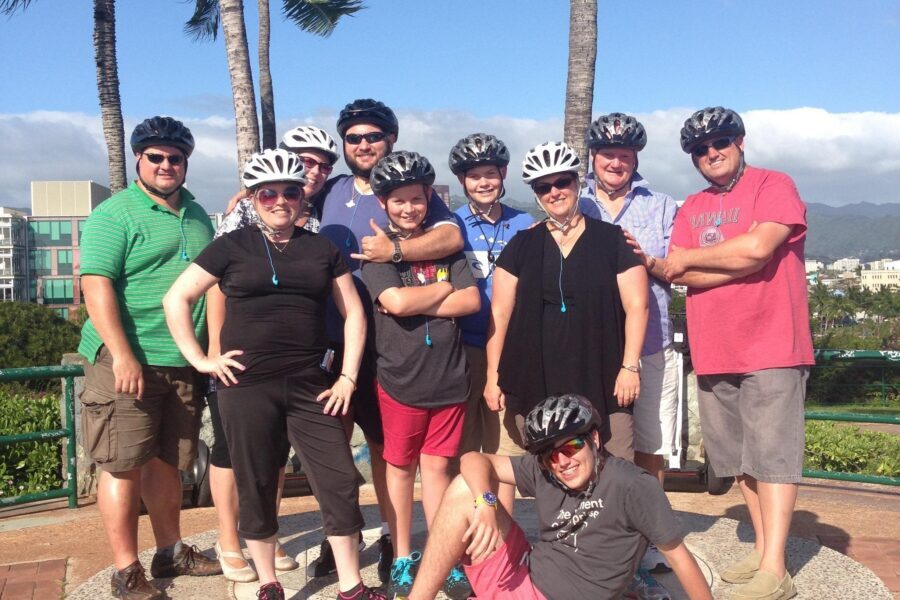
After Chinatown, the route heads toward Honolulu’s Wall Street on Bishop Street and then continues along Merchant Street. These are described as featuring first paved street history and artistic buildings, plus historic transportation buildings that are more than 150 years old.
This is a smart shift because it widens the story beyond monarchy and government into commerce. You get the sense that Honolulu wasn’t only a stage for power—it was also a hub for trade, movement, and business.
One thing I like about visiting this area as part of a guided loop: you’re not trying to decode architectural details by yourself. The guide’s pacing and explanations help you notice what you’d otherwise gloss over—like why a street matters historically and how the built environment reflects those functions.
Honolulu Harbor and Aloha Tower: skyline drama plus the coral reef side quest
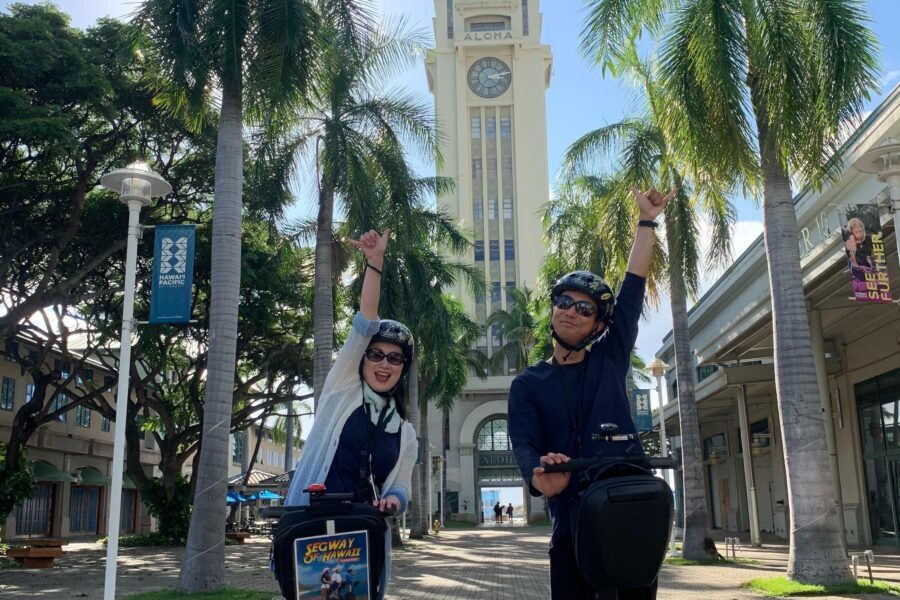
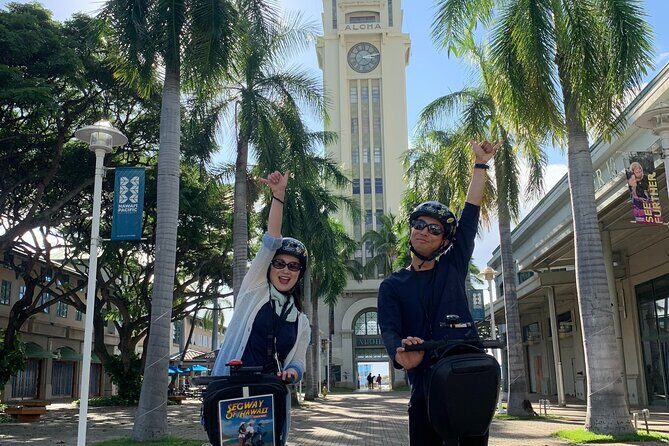
Then you roll to Honolulu Harbor, where you see the famed Aloha Tower. When built in 1926, it was noted as the tallest building in Hawaii. That kind of “was the tallest” detail turns a landmark into a story you can actually picture, not just an object you walk past.
The tour also includes checking out the restored coral reef and fish that now comes to feed close by. That’s a nice contrast: you’re standing in a working harbor and then looking at something ecological that’s been restored. It helps the day feel less one-note and more like the island’s culture is connected to land and ocean in practical ways.
In feedback, people highlighted that this portion truly takes you back through Hawaii’s history while still being something you experience with modern-day riding tech. In other words, you get the historical context and the “today” experience at the same time.
Kaka’ako Waterfront Park, Point Panic surfers, and the Ehime Maru Memorial
As you glide back toward the ocean, you reach Kaka’ako Waterfront Park, known for a promenade and for the surfers at Point Panic. This is a good moment for a change of pace. You’ve been in civic and heritage zones; now you’re looking at a living shoreline culture where the ocean is part of daily identity.
Then the route goes up the hill to see the Ehime Maru Memorial and the Echo Stone. This is more solemn than some of the earlier photo stops, and it brings a different kind of historical attention—one tied to remembrance rather than just political milestones.
A consideration here: memorial areas can feel emotionally heavier than other stops. That’s not a problem, but it’s good to know the tour doesn’t stay purely light and scenic. If you prefer everything upbeat, you might want to mentally brace for a reflective segment.
Ala Moana Regional Beach Park ending: a clean finish along the ocean
For the final stretch, you glide back toward the ocean and end along Ala Moana Regional Beach Park. The tour is described as ending with a beautiful finish, and it’s a practical one: you get a waterfront conclusion without needing extra transit afterward.
This ending helps because the day has a lot of visual input. By the time you reach the beach park segment, your brain gets a reset zone—open views, ocean air, and a calmer atmosphere to wrap up.
Price and value: what $254.14 gets you (and when it’s a smart buy)
At $254.14 per person for about 2 hours 30 minutes, you’re paying for guided interpretation, equipment, and time savings. What’s included is bottled water, plus the helmet and headset setup so you can communicate with the guide using two-way radios.
The big value drivers here are:
- You cover many major areas in a single session, instead of piecing together multiple half-days.
- Small group size (max 8) reduces waiting and makes the guide easier to address directly.
- The communication system means you don’t lose the story while moving.
There’s also an optional extra: round-trip transfer from Waikiki to Kaka’ako costs $20 per person. If you’re already comfortable getting to the meeting point on your own, you can save money. If you want the morning to be stress-free, paying for the transfer can be a smart trade.
Is it worth it? If you’re the type who likes seeing key sights but hates spending your vacation in slow, stop-and-start transit, this is priced like a time-saving experience. If you enjoy slow walking at your own pace and you’re staying somewhere with easy access to downtown and the harbor, you might prefer doing individual stops. But if you want structure, storytelling, and momentum in one package, the price starts to make sense.
Who this Segway Honolulu history tour fits best
This tour is a strong match if you:
- like history and culture but don’t want a full-day walking plan
- want to cover downtown, palace grounds, Chinatown, and the harbor in one go
- enjoy photo stops without having to plan each one separately
- appreciate a guided pace with clear communication
It’s also useful for first-time Segway riders. The feedback includes people who were nervous at the start but felt safe and comfortable once the guide helped them get used to the Segway experience quickly.
It may be less ideal if:
- weather is unreliable for your dates, since the tour requires good weather
- you’re uncomfortable with standing and balancing for a moving ride
- you want deep, long museum time, since this is described as a glide-based tour route with stops rather than a full-on museum marathon
Should you book this tour?
I’d book it if you want an efficient way to connect Honolulu’s government, royal-era landmarks, and commerce districts into one morning, with two-way radios and a pace that keeps you from burning hours on foot. With a small cap of 8 riders and a track record of guides like Jeanne, Michael, Zach, Tyler, and Allen being called out for safety and strong explanations, it’s the kind of tour that’s built to feel smooth.
Skip it only if balance is a concern for you or if your schedule can’t flex for weather. If you’re flexible and want a guided, sight-packed ride through key Honolulu landmarks, this one is an easy yes.
FAQ
How long is the History & Culture Tour in Honolulu via Segway?
The tour runs about 2 hours 30 minutes.
What time does the tour start?
The start time is 9:00am.
Where does the tour start and end?
It starts at Segway of Hawaii – Kaka’ako Store, Keer Building, 1687 Kalauokalani Way, Honolulu, HI 96814, and it ends back at the same meeting point.
What’s included in the price?
Included items are bottled water, a colorful helmet, and a two-way radio headset with a knowledgeable tour guide.
Is transportation from Waikiki included?
No. Round-trip transfer from Waikiki to Kaka’ako is available for an additional $20 per person, and pickup requires scheduling with Segway of Hawaii – Kaka’ako.
How many people are on the tour at once?
The tour has a maximum of 8 travelers.
Does the tour run in bad weather?
The experience requires good weather. If it’s canceled due to poor weather, you’ll be offered a different date or a full refund. Free cancellation is available up to 24 hours before the start time.
What language is the tour offered in?
The tour is offered in English.