REVIEW · OAHU
Group of 2 + mid length eFoil experience Honolulu HAWAII
Book on Viator →Operated by Foil Surfing Hawaii · Bookable on Viator
Flying over water in Honolulu is real.
This mid-length eFoil lesson at Foil Surfing Hawaii is interesting because you don’t just jump on a board. You get 15–30 minutes of ground school, then you practice on the water in structured runs. I love how the coaching is set up to help you get your bearings fast, and I also love the practical time breakdown: three 20-minute water runs with short breaks built in. One thing to consider: this experience requires good weather, and it’s not recommended if you’re over 250 LB.
The other reason it works well is how focused the whole session is. You’ll finish back at the same place you started, and the day can stay yours afterward, since the lesson is about 2 hours total. My one caution is that eFoil still takes some balance and comfort in the water, so if you’re nervous about standing and riding right away, plan to lean on the instruction and go slowly with the process.
In This Review
- Key Highlights You’ll Care About
- Why This Mid-Length E-Foil Lesson Feels Manageable in Honolulu
- Finding Foil Surfing Hawaii at 1440 Sand Island Pkwy (and Getting Back Easily)
- Gear and Safety Setup: Helmets, Life Vests, and Boards Provided
- On Land First: The 15–30 Minute Ground School That Builds Confidence
- The Water Plan: Three 20-Minute Runs Plus 10-Min Breaks
- How the Instructor Support Shows Up During Your Learning Curve
- Weight Limit and Comfort Notes Before You Commit
- Who This E-Foil Session Best Fits (Senior-Friendly, Budget-Minded, First-Timers)
- Weather Matters More Than You Think for eFoiling
- Value and Time: Getting More Than a Quick Thrill
- What to Expect When Your Lesson Starts (A Simple, Calm Game Plan)
- Should You Book This Mid-Length eFoil Experience in Honolulu?
- FAQ
- How long is the eFoil experience in Honolulu?
- What happens during the ground school?
- How much time will I spend on the water?
- Are there breaks during the lesson?
- Is equipment provided?
- Is this a private tour or a group mixed with others?
- What are the weight guidelines?
- What if the weather is bad?
- Where do I meet the tour?
Key Highlights You’ll Care About
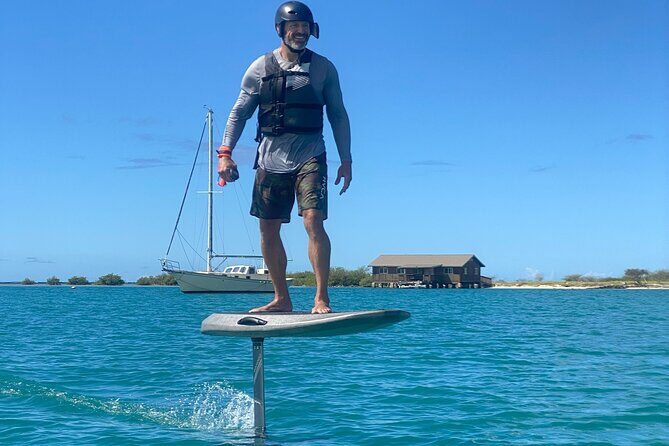
- Land practice first (15–30 minutes): You learn technique on shore before you go out.
- About 60 minutes on the water: Split into three 20-minute runs per student.
- Safety gear included: Helmets and life vests are provided along with the boards.
- Built-in downtime: You get three 10-minute breaks while your partner rides.
- One eFoil per student: You’re not sharing a board during your turn.
- Private group only: It’s just your group, not mixed with random strangers.
Why This Mid-Length E-Foil Lesson Feels Manageable in Honolulu
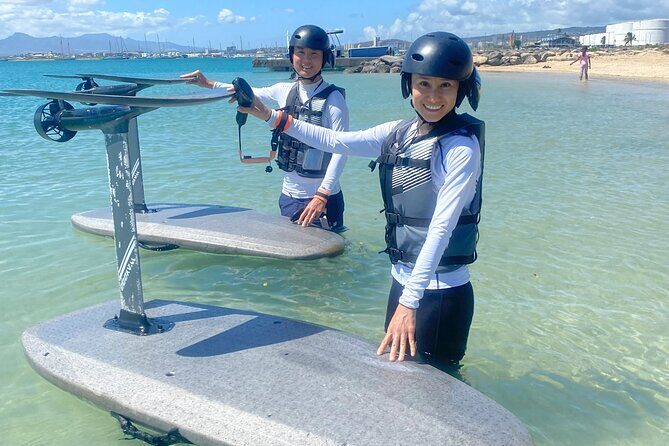
A lot of “try it once” activities look simple until you’re actually doing them. This one is designed to feel doable because it’s staged. You don’t head straight into the water. Instead, you start with short ground coaching where you learn what to do with your body and how to think about balance and control.
Then you move to the sea in three distinct 20-minute runs. That structure matters. It’s long enough to make progress, but not so long that one mistake ruins the whole experience. You also get three 10-minute breaks, timed while your group partner is out, so you can reset, listen to coaching cues, and feel ready for your next turn.
And because it’s about a 2-hour total lesson, you’re not locked into a full day. Plan your trip so you can still explore Oahu after you finish. That balance—learning something new without eating your whole itinerary—is a big part of why I think this works.
You can also read our reviews of more tours and experiences in Oahu.

Finding Foil Surfing Hawaii at 1440 Sand Island Pkwy (and Getting Back Easily)
The meeting point is Foil Surfing Hawaii, 1440 Sand Island Pkwy, Honolulu, HI 96819. The good news is that it’s described as easy to find, so you’re not spending your morning hunting for a tiny sign or a hard-to-locate dock.
You’ll also end back at the meeting point. That sounds basic, but it’s practical when you’re traveling. You don’t have to plan a complicated return ride or worry about where you’ll be when the lesson ends. You’re simply dropped back where you started, and you can switch from “lesson mode” to “vacation mode” right away.
English is offered, and you’ll have a mobile ticket, which is handy for travelers who hate printing and paperwork.
Gear and Safety Setup: Helmets, Life Vests, and Boards Provided
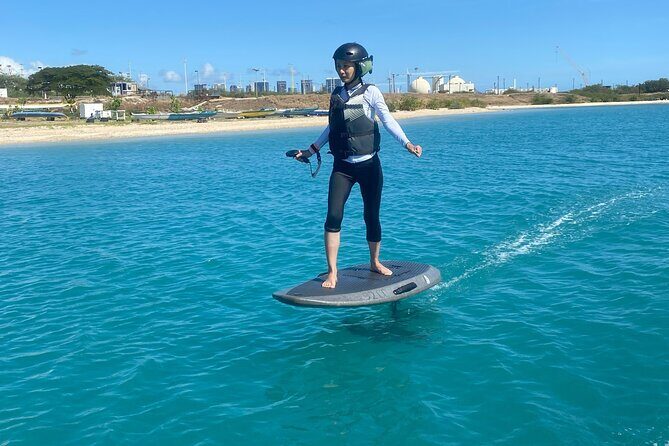
For eFoil, the gear setup is part of the safety experience—not just a formality. You’ll have boards, helmets, and life vests provided. That means you’re not trying to improvise with random beach gear or borrow something that’s not designed for this activity.
It also helps you focus. Instead of thinking about what to bring, you can think about how to learn. I like that the lesson starts with a clear safety baseline and a physical setup that matches what you’ll need in the water.
Also, this is offered as a private tour/activity, meaning only your group participates. That can make the whole gear-and-safety flow feel more controlled. You’re not squeezed into a busy mix of other riders, which usually means less confusion and smoother handoffs between the shore part and the water part.
On Land First: The 15–30 Minute Ground School That Builds Confidence
You’ll have 15–30 minutes of ground school before any real riding. This is one of the best choices in the whole format. It’s long enough to learn the essentials, but short enough that you’re not stuck in a lecture while everyone else is already dreaming about the water.
On shore, you can expect to practice the basics of stance, balance, and technique. In past experiences, instructors like Ben, Danny, and Jake have been described as patient and clear, with step-by-step guidance that helps first-timers feel comfortable during the learning curve.
If you’re the kind of person who learns by doing, don’t worry. This ground time isn’t just listening. It’s meant to get your body thinking in the right direction before you go where the learning curve gets steeper.
Tip from how this is structured: pay attention to the small cues during ground school. Those cues are often the difference between a run that feels frustrating and a run that feels like you’re finally getting it.
The Water Plan: Three 20-Minute Runs Plus 10-Min Breaks
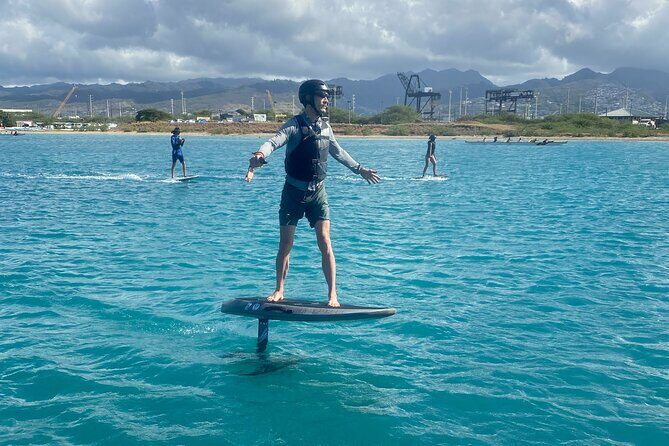
Here’s the core rhythm of the experience:
- Three 20-minute water runs each (about 60 minutes total water time per student)
- Three 10-minute breaks while your partner is out on the water
This timing is more than just schedule. It’s built to support actual learning. When you ride for 20 minutes, you get enough time to feel what works. When you stop after that, you can reset with fresh attention. The 10-minute break also helps you avoid fatigue, which matters for balance-based activities.
Another detail that’s easy to overlook until you’re there: 1 eFoil per student. That means you’re not sharing the same board during your turn, which usually leads to less waiting and more actual riding time.
In plain terms: you get real practice, not just a quick taste.






How the Instructor Support Shows Up During Your Learning Curve
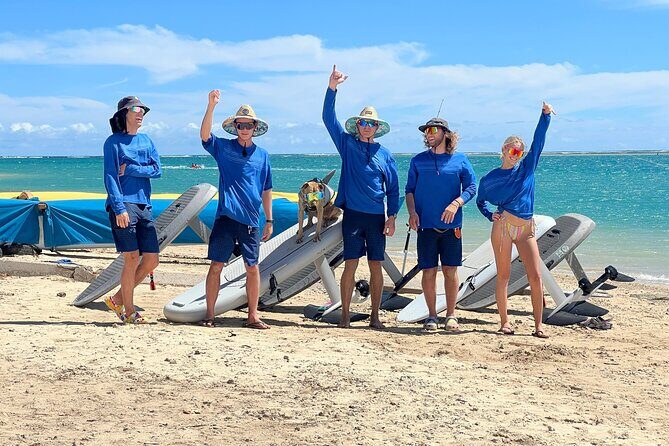
Even the best board in the world won’t teach you by itself. This is why the instructor role matters so much here.
Instructors like Ben (and alongside him, Danny), plus Jake, are repeatedly described as patient and focused on making you feel confident. That doesn’t mean you won’t struggle at first. It means you get guidance that helps you turn frustration into small wins.
You’ll feel this most during the first water runs. The goal isn’t to be perfect. It’s to stay safe, follow instruction, and gradually connect technique with how the board responds.
I also like that the plan includes land practice first. It gives you a base layer so that when you’re in the water, you’re not trying to learn everything from scratch.
Weight Limit and Comfort Notes Before You Commit
This experience says it’s most travelers can participate, but it’s not recommended for guests over 250 LB. If you’re near that limit, don’t assume it’ll be fine. The equipment and riding dynamics are tuned around safety and performance, so check your comfort and height/weight needs honestly.
Also, think about whether you’ll be okay with standing and balancing while wearing a life vest. That’s a skill, even when it looks effortless in videos.
If you’re an older traveler or you’ve been inactive for a while, you may find this format especially approachable because it’s structured, scheduled, and time-bounded. It’s designed for learning, not endurance.
Who This E-Foil Session Best Fits (Senior-Friendly, Budget-Minded, First-Timers)
The experience is described as perfect for senior citizens, inactive & budget minded students. That’s a bold promise, but the structure supports it.
Why it makes sense:
- The lesson is only about 2 hours, so you’re not stuck for a long stretch.
- You get a short ground lesson before the water.
- You get breaks built into the schedule.
- You return to the meeting point right afterward, so your logistics stay simple.
If you’re traveling with someone who’s less athletic, this kind of pacing can help. You’re not asking your body to power through an all-day workout. You’re learning technique in blocks.
If you’re a thrill-seeker, you’ll still get enough time to feel the payoff. 60 minutes on the water total per student is meaningful, especially for first-time learners.
Weather Matters More Than You Think for eFoiling
This activity requires good weather. That’s not just a technicality. EFoil depends on conditions, and safety is part of why weather is a real factor here.
If conditions are poor, the experience can be canceled and you’ll be offered a different date or a full refund. That’s a fair setup for a trip where plans are still forming.
My practical advice: treat this like a weather-dependent highlight. If your schedule is tight, consider leaving at least some flexibility on your Oahu day so you can adjust if the sea doesn’t cooperate.
Value and Time: Getting More Than a Quick Thrill
Even without seeing any pricing details, the value here comes from how the time is used.
- You get equipment provided (boards, helmets, life vests).
- You get structured instruction instead of a vague orientation.
- You get about 60 minutes of water time total per student, split into three runs.
- You get a private group format, so your attention doesn’t get diluted.
And the pacing is built for travelers. The lesson is about 2 hours total, and the plan says to expect about an hour for the experience portion with the rest of your day free. That’s huge if you’re trying to fit more than one Oahu activity into the same day.
If your goal is to feel the joy of eFoiling without turning your entire day into an activity buffer, this is a smart fit.
What to Expect When Your Lesson Starts (A Simple, Calm Game Plan)
When you arrive at Foil Surfing Hawaii in Sand Island, your best move is to treat it like a training session, not a performance. You’ll go from ground instruction to gear prep to water practice.
A good approach:
- Listen closely during the 15–30 minutes on land.
- Don’t rush your learning. The schedule is built so you can improve across runs.
- Use the 10-minute breaks to refocus on the cues you were given, especially right before you go back out.
If you’re traveling with a partner, remember how the breaks work. While one person rides, the other is resting onshore, then you rotate through the runs.
Should You Book This Mid-Length eFoil Experience in Honolulu?
If you want a fun Oahu activity that’s structured enough for first-timers and paced enough for travelers who don’t want a long day, I’d say this is worth booking. The strongest reasons are simple: you get real time on the water, you’re supported by instruction, and the lesson is capped so it fits into a normal travel day.
Book it if:
- You’re curious about eFoiling and want a clear path from shore to sea.
- You want three practice runs and planned rest.
- You prefer safety gear provided and coaching that helps you feel comfortable.
Think twice if:
- You’re over 250 LB.
- You’re likely to panic with balance-based riding.
- Your schedule can’t handle weather-related changes.
Bottom line: this is a practical, well-paced way to try eFoiling in Honolulu without turning your trip into a long, stressful project.
FAQ
How long is the eFoil experience in Honolulu?
It’s approximately 2 hours total, including the ground school and your time in the water.
What happens during the ground school?
You’ll have 15–30 minutes of ground school where you learn technique on land before going into the sea.
How much time will I spend on the water?
You’ll get about 60 minutes total on the water, split into three 20-minute water runs.
Are there breaks during the lesson?
Yes. There are three 10-minute breaks while your group partner is out on the water.
Is equipment provided?
Yes. Boards, helmets, and life vests are provided.
Is this a private tour or a group mixed with others?
It’s private for your group only. Only your group will participate.
What are the weight guidelines?
It’s not recommended for guests over 250 LB.
What if the weather is bad?
The experience requires good weather. If it’s canceled due to poor weather, you’ll be offered a different date or a full refund.
Where do I meet the tour?
The meeting point is Foil Surfing Hawaii, 1440 Sand Island Pkwy, Honolulu, HI 96819, and the activity ends back at the meeting point.