REVIEW · OAHU
Honolulu’s Waikiki Self-Guided Walking Audio Tour
Book on Viator →Operated by History with Action · Bookable on Viator
Waikiki sounds different at walking speed. This self-guided audio tour turns familiar spots into story stops, from shoreline healing sites to the legend of Duke Kahanamoku. I especially like the hands-free, location-triggered audio (so you’re not constantly tapping), and I like that you get lifetime access you can use on future trips without paying again.
There’s one key consideration: this is a long walk. The route notes it’s over 14 miles with more than 45 audio stories, so plan on closer to a 2–3 hour outing if you do the whole thing at a relaxed pace.
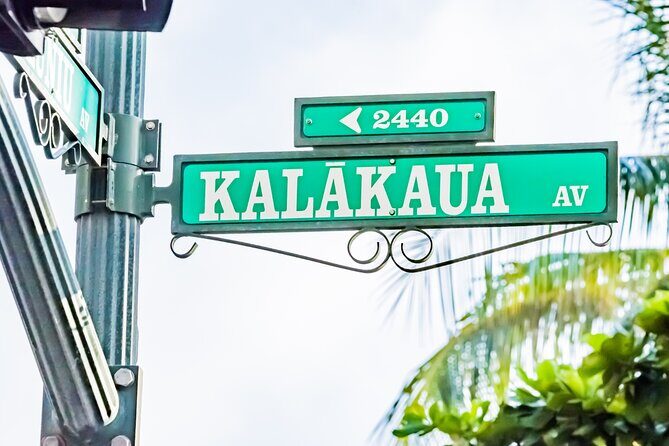
You’ll start on Kalākaua Avenue and end at Waikiki Walkway by the Waikiki Wall, with no guide meeting you in person. You just download the app, punch in the password, then follow the audio cues and take breaks when you want.
In This Review
- Key Things I’d Plan For
- Price and Time: Is This Good Value?
- Getting Set Up: Download Once, Then Let It Run
- Start Point to Finish: The Walk Itself (and Why It Matters)
- The First Stretch: Taft-Era Concrete and Waikiki Healing Waters
- Princess Kaiulani to Duke Kahanamoku Lagoon: Royals, Surf Legends, and the Waikiki Shift
- Moana Surfrider and the Jane Stanford Mystery: A Hotel Stop with Teeth
- Kuhio Beach and Prince Jonah Kuhio: Beach Time with Context
- Waikiki Wall and Kalākaua Avenue: Concrete, Medals, War, and Civic Service
- Makua and Kila to Waikiki Walkway: The Walk Ends Where the Spirit Lives
- What the Audio Tour Does Better Than a Typical Waikiki Stroll
- Who This Tour Fits Best
- Should You Book This Waikiki Audio Walk?
- FAQ
- FAQ
- How much does the Honolulu Waikiki Self-Guided Walking Audio Tour cost?
- How long is the tour?
- Does the tour include tickets or entry fees?
- Is it usable offline?
- What do I need to do before I start walking?
- Where does the tour start and end?
- Do I need headphones?
- Can I start the tour at any time?
Key Things I’d Plan For
- Offline maps and autoplay GPS cues so you can keep going even without cell service
- Lifetime access, no expiry so you can replay stories on later Waikiki visits
- 45+ audio stories over a long route that adds up to a real half-day feel if you do it all
- Real historical anchors like Taft-era coastal protection and the Moana Surfrider’s connections to Jane Stanford
- Icon-first stops tied to Princess Kaiulani, Duke Kahanamoku, and Prince Jonah Kuhio
- Start anytime within 6:00 AM–9:00 PM and pause freely, so it fits your day instead of forcing a schedule
Price and Time: Is This Good Value?
At $9.99 per person, this is priced like a small add-on, not a big-ticket tour. The value comes from two things: you’re paying once for a route that has 45+ stories, and you’re paying for repeatable access. Lifetime access means you’re not stuck with a one-and-done experience.
Time is the part to respect. The overview says 1–2 hours, but the route note says over 14 miles and about 2–3 hours to complete. My practical advice: don’t start this if you only have an hour to burn. Treat it like a proper walk-and-learn window, then adjust your pace.
You can also read our reviews of more walking tours in Oahu


Getting Set Up: Download Once, Then Let It Run

This tour works through Action’s Tour Guide App. After booking, you’ll get an email and text with setup instructions and a password. Here’s the workflow that matters:
- Download the tour while you’re on strong wifi/cellular.
- Enter the password in the app using the device you’re carrying.
- After download, the tour uses offline maps so you can keep listening without a signal.
Once you’re onsite, there’s no staff member waiting for you. You open the app, start the version that matches your starting point and direction, then head to the first story point. Audio plays automatically as you move.
Two small practical notes:
- Use headphones/earbuds for the best experience.
- The app is recommended for iPhone (iOS 15+), Android (9+), or an iPad/tablet with GPS.
Start Point to Finish: The Walk Itself (and Why It Matters)
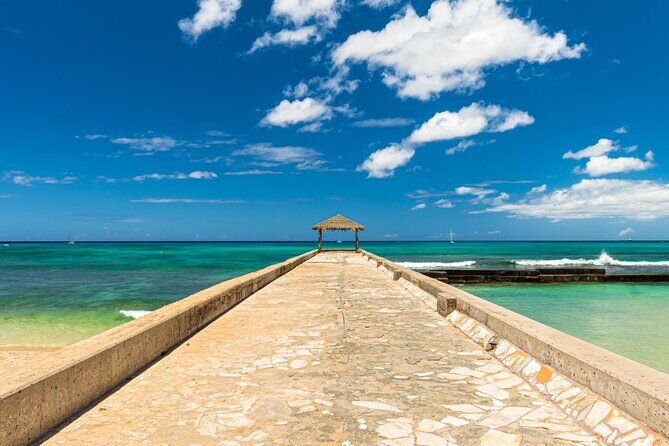
The tour begins at the Brothers in Valor memorial on Kalākaua Avenue (2081 Kalākaua Ave) and ends at Waikiki Walkway at the Waikiki Wall (also on Kalākaua Ave). It runs Monday–Sunday, 6:00 AM–9:00 PM.
Because it’s self-guided, you control the pace. The audio cues are location-based, so you’ll get the best results by sticking to the tour route rather than cutting across random blocks just because you see a faster line.
Also, since it’s a private tour/activity for your group, you’re not dealing with the usual “everyone move at once” rhythm. It’s you and the streets.
The First Stretch: Taft-Era Concrete and Waikiki Healing Waters
You begin with a story tied to a concrete structure dating back to 1904, when President Taft pushed for a “Ring of Steel” to protect Hawaii’s coast from attacking battleships. It’s a striking opening because it reframes Waikiki from beach postcard to strategic shoreline history.
From there, you move into the healing-site storytelling. The stop at Kawehewehe points you to deeper blues and a strip of light blue over sand—described as one of four ancient healing sites in Waikiki. This is a good moment to slow down and just look. Even if you think you know Waikiki, these kinds of place-specific descriptions change how you see the coastline.
Then comes Bali Oceanfront, explained as part of the Hawaiian people’s lifesource since early Polynesian settlement (between 400 and 1100 CE). It’s a reminder that these spots weren’t built for visitors—they were already woven into daily life long before the hotel era.
Why this early section works: it sets the tour’s pattern—each stop gives you a reason the location matters, not just a name.
Possible drawback: the route is long, so if you burn too much time gawking early on, you may rush later. A simple fix is to enjoy the first stops, then keep moving with a steady rhythm.
Princess Kaiulani to Duke Kahanamoku Lagoon: Royals, Surf Legends, and the Waikiki Shift
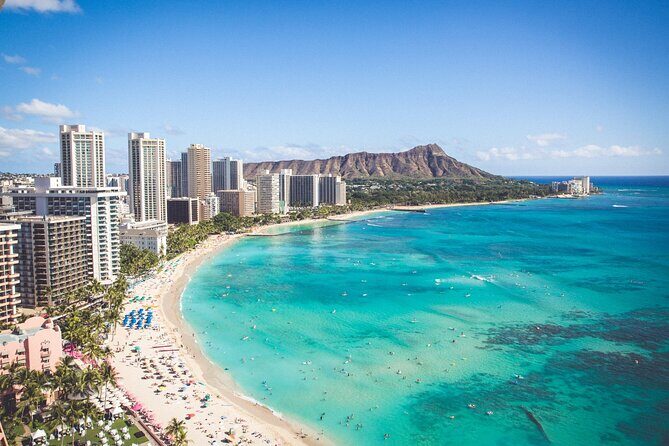
Next, you hit the royal story anchor with the Princess Kaiulani Statue. Waikiki has famous figures, but this one is presented as Hawaii’s last heir to the throne—and the stop invites you to connect the name to a physical landmark you can revisit anytime.
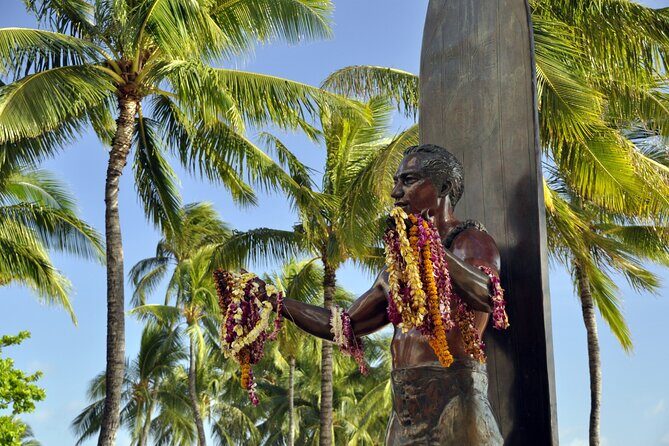
After that, you reach Duke Kahanamoku Lagoon. The story ties Princess Ka’iulani’s passing in 1899 to the rise of Duke Kahanamoku as another Hawaiian hero. The audio frames his beginning in the “shadows of the palm trees,” then shifts to the imagery of a breaker crest—basically, the tour tries to make you feel what surfing culture was about at the start.
Then the tour brings in the legend with a dedicated Duke surfing segment: in the early 1900s, most people hadn’t seen anyone surf, then Duke did, and it sparked a surfing fever that spread around the world.
Why you’ll likely enjoy this section: it’s the emotional and cultural bridge. You go from monarchy and legacy to sport and worldwide influence, all while still staying grounded in real Waikiki locations.
A practical consideration: Duke-related stops can make you want to stop for photos. That’s fine—just plan it. This tour’s power is the sequence, so take pictures, but keep your forward motion so the audio keeps matching where you are.
You can also read our reviews of more guided tours in Oahu






Moana Surfrider and the Jane Stanford Mystery: A Hotel Stop with Teeth
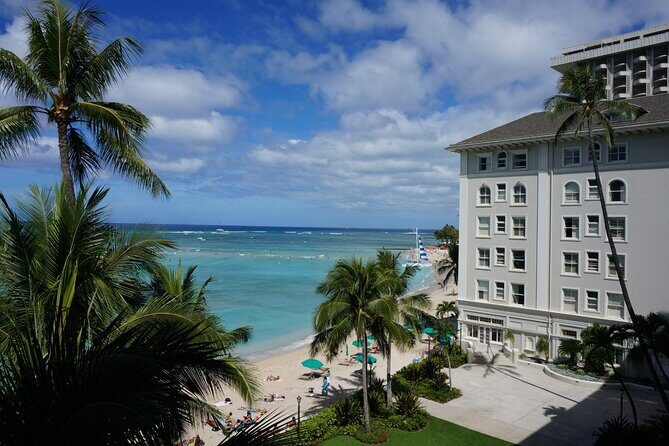
The next big shift is the Moana Surfrider, A Westin Resort & Spa, Waikiki Beach story. The tour notes the Moana debuted in 1927 (and also mentions the hotel as a 1901-built featured stop with the first electric-powered elevator in Hawaii, still in use today). Either way, the point is clear: this place is old enough to have witnessed multiple eras.
The storytelling goes beyond architecture and into the famous unresolved narrative: the murder of Jane Stanford. If you’ve ever heard the Jane Stanford story in passing, this is where the audio gives it a Waikiki anchor, so it stops being a rumor and turns into a place-based mystery.
It also ties in the celebrity-and-royalty feel of the era. The tour mentions Marilyn Monroe and Franklin Roosevelt, and it links Duke Kahanamoku directly to the hotel’s lore.
Why this stop is worth your time: it gives you a “hotel as history” lens. Instead of treating Moana Surfrider like scenery, you hear why it became a stage for big names and dark events.
Trade-off: hotel areas can be busy and visually complex. Keep your headphones in and follow the audio cues so you don’t lose the story thread in the crowds.
Kuhio Beach and Prince Jonah Kuhio: Beach Time with Context
After Moana, you head toward Kuhio Beach Hula Show. This stop is pitched as one of Waikiki’s best beach spots, with practical ocean-use notes. The audio points out that the area is good for snorkeling or bodyboarding, and it also explains why the water feels calmer: both sides of the beach have concrete walls that extend into the ocean, creating a kind of wading-pool setup that can be easier for families.
Then the tour folds in a historical figure: Prince Jonah Kuhio Kalaniana’ole, described as the youngest son of a high Hawaiian priest. The audio notes he lived in a home at this Waikiki spot with his wife, Princess Elizabeth Kahanu.
Why this pairing works: it blends what you can see (the beach layout) with who lived there. That mix is the main reason an audio walk beats just reading a plaque.
Possible drawback: if you’re not into ocean activities at all, Kuhio may feel like a “pretty detour.” But even then, the Prince Jonah Kuhio connection gives it meaning.
Waikiki Wall and Kalākaua Avenue: Concrete, Medals, War, and Civic Service
The tour then guides you past the Waikiki Wall. At first glance, a concrete wall can feel out of place in paradise. The audio’s angle is that it’s been there for so long it’s now part of the scenery, which is exactly the kind of thought I like on walking tours: it pushes you to notice what you’d normally overlook.
Next comes Kalākaua Avenue, tied to Duke Kahanamoku’s wider life. The audio references his Olympic retirement in 1932 after winning three gold and two silver medals, then shifts to World War II and civic roles in Honolulu, including serving multiple terms as Sheriff of Honolulu.
Why this section matters: it prevents Duke from being just a surf poster. You connect the surfing legend to competition, war service, and local leadership.
Practical tip: since these stories are tied to a main street, your environment may be louder and more traffic-focused. Keep an eye on your footing and volume level so the audio stays clear.
Makua and Kila to Waikiki Walkway: The Walk Ends Where the Spirit Lives
You finish with Makua and Kila, a statue described as a young surfer and an unlikely friend: a Hawaiian monk seal. The audio asks for a greeting with aloha, and it frames the animals as part of the ongoing welcome for visitors.
Finally, you reach the endpoint at Waikiki Walkway by the Waikiki Wall. The last story segment ties the tour’s theme together: the spirit of Duke and what he stood for continues in Waikiki through surfing, swimming, and people laughing and loving. The audio also notes that until Duke’s death in 1968, his hope was that those things would keep living on.
Why the ending feels satisfying: it lands the walk on a forward-looking note instead of just history. You finish with a sense of continuity, not just facts.
Small drawback to note: because this is a long route, your brain may want to rush the final steps. Resist that. The ending is meant as a closing emotional beat.
What the Audio Tour Does Better Than a Typical Waikiki Stroll
At $9.99, it’s easy to wonder if you’ll feel shortchanged. I think it’s good value because the tour’s structure is built for the way you actually travel:
- Stories are triggered by your location, so you don’t have to guess where you are in the narrative.
- You can start anytime within opening hours and pause anywhere for snacks, photos, or side wandering.
- The app includes the option to learn more with extra stories if a topic hooks you.
- Offline use means you’re not hostage to spotty Wi-Fi in busy Waikiki blocks.
- You get lifetime access with no expiry, so future trips can feel fresh even when you return to the same streets.
One more detail I appreciate: there’s an actual “listen to a great voice” focus. The tour is meant to be carried through the walk without you fighting the technology.
Who This Tour Fits Best
This self-guided walk is a strong match if you:
- Want Waikiki with context, not just beaches and hotels
- Prefer moving at your own pace instead of following a group
- Like American-and-Hawaiian connections (taut political history plus Duke’s Olympic and civic story)
- Travel with a phone you can use for GPS and you’re comfortable downloading content once
It also works well for couples because the tour notes that couples can share one tour by splitting headphones.
And because it’s private for your group, it’s calmer than many group tours.
Should You Book This Waikiki Audio Walk?
Yes, if you’re willing to do the walking. At $9.99, the lifetime access and the large number of stories make it hard to beat. The route is long enough that it’s worth planning as a main activity, not a quick side errand.
I’d hold off or partially plan around it if you:
- Have limited walking endurance (over 14 miles is a lot)
- Only want a tight highlights loop (the route is designed to cover many stops)
- Hate phone-first navigation and prefer purely guide-led experiences
If you’re the type who likes to wander with purpose, you’ll probably enjoy this. You’ll leave with a Waikiki you didn’t have before: one with Taft-era coastal protection, royal names, and surf history stitched into the sidewalks.
FAQ
FAQ
How much does the Honolulu Waikiki Self-Guided Walking Audio Tour cost?
It costs $9.99 per person.
How long is the tour?
It’s listed as about 1 to 2 hours, but the route note says it’s over 14 miles and takes about 2–3 hours to complete.
Does the tour include tickets or entry fees?
No. It does not include attraction passes, entry tickets, or reservations.
Is it usable offline?
Yes. It includes offline maps and works without cellular or wifi after you download it.
What do I need to do before I start walking?
After booking, you’ll receive setup instructions and a password by email and text. You need to download the tour while you have strong wifi/cellular, then open the Action’s Tour Guide App onsite and enter the password.
Where does the tour start and end?
It starts at Brothers in Valor memorial, 2081 Kalākaua Ave, Honolulu and ends at Waikiki Walkway at the Waikiki Wall, Honolulu.
Do I need headphones?
For the best experience, the tour recommends bringing headphones/earbuds.
Can I start the tour at any time?
You can start anytime during the stated hours (6:00 AM to 9:00 PM), and you can pause and resume freely while touring.