REVIEW · OAHU
Honolulu Downtown Walking Tour
Book on Viator →Operated by Hawaii Free Tours · Bookable on Viator
Downtown Honolulu tells a big story on foot. This guided walking tour gives you a tight, human-scale introduction to how Hawaii’s kingdoms, monarchs, and government buildings shaped modern Honolulu—without needing a full day of research. I especially love how the local guide (often Susan) turns landmarks into clear stories you can repeat later, and how the route leans on free admission sites so your money stays in your pocket.
One watch-out: you’ll do a lot of standing and listening. It is not a fast, long-distance walking mission, and on a busy or slower day you may feel there is more talk than steps.
In This Review
- Key Highlights You’ll Notice Right Away
- Why This Downtown Honolulu Walk Is Worth Your Morning
- Price, Group Size, and Timing: What You Actually Get for $5
- How the Route Walks You Through Hawaii’s Political Story
- King Kamehameha Statue: More Than a Photo Spot
- Aliiolani Hale: Seeing Royal Government Lines on a Street
- Iolani Palace: Monarchs, Power, and a Timeline That Sticks
- Hawaii State Capitol: The Shift to U.S. Territory and Statehood
- Kawaiaha’o Church: Where Spiritual Life Meets the City’s Memory
- Honolulu City Hall and Hawaii State Library: The Everyday Institutions With Big Meaning
- King Lunalilo Mausoleum and Gardens: A Reflective Ending
- What’s Most Praised Here (and Why It Matters for You)
- The Most Common Trade-Offs to Consider
- Practical Tips Before You Show Up at 9:00 am
- Should You Book This Downtown Honolulu Walk?
- FAQ
- How long is the Honolulu Downtown Walking Tour?
- How much does the tour cost?
- Where do I meet the tour?
- What time does the tour start?
- Is the tour in English?
- Are admission tickets required for the stops?
- What’s the group size limit?
- What should I do if the weather is bad?
- Are service animals allowed?
Key Highlights You’ll Notice Right Away
- Small-group feel (max 30) makes it easier to ask questions and stay oriented.
- Story-first guiding turns famous names—like Kamehameha—into a timeline you can actually follow.
- Landmarks on foot cluster in downtown, so you get a lot in about 1 hour.
- Government and kingdom sites show the shift from monarchy to U.S. territory and statehood.
- Many free stops means great value for the $5 price.
- Good first-tour pick if you have limited time and want context before you go elsewhere.
Why This Downtown Honolulu Walk Is Worth Your Morning
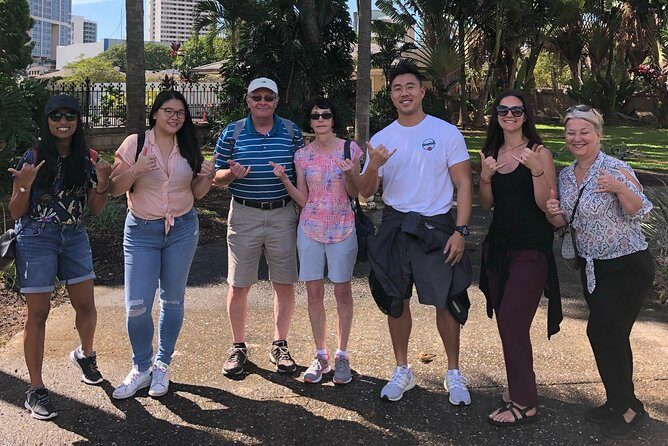
If you’re picturing Waikiki sunsets and ocean views, downtown can feel like a different planet. That is exactly why this tour works: it slows you down and explains how Honolulu became the political and cultural center it is today. You meet at the King Kamehameha Statue (447 S. King St., near Punchbowl St.), and the tour is designed to help you get your bearings fast.
The biggest win here is the guide’s pace. You’re not just collecting photos; you’re getting cause-and-effect stories. Guides like Susan are praised for keeping the history in plain language and answering follow-up questions on the spot.
The second win is value. At $5 per person for about 1 hour 10 minutes (often experienced as around 1h20), you’re paying for guided interpretation more than paying for attractions. And most stops are free to enter, which matters if you’re trying to stretch your trip budget.
You can also read our reviews of more walking tours in Oahu



Price, Group Size, and Timing: What You Actually Get for $5
This is one of those deals that feels almost too simple: $5 buys a structured walk through downtown Honolulu with a live guide. You also get a mobile ticket, and there’s a confirmation at booking, which keeps your planning easy. Tours are usually booked ahead (often about 30 days), so if you can, grab the date you want early.
Timing is short and focused. Expect a route that covers several major sites on foot, with multiple stops where you listen for around 10–15 minutes at a time. The walking distance is modest; one review specifically describes the area as close—think roughly a 1.5 km radius—and another mentions a day where it felt even shorter.
Group size stays capped at 30 travelers, which is big enough to meet other visitors but small enough that the guide can keep control of the pacing. Most travelers can participate, and service animals are allowed, which is helpful for travelers who need that support.
How the Route Walks You Through Hawaii’s Political Story
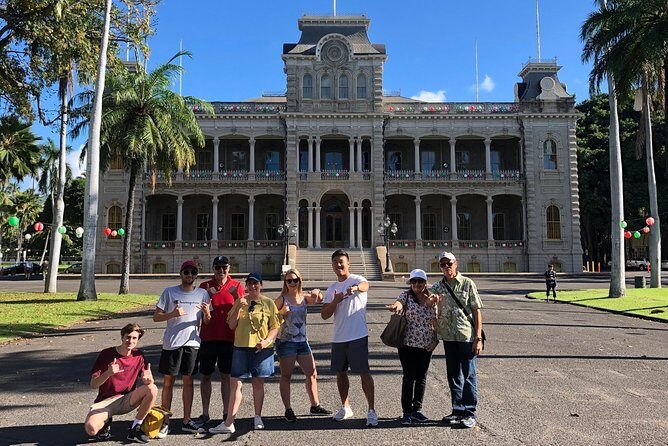
This tour is built around the idea that Hawaii’s history is not just legends and costumes—it is also seats of power. You start with an early unifying figure and then move through the architecture and institutions that represent different eras.
The route includes:
- Kamehameha Statue
- Aliiolani Hale
- Iolani Palace
- Hawaii State Capitol
- Kawaiaha’o Church
- Honolulu City Hall
- Hawaii State Library
- King Lunalilo Mausoleum
The walk stays outside Waikiki, right in Honolulu’s downtown area. If you want the history of the island in a practical, walkable format, this route gives you a strong skeleton to build on later with museum visits or beach time.
King Kamehameha Statue: More Than a Photo Spot
You begin right where the tour wants you: at the King Kamehameha Statue. This is not treated as a random landmark. The guide frames it as a starting point for bigger themes—how Polynesian and Austronesian roots connect to later Hawaiian identity, and how the first and only nation of Hawaii formed.
In plain terms, this first stop helps you understand what comes next. If you are new to Hawaii’s monarchy era, the Kamehameha story is the anchor. It’s also a good moment to ask basic questions before you move on to the more specific buildings.
One practical tip: arrive a few minutes early. You start at 9:00 am, and you’ll want time to find the group before the first explanation begins.
Aliiolani Hale: Seeing Royal Government Lines on a Street
After Kamehameha, the route continues with Aliiolani Hale, another key site tied to leadership and rule. This stop matters because it bridges you from the iconic statue world into the lived, administrative side of the islands’ past.
You’ll hear the kinds of details that are hard to discover just by walking around: how the monarchy era ran its systems, and how later outside influence changed the course of events. Even if you have read a little already, a guide’s version of the timeline can make it click faster.
If you’re the type who likes to look at buildings and ask, Who ran this and how did it work?, you’ll enjoy this part. The tour keeps the focus on the people behind the structures, not just on facts for a trivia game.






Iolani Palace: Monarchs, Power, and a Timeline That Sticks
Next comes Iolani Palace, and this is one of the stops that turns the tour from sightseeing into understanding. The guide explains different monarchs and how the presence of US mainlanders and Europeans played a role in shaping Hawaii’s history.
This is also where you’ll start connecting the dots. If the earlier Kamehameha stop is about unification, then Iolani Palace is where you see how the story evolves—who leads, how rule changes, and how outside forces affect the island’s path.
I like that this stop is paced. You get enough time to listen and take in the building without feeling rushed. And if you ask questions, this is usually the kind of stop where the guide can answer in a way that fits the larger storyline, not just as a one-off fact.
Hawaii State Capitol: The Shift to U.S. Territory and Statehood
When the tour reaches the Hawaii State Capitol, it shifts from monarchy to the political transformation of the islands. You’ll hear how Hawaii became a U.S. territory and later moved into U.S. statehood.
This stop is valuable even if you plan to visit museums later. The capitol gives you a visible, official setting to hang your understanding on. You will probably leave with a clearer sense of why downtown Honolulu has the governmental feel it does.
There is one drawback to keep in mind: this tour is short, so it cannot cover every nuance of the timeline. Instead, it gives you a guided framework. If that framework sparks curiosity, you’ll know exactly what to look up next—without wasting your first day hunting for the right questions.
Kawaiaha’o Church: Where Spiritual Life Meets the City’s Memory
The route includes Kawaiaha’o Church, with time set aside for about 10 minutes. This is a quieter stop compared with the bigger government buildings, but it adds contrast. Churches in places like Honolulu often represent layers of cultural contact and community life, not just religious architecture.
What you’re listening for here is how the city’s identity shifts over time. Even if you do not lean religious, you’ll likely appreciate the role such institutions play in everyday history.
Practical note: churches can have rules about where you stand and how you behave. The tour keeps things respectful and straightforward, but it’s smart to be mindful of your surroundings and follow the guide’s direction.
Honolulu City Hall and Hawaii State Library: The Everyday Institutions With Big Meaning
Two more stops round out the downtown theme: Honolulu City Hall and the Hawaii State Library. These might not scream famous from a distance, but that is part of the point. A city’s power is not only in palaces and capitols. It lives in offices, paperwork, and public services.
This is where the tour becomes useful for first-time visitors. You start to see how the downtown core functions. You also get context for why certain buildings feel central to the city’s identity—even if you would not know that from walking by.
If you love architecture or you just like understanding how cities run, these stops give you that “how it works” angle. And because the guide ties them back to larger historical threads, they don’t feel like random detours.
King Lunalilo Mausoleum and Gardens: A Reflective Ending
The final stop is the King Lunalilo Mausoleum, including time for the garden and burial. This closing section changes the tone. Instead of focusing on government and political shifts, you end with memory and commemoration.
It’s a fitting end for a tour that starts with unification and follows leadership through changing eras. The mausoleum stop helps you leave with more than dates—it gives the story a human ending point.
If you like calm moments on tours, this part is a good break. It is also one of those stops where you might slow down on your own after the guide finishes talking, just to take in the atmosphere.
What’s Most Praised Here (and Why It Matters for You)
The consistent best feedback centers on the guide experience. Many participants highlight that the stories are warm, insightful, and told in a way that keeps attention. Guides such as Susan are praised for energetic storytelling and for answering questions without making you feel rushed.
Another strongly praised aspect is clarity. People specifically mention that the history is explained in plain language and organized as a chronology—from ancient roots through monarchy and into modern political change. That matters because Honolulu history can feel scattered if you try to piece it together alone.
The third big praise is staying focused on the heart of downtown. Instead of scattering across long distances, the tour keeps you concentrated near the historic core. That is a big deal if you have limited time and you want a high return on effort.
The Most Common Trade-Offs to Consider
Based on what people experienced, the main downside is the balance between talking and walking. Multiple comments point out that there is a lot of standing and not a huge amount of walking. If you expect a long, active stroll with many miles, you might feel a bit underwhelmed.
Another occasional issue is stop count and pacing. One comment describes a day where it felt like fewer sites than expected, possibly due to access or maintenance. That is not something you can control, but it helps to set expectations: this is a tight city walk, and any public-site access changes can affect how many places you hit in the final run.
My advice: go in wanting context, not cardio. If you want both, do this tour first thing in the morning, then plan a separate longer walk afterward.
Practical Tips Before You Show Up at 9:00 am
- Wear comfortable shoes. You’ll spend time on your feet, even if the total walking distance is modest.
- Bring a light layer. Downtown mornings can be cooler than you expect, and weather can turn quickly.
- Set your goal as orientation. Think of this as your history compass for the rest of Oahu.
- Arrive early at the statue. Meeting at the King Kamehameha Statue is straightforward, but early beats stressful.
- Ask questions during pauses. This tour format is built for interaction, and the guide is there for follow-ups.
Also remember it’s weather dependent. If conditions are poor, you’ll be offered a different date or a full refund. That matters if you have tight schedules—keep one flexible morning if you can.
Should You Book This Downtown Honolulu Walk?
Book it if you want an efficient, history-focused morning that helps you understand the city you’re looking at. For first-time visitors, it’s a smart starting point because it connects key landmarks to the bigger political and cultural story.
Skip it if you want a long, energetic walk or you plan to treat it like a casual stroll with minimal listening. This tour is short, but it packs in explanation, and it is best when you’re in the mood to learn.
Overall, for $5, this is the kind of experience that gives you more understanding than it costs in time or money. If you like hearing the story behind the buildings and you want a downtown route that makes sense, this one is an easy yes.
FAQ
How long is the Honolulu Downtown Walking Tour?
It runs for about 1 hour 10 minutes (approximately).
How much does the tour cost?
The price is $5.00 per person.
Where do I meet the tour?
Meet in front of the King Kamehameha statue at 447 S. King St., Honolulu, HI 96813.
What time does the tour start?
The start time shown is 9:00 am.
Is the tour in English?
Yes, it is offered in English.
Are admission tickets required for the stops?
The tour lists free admission for the included landmarks.
What’s the group size limit?
There is a maximum of 30 travelers.
What should I do if the weather is bad?
The experience requires good weather. If it is canceled due to poor weather, you’ll be offered a different date or a full refund.
Are service animals allowed?
Yes, service animals are allowed.