REVIEW · OAHU
Bee Farm Ecotour and Honey Tasting in Waialua, North Shore Oahu
Book on Viator →Operated by Hi Honey Farm · Bookable on Viator
Bees in banana shade beat any museum stop. This Hi Honey Farm tour gives you a working apiary experience on Oahu’s North Shore, with suit-up hive viewing plus a chance to hold a raw honeycomb frame. I also love that the tour ends with a real honey tasting of their raw and infused varieties, so the science has a sweet payoff. One drawback: this is not recommended if you have a bee sting allergy, and the hives are outdoors, so good weather is part of the deal.
You’ll meet at 66-1128 Kaukonahua Rd in Waialua, starting at 9:00 am, and the group stays small at a max of 10 people. In the past, guides including Ananya, Adam, Connery, and Stanislav have run the show, and that matters because you actually get answers while you’re standing by the hives. It’s a compact outing that’s easy to plug into a North Shore day without turning your schedule into a juggling act.
In This Review
- What Hi Honey Farm Does Differently on Oahu’s North Shore
- The 9:00 am Meeting and the Suit-Up Moment
- Walking Through Banana Trees to the Hives
- Queen Spotting and Holding Honeycomb: The Real Learning
- Honey Tasting That Actually Teaches Flavor
- Price and Timing: Is $135 Worth It?
- Weather, Allergies, and Who Should Skip It
- Guide Style, Photo Keepsakes, and the Personal Touch
- Should You Book This Bee Farm Ecotour and Honey Tasting?
- FAQ
- Where is the Bee Farm Ecotour meeting point?
- What time does the tour start?
- How long is the experience?
- Is the honey tasting included in the price?
- Is the tour offered in English and do I need a mobile ticket?
- What happens if the tour can’t run due to weather?
What Hi Honey Farm Does Differently on Oahu’s North Shore
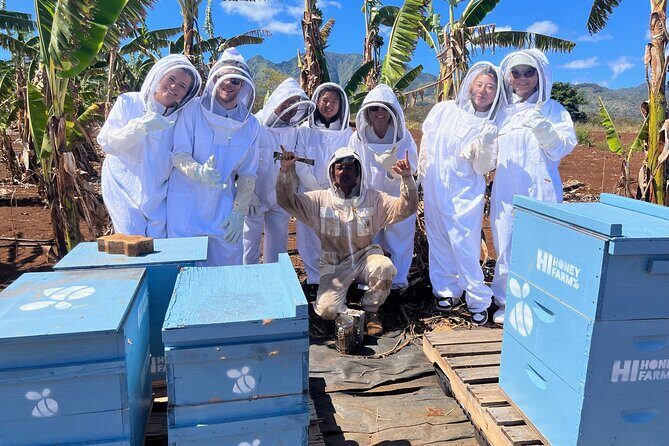
This isn’t a staged honey-themed stop. It’s a working bee farm ecotour, focused on how honey is made and what bees do when people aren’t hovering with cameras. You start with a short intro at the farm, then you walk a short distance through banana trees to the beehives, so the experience feels like a real farm day instead of a lecture followed by a snack.
The setting is also a big part of the appeal. Waialua and the North Shore have that slower pace, and this tour leans into it: you’re outside, you’re close to live hives, and you’re tasting honey made right there. For food lovers, it’s a smart pairing with the region’s farm-to-table vibe. For science-curious people, it’s a chance to see the basics in motion rather than reading about them.
Price-wise, $135 per person for about 1 hour 40 minutes can feel steep at first glance. But the ticket includes your admission, and the tour includes the hands-on hive time and honey tasting. With a small group size, you’re paying for access, safety gear, and guided interpretation—not just for honey to try.
The 9:00 am Meeting and the Suit-Up Moment
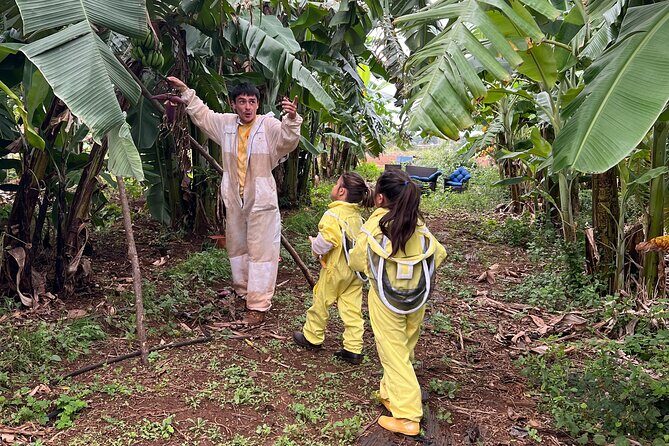
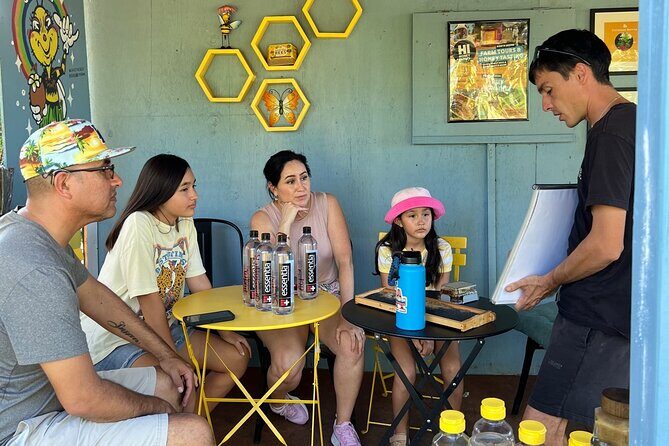
The tour starts at 9:00 am at Hi Honey Farm on Kaukonahua Road in Waialua. You’ll receive confirmation at booking and you’ll use a mobile ticket, which is convenient if you like keeping your plans digital. The experience is offered in English, and it’s designed so most people can participate—again, with the key exception of bee sting allergy.
Here’s what I’d watch for as you plan your morning: since you’re suiting up and going to active hives, show up ready to follow directions quickly. This isn’t the kind of tour where you can drift at your own pace. The guides guide the pace for a reason: the hives are active, and you’ll get the best experience (and the safest one) when everyone stays synchronized.
Also note the weather requirement. The experience requires good weather, and if it gets canceled due to poor weather, you’ll be offered a different date or a full refund. That’s not a small detail. Hive viewing is part of the main event, so plan flexibility around that morning slot.
You can also read our reviews of more food & drink experiences in Oahu


Walking Through Banana Trees to the Hives
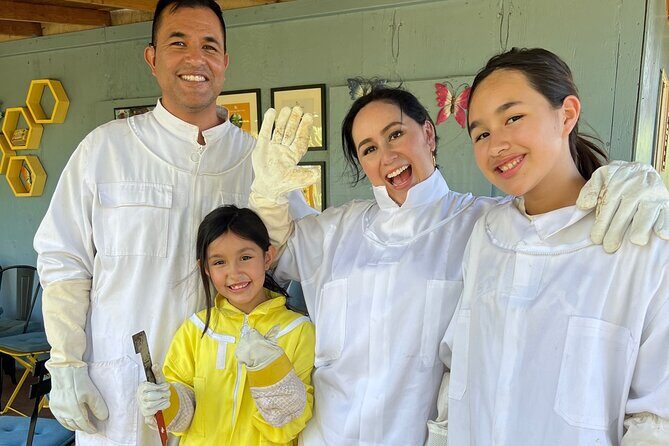
After the intro, you suit up and walk through banana trees to the beehives. That short walk sounds simple, but it changes the tone of the tour. You shift from farm explanations to real-life hive work in a few minutes, and you’re not stuck in one spot with a group photo while the guide talks.
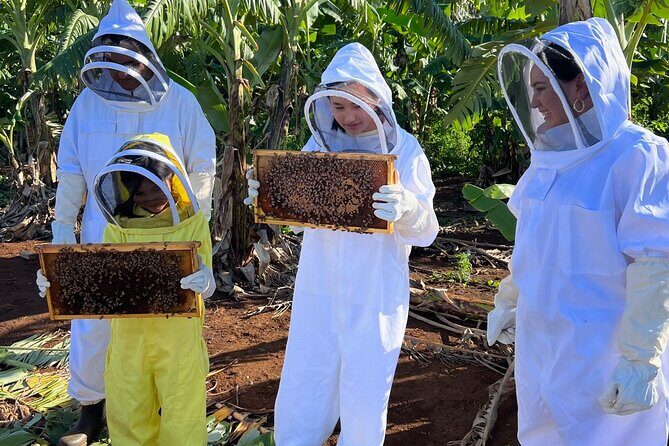
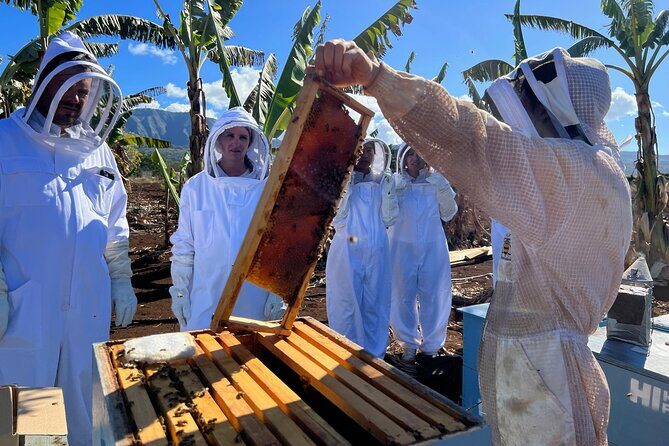
Once you reach the hives, you’ll get hands-on viewing with the support of the beekeepers. They’ll do their best to point out:
- the queen in a hive
- what they refer to as a bee birth
- and how the hive operates up close
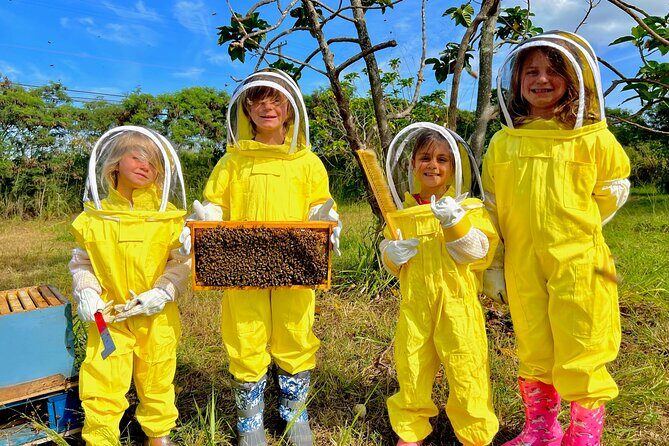
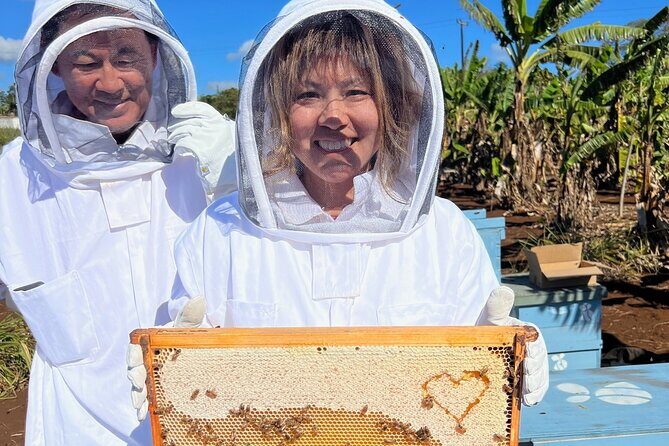
They also let you hold a frame of raw honeycomb. That part is the big attention-grabber, because you’re not just watching bees work—you’re handling a real piece of hive structure. You’ll also take pictures holding frames with bees and honey, which is a nice keepsake since this is the kind of experience that’s hard to recreate later.
A practical consideration: even with suits and guidance, this is still an active-hive environment. If you’re anxious around insects, it helps to know what you’re walking into. The tour is safe and guided, but it’s not a passive petting-zoo setup.
Queen Spotting and Holding Honeycomb: The Real Learning
This is where the tour earns its reputation. The sequence matters: first you learn how honey is made, then you go to the hive. That order turns what you see into something you can interpret. Instead of thinking, Wow, bees are everywhere, you start noticing hive roles and structures.
The guide’s focus on the queen is especially useful because people often have vague ideas about how a colony is organized. When you see her pointed out in the hive, it gives the whole system a center point. The same goes for the mention of bee birth—seeing brood develop is one of the clearest reminders that a hive is not just honey storage. It’s a living system with a schedule and jobs.
Holding a frame of raw honeycomb is another education win. You get a physical sense of what bees build and why frames exist. It also makes the honey tasting more meaningful later, because you’ll connect the honey in jars to the actual comb you were holding.
And if you’re traveling with kids, this is also a good reason to consider the tour. The combination of suit-up gear, near-constant guide attention, and the hands-on moments can keep attention better than a purely classroom-style program.
Honey Tasting That Actually Teaches Flavor
After you’re finished at the hives, you sample Hi Honey Farm’s raw and infused honey varieties. The exact selection depends on availability and season, so you shouldn’t expect the same flight every day. That said, the tasting is a core part of the value here, not a token sprinkle.
One standout detail: some groups have had tasting around 10 varieties, plus different forms and pairings. Examples mentioned include fruit and avocado, and even honey used with ice cream. That matters because honey can taste wildly different depending on how it’s processed and what it’s paired with.
As you taste, I think you’ll enjoy the process more if you keep it simple: treat each sample like a different ingredient, not like a single flavor you’re ranking. If you like food experiments, this is a fun way to learn what changes when honey is raw versus infused. And if you don’t usually buy fancy honey, you’ll likely come away with a better sense of what you actually like.
You’ll also get that behind-the-scenes feeling again. You’re not just tasting honey in a shop. You’re tasting honey from a working farm after seeing the hive work that created it. That loop—hive to honey—is the tour’s strongest storytelling.
Price and Timing: Is $135 Worth It?
At $135 per person for about 1 hour 40 minutes, you’re paying for access and instruction. The ticket includes your admission and the tasting, which helps justify the cost compared with experiences where you pay extra for samples.
The small group size (maximum 10) is part of what makes the pricing feel fair. When the group is bigger, hive time turns into a slow shuffle. With a smaller group, you’re more likely to get guidance on what you’re seeing and how to hold frames without feeling rushed.
Let’s also look at the time investment. For most people, 1 hour 40 minutes is short enough to keep your day intact. You’re not committing to half a day plus travel buffers. You get a full sensory experience—farm intro, suited hive time, and honey tasting—without needing an all-day plan.
If you’re deciding between this and another North Shore activity, the quick test is simple: if you want hands-on science plus food at the end, this is the better match than a purely scenic stop.
You can also read our reviews of more tours and experiences in Oahu




Weather, Allergies, and Who Should Skip It
This tour isn’t for everyone, and that’s okay. If you have a bee sting allergy, it’s not recommended. That’s not just a fine-print note; it’s the kind of risk you don’t manage with optimism. If this applies to you, look for a different North Shore experience.
Weather is the other big factor. The program requires good weather. Since you’re viewing active hives outdoors and walking through banana trees, cloudy or rainy conditions can affect whether the tour runs. If it’s canceled, you’ll get a different date or a full refund, so it’s not a sunk cost—just something you’ll want to plan around.
As for who it suits best, the format works well for:
- families who like hands-on activities
- couples who want a memorable local-food experience
- anyone who’s curious about bees and wants the basics explained at hive level
Pace-wise, it’s structured but not rushed. You get a guided intro, a short walk, hive time with interpretation, then tasting.
Guide Style, Photo Keepsakes, and the Personal Touch

Good tour guides make the difference between a cool photo and an experience you understand. This program leans into guide interaction. Guides have been praised for being attentive, patient, and genuinely invested in the bees and honey-making process.
Names you may see leading tours include Ananya and Adam, along with Connery and Stanislav. That’s useful because it hints at consistent training and a team approach: you’re not stuck with one standard script. Even within a small group, different people bring different strengths—one might explain colony behavior more clearly, another might manage picture timing and frame-handling so it stays calm.
The picture component is also practical. You get pictures throughout the tour and you take pictures holding frames with bees and honey. That’s a big deal because it would be hard to capture those moments yourself without getting in the way.
And there’s a local-business angle that feels real. Some people have walked away not just with honey tasting memories but also jars of honey and farm merchandise like t-shirts. That’s a nice way to support the operation if you end up loving what you taste.
Should You Book This Bee Farm Ecotour and Honey Tasting?
Book it if you want a North Shore activity that blends farm life, real bee access, and a honey tasting that actually has variety. The hands-on hive time—especially holding a honeycomb frame—plus the structured intro is a strong combo. If you’re a foodie, you’ll also appreciate that the tasting isn’t one jar and done; it can cover multiple honey types and pairings.
Skip it if you have a bee sting allergy, or if you hate the idea of being suited up and working with directions in an active-hive setting. Also think about weather: if your schedule is rigid with no flexibility, consider booking early in your North Shore stay so a reroute is easier if conditions change.
If you’re traveling solo, one thing to keep in mind: there may be a minimum of 2 people needed for a tour to run. In at least one case, a solo booking got flagged and the guest was contacted to reschedule. If you’re on your own and the date looks important, a quick confirmation call can save stress.
FAQ
Where is the Bee Farm Ecotour meeting point?
You meet at Hi Honey Farm, 66-1128 Kaukonahua Rd, Waialua, HI 96791.
What time does the tour start?
The start time is 9:00 am.
How long is the experience?
It runs about 1 hour 40 minutes.
Is the honey tasting included in the price?
Yes. The admission ticket is included, and honey sampling is part of the program after the hive viewing.
Is the tour offered in English and do I need a mobile ticket?
The tour is offered in English, and you’ll use a mobile ticket.
What happens if the tour can’t run due to weather?
The experience requires good weather. If it’s canceled for poor weather, you’ll be offered a different date or a full refund.