REVIEW · OAHU
Hawaii Off The Beaten Path Food Tour
Book on Viator →Operated by Hawaii Free Tours · Bookable on Viator
You’ll leave Honolulu stuffed and educated. This small-group walk weaves together a working Japanese Shinto temple and multi-country food stops, guided by locals like Victor (and often TJ). I love the huge amount of real food and the behind-the-counter stories from Chinatown. One drawback to plan for: you’ll spend a lot of time standing while you taste.
Pickup from Waikiki and Honolulu keeps mornings easy, and the pace is relaxed enough to ask questions. Still, the tour is designed for people who want to eat and walk, not snack slowly with lots of breaks.
In This Review
- Quick hits: what makes this Oahu food tour special
- Why this Honolulu food walk feels different than a typical tour
- Price and value: what $150 buys you in real terms
- Pickup, meeting point, and how to plan your morning
- The walking pace: great for food lovers, not ideal for long sit-down breaks
- Stop-by-stop: what you’ll actually eat in Chinatown and beyond
- 1) Izumo Taishakyo Mission of Hawaii (free entry, 125-year-old temple)
- 2) Downtown Honolulu manapua tasting
- 3) Chinatown turon (banana lumpia)
- 4) Chinatown chicken adobo
- 5) Downtown or nearby seafood: ama ebi (deep-water prawns)
- 6) Fresh local fruit tastings (seasonal, 5+ bites)
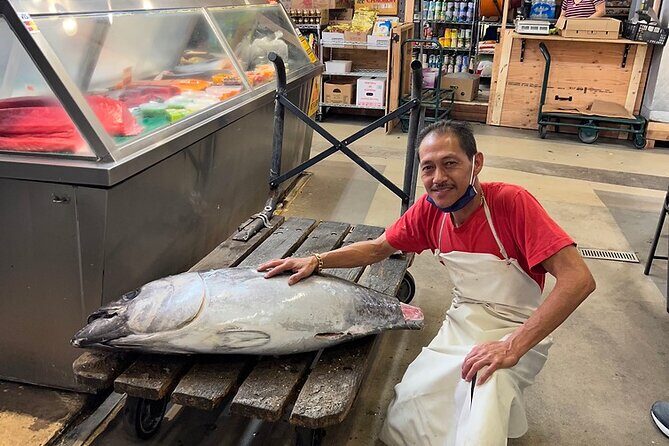
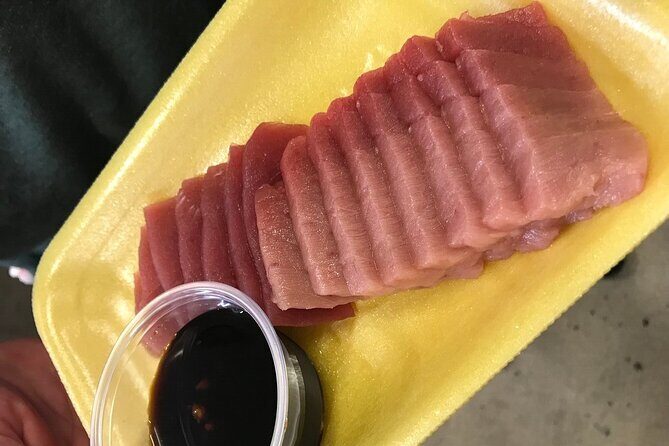
- 7) Oahu Fish Market: chutoro sashimi, tako poke, and more
- 8) Chinatown roast meats: duck and/or roast pork
- 9) Vietnamese pandan cake
- 10) Hawaiian-style poke (ahi limu poke)
- The “eat order” logic: how the morning keeps you from feeling sick
- What the guides do besides food: Victor’s and TJ’s role in the experience
- Who this tour fits best (and who should skip it)
- Should you book this Hawaii Off The Beaten Path Food Tour?
- FAQ
- How long is the Hawaii Off The Beaten Path Food Tour?
- What time does the tour start, and where do I meet?
- Do they offer hotel pickup?
- What food and drinks are included?
- Will I be sitting during the tour?
- Is the tour okay for people with food allergies?
- Is the tour canceled for bad weather?
Quick hits: what makes this Oahu food tour special
- Small-group feel with a cap that keeps the morning personal
- Victor and TJ bring strong local context and an easy chat style
- A temple start at Izumo Taishakyo Mission of Hawaii, free to enter
- Chinatown market momentum, with lots of bite-sized tastings
- Poke and sashimi stops when you want to try tuna belly and local-seasoned fish
- You’ll likely take leftovers home, since portions can go beyond what you can finish
Why this Honolulu food walk feels different than a typical tour
Honolulu’s food scene is multicultural because Hawaii’s story is multicultural. This tour leans into that reality in a very practical way: you don’t just hear about it, you taste it across Japanese, Filipino, Chinese, Vietnamese, Korean-spice influence, and local Hawaiian flavors.
The big reason this works is the setting. You’re not eating at a single restaurant with a lineup of dishes. You’re moving through working places: markets, stalls, and long-running counters where vendors do business every day. That changes the whole vibe. It feels more like getting a guided pass into a neighborhood than following a script.
And yes, you’ll hear food history along the way, but it stays tied to what’s on the plate. The guides connect flavors to people, ingredients, and how communities settled and traded food styles over time.
You can also read our reviews of more food & drink experiences in Oahu

Price and value: what $150 buys you in real terms
At $150 per person for about 3 hours, this isn’t a “just try one thing” kind of tour. The value comes from the number of tastings and the mix of categories:
- Filipino-style bites like manapua and chicken adobo
- Fried sweets like turon (banana lumpia)
- Seafood that goes beyond standard tourist poke, including ama ebi (deep-water prawns) and Japanese-style preparations
- Chinese roast meats like roast duck, roast pork belly, and charsiu
- Vietnamese dessert with green pandan cake
- Hawaiian favorites like ahi limu poke (seasoned raw tuna, cubed)
Add drinks (local juice like lilikoi, lychee, guava, or pineapple, plus bottled water) and hotel pickup in the Waikiki/Honolulu zone, and the math starts to make sense fast. Even if you’re not a super-fast eater, you should leave feeling like you had a real lunch, not a few samples.
One more value point: the tour isn’t just about food. The guides also share practical recommendations afterward, so you can turn this morning into a day plan for the rest of your trip.
Pickup, meeting point, and how to plan your morning
The tour starts at 9:30 am. Pickup runs between 9:00 and 9:30 am depending on traffic, and you’ll get a text the day before with your pickup window and details.
Here’s the important part for where you’re staying: pickup is only offered within Honolulu and Waikiki. If your lodging is farther out (think Kailua/Kaneohe or west-side resorts), you’ll meet the group at the first stop instead of being picked up at your hotel.
Plan to be flexible on timing if you’re coming from outside the pickup zone, and build in a little buffer if you’re relying on rideshares. This tour runs like a morning operation: it keeps moving so you don’t lose prime tasting windows.
The walking pace: great for food lovers, not ideal for long sit-down breaks
This is a walking tour, and the expectation is that you’ll stand for most of the tour, with seating arranged when possible. The good news from what you can observe on the route is that the walking is straightforward and the stops are close enough that the morning doesn’t feel like a slog.
Dress for comfort and quick stops:
- Wear walking shoes you trust on city sidewalks
- Bring a small water habit (you’ll have drinks on the tour, but you might want a sip if you’re thirsty)
- Come ready to move through clusters of people at market counters
If you need a fully seated experience with minimal standing, this may test your patience.
Stop-by-stop: what you’ll actually eat in Chinatown and beyond
Below is the flow as you’ll experience it, with what each stop adds to the overall picture.
You can also read our reviews of more tours and experiences in Oahu



1) Izumo Taishakyo Mission of Hawaii (free entry, 125-year-old temple)
You start at Izumo Taishakyo Mission of Hawaii, an active Japanese Shinto temple next to the Nuuanu stream. Admission here is free, and the brief visit sets the tone: Hawaii’s food isn’t isolated. It’s part of a chain of cultures, immigration, and daily life that includes religion, community events, and yes, food.
What to watch for: you’ll have a moment to shift gears from beach vacation mode into “local neighborhood” mode.
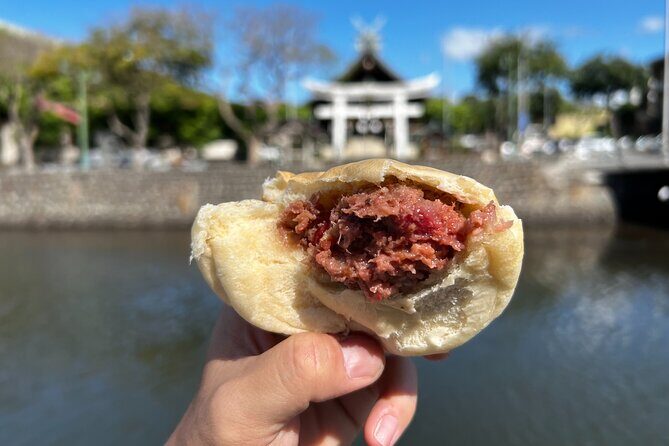
2) Downtown Honolulu manapua tasting
Next comes a classic comfort bite: manapua. These are sweet buns with savory and smokey pork fillings. The key is that this isn’t a fancy, plated pastry. It’s the kind of snack you’d see locals grabbing when they want something warm and filling.
Value for first-timers: it’s a great starting flavor because it’s hearty without being overwhelming.
3) Chinatown turon (banana lumpia)
In Chinatown, you’ll hit turon, also called banana lumpia. It’s a Filipino fried banana dessert—crispy outside, warm fruit inside. This is a nice palate reset before the more savory dishes.
If you’re the type who worries about fried sweets, don’t. The portion size makes it easy to try, and it helps you experience the full “snack spectrum” of Chinatown.
4) Chinatown chicken adobo
Then you get chicken adobo, one of the most recognizable Filipino dishes. The flavor is built on marinating and simmering in sauce, so it tastes deeper than you’d expect from a small tasting.
This stop matters because it shows you how Filipino cooking can be both homey and complex. If you like braises and savory sauces, you’ll understand why adobo is a staple.
5) Downtown or nearby seafood: ama ebi (deep-water prawns)
You’ll taste Kauai wild caught deep water prawns, also referred to as ama ebi or boton shrimp. These prawns are famous because they taste different from the standard shrimp many visitors get back home.
Think of this as your “seafood seriousness” moment. You’re tasting Hawaii seafood that’s connected to local harvesting, not just generic cruise-ship seafood.
6) Fresh local fruit tastings (seasonal, 5+ bites)
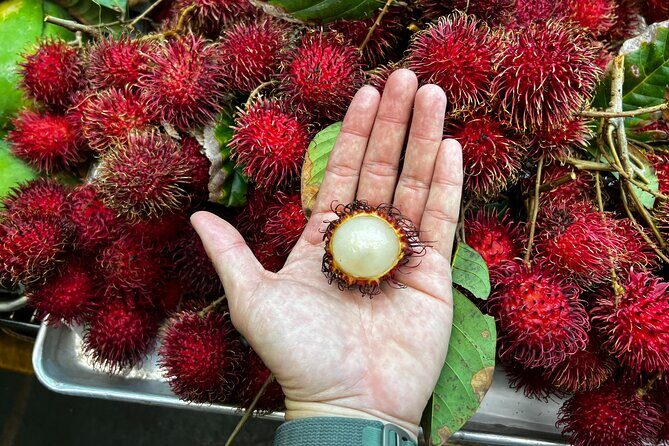
Next is fruit, and it’s where surprises happen. You’ll get 5+ tastings of exotic locally grown fruits, depending on season and what looks good at the time.
People often get excited about a fruit they’ve only heard of. In past runs, guides have served fruits like durian when it’s available. Even if you skip the most intense flavors, you still get a mini lesson in what Hawaii grows well.
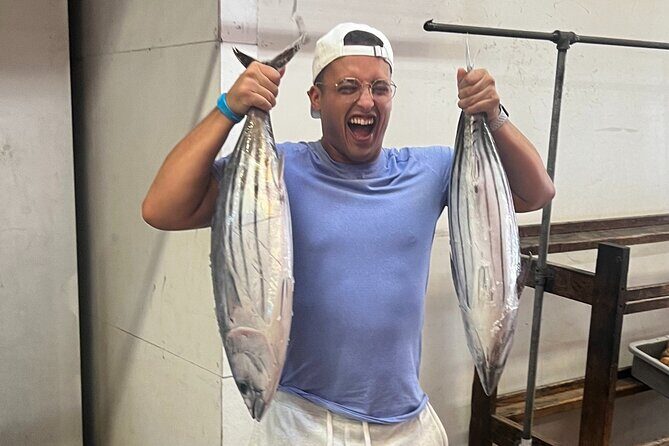
7) Oahu Fish Market: chutoro sashimi, tako poke, and more
This is one of the most memorable stops because it’s part market, part tasting counter. At the Oahu Fish Market, you try Japanese-style seafood preparations depending on availability.
Key tastings include:
- Chutoro sashimi: fatty, fresh tuna belly sliced Japanese-style
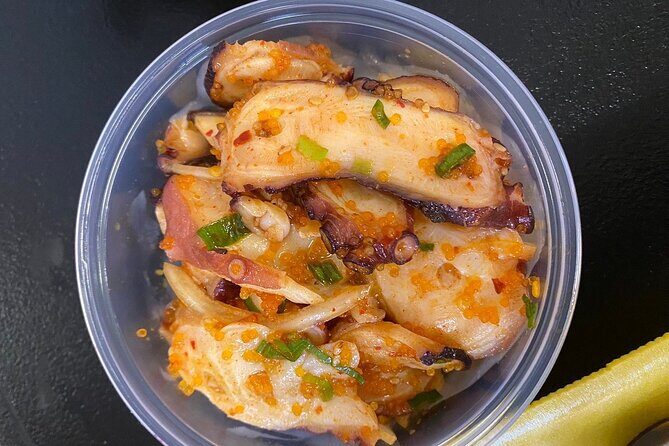
- Tako poke: cooked Japanese tako/madako, seasoned with a Korean-style spicy sauce and topped with flying fish eggs
- Often, you’ll also see other tuna or seafood options based on what’s freshest
This stop is valuable even if you’re picky about raw fish. Freshness is the whole point here. And if you want to understand poke at a deeper level, it’s a great place to start.
8) Chinatown roast meats: duck and/or roast pork
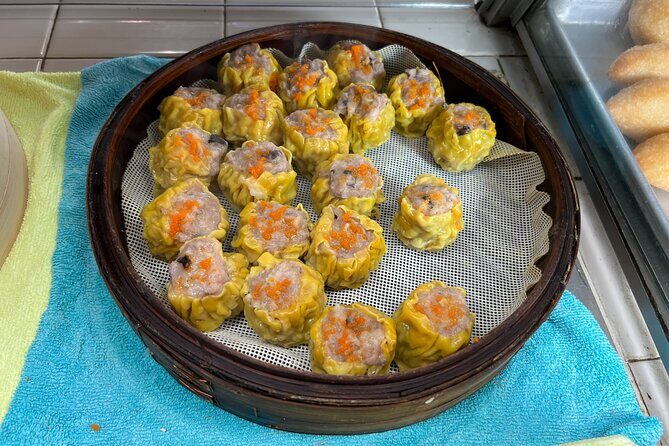
Then you move back into the Chinese BBQ world. You’ll taste roast meats, with options like duck and roast pork depending on what’s available.
The sample menu also includes roast pork belly with crispy skin and sweet honey BBQ pork belly (charsiu) when offered. The shared theme: rich, salty-sweet flavors, often with a lacquered finish.
Practical note: these portions are filling. Pace yourself so you don’t hit “full” right before the fish and poke sections.
9) Vietnamese pandan cake
A Vietnamese stop follows: Vietnamese pandan cake. Pandan gives a distinct aroma—soft, floral, and sweet. It’s an easy dessert bite that helps balance the savory-heavy morning.
If you like desserts that taste like ingredients (not just sugar), this is a good pick.
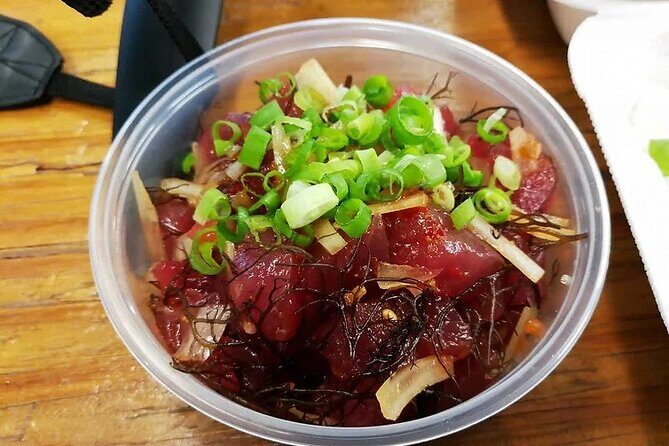
10) Hawaiian-style poke (ahi limu poke)
The finale brings it back to Hawaii with Hawaiian-style poke. You’ll try ahi limu poke: raw big eye tuna cubed and seasoned in a local style.
No big lecture needed here. Poke is one of Hawaii’s most recognizable food exports, but this tasting helps you see the difference between what’s made for tourists and what’s made for local tastes.
The “eat order” logic: how the morning keeps you from feeling sick
A lot of food tours fail by piling on too much in the wrong order. This one is planned to keep the experience enjoyable.
You start with:
- light-to-medium bites like manapua and banana dessert
- then go heavier with adobo and meats
- then hit seafood with Japan-inspired selections
- finish with fruit flavors and poke
Even if you feel “I can handle it,” remember this tour can get to a big number of tastings. On some mornings, guides have served around 17 different tastings, and most people leave with leftovers.
That’s why you should not eat a big breakfast right beforehand. If you show up hungry, you’ll actually enjoy the variety instead of forcing it.
What the guides do besides food: Victor’s and TJ’s role in the experience
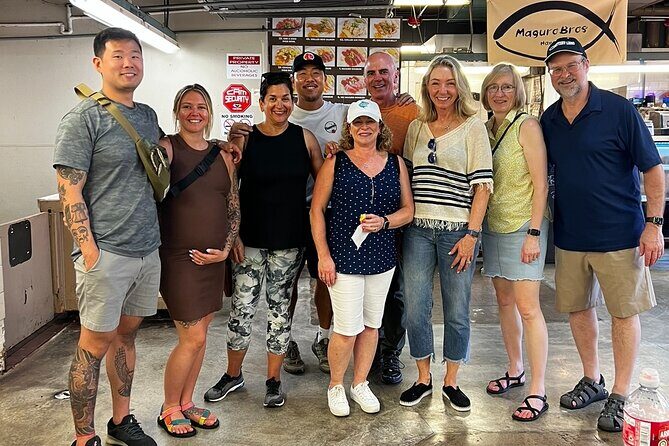
The guides make the tour feel like a guided conversation rather than a checklist. In multiple runs, Victor has been described as professional, friendly, and seriously engaged with the people running the shops.
TJ (on some departures) gets credited for navigating Chinatown smoothly and keeping groups on track. Together, you often get the same pattern: food details tied to culture, plus practical recommendations afterward.
A fun detail you might not expect: the guides sometimes share comparisons that connect Hawaii food to places far outside the island, from general demographics to everyday food habits. It makes the stories feel grounded, not like trivia.
And if you ask questions, you’ll get answers that connect back to what you’re eating in that moment. That’s how a food tour becomes a memory you can use later.
Who this tour fits best (and who should skip it)
This tour is a strong match if you:
- want a Chinatown walking food tour with actual stops, not restaurant plates
- like multicultural food and want to connect flavors to Hawaii’s history
- get excited by seafood, especially tuna belly style sashimi and poke
- want hotel pickup convenience if you’re staying in Waikiki/Honolulu
- like being guided through markets and seeing how vendors work
It’s less ideal if you:
- need mostly seated time
- have serious dietary restrictions (you should contact the operator before booking)
Should you book this Hawaii Off The Beaten Path Food Tour?
If you’re aiming for an Oahu experience that feels local and fills your schedule with real food stops, I think this one is worth your morning. The combination of a temple start, Chinatown market tastings, seafood and roast meats, and the fact that you’ll likely leave with leftovers makes it a high-value way to get your bearings fast.
Book it early in your trip if you want ideas for where to eat the rest of the week. Come hungry, wear comfortable shoes, and treat the standing time as part of the deal.
If you want a quiet, seated, slow meal experience, pick something else. But if you want to walk, taste, and learn without forcing it, this is the kind of tour you’ll remember when you start craving poke back home.
FAQ
How long is the Hawaii Off The Beaten Path Food Tour?
It runs for about 3 hours.
What time does the tour start, and where do I meet?
The tour starts at 9:30 am. The listed meeting point is 201 N Kukui St, Honolulu, HI 96817, and the tour ends back at the meeting point.
Do they offer hotel pickup?
Yes, pickup is offered only within the Honolulu and Waikiki areas. If your hotel is not within that zone, you’ll meet at the first stop.
What food and drinks are included?
The tour includes drinks (local juice like lilikoi/lychee/guava/pineapple or bottled water) and a long list of tastings such as manapua, chicken adobo, turon, fresh local fruits, deep-water prawns, Japanese-style sashimi and poke items, roast meats, Vietnamese pandan cake, and Hawaiian-style poke.
Will I be sitting during the tour?
Expect standing for most of the tour. Seating will be arranged whenever possible.
Is the tour okay for people with food allergies?
If you have serious food allergies, you should contact the operator before booking.
Is the tour canceled for bad weather?
This experience requires good weather. If it’s canceled due to poor weather, you’ll be offered a different date or a full refund.