REVIEW · OAHU
North Shore Surfing Lessons Oahu Hawaii
Book on Viator →Operated by DFC Surfing Academy · Bookable on Viator
The North Shore turns first-timers into wave catchers. This 1.5-hour lesson blends a calm beach tutorial with hands-on time in the water, at North Shore spots like Chun’s Reef and Pua’ena Point. I like that the instruction is stayed with you style, and I also love that they keep things age-friendly and practical for beginners.
The main drawback to plan for: you’re still surfing in real ocean conditions, so if you’re uneasy about sharp coral/rocks or you don’t feel like a confident swimmer, this can feel stressful. Also, sun protection and water aren’t included, so you’ll want to pack smart.
In This Review
- Key things to know before you go
- North Shore surfing lessons in Oahu: why this beats the crowded vibe
- Your 90 minutes: what happens from sand drills to wave time
- Chun’s Reef and Pua’ena Point: surfing spots that keep the day simple
- Equipment included: what you’ll get, and what you still need
- Instructors make or break it: names worth aiming for
- Safety and surf etiquette: how you avoid the lineup chaos
- The workout reality: prepare your body for paddling and balance
- Price and value: what $120 buys you on the North Shore
- Logistics that affect your day: directions, timing, and language
- Should you book this North Shore surf lesson?
- FAQ
- How long is the North Shore surfing lesson?
- How much does it cost?
- What’s included in the lesson?
- What should I bring since it’s not included?
- Where do lessons take place on the North Shore?
- How do I find the meeting location?
- Is there an option for private instruction?
- What’s the cancellation policy?
- What happens if the weather is bad?
Key things to know before you go
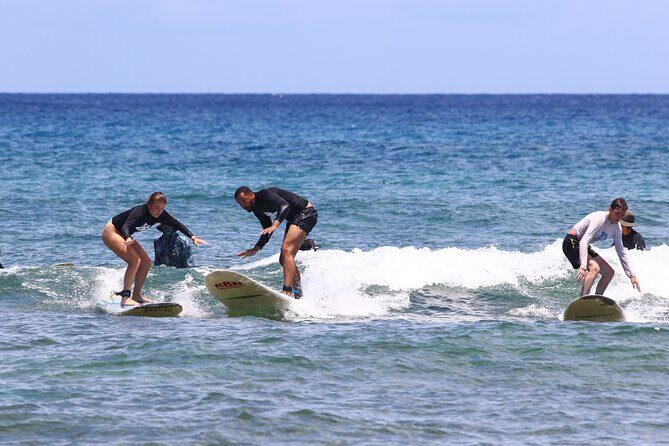
- Beach-to-water progression: you start on land with paddling, standing up, and wave-catching basics before heading out
- Multiple nearby North Shore locations: Chun’s Reef and Pua’ena Point are used, and the lesson spots are within about a mile of each other
- Equipment is covered: board, rash guard, and leash come with the lesson
- You can go one-on-one: there’s an upgrade option for private instruction
- Instruction stays with you: the goal is quality coaching throughout, not a quick handoff
North Shore surfing lessons in Oahu: why this beats the crowded vibe
If you’re aiming for your first taste of real surfing, Oahu’s North Shore is a great choice. It has that classic feel—big ocean energy, dramatic coastline, and a sense that you’re learning in the real environment where surfing happens. And because this lesson uses North Shore beaches that are close to each other, you’re not wasting time getting shuttled all over the island.
What really matters for your trip is this: a good beginner lesson can prevent the usual frustration. The better the teaching, the faster you figure out how paddling, timing, and balance fit together. DFC Surf Academy’s setup is built around that idea, starting with the basics on the beach and then keeping you in the water long enough to actually connect the skills.
This is also a solid option if you’re traveling with mixed ages. The lesson is described as suitable for all ages and swimming capabilities, and the vibe in the stories people share is that families of different ages can all learn at once—without feeling like the “small kids” get ignored or the “new adults” get rushed.
You can also read our reviews of more tours and experiences in Oahu
Your 90 minutes: what happens from sand drills to wave time
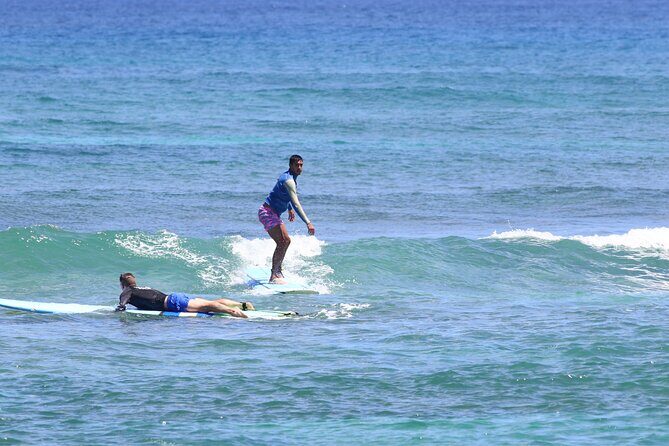
Think of the lesson as two phases: teach, then practice.
First, you’ll get a beach tutorial that covers the core moves you need to catch a wave:
- paddling (the rhythm and body position)
- standing up (how to get your feet under you)
- wave-catching technique (when to try and how to read what’s coming)
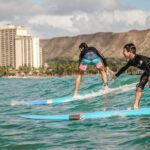
Then you head into the ocean with an instructor who stays with you. That one detail is huge for beginners. It means you’re not guessing how you looked, or hoping you figured out the “real” part of the technique. You’re getting corrections and encouragement while you’re still building muscle memory.
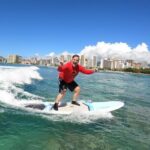
In real water, your day will be shaped by conditions. If waves are manageable, you’ll likely spend more time catching. If it’s rougher, your instructor will steer you toward safer attempts and teach you how to handle the ocean before you chase bigger ones. Either way, you’ll come away with clearer instincts for what to do next time.
Some people also mention lessons running a bit longer than expected. It’s smart not to plan your whole schedule around that, but it’s a sign that the coaching isn’t just about filling a timer—it’s about getting you actual reps.
Chun’s Reef and Pua’ena Point: surfing spots that keep the day simple
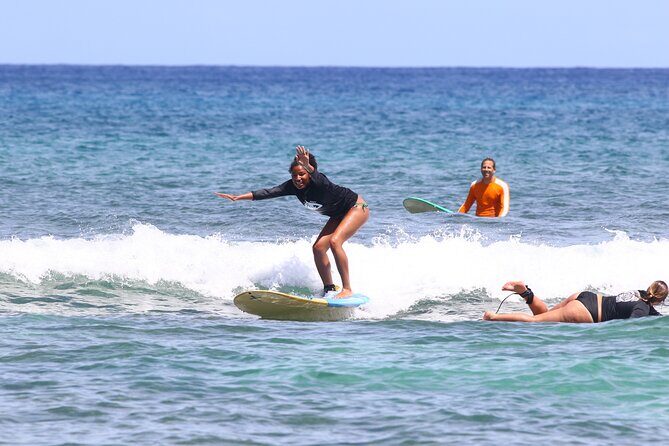
DFC Surf Academy uses North Shore locations like Chun’s Reef and Pua’ena Point. The key logistical bonus is that the lesson spots are close together—within about a mile of each other—and they’re searchable on Google Maps.
So instead of a long drive between “best conditions” and “meeting point,” you get a simpler plan. And because they contact you the day before with detailed directions, you can map it out ahead of time and avoid the usual last-minute guessing game.
Chun’s Reef is often the kind of place where the ocean looks close enough to touch—but it still behaves like ocean. That’s why the early beach coaching matters: if you understand paddling and standing, you’ll waste less time flailing in the lineup. People also call out that the water can be a workout, and the ocean floor can include sharp coral/rocks in places, so your rash guard doesn’t make you invincible—it just helps.
Pua’ena Point is another North Shore option that keeps the lesson tied to the actual coastline vibe. In practical terms, it’s where you’ll be learning in the same “feel” as the classic North Shore surf day: ocean wind, changing set waves, and a steady need for good timing.
Equipment included: what you’ll get, and what you still need
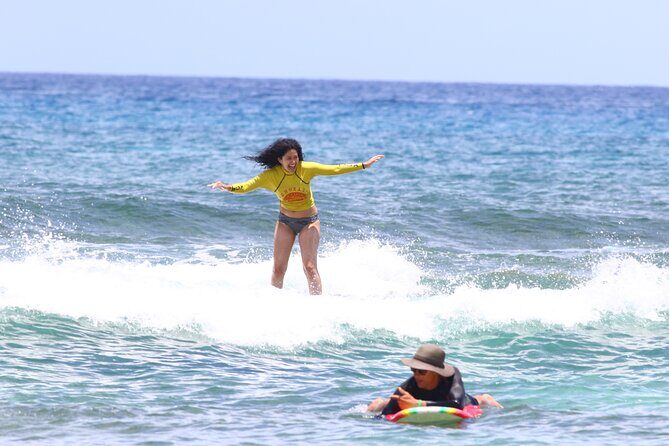
This lesson is set up so you don’t have to overpack.
What’s included:
- surf board
- rash guard
- surf board leash
What’s not included:
- sun screen
- towel
- water
That “not included” list is worth treating seriously. You’ll be in sun (North Shore glare is no joke), plus you’ll be working hard. If you forget water, you’ll pay for it fast—especially if you’re already walking around, taking photos, and feeling jet-lagged.
My practical advice:
- Bring sunscreen even if it looks cloudy. Ocean air still burns.
- Pack a towel you’re okay leaving salty.
- Bring water you can sip between attempts.
- Wear the rash guard they provide, and don’t skip it. It helps with friction and minor scrapes.
Also, if you’re thinking about coral and rocks: the lesson includes a rash guard, but you’re still in the ocean. You might get some bruises or minor rash, especially as a beginner. That’s normal. The key is protecting yourself so small issues don’t turn into a trip-killer.
Instructors make or break it: names worth aiming for
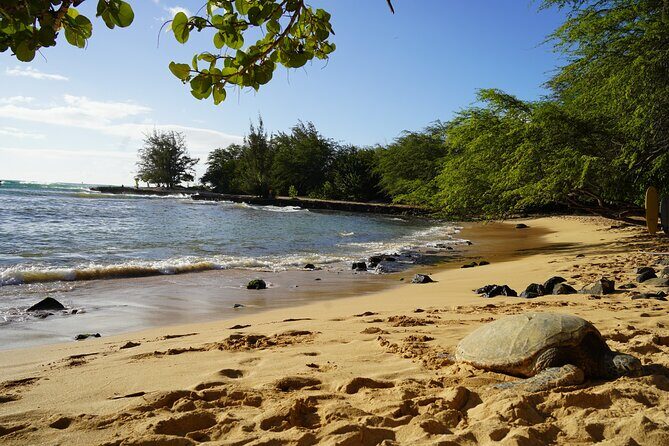
DFC Surf Academy is locally owned, and the instructors are described as ocean-focused and passionate about sharing surfing. In the details people share, one theme comes through again and again: teaching style matters.
Several instructor names show up repeatedly in positive stories:
- Matthew: often praised for clear instruction, high energy, patience, and helping first-timers get standing quickly
- Jacob: praised for safety focus and for adjusting instruction to where the waves are lining up best
- Chris: praised for making beginners feel comfortable, teaching safety and surf etiquette, and pacing so you don’t feel rushed
- Sterling and Anita: also mentioned as patient, encouraging, and good at keeping the lesson on track for less-confident surfers
If the booking process lets you request a specific instructor or note preferences, it’s worth doing. Your odds improve when you click with the coach style—especially on your first day trying to paddle, balance, and time a wave all at once.
One thing to keep in mind: ocean lessons are emotional. You’re cold, you’re tired, you might not catch a wave immediately, and the board can feel awkward under stress. If an instructor is short-tempered, that can make everything harder. The good news is that this company has a lot of evidence of patient, safety-first coaching, so you’re not rolling the dice blindly.






Safety and surf etiquette: how you avoid the lineup chaos
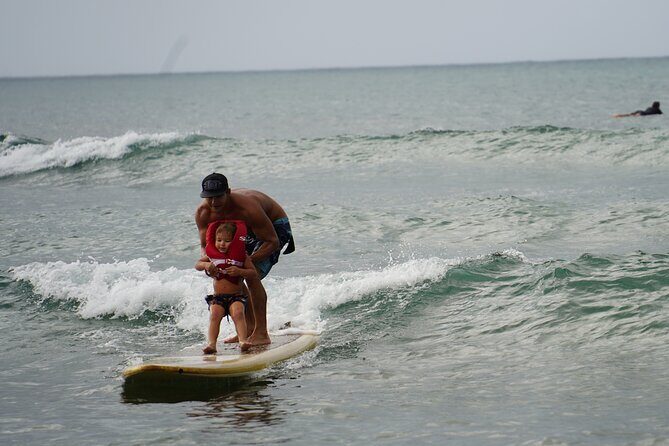
The best beginner lessons don’t just teach technique—they teach how to be safe with other surfers and with the ocean itself.
What you should expect here:
- Safety coaching before you enter the water
- Surf etiquette so you know how to share space and avoid risky situations
- Instructor-led wave selection so you’re not blindly trying to take the wrong set
In multiple stories, instructors are credited with keeping things orderly and calm, especially for first-timers. That’s a big deal on North Shore beaches, where the ocean can move fast and other surfers can be unpredictable.
If you’re a nervous swimmer, don’t ignore that feeling. A surf lesson isn’t just about effort; it’s about comfort in the water and trust in the plan. The lesson is described as suitable for all ages and swimming capabilities, but if you’re not confident, tell your instructor early so they can set realistic attempts from the start.
The workout reality: prepare your body for paddling and balance
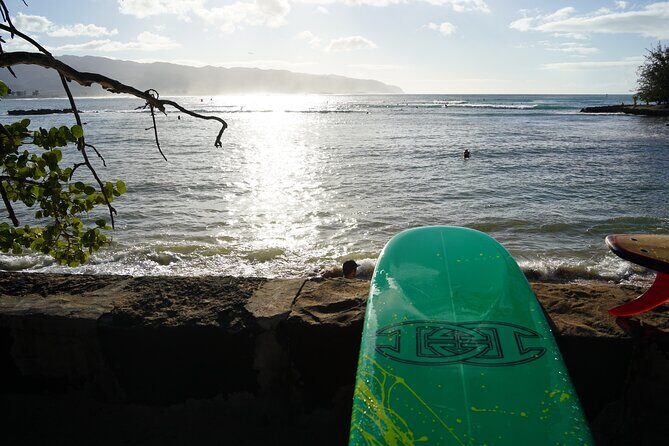
Surfing isn’t just fun. It’s also a workout, especially for beginners who have to paddle hard, pop up awkwardly, and repeat. People who try it for the first time often walk away surprised by how physical it feels.
Plan for:
- paddling effort (your shoulders and core do a lot)
- balance practice (legs and hips work constantly)
- possible bruises or minor scrapes (normal beginner stuff)
If you want an easier day, do a little prep before you go:
- stretch your hips and hamstrings
- do light shoulder work (even a few sets of easy push-ups or band exercises)
- bring energy snacks or water to help you recover between attempts
If your feet are worried about the ocean floor, focus on what you can control: the rash guard, your stance, and listening carefully on land so you’re not rushing into water steps you don’t understand yet.
Price and value: what $120 buys you on the North Shore
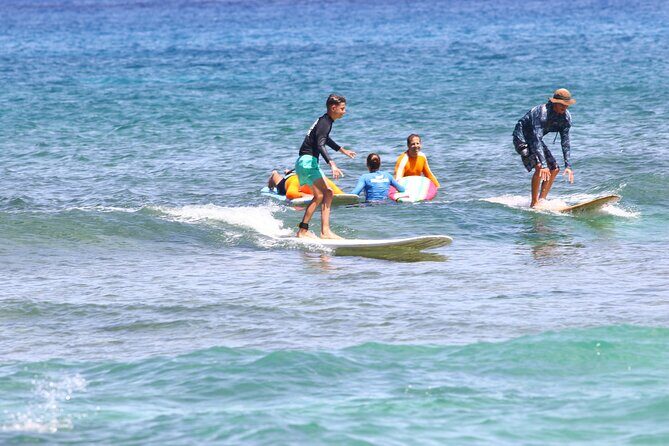
At $120 per person for about 1.5 hours, you’re paying for two things: coaching time and equipment support. Equipment included helps, because you avoid the usual hassle and extra rental costs for a first lesson.
The biggest value factor is the “time in the right place” part. If the instructor keeps you active—teaching, correcting, and helping you read waves—you get more learning per minute. When instruction is hands-on, you’re more likely to leave with actual skills you can use later, not just a fun memory.
The private upgrade for one-on-one attention can be worth it if:
- you’re traveling as a couple who wants focused coaching
- you’re a parent with a child who needs steady reassurance
- you have a learning goal and want faster feedback loops
Even if you don’t upgrade, the shared approach can still work well. Mixed ages can learn side-by-side when the coach keeps the lesson structured and safe.
Logistics that affect your day: directions, timing, and language
This experience uses a mobile ticket and is offered in English. You’ll get confirmation at booking, and the team contacts you the day before with detailed directions. That day-before message is your best friend. Use it to find the meeting area without stress, and plan to arrive with buffer time—ocean conditions and teaching flow can shift the exact start moment.
Duration is listed as about 1 hour 30 minutes. In the real world, your “learning load” still depends on wave rhythm, wind, and the mix of skill levels on the beach that day. So don’t schedule your next activity right down to the minute. Build in some room for soreness and the rinse-off routine.
This is also near public transportation, which can help if you’re staying in Turtle Bay or another North Shore area and don’t want to fight traffic.
Should you book this North Shore surf lesson?
Book it if:
- you want a beginner-focused lesson with clear land instruction and time in the water
- you appreciate safety coaching and surf etiquette basics
- you’re traveling with kids or mixed ages and want a structured, supportive environment
- you don’t want to worry about renting a board or finding a rash guard
Skip it (or switch to a different style lesson) if:
- you’re strongly uncomfortable about ocean footing, sharp rocks/coral areas, or you’re not confident in the water
- you hate the idea of a physical workout
- you’re looking for something more like a casual beach hangout than active surf coaching
If you go, pack the basics they don’t provide—sunscreen, towel, and water—and plan your day with extra buffer time. And if the instructor lineup includes names like Matthew, Jacob, or Chris, it’s worth choosing based on teaching style. That’s the difference between a “we tried” day and a “now I get it” day.
FAQ
How long is the North Shore surfing lesson?
It runs about 1 hour 30 minutes.
How much does it cost?
The price is listed as $120.00 per person.
What’s included in the lesson?
You receive a surf board, rash guard, and a surf board leash.
What should I bring since it’s not included?
Sun screen, towel, and water are not included.
Where do lessons take place on the North Shore?
The lesson uses one of three North Shore locations, including areas like Chun’s Reef and Pua’ena Point. All locations are within about a mile of each other, and you can find them via Google Maps.
How do I find the meeting location?
You’ll be contacted the day before your lesson with detailed directions.
Is there an option for private instruction?
Yes. There’s an upgrade available for a private, one-on-one lesson.
What’s the cancellation policy?
You can cancel for free up to 24 hours in advance for a full refund.
What happens if the weather is bad?
If the experience is canceled due to poor weather, you’ll be offered a different date or a full refund.