REVIEW · OAHU
Waikiki Private Group Surf Lesson
Book on Viator →Operated by Stoke Drift · Bookable on Viator
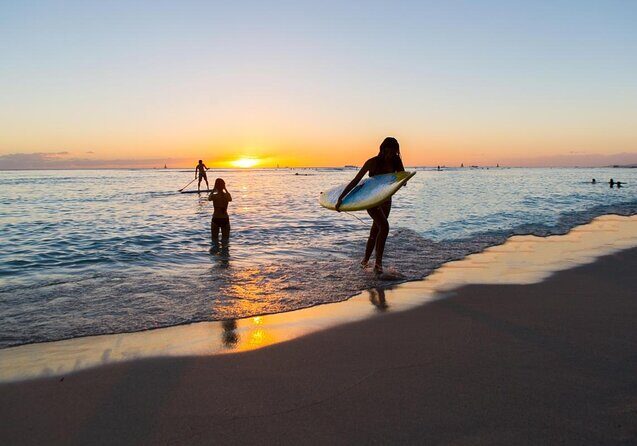
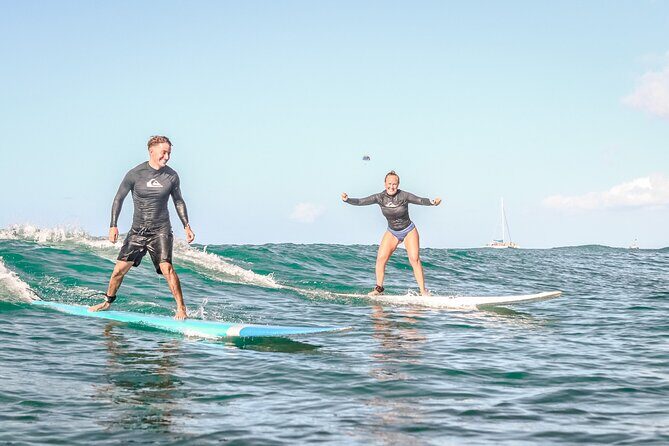
Surfing Waikiki is the bucket-list move. This private group lesson in Oahu pairs a quick safety talk with about an hour in the ocean, aimed at getting you standing up and riding. You’re not squeezed into a giant crowd, and you can pick from multiple start times to fit your day in Honolulu.
What I like most is the balance: short coaching on land (usually 15–30 minutes), then real reps in the water for around an hour. I also like that the staff focuses on timing and individual support. In one lesson, instructors helped beginners switch in and out so both people could catch waves. You’ll also get real ocean awareness—like when to hold back on a dangerous set without making it dramatic.
One consideration: conditions can be slow, so you may spend more time waiting for the right waves than you expect. When that happens, the experience can still feel fun (sea turtles can pop up), but the pace won’t always match your hopes. And if you care a lot about photos, the photographer add-on can be pricey.
In This Review
- Key things that make this lesson worth your time
- Entering Stoke Drift: Waikiki surf, minus the circus
- 15–30 minutes on land: safety first, then technique that clicks fast
- The ocean session: about an hour of wave time, with real ocean coaching
- A gentle warning about conditions
- Instructors and vibe: patient, attentive, and tuned to your skill level
- The photographer: fun memories, but plan for extra cost
- Price and value: $123 per person for focused coaching that gets you moving
- Who should book this Waikiki private surf lesson?
- Best matches
- Planning your day: what to expect from timing and learning flow
- Quick FAQ
- FAQ
- What is included in the Waikiki private surf lesson?
- How long is the lesson?
- Who can participate?
- Do I need to know how to swim?
- What meeting point does the lesson use?
- Is it only my group?
- Are photos provided?
- What if the ocean conditions are poor?
- How flexible is cancellation?
- Should you book this Stoke Drift private lesson?
Key things that make this lesson worth your time
- Private group only: your session is just your group, not a mixed free-for-all.
- 15–30 minutes on land: you get safety and technique without wasting the best part of the day.
- About 1 hour in the water: the lesson’s built for actually catching waves, not just watching.
- Strong beginner coaching: instructors like Justice, Joey, Cole, Keith, Trey, and Chaz are repeatedly praised for keeping things clear and calm.
- Sea turtle sightings happen: multiple lessons mention turtles around the group.
- Photos cost extra: there’s a photographer, but don’t assume every single ride will be captured.
Entering Stoke Drift: Waikiki surf, minus the circus
The whole experience starts at Stoke Drift Surf School at Ocean Patio B Retail, 2161 Kālia Rd Space 107, Honolulu, HI 96815. It ends right back at the same meeting point, which makes planning simple. You’ll get a confirmation after booking, and you’ll use a mobile ticket.
This is near public transportation, which matters if you don’t want to rely entirely on parking in busy Waikiki. It’s also a private tour/activity, meaning you won’t be blended into a larger group that dilutes attention. That one change—from public lesson energy to your own group—can be the difference between feeling lost and actually learning what to do next.
One more practical note: this is often booked ahead (on average, about 32 days in advance). If you’re traveling during peak season or your dates are tight, pick a lesson time early.
You can also read our reviews of more private tours in Oahu
15–30 minutes on land: safety first, then technique that clicks fast
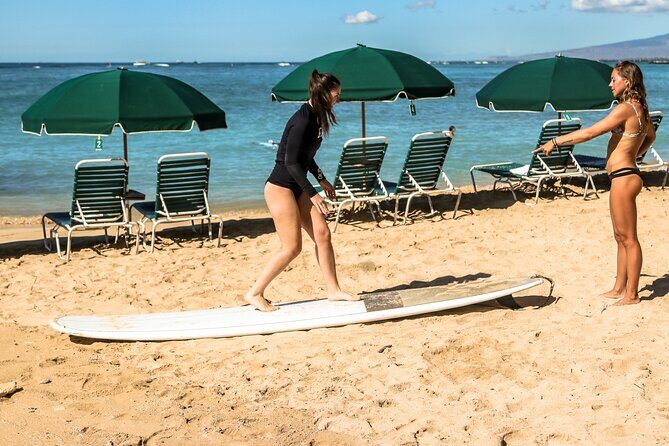
Before you’re anywhere near the breaking waves, you’ll spend 15–30 minutes on land. This is where the lesson earns its keep. Instead of a long lecture, you get the essentials: safety, ocean conditions, and technique basics.
From the way people describe the instruction, the best lessons are the ones that keep it simple and usable. You’ll usually learn what to do when you’re paddling out, what to watch for in the water, and how to position your board so your first attempt has a real chance.
A big theme in the positive reviews is pacing. Instructors like Chaz and Justice are praised for being clear and professional—explaining just enough so you can focus once you’re in the water. There’s also an important safety element: you may get held back from a wave that looks risky. One instructor was noted for stopping a potentially dangerous wave without embarrassing the surfer. That kind of judgment matters more than hype.
If you’re a total beginner, this land time is your mental warm-up. If you’re returning after time off, it helps you reset your technique before you start taking waves.
The ocean session: about an hour of wave time, with real ocean coaching
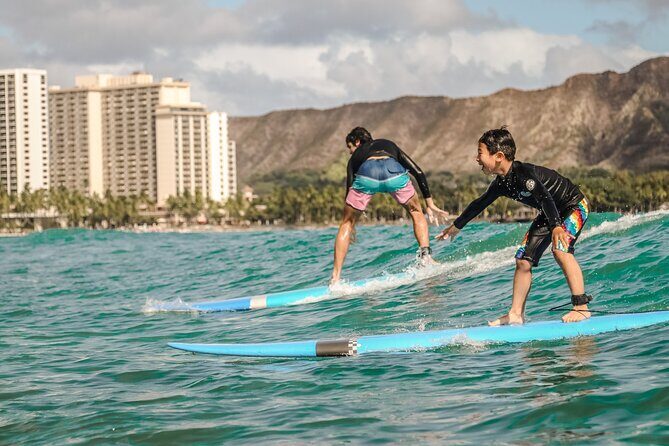
After the land prep, you get about 1 hour in the ocean. This is the part you’re paying for. And in most of the best outcomes, you don’t just “try” once—you catch multiple waves.
The instructors seem to manage the water in a way that keeps the lesson moving. You may alternate turns catching waves so the timing works for the whole group. That’s huge for beginners, because the instructor can time waves and help you match the moment when you can actually stand.
You’re also likely to get hands-on help beyond just telling you what to do. Reviews mention instructors assisting in ways that support paddling and standing—especially for kids, smaller surfers, and adults who aren’t trying to burn through their energy before they even reach the lineup. One parent noted the strong work of instructors who had to paddle a child out and back repeatedly. Another beginner described getting help that made the difference between failing and riding.
One delightful detail: sea turtles show up. A few lessons mention turtles popping up around the group. That can turn a slower wave day into something you’ll remember even if you’re not racking up perfect rides.
A gentle warning about conditions
The ocean doesn’t care about your schedule. One review described a day with fewer waves, which led to more waiting around. That isn’t anyone’s fault. When it happens, the value is still in the instruction and safety coaching—but you should go in knowing your “how many waves?” result can swing with the day’s surf.
Instructors and vibe: patient, attentive, and tuned to your skill level
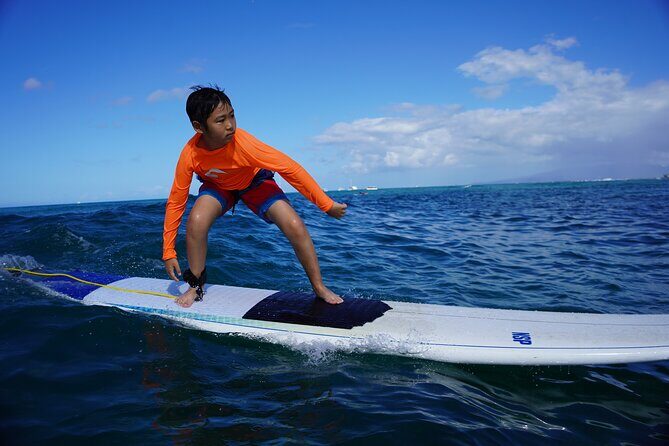
If I had to summarize the standout pattern across high ratings, it’s this: the instructors don’t just teach surfing—they manage confidence.
People repeatedly praise staff for being encouraging and attentive to kids. Families describe instructors staying close to children the entire session, so parents could actually enjoy their own surfing attempts instead of constantly watching. One set of parents said their guides helped their kids feel safe and comfortable from the start.
For first-timers, the coaching style matters. Several reviews mention instructors making things simple and then adjusting in real time. Cody and Keith were praised for working well with first-time surfers. Joey and Justice were noted for patience and for getting people onto a lot of waves. Chaz, described as kind and knowledgeable, is singled out for instruction that matches beginners.
And for older surfers or people with physical limitations, this matters too. One surfer with injuries described how an instructor accommodated them. That tells you the lesson isn’t only built for the young and athletic—it’s built for learning.
One caution from the lower rating: not every instructor will match your expectations for constant interaction. One guest felt their instructor was too quiet and not engaged during a slow-waves day. Another guest felt their instructor gave less instruction than a nearby group. Those aren’t deal-breakers, but they’re a reminder: if you need lots of talk-through coaching every minute, you should pick a time and group setup that supports active instruction, and ask questions when you can on land.
You can also read our reviews of more tours and experiences in Oahu


The photographer: fun memories, but plan for extra cost
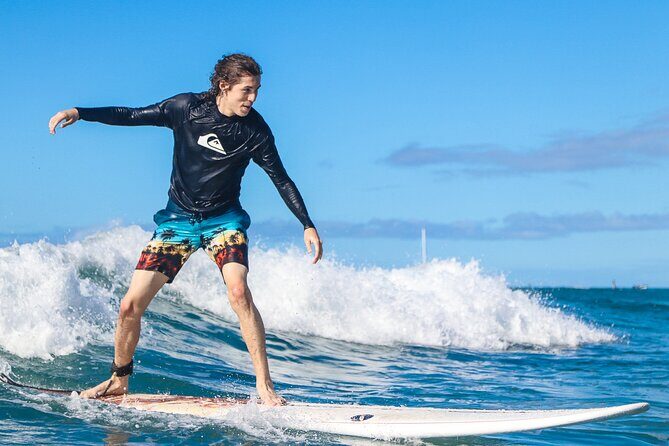
Most of the time, there’s a photographer during the lesson. People mention loving the photos and the idea of having surf shots as proof it happened.
But here’s the practical part: photos cost extra, and pricing can vary by what you buy and for additional people. One review was disappointed because the photographer left partway through the lesson, resulting in lots of images of falls rather than successful rides. Another review called the photo package pricey.
So I’d treat the photographer as a bonus, not a guarantee. If you care about action shots, plan your mindset around the main goal: learn to catch waves. Then, if you love what you see afterward, you can decide what to purchase.
Price and value: $123 per person for focused coaching that gets you moving
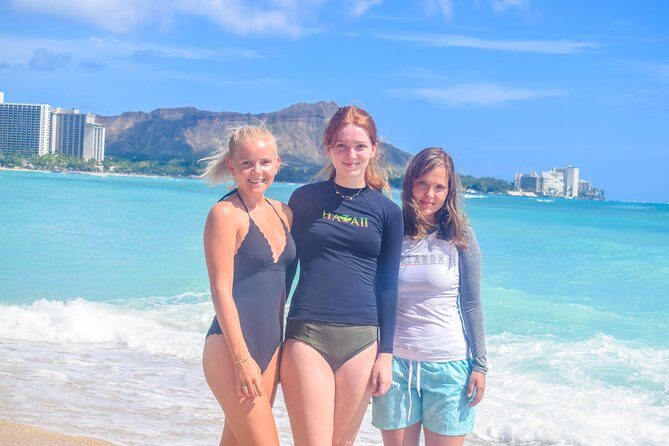
At $123 per person for about 1 hour 30 minutes, this sits in the “serious experience” range rather than the cheapest way to try surfing. The real question is value: do you get enough time, attention, and wave success to justify it?
Based on the feedback patterns, the answer is often yes—because this isn’t a passive tour. It’s instruction designed to produce rides. People report standing up, catching multiple waves, and seeing real progress fast. Beginners repeatedly describe it as the highlight of their trip.
The private group setup also matters. Even when multiple instructors are working with the group, you’re still not competing for attention with random passersby. That increases the odds you get real corrections and support, especially with paddling and timing.
Still, the cost isn’t worth it if your day turns into mostly standing around. Since wave availability depends on conditions, part of the value equation is weather and surf. If you’re booking a day when you’re flexible, you’ll feel better about the risk.
Who should book this Waikiki private surf lesson?
This lesson is for ages 13 and up. Adult includes anyone 13 years of age or older. Children under 13 fall under a different category, and the rules state that children 12 and younger must take a private lesson.
It also requires that everyone can swim. That’s not optional. If you can’t swim confidently, you’ll want to fix that first or choose an option designed for non-swimmers (not covered by this lesson’s requirements).
You should also have moderate physical fitness. Surf uses your legs, core, and shoulders for paddling and getting up. If you can handle moderate activity in heat and water, you’ll likely enjoy the session more.
Best matches
- Adults and teens (13+) who want a fast, beginner-friendly path to riding waves
- Families with older kids who can swim and handle ocean activity
- Couples who want a private group format and personal coaching
- Visitors who want a Waikiki activity that’s active, not just scenic
Planning your day: what to expect from timing and learning flow
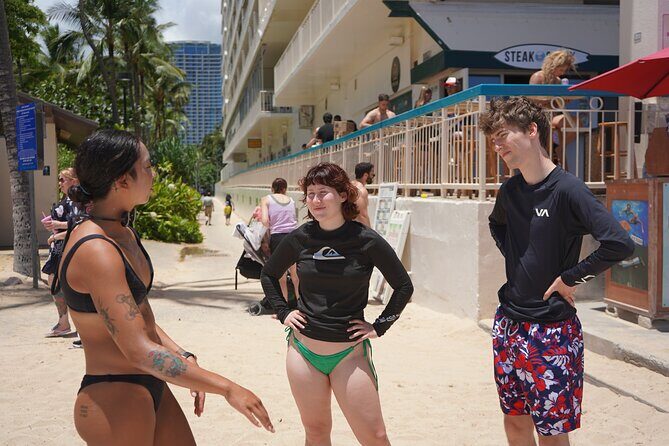
Lessons can be chosen at several times, which is helpful in Waikiki when your schedule is packed with beach time, food stops, and sightseeing. Since you’ll be in the water for about an hour and you’ll spend up to 30 minutes on land, plan around that block. Give yourself buffer time before and after so you’re not sprinting to the next reservation.
If you’re a beginner, I’d also plan your expectations around learning. You may catch many waves, but you’ll also fall. The goal is not to avoid falling. The goal is to learn why you fell and how your next attempt improves.
And if you’re going with kids, look for an instructor style that you can trust. The best sessions described in reviews show instructors staying attentive, managing safety, and timing waves so kids can actually succeed.
Quick FAQ
FAQ
What is included in the Waikiki private surf lesson?
You get 15–30 minutes on land for safety, ocean conditions, and technique, then about 1 hour in the ocean catching waves with your instructor.
How long is the lesson?
It’s approximately 1 hour 30 minutes total.
Who can participate?
This lesson is for adults (age 13 and older). Anyone younger than 13 is considered a child, and children 12 and younger must take a private lesson.
Do I need to know how to swim?
Yes. All participants must be able to swim.
What meeting point does the lesson use?
Start at Stoke Drift Surf School, Ocean Patio B Retail, 2161 Kālia Rd Space 107, Honolulu, HI 96815. The activity ends back at the meeting point.
Is it only my group?
Yes. It’s described as a private tour/activity, so only your group participates.
Are photos provided?
A photographer takes pictures during the lesson, but photos appear to be an additional paid add-on.
What if the ocean conditions are poor?
This experience requires good weather. If it’s canceled due to poor weather, you’ll be offered a different date or a full refund.
How flexible is cancellation?
You can cancel for a full refund if you cancel at least 24 hours before the experience start time. If canceled less than 24 hours before, the amount paid is not refunded.
Should you book this Stoke Drift private lesson?
Yes—if you want a focused, beginner-friendly surfing start in Waikiki and you meet the key requirements (swim ability, age 13+, moderate fitness). The biggest “book it” reasons are straightforward: short safety coaching, real time in the water, and instructors who consistently help beginners stand up and catch waves.
I’d hesitate only if you’re extremely sensitive to slow wave days or you’re counting on perfect action photos. The ocean can be quiet. When it is, you’ll still get coaching and the vibe can stay fun—sea turtles have been a recurring bonus—but the ride count can drop.
If you’re ready to learn and you want an active Hawaiian memory you can hold onto long after the beach photos fade, this private lesson is a smart choice.