REVIEW · OAHU
Surfing Lessons On Waikiki Beach
Book on Viator →Operated by Big Wave Dave Surf & Coffee · Bookable on Viator
The ocean calls, and Waikiki answers. This is a beginner-friendly small-group surfing lesson on Oahu that mixes a quick on-land basics session with hands-on coaching in the water so you can actually get your first rides. I especially like the focus on confidence for first-timers, and how instructors such as Derek and Joshua are praised for staying calm and patient. One thing to think about: the vibe can depend on conditions and sound carry, so if it’s windy or crowded, you’ll need to lock in on what you’re taught on land.
Plan to check in about 20 minutes early at Big Wave Dave Surf & Coffee, stash your stuff in the locker, and grab the surfboard and leash. The south-facing Waikiki shoreline is the big reason this works for beginners: soft sand, shallow water, and forgiving wave set-ups. You’ll still need to meet the basics—you must be able to swim and you should be ready for a workout.
In This Review
- Key things to know before you catch your first wave
- Waikiki’s beginner shore: why this spot is usually a smart first surf choice
- Checking in at Big Wave Dave Surf & Coffee: timing and getting set up
- The on-land session: safety, paddling, and how to not fight the board
- In the water with an instructor beside you: small group coaching that builds rides
- Gear, rash guards, and lockers: what’s included and what costs extra
- Price and wave time: is $129 really a good deal?
- Tides, timing, and weather: planning choices that can change your lesson
- Should you book this Waikiki surf lesson?
- FAQ
- How long is the Waikiki surfing lesson?
- What’s the group size for this lesson?
- Do I need to know how to swim?
- Where do I meet for the lesson?
- What equipment is included?
- Is a rash guard included, and can I rent one?
- Do I need to rent a lock?
- What happens if weather is bad?
- Is photography included?
Key things to know before you catch your first wave
- Small group size (max 5): less waiting, more chances to get corrected fast.
- 20 minutes on land first: safety rules, paddling, and how to handle the board before you go out.
- Locker + equipment included: board and leash are provided, and you can store belongings on site.
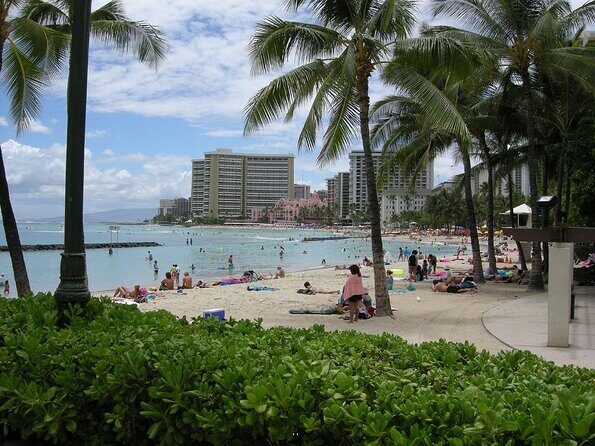
- Waikiki south shore for beginners: shallow, sandy-bottom water helps you practice without constant fear.
- English instruction: lessons are offered in English, so you can focus on technique and timing.
Waikiki’s beginner shore: why this spot is usually a smart first surf choice
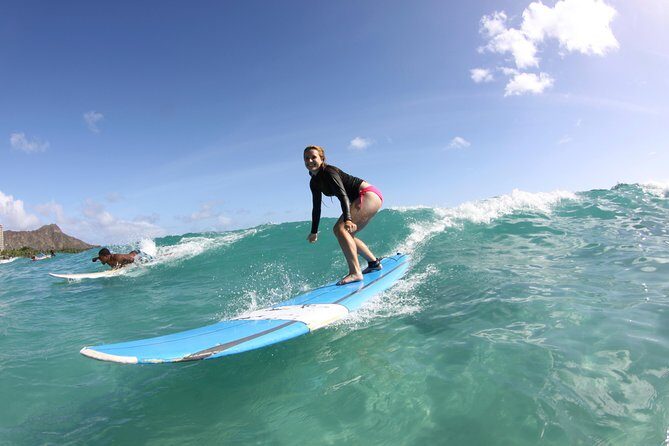
Waikiki has a reputation for being beginner-friendly, and this lesson is built around the idea that you learn fastest when the ocean doesn’t punish you for every tiny mistake. You’ll be surfing near Waikiki Beach Walk, on the south-facing coast where the water tends to be shallower. That matters because shallow water lets you recover quickly, reposition, and practice standing without feeling like you’re committed to a long swim.
The lesson also includes a short on-land session right before you enter the water. That’s not just a formality. It’s where instructors can explain safety etiquette, how paddling should feel, and how to manage the board—so when you’re out there, you’re not trying to guess what you should be doing while waves are moving under you.
One more practical note: Waikiki is popular. Even if the lesson area is beginner-suitable, you can still get crowds and boats nearby. In that kind of environment, having a coach beside you (and not just shouting from shore) is a big deal. If you’re there to learn, your attention will be worth protecting.
You can also read our reviews of more tours and experiences in Oahu
Checking in at Big Wave Dave Surf & Coffee: timing and getting set up
Your starting point is Big Wave Dave Surf & Coffee, 226 Lewers St #154, Honolulu, HI 96815. It’s set up for walk-in travelers and also works well if you’re using public transportation, since the area is well connected.
You’ll check in about 20 minutes early. That early arrival is about more than paperwork. It’s when you’ll:
- get your bearings near Waikiki Beach Walk
- use the included locker to store your items securely
- pick up the surfboard and leash you’ll use for the lesson
The shop is part surfing company, part coffee stop, so expect an easy, casual feel. One review mentioned the bathroom access can be limited, so if you’re picky about “bathroom before ocean,” do it early and then settle in.
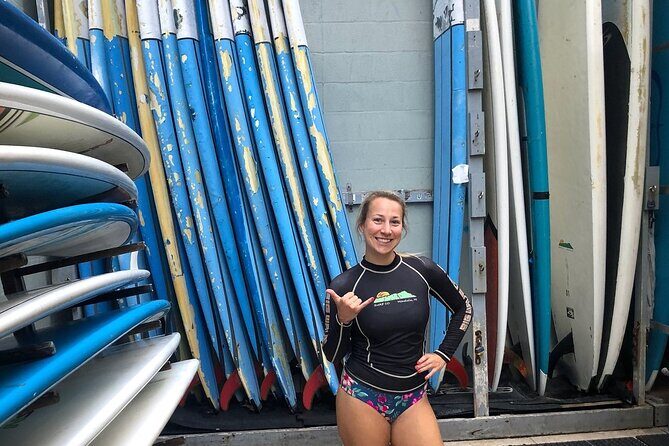
Also, don’t plan to bring your own gear unless you want to. The lesson includes the surfboard and leash, which is the part that actually changes your day. If you do have your own rash guard, great. If not, you can rent one.
The on-land session: safety, paddling, and how to not fight the board
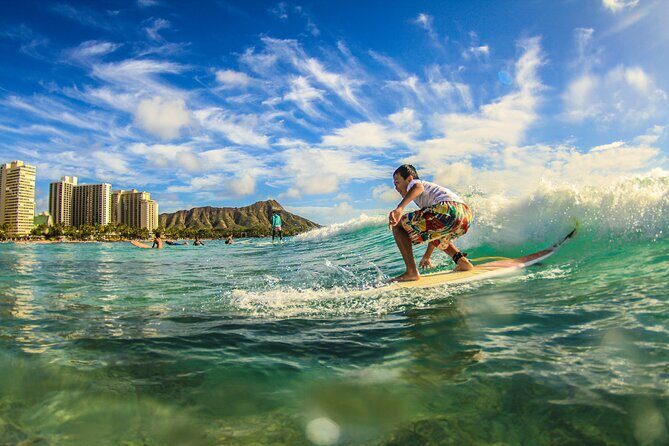
Your lesson starts with about 20 minutes on land. This is where you learn the basics that make the ocean less confusing: water safety etiquette, surfboard maneuvering, paddling technique, and wave-handling practices.
For a first-timer, this part is gold because it answers the questions you don’t know you’re asking. Like: How do you paddle so you don’t spin in place? Where do you place your weight when you’re trying to pop up? What should you do when you feel a wave coming and you’re not ready?
This is also where you get the biggest “time saver” on a beginner course. If you wait until you’re in the water to figure out what the instructor meant, you’ll burn attempts—slipping, resetting, and trying to remember instructions while the conditions change.
A few coaching names come up often in people’s experiences—Derek, Joshua, Tanner, Alex, Cody, and Mouse. While every instructor teaches slightly differently, the common theme is clear explanations and hands-on guidance. That lines up with this on-land start. You’re basically getting a mini playbook so you can spend more time standing.
In the water with an instructor beside you: small group coaching that builds rides
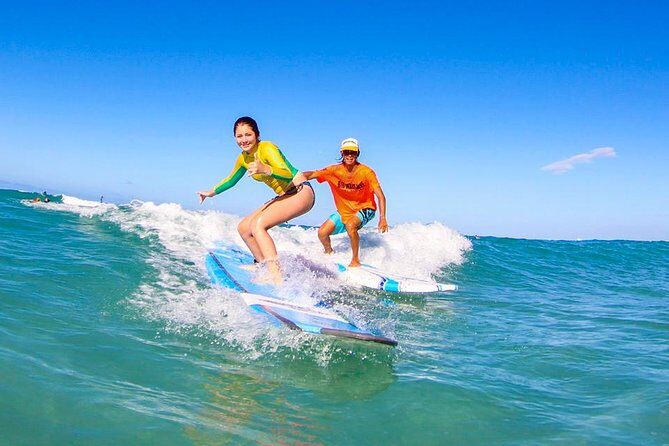
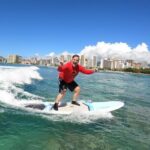
After the on-land basics, you’ll move into the water for the main action, with personalized instruction as you try to stand and ride your first waves. The lesson is designed for a beginner audience, and the south shore conditions are meant to help you practice safely in shallow, sandy-bottom water.
The structure is simple:
- you’ll practice standing up (and the timing to make that happen)
- you’ll work on how to catch and ride waves
- the instructor stays right there beside you, guiding you throughout the session
Group size is a big part of why this can feel worth it. The tour states a maximum of five travelers, which usually means less time waiting for one-on-one help. In lessons like this, the difference between learning and just getting wet often comes down to whether someone can correct you quickly when you’re popping up too early, too late, or not shifting your weight.
That “someone beside you” part also helps for confidence. Several instructors were highlighted for being patient and encouraging—especially when students are nervous. If you’re traveling with teens or older first-timers, this matters. Surfing is physically demanding, and confidence can be the difference between one more attempt and giving up early.
One possible downside to keep in mind: in busy Waikiki conditions, audio can be an issue. Waves and wind can make instructions harder to hear once you’re out there. That’s why the land session matters. If you can, pay attention like the instructor is teaching you a dance move you’ll need to repeat immediately.
Gear, rash guards, and lockers: what’s included and what costs extra
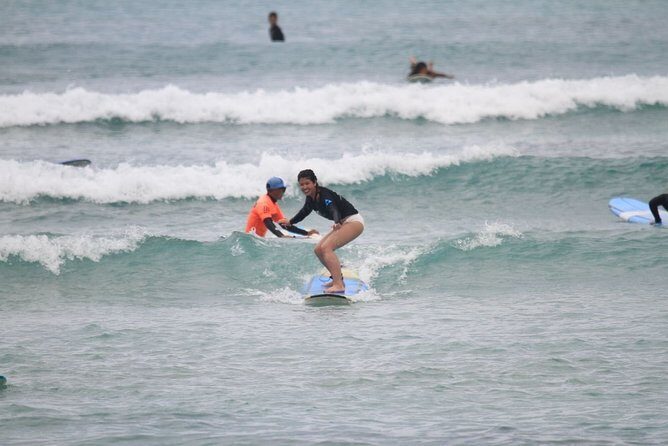
Here’s what’s included:
- surfboard and leash
- professional instructor
- use of a locker to store belongings
What’s not included:
- photography (available with advance reservations)
- rash guard rental for $5
- optional lock rental for $5, or you can bring your own
This lineup is pretty practical. You don’t want to guess on day one with an unfamiliar board setup, so having the equipment covered reduces hassle and risk. And lockers help you avoid the “where do I put my phone during lesson time?” headache.
My advice: if you burn easily or want extra comfort, consider renting the rash guard. It’s only $5, and it can make the lesson more enjoyable if you’re sensitive to sun, friction, or saltwater.
Also, think about your own lock plan. If you already have a small travel lock, bring it and skip the $5 rental. If you don’t, plan on using theirs or just keep valuables minimal so you’re not stressing while you’re in the surf.


Price and wave time: is $129 really a good deal?
At $129 per person for about 1 hour 30 minutes, this sits in the middle of what you’ll pay for a real beginner lesson in Waikiki. The value depends on two things: how well the lesson matches beginner conditions and how much meaningful coaching time you actually get.
On paper, the lesson is built for learning. You get:
- roughly 20 minutes on land to set technique and safety
- coaching in the water where you practice standing and wave handling
- a max-five group, which tends to increase attention per person
In real life, the number and quality of waves can vary. Some people get lots of good attempts; others get fewer rides if the water is messy, crowded, or just not lined up. Even with a great instructor, you can’t control wave timing.
That’s why the best way to judge value is this: do you leave with more control than when you started? The lesson is aimed at getting you “your first Waikiki waves,” and the small-group coaching helps you move past the scary stage faster.
One more reality check: Waikiki is busy. If the launch area is shared or there’s boat traffic, it can feel stressful for beginners even if the water is generally manageable. If you know you get nervous in chaotic situations, arrive early, listen carefully, and trust the instructor’s decisions on where to paddle and how to handle timing.
Tides, timing, and weather: planning choices that can change your lesson
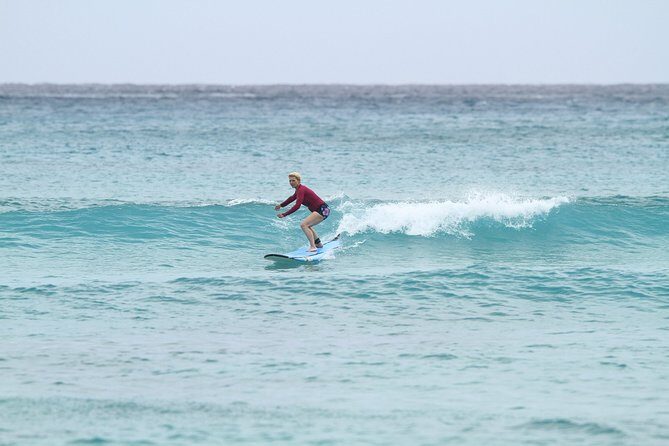
This experience requires good weather. If it gets canceled due to poor weather, you’ll be offered another date or a full refund.
Because you’re learning, tide and conditions matter. One simple timing tip that shows up in people’s experiences: morning sessions can mean higher tides, while afternoon can start on smaller waves. Neither is automatically better—smaller waves can feel easier for first attempts—but if your goal is to stand up more smoothly and get more consistent wave faces, morning timing can help.
Also keep your physical readiness in mind. The tour suggests a moderate fitness level and clearly requires that you can swim. Surfing uses your legs and core, and paddling is work. If you’re not confident swimming, you’ll struggle before you even get to the standing part.
Finally, build in the mental part. Surfing is repetitive learning. Your first attempts can feel awkward. A good instructor keeps you calm and helps you try again with small corrections. People often name instructors like Derek, Joshua, Tanner, Cody, Alex, and Mouse because they show up with a steady teaching style.
Should you book this Waikiki surf lesson?
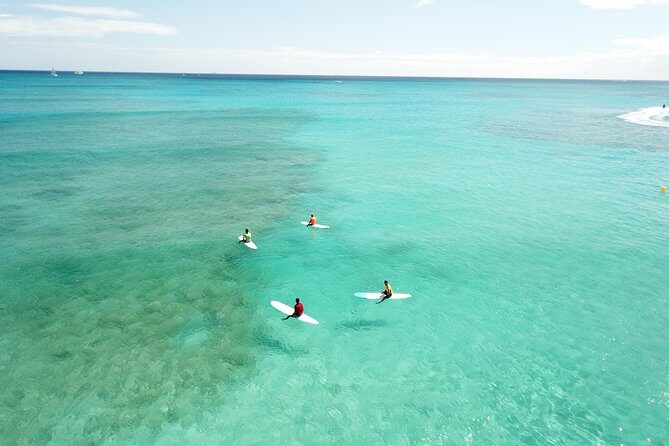
I’d book it if you want a true beginner setup in Waikiki, and you like lessons that give you a structured start on land plus an instructor who stays with you in the water. The max-five group size, the locker and equipment included, and the south shore beginner conditions are the combo that makes this lesson practical for first-timers.
Skip it or do extra homework if you know you get overwhelmed by noisy, crowded beach environments, because instructions can be hard to hear once you’re out there and the launch area may be shared with other activities. And if you’re the type who needs constant reassurance, pick an instructor schedule that feels best for you.
If you can swim, you’re open to a physical workout, and you’re ready to learn in bite-sized steps, this is the kind of Oahu experience that can turn into a next-trip “I need another session” habit.
FAQ
How long is the Waikiki surfing lesson?
The lesson runs about 1 hour 30 minutes.
What’s the group size for this lesson?
It’s a small-group lesson with a maximum of five travelers.
Do I need to know how to swim?
Yes. You must be able to swim.
Where do I meet for the lesson?
You meet at Big Wave Dave Surf & Coffee, 226 Lewers St #154, Honolulu, HI 96815.
What equipment is included?
The lesson includes all required equipment, including a surfboard and leash, plus use of a locker to store your belongings.
Is a rash guard included, and can I rent one?
A rash guard is not included. You can rent one for $5.
Do I need to rent a lock?
An optional lock rental is available for $5, or you can bring your own. The tour includes locker use.
What happens if weather is bad?
This experience requires good weather. If it’s canceled due to poor weather, you’ll be offered a different date or a full refund.
Is photography included?
Photography isn’t included, but it may be available if you reserve it in advance.