REVIEW · OAHU
Oahu: Waikiki 2-Hour Beginner Group Surf Lesson
Book on GetYourGuide →Operated by Kai Sallas' Pro Surf School Hawaii · Bookable on GetYourGuide
Surfing in Waikiki is totally doable. You just need the right setup and coaching. This 2-hour beginner group lesson keeps things friendly, safe, and focused on getting you standing and riding in real Waikiki-style conditions. I like that it’s taught by current professional surfers and that you start with clear basics before you paddle out.
Two things I especially like: first, the lesson is built around a short 20-minute on-land intro, then you spend most of your time in the water catching waves. Second, you get coached on surf stance, timing, and technique in a small group of up to 6, so you’re not just watching someone else have fun. Instructors such as Turner and Kai are repeatedly highlighted for patience and for keeping everyone moving toward success.
One drawback to plan for: this isn’t for everyone. It’s not suitable for pregnant women or people with mobility impairments, and kids must be at least 11 for group classes.
In This Review
- Key things that make this surf lesson work
- Waikiki lessons 1 mile from the chaos
- How the 2-hour schedule squeezes in real wave time
- Who’s teaching you, and why CPR matters
- The land lesson: what you learn before you paddle out
- In the water: stance, pop-up timing, and wave selection
- Equipment is included, so you can pack lighter
- Surf etiquette you’ll actually use in Waikiki waters
- Small group size: max 6 means more coaching hits
- Who this fits best (and who should consider a private session)
- Price and value: what $103 buys you in real learning
- Practical tips before you go (so the day goes smoother)
- Should you book this Waikiki surf lesson?
- FAQ
- How long is the Waikiki beginner group surf lesson?
- What is the price per person?
- How many people are in the group?
- What equipment is included?
- What should I bring?
- Is the lesson suitable for children?
- Are there any people who should not take this lesson?
Key things that make this surf lesson work

- Pro surfers teach it, not random passersby, so you learn real technique early
- CPR & lifeguard certified instructors help you feel safer in the water
- A 20-minute land lesson sets you up so you can spend the rest of the time surfing
- You learn surf etiquette and how to move over crashing waves before you get tossed around
- Small group size (max 6) means more individual coaching
- Included gear means you can focus on surfing, not shopping
Waikiki lessons 1 mile from the chaos
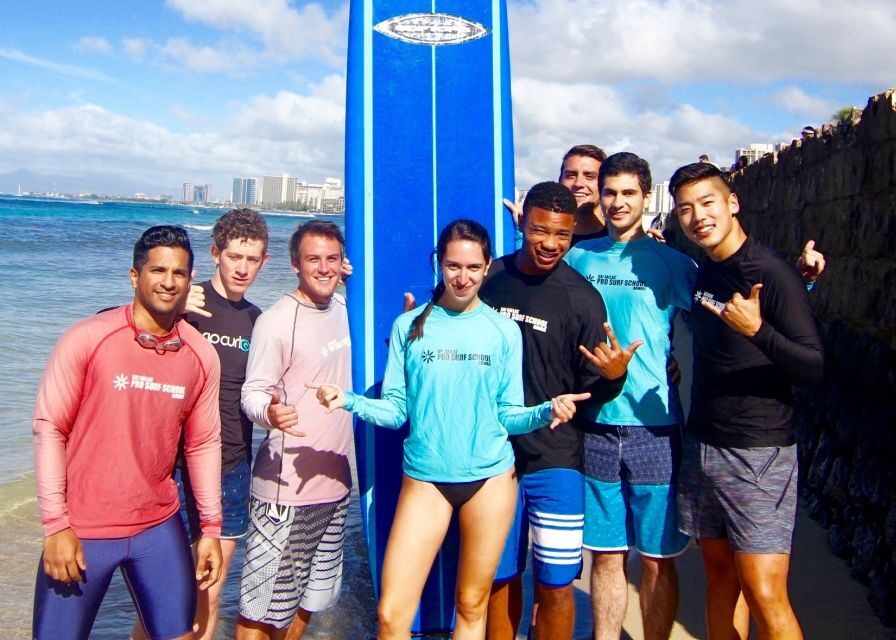
Waikiki surf is famous, but the area near the busiest beaches can feel crowded fast. What I like about this lesson is the way it’s set up for beginners at a beginner-friendly spot about 1 mile outside Waikiki, away from the worst crowd conditions. That matters because your learning curve gets way easier when you’re not constantly dodging people or timing your paddle to avoid a parade.
Also, uncrowded water changes the mood. You’ll still get real wave time, but you can practice repeatedly instead of waiting for the next opening. This is the kind of setup that turns a first-timer session into an actual progress session.
You can also read our reviews of more tours and experiences in Oahu



How the 2-hour schedule squeezes in real wave time
The class is simple and effective: start with a quick land lesson, then go straight to the ocean. You’ll get about 20 minutes on land focused on what makes surfing work and how to stay safe, then the rest of the 2 hours are in the water.
Here’s what that means for you. If you’re nervous, that land portion helps you understand what you’re about to do, not just what you should hope for. If you’re eager, you won’t be stuck listening forever—you’ll be in the lineup soon enough to feel the payoff.
Lessons run twice a day, so it’s easier to match the session to your day plan on Oahu. And if you’re the type who wants a morning adrenaline boost, you can pick the time that fits your energy level.
Who’s teaching you, and why CPR matters
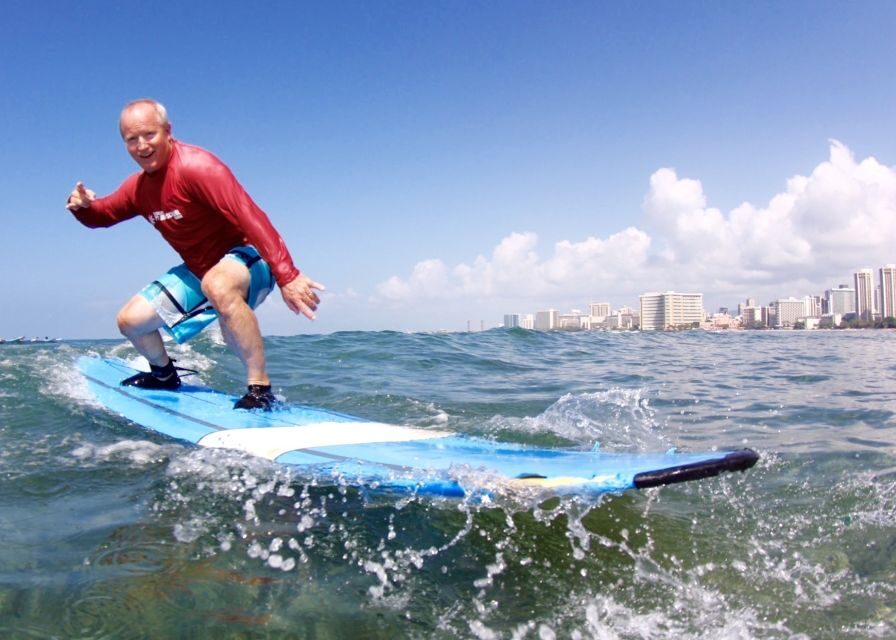
This lesson isn’t just about surfboards and sunshine. The instructors are CPR & lifeguard certified, which gives the whole experience a calm, responsible baseline. When people feel safe, they take coaching better, and they fall (usually) with less panic.
From the instructor names that come up again and again, the coaching style seems consistent: Turner is described as confident, encouraging, and especially good at explaining basics in a way that sticks. Kai is repeatedly praised for being patient and observant, making sure people aren’t just trying moves but learning the right version of the move.
Other names you may see include Tucker, Noa, and others. The pattern across them is the same: clear instruction, lots of encouragement, and coaching that keeps your feet moving toward the next small win.
The land lesson: what you learn before you paddle out
That short on-land segment is more important than it sounds. You’re not just warming up. You’ll learn the basics of how surfing works, including the different materials used in surf gear and how safety fits into real ocean conditions.
Then you’ll get coached on:
- Surf safety techniques so you know what to do when things get messy
- How to pick the right equipment based on your skill level
- Surf etiquette, meaning how to share the water and avoid common collisions
- How to approach your surf stance, so your body is in the right place before you commit to paddling and popping up
If you’ve never surfed, this is the part that keeps you from wasting wave attempts. The difference between getting wiped out and getting a few rides often comes down to basics like balance, where your weight goes, and what you do right before you stand.
In the water: stance, pop-up timing, and wave selection
Once you’re out there, the goal shifts from learning to doing. You’ll be instructed on proper surf stance and how to handle your board as the waves hit. You’ll also learn how to maneuver over crashing waves, which is one of the first things beginners need because the ocean doesn’t wait for your confidence.
The coaching vibe from the instructors is that everyone should get chances. People often mention that they stood up quickly and caught multiple waves, which usually happens when the instructor is actively managing wave choice and positioning for the group.
In practical terms, you’ll keep getting feedback as you practice. When you’re a beginner, that kind of real-time coaching is the fastest route to improvement. It also makes the ocean feel less like a big scary unknown and more like a place where you’re following steps.
You can also read our reviews of more tours and experiences in Oahu






Equipment is included, so you can pack lighter
This is one of those lessons where the value is in what you don’t have to figure out. Your package includes:
- Surfboard and leash
- Rashguard
- Reef booties
No towel needed? You’ll want one. A towel is listed as the one personal item you should bring.
The board and leash are key because the “right” choice helps you learn faster. Bigger, beginner-leaning boards are generally easier to balance on, and that’s exactly what you want when your goal is to stand up and ride. Reef booties are also a smart inclusion. They help with comfort on reefy bottoms and make the transition between sand and water less of a test of toughness.
No swimsuit or towel is included, so plan for that. You’ll likely want a dry change of clothes ready for after you shower off the salt.
Surf etiquette you’ll actually use in Waikiki waters
Even as a beginner, you don’t get a free pass from ocean rules. The lesson includes an explanation of surf etiquette and how to navigate the water responsibly.
You’ll get the run-down on how to share space, how to move around your board and path, and how to position yourself so you’re not creating problems for others. This part matters because a good first surf session is not just about standing. It’s about feeling like you belong out there and not like you’re in the way.
If you’ve watched Waikiki surf, you know it can look chaotic. Etiquette training helps you interpret what you’re seeing and respond in a way that keeps everyone safer.
Small group size: max 6 means more coaching hits
A lot of “beginner surf” experiences end up feeling like group entertainment. This one’s capped at 6 participants, and that changes how coaching works.
With fewer people, instructors can:
- watch your form more clearly
- correct stance issues faster
- manage turns, timing, and wave order with less chaos
That’s a big reason so many people mention that they got up multiple times. When the coach can see you clearly, you can adjust quickly. And when you can adjust quickly, you catch more waves before the session ends.
Who this fits best (and who should consider a private session)
This is a beginner group class designed for people who want to learn how to surf without needing prior experience. It’s also great if you have a bit of fitness and you’re willing to practice pop-ups and falls without taking it personally.
Age matters. Children must be 11 years old to join the group class. Kids under 11—or weak swimmers—need a private one-on-one lesson for safety reasons. That’s a good sign, not a hassle. It means the operator prioritizes matching training intensity to risk.
It’s not suitable for pregnant women or people with mobility impairments. If either of those applies, you should look for an alternative activity designed for your needs.
Price and value: what $103 buys you in real learning
At $103 per person for a 2-hour lesson, you’re paying for more than access to the beach. You’re paying for coaching time, gear, and safety infrastructure.
Here’s the value breakdown that makes this price feel reasonable:
- You get included gear (board, leash, rashguard, reef booties), which would add up fast if you rented or bought everything
- You get structured coaching: 20 minutes on land plus the majority of time in the water
- You get pro surfer instruction and certified safety support
Where it may feel expensive is if you’re the kind of person who needs unlimited time to learn one thing. This is an efficient lesson. The upside is that it’s designed for momentum. If your goal is to get up and ride some waves in one outing, the structure supports that goal.
Practical tips before you go (so the day goes smoother)
These are the small choices that can make or break a first surf lesson:
- Bring a towel for after the water time
- Wear your best “don’t worry about salt” mindset
- Plan for wet hair and sand everywhere, because surfing is messy in the best way
Also, if you’re doing this as a family activity, note the age cutoff. It’s better to plan early than to discover on the beach that your child needs the private option.
And if you’re nervous, good. Nervous is normal. What you want is clear instructions and a coach who keeps you moving forward, and the instructor feedback around Turner and Kai suggests that’s exactly how this class runs.
Should you book this Waikiki surf lesson?
If your priority is a beginner-friendly way to try surfing in the Waikiki area—and you want real coaching, small group attention, and included equipment—this lesson is a strong pick. The big reasons to book are the pro-surfer teaching, the CPR/lifeguard certified safety, and the fact that you spend most of your 2 hours in the water.
I’d skip it or adjust plans if you’re under 11 (group class rules) or if you fall into the categories listed as not suitable. If you’re in that zone, you’ll be better served by an alternative format designed for you.
FAQ
How long is the Waikiki beginner group surf lesson?
The lesson lasts 2 hours.
What is the price per person?
The price is $103 per person.
How many people are in the group?
The group is limited to 6 participants.
What equipment is included?
You’ll get a surfboard and leash, plus a rashguard and reef booties.
What should I bring?
Bring a towel.
Is the lesson suitable for children?
Children must be 11 years old to join a group class. Children under 11 (or weak swimmers) need a private one-on-one lesson for safety reasons.
Are there any people who should not take this lesson?
It is not suitable for pregnant women or people with mobility impairments.