Surfing Waikiki with firefighters is a confidence boost. You get a private lesson with surfboard included, plus real coaching that’s built for beginners and timed around Waikiki’s gentle, forgiving waves and the view of Diamond Head. If you like hands-on learning with calm guidance, this setup makes the ocean feel manageable fast.
One thing to plan for: return transportation may not be provided, depending on how the rest of the schedule is running.
In This Review
- Key Takeaways Before You Paddle
- Why a Firefighter-Led Waikiki Lesson Feels Different
- Price and Value: What $90 Really Buys
- Getting There: Duke Paoa Kahanamoku Meeting Point and Pickup Details
- Waikiki Beach Start: Basics on Sand Before You Go In
- Paddling Out Under Diamond Head: What You Actually Do During the Lesson
- Coaches, Calm Energy, and Real Confidence Building
- What the End Feels Like: Accomplishment and a Photo Moment
- Practical Tips So Your Lesson Goes Smoother
- Who Should Book This Surf Lesson (and Who Might Skip)
- Should You Book Surfing Waikiki with Local Firefighters?
- FAQ
- Is this a private surfing lesson?
- What’s the approximate duration?
- What’s included in the price?
- Do I need to rent a surfboard separately?
- Where is the meeting point?
- Does pickup happen?
- What language is the lesson provided in?
- What if the weather is poor?
- What’s the cancellation cutoff for a full refund?
Key Takeaways Before You Paddle
- Firefighter-led instruction brings a safety-first attitude, and you can often feel that extra calm in the water.
- Land practice first means you learn the motions before you’re dealing with waves.
- Surfboard is included, so you’re not scrambling for gear right before getting wet.
- Diamond Head views are part of the deal while you’re on the board.
- Private for your group keeps the pace comfortable and the focus on your people.
Why a Firefighter-Led Waikiki Lesson Feels Different
Waikiki surf lessons can be fun and still be kind of chaotic. This one is structured around coaching you can actually use. The biggest difference is the instructor vibe: local firefighters (some also surf on days off) tend to bring clear communication and practical safety habits, and that shows in how they run the class.
You’ll start on Waikiki’s sands with the basics: how to paddle, how to balance, and the pop-up motion that turns you from laying flat into standing. That part matters more than people think. When you learn the movement on land first, you stop wasting energy trying to figure out your body mechanics while you’re already in the surf. In other words, you get a plan before the ocean tests you.
And then there’s the setting. Waikiki is famous for a reason: you’re in warm, clear water with waves that are usually rolling and beginner-friendly. From the water, you can look toward Diamond Head while you wait for your next chance—something that makes the whole experience feel like more than just a lesson.
You can also read our reviews of more tours and experiences in Oahu.

Price and Value: What $90 Really Buys
At $90 per person, this is not the cheapest way to try surfing in Waikiki. It is a strong value when you match it to what you’re getting: a private instruction format, a surfboard included, and private transportation to the start.
The board being included is a real cost-saver. Rental prices add up fast in Waikiki once you factor in time and hassle. Here, you just show up, get on a board, and focus on learning.
Private transportation helps too. Waikiki traffic and parking can be a headache, especially early in the day. Pickup is offered (you’ll use a Grey Tacoma with surfboards on top), which takes one “where do we park?” problem off your plate.
If you’re traveling as a couple or a small family unit, this pricing often feels fair because you’re not sharing instruction with a giant mix of skill levels. You get coaching time that’s more likely to match your pace.
Getting There: Duke Paoa Kahanamoku Meeting Point and Pickup Details
Your start point is easy to picture if you know Waikiki: the Duke Paoa Kahanamoku Statue on Kalākaua Ave, Honolulu. That’s a solid anchor location—right in the area where you want to be before stepping into the surf.
If pickup is included for you, look for the Grey Tacoma with surfboards on top. It’s a simple visual cue, and it helps if you’re coming in from nearby hotels or using public transportation.
The activity ends back at the meeting point. One caution: the information you’re given notes that return transportation may not be provided, because the pickup schedule is continuous. If you hate logistical guesswork, I’d plan your own backup way back to Waikiki after the lesson. (Ask ahead if you’re unsure how that works for your exact booking time.)
Waikiki Beach Start: Basics on Sand Before You Go In
The lesson begins on Waikiki Beach with an introduction to surfing basics. You don’t just get thrown into the water and told to figure it out. The flow is built to reduce panic.
You’ll usually cover:
- Paddling basics so you can position yourself and try for waves
- Balancing on the board so standing doesn’t feel random
- The pop-up motion that gets you upright quickly
- Safety tips and wave etiquette for sharing the surf
This is where the “practice on land first” part earns its keep. Beginners often struggle with timing: paddling takes one set of muscles, and the pop-up uses another. Learning the motions on sand first helps your brain store the sequence, so when you hit the water you can spend your energy on the wave itself.
It’s also where the firefighter-led approach tends to shine. You may notice the coaching style is clear, structured, and safety-minded—exactly what you want when you’re learning something new and you don’t want your first experience to feel risky.
Paddling Out Under Diamond Head: What You Actually Do During the Lesson
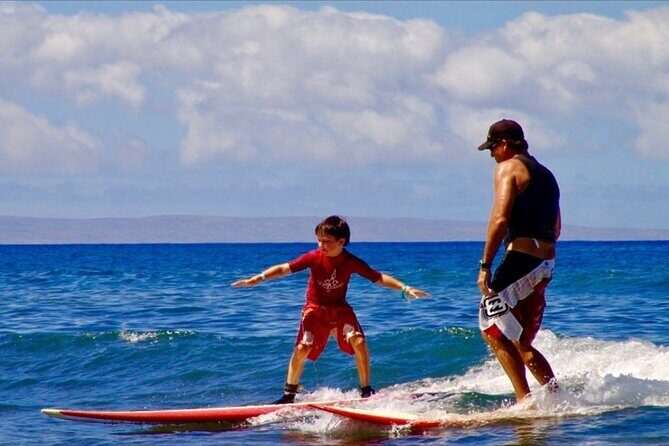
Once you’re comfortable with the basics, you wade into the water. Waikiki’s conditions are a big reason this works for beginners: the waves are generally gentle and rolling, which gives you more time to set up for a ride.
In the water, your instructor gives real-time coaching—often the kind that fixes tiny issues quickly. Those small fixes are huge in surfing. A small tweak to how you paddle, how you position your body, or when you stand can turn a near-miss into a ride.
This is also where you’ll spend time floating and trying again. That’s not wasted time—it’s part of surfing learning. You get repeated chances to match your pop-up timing to what the wave is doing.
As you wait between tries, you can take in the shoreline and Diamond Head from the water. For many people, that view becomes part of the memory you take home, not just the moment you finally stand.




Coaches, Calm Energy, and Real Confidence Building
One reason people come back to this kind of beginner lesson is confidence. You’re not training for a contest—you’re learning to trust your balance, your board, and your ability to handle waves.
The coaches behind the experience are often local firefighter surfers. Names you might encounter in past lessons include Jake, Casey, and Elsy. Across those stories, the pattern is consistent: patience, encouragement, and teaching that keeps things approachable.
If you’re traveling with kids, this matters a lot. Several families noted their kids were able to participate with extra one-on-one help in the water. One family specifically highlighted that the instructor had advanced first aid/life support training, which can make a big difference for parents who worry about safety.
If you have mobility concerns, the lesson is described as suitable for most participants, and the format is designed to work for beginners. Still, surfing is physical. Bring your common sense: if you’re nervous about swimming endurance or balance, it’s okay to start with a mindset of learning first, riding second.
What the End Feels Like: Accomplishment and a Photo Moment
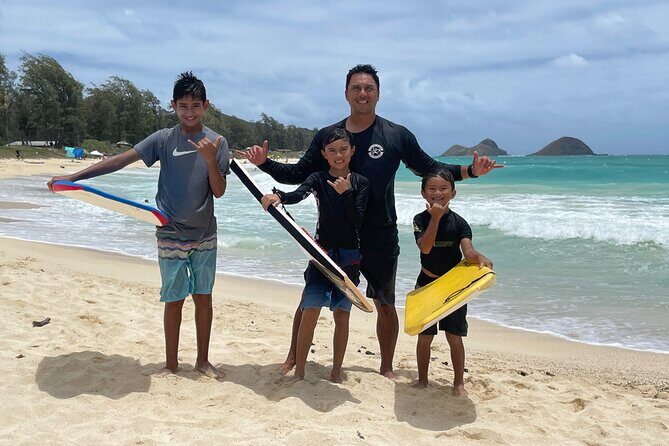
By the close of the lesson, most participants can stand up and ride at least one wave. That doesn’t mean everyone becomes a surfer on hour one—but the goal is progress you can feel immediately.
Expect an upbeat wrap-up. The experience is often finished with a group photo to mark the win, especially for first-timers who want something to show for the day besides sandy ankles.
The best part is the momentum this creates. After a good first lesson, you usually understand what to practice next. A lot of people end up wanting to keep surfing while they’re on Oahu, because Waikiki suddenly feels like a place you can navigate, not a place you’re just watching from the shore.
Practical Tips So Your Lesson Goes Smoother
Here are a few practical things I’d do if I were booking this for my own trip:
- Do it earlier in your stay. That way, you can apply what you learn on the rest of your trip.
- Bring swimwear you can move in. Surfing involves getting on and off the board and a lot of quick repositioning.
- Plan your timing around your pickup/transport. If return transport isn’t guaranteed, have a simple backup plan.
- Listen for the pop-up cues. Most beginners don’t need more paddling tips—they need the stand sequence.
- Take the wave etiquette seriously. The lesson covers it for a reason, and it makes everyone’s time safer and calmer.
Who Should Book This Surf Lesson (and Who Might Skip)
This is a great fit if you:
- Want a private beginner experience in Waikiki
- Appreciate structured coaching and want to practice the basics on land first
- Care about safety and a calm instruction style
- Are excited by the idea of surfing with a local firefighter instructor
It may not be ideal if:
- You’re counting on guaranteed round-trip transportation back to your lodging
- You’re only interested in advanced surfing moves (this is built for starting out)
- You’re booking at a time when weather is unpredictable and you’d rather not deal with rescheduling
If your main goal is a confidence-building first surf session with stunning views and real coaching, this checks the boxes.
Should You Book Surfing Waikiki with Local Firefighters?
Yes, if you want a beginner-friendly lesson that doesn’t waste time and doesn’t feel unsafe. The mix of private instruction, surfboard included, and coaching that starts on land is a smart way to learn fast without getting overwhelmed.
The only real “pause and think” point is transportation on the back end. If you plan for that and confirm how return pickup works for your booking, you’re set up for a smooth morning and a memorable first ride.
FAQ
Is this a private surfing lesson?
Yes. It’s listed as a private tour/activity, meaning only your group participates.
What’s the approximate duration?
The duration is about 1 hour 15 minutes.
What’s included in the price?
Included items are surfboards and private transportation (pickup offered).
Do I need to rent a surfboard separately?
No. Surfboards are included, so you do not need to rent them separately.
Where is the meeting point?
You meet at the Duke Paoa Kahanamoku Statue on Kalākaua Ave, Honolulu, HI 96815, USA.
Does pickup happen?
Pickup is offered. Pickup details note a Grey Tacoma with surfboards on top.
What language is the lesson provided in?
The experience is offered in English.
What if the weather is poor?
The experience requires good weather. If it’s canceled due to poor weather, you’ll be offered a different date or a full refund.
What’s the cancellation cutoff for a full refund?
You can cancel up to 24 hours in advance for a full refund. If you cancel less than 24 hours before the start time, the amount is not refunded.