REVIEW · OAHU
Oahu Beachfront ATV Adventure and Farm Tour
Book on Viator →Operated by North Shore Stables · Bookable on Viator
Want an ATV with a purpose? At North Shore Stables on Oahu’s North Shore, you drive your own ATV across oceanfront farm land, then help restore the shoreline by planting native species.
I like that you get your own 4-wheel ATV for the ride, not a UTV setup where one driver steers and you sit as a passenger. I also love the hands-on part: you choose one of the 49 native shoreline plants and plant it yourself in a restored shoreline area.
One thing to weigh: despite the beachfront promise, some people find the beach time is brief and the pace can feel slow, so go in expecting scenery and shoreline work, not racing.
In This Review
- Key points if you want the quick take
- North Shore Stables: ATV fun with a shoreline restoration mission
- Your ATV is the main event (and it’s really an ATV)
- The time split: why “45 minutes” feels like more than it sounds
- Start on oceanfront farm land near Waialua
- Kapukapuakea and Taputapuatea: the lesson you don’t get on typical ATV tours
- Planting day: choose your native shoreline plant and put it in the ground
- The farm side: animal ohana and feeding time
- How the soil is handled: Korean Natural Pig Farming and organic rejuvenation
- What the ride feels like: ocean views, but don’t expect a dirt-race movie
- Dust, mud, and what to wear (seriously)
- Helmet cover costs and picture package reality
- Guides and group size: why a small crew can help (but not always)
- Price and value: is $130.89 a fair trade?
- Who should book this ATV and farm tour on Oahu?
- Final call: should you book?
- FAQ
- How long is the ATV and farm tour?
- Do I drive my own ATV?
- What’s included in the price?
- What should I wear?
- Is a helmet cover or face covering required?
- What about the shoreline planting part?
- Where is the tour meeting point?
- How big is the group?
- What happens if I cancel or the weather is bad?
Key points if you want the quick take
- Drive your own ATV (not a UTV) on a 4-wheel track with required helmet and eye protection
- Plant a native shoreline plant yourself from a list of 49 to help prevent erosion
- Kapukapuakea + Taputapuatea connection is part of the teaching during the experience
- Small groups (max 16) help the guides keep things moving and personal
- Farm time is real with animal feeding plus organic soil rejuvenation methods
- Expect dust, mud, and dirt clothes on a working shoreline and farm track
North Shore Stables: ATV fun with a shoreline restoration mission
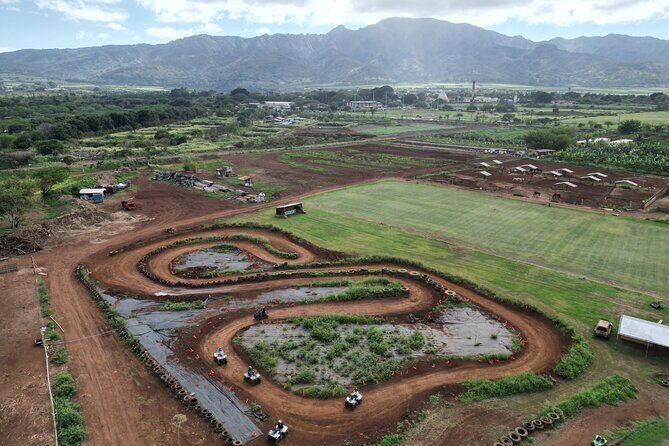
This tour is built around a simple idea: you get the thrill of riding, but you also leave something behind. On the North Shore near Waialua, you’ll be on oceanfront farm land at North Shore Stables, and the experience links that ride to the health of Hawaiʻi’s shoreline.
What I like most is that the payoff isn’t just photos. You actually choose a native plant and plant it in the restored shoreline zone. For a lot of people, that turns a quick ATV outing into a memory with meaning.
You can also read our reviews of more tours and experiences in Oahu
Your ATV is the main event (and it’s really an ATV)
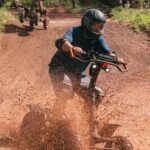
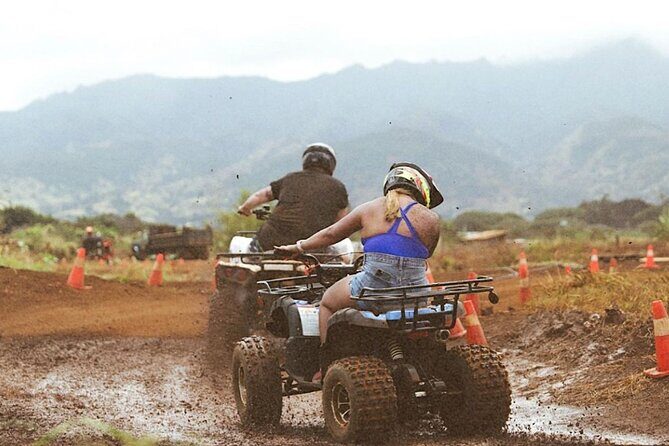
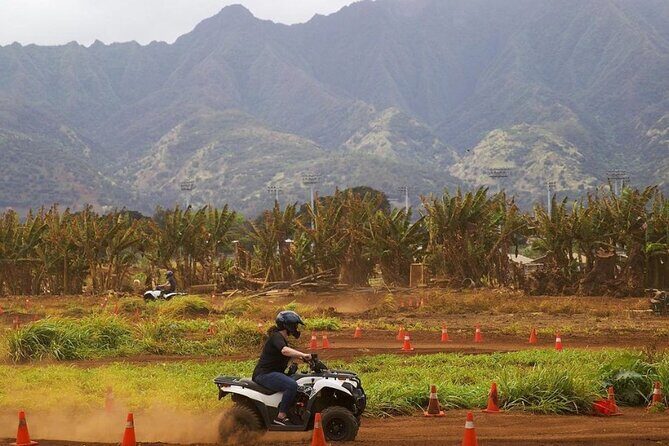
You’ll ride a 2022 Kawasaki All Terrain Vehicle (ATV), and the big difference is that you drive. This isn’t a UTV setup where one person steers while others sit with a passenger layout.
You’ll get a helmet (required) and eye protection is available (goggles or safety glasses), or you can use your own sunglasses. That matters because the track can be dusty and muddy, so good eye coverage keeps the ride more comfortable.
The time split: why “45 minutes” feels like more than it sounds
The tour runs about 1 hour total, and the main ride portion is listed as about 45 minutes. In practice, your timeline starts before you even get on the ATV, because you need time for check-in, fitting helmets, and the safety demonstration.
Because they leave promptly at your reservation time, arriving early isn’t about being polite. It’s about getting more riding time. If you show up at the last minute, you’ll spend time that should’ve been on the track.
Start on oceanfront farm land near Waialua

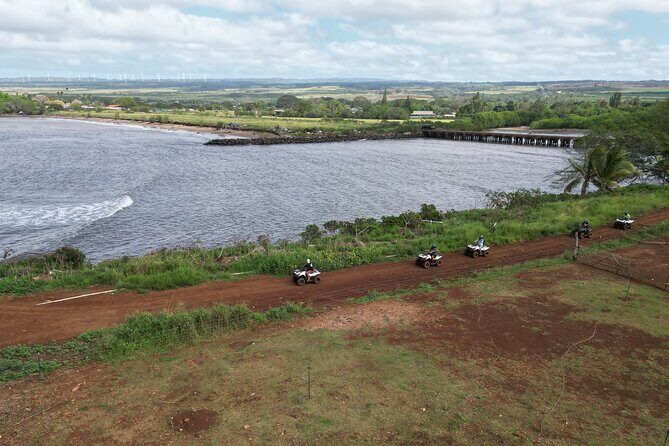
Your ride begins at North Shore Stables, 67-221 Waialua Beach Rd. From there, you’ll travel over 80 acres of oceanfront farm land, using their signature ATV track.
If you’re picturing long, high-speed beach runs, calibrate your expectations. Several reviews describe a guided pace (often cited around the 8–10 mph range) and a more controlled ride style like following the leader and staying in line. The trade-off is a calmer, beginner-friendly flow and more time for what the tour is trying to teach.
Kapukapuakea and Taputapuatea: the lesson you don’t get on typical ATV tours
A major part of this experience is story. You’ll learn about Kapukapuakea, described as a place with a 1,000-year history, and how it connects spiritually and physically to Taputapuatea, a UNESCO-recognized world heritage site.
This isn’t just trivia to fill time. The tour ties the history to why shoreline restoration matters today. If you’re the kind of traveler who likes your activities to have context (and not just motion), this is where you’ll feel the difference.
And you might recognize the names if you’ve been reading about Polynesian history—Taputapuatea comes up a lot. Here, you’ll get the connection explained as part of the day, while you’re already out where the land meets the ocean.
You can also read our reviews of more tours and experiences in Oahu


Planting day: choose your native shoreline plant and put it in the ground
Here’s the most memorable “you did this” moment: you choose a native shoreline plant and personally plant it in the restored shoreline area.
The purpose is very practical. The tour explains that a healthy shoreline helps prevent erosion and build sand dunes. That’s the type of cause-and-effect that makes restoration projects feel real instead of abstract.
It also changes how you look at the coast afterward. When you see how vulnerable shoreline can be, planting one small section yourself feels like a tangible contribution rather than a box-checking activity.
The farm side: animal ohana and feeding time
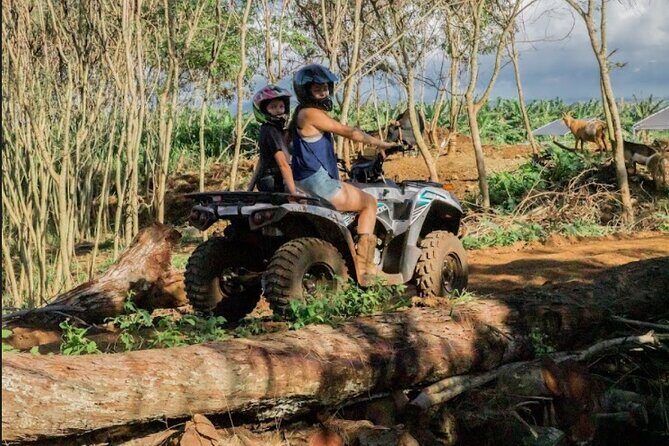
Between the riding and the shoreline teaching, you also get farm time. The tour frames it as animal ohana (family), and the experience commonly includes the chance to feed animals as part of meeting the farm crew.
You’ll see animals like goats and pigs mentioned, and some people also describe cows in the mix. It’s not a zoo-style stop where everything is staged at a distance. It’s part of a working environment where you’re interacting more closely.
One caution: animals can be curious up close. If you’re visiting with kids or you’re the type who hates surprises, keep an eye on hands and fingers. The ride may be laid-back, but farm animals don’t act like theme-park props.
How the soil is handled: Korean Natural Pig Farming and organic rejuvenation
The tour also highlights how they work to rejuvenate the soil, describing Korean Natural Pig Farming as part of their approach. You’re essentially being shown a whole system, not just a “pretty field” stop.
Even if you’re not a farm method nerd, this helps the story stick. It ties into their larger claim that the property is being restored and managed for long-term health—especially with shoreline plantings built around erosion control.
What the ride feels like: ocean views, but don’t expect a dirt-race movie
Let’s talk about the ride itself, because that’s why you booked. Many people describe the ocean scenery as breathtaking and the track as fun, especially as a first-time ATV experience. If you want a straightforward activity that’s more about views than technical trail driving, it can be a strong fit.
At the same time, there are consistent criticisms. Some describe the ride as slow and not very trail-like, with a short time near the shoreline. A few mention the route doesn’t hug the beach for very long, and that you may end up spending more time on inland paths or near the bay rather than on a long continuous beachfront segment.
So here’s a practical way to think about it: you’re buying a mix of ATV + learning + restoration + farm interaction. If you only want the ATV and you want speed or wild trail turns, you could end up disappointed.
Dust, mud, and what to wear (seriously)
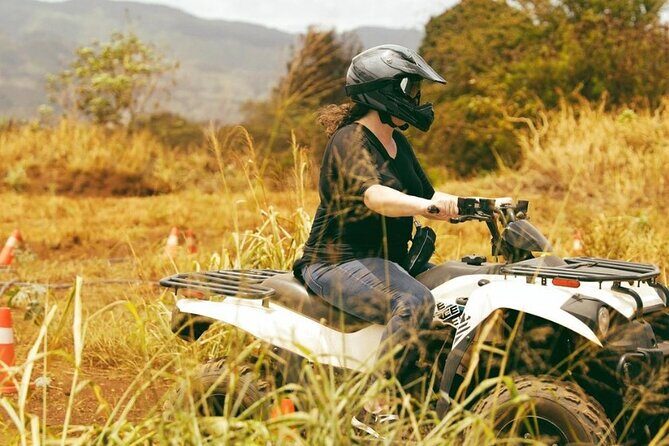
The track is dusty and muddy, and that’s not a small detail. Dress like you’ll be outdoors doing real work. Bring clothes you don’t mind getting dirty, and plan for dust in the air during dry season.
Also, closed-toe shoes are required. Wear something you can take a beating. One extra tip that shows up again and again: bring a second pair of shoes (or flip-flops) for afterward. Your clothes and footwear will pay the price for the fun.
If you’re sensitive to mess, consider packing a small towel and even baby wipes. You’ll thank yourself when you’re back in your car.
Helmet cover costs and picture package reality
You’ll wear a helmet, but you might also run into a practical add-on: some riders report needing a helmet face cover or balaclava and paying a small fee because the provided ones weren’t in great shape. Your best bet is to bring your own if you want control over cleanliness and comfort.
On the fun side, there’s a Polaroid photo package you can buy. Several people say the pictures aren’t cheap, so treat it as optional. If you want the souvenir, great. If you’re watching costs, decide ahead of time.
Guides and group size: why a small crew can help (but not always)
This tour caps at 16 travelers, which is a real plus if you want less chaos. Smaller groups tend to mean easier safety management and more chance to ask questions.
Guide quality also matters, and you’ll see a range of experiences in the feedback. Some people mention friendly, helpful staff and name one guide—Shavel is specifically mentioned as a great tour guide. When guides are engaged, you get more than a ride. You get context, pacing, and better interaction during the farm and planting moments.
If you’re the type who needs your guide to constantly engage, go in with a realistic mindset. Even with small groups, this is a working farm and an instructional ride, so moments can feel practical rather than theatrical.
Price and value: is $130.89 a fair trade?
At $130.89 per person for about an hour, this isn’t a budget activity. You are paying for several things rolled together: an individual ATV, helmet and eye protection, admission, and a guided experience that includes shoreline planting and farm interaction.
You’re also paying for access. It’s not just riding random trails; you’re on controlled property with a specific mission around shoreline restoration and native plants. That’s where the value comes from for the right traveler.
But here’s the balance check. If you’re mainly chasing ATV speed, long beachfront driving, or a big production ride, the price may feel steep. The negative feedback tends to focus on slow pace, short route length, and the feeling that the beachfront marketing doesn’t match the actual time spent right along the shore.
So the value question is really this: do you want ATV fun plus active shoreline restoration? If yes, the price can make sense. If you want only ATV thrills, you’ll likely feel the cost more.
Who should book this ATV and farm tour on Oahu?
This works best for you if:
- You want a beginner-friendly ATV experience where you drive your own 4-wheel machine
- You care about the shoreline restoration angle and want hands-on planting
- You like animals and don’t mind a working farm vibe
- You’re staying on the North Shore and want something outside the Waikiki pattern
It may not be your best match if:
- You want long, fast trail riding with lots of open speed
- You expected a full-length beachfront ATC-style ride along the shoreline
- You hate dust and mud and don’t want to dress for it
Final call: should you book?
Book it if you want a North Shore activity that blends ATV time, coastal education, native planting, and farm life in one compact outing. The small-group size and the hands-on shoreline planting are the strongest reasons to choose this over a purely recreational ATV stop.
Skip or rethink it if your top priority is speed, long trail variety, or hours of direct beach riding. Based on what’s been experienced by different visitors, the pace and route can be more controlled and less “beach cruise” than the name might suggest.
If you’re on the fence, my advice is to decide what you want more: motion or meaning. This tour leans toward meaning.
FAQ
How long is the ATV and farm tour?
The experience is about 1 hour total, with the ride portion listed as about 45 minutes.
Do I drive my own ATV?
Yes. You use an individual ATV and you drive your own 4-wheel machine. This is not described as a UTV passenger setup.
What’s included in the price?
Your price includes use of the individual ATV, a required helmet, admission, and eye protection (goggles or safety glasses are available, or you can use your own sunglasses).
What should I wear?
Closed-toe shoes are required for all riders. The track can be dusty and muddy, so wear clothes you do not mind getting dirty.
Is a helmet cover or face covering required?
The tour information says helmets are required, but it also notes eye protection options. Some riders report paying for a helmet face cover if needed, so it’s smart to be prepared.
What about the shoreline planting part?
Each guest chooses one of the 49 native Hawaiian shoreline plants and personally plants it in the restored shoreline area.
Where is the tour meeting point?
The tour starts and ends back at North Shore Stables, 67-221 Waialua Beach Rd, Waialua, HI 96791.
How big is the group?
The tour/activity has a maximum of 16 travelers.
What happens if I cancel or the weather is bad?
You can cancel for a full refund up to 24 hours in advance. If it’s canceled due to poor weather, you’ll be offered a different date or a full refund.