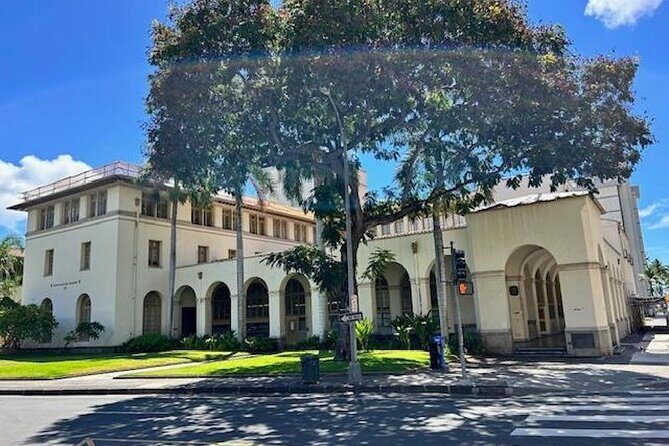
REVIEW · OAHU
Downtown Honolulu Self Guided Walking Audio Tour
Book on Viator →Operated by History with Action · Bookable on Viator
Honolulu history walks at your pace. This self-guided route links big landmarks in downtown—Kamehameha, Liliʻuokalani, Iolani Palace, and even the Pearl Harbor memorial—using a location-aware audio guide with offline maps.
I especially like the hands-free way the stories play as you move, so you’re not stuck staring at your phone every 10 seconds. I also like that the route is short enough to do in 1 to 2 hours, yet packed with 23+ story stops and frequent chances to duck into buildings when the sun hits.
One real catch: getting started can be a bit fiddly if you’re not tech-comfortable. You need to download the tour app with good signal, enter the password you’re sent, then launch the right tour version for your starting point.
In This Review
- Quick Highlights You’ll Actually Feel
- Price and What You Really Get for $9.99
- Getting Oriented: Start at Aloha Tower, End at Liliʻuokalani
- How the App Works on Your Phone (and Where People Get Stuck)
- The Walk Itself: 1.6 Miles, 23+ Stories, Flexible Timing
- Stop 1: King Kamehameha Statue to Set the Tone
- Stops 2 and the Missionary-Period Museum: Faith, Transition, and Conflict in Context
- Stop 3: Aliʻiolani Hale and the Shift from Palace to Government
- Stop 4: Honolulu Hale and the Return of Kalākaua
- Stop 5: Patsy Takemoto Mink Statue and Why Her Story Matters
- Stop 6: Sky Gate by Isamu Noguchi
- Stop 7: Hawaii State Capitol and the Government Shift Before the Capitol
- Stop 8: Eternal Flame Memorial for Pearl Harbor, December 7, 1941
- Stop 9: Washington Place and the Living Presence of Queen Liliʻuokalani
- The Iolani Barracks Stop: Royal Guard Before the Coup
- Stop: Iolani Palace, the Only Royal Palace in the United States
- Stop 10: Queen Liliʻuokalani Statue to Close the Loop
- Value Check: Best Use Cases for This Audio Walk
- When It Might Feel Annoying (and How to Prevent That)
- Should You Book This Downtown Honolulu Audio Tour?
- FAQ
- How long is the Downtown Honolulu self-guided walking audio tour?
- Where does the tour start and end?
- How much does it cost?
- Is the tour available in English?
- Do I need cellular or Wi‑Fi during the walk?
- How do I start the audio while I’m on location?
- Are any entrance fees included?
- Is the experience private?
- Can I get a refund if my plans change?
Quick Highlights You’ll Actually Feel

- Audio plays by location, so you follow cues instead of constantly tapping a screen
- Offline maps help when the downtown signal gets spotty
- About 1.6 miles with 23+ stories, so it’s doable even with photo stops
- Many stops are free to view, and you’re mostly walking exterior sites
- Great for a morning walk if you want to beat Honolulu heat
- No guide walking with you, so you control pace, breaks, and skips
Price and What You Really Get for $9.99

At $9.99 per person, this is priced like an easy add-on to your Honolulu day: you’re paying for the audio, route support, and offline tools, not for museum tickets or attraction entry. The key value is that you can reuse it—this pass has new, lifetime access with no expiry, meaning you can come back on another trip and replay the walk.
In practice, that lifetime access matters in Hawaii. Plans change. Weather happens. Your day might start later. With this format, you’re not locked into a fixed tour time once you’ve downloaded the content.
What you don’t pay for is also clear: there are no attraction passes, entry tickets, or reservations included. Even so, many of the stops listed are marked admission ticket free, so your spending stays mostly to what you choose to buy on the way.
You can also read our reviews of more walking tours in Oahu



Getting Oriented: Start at Aloha Tower, End at Liliʻuokalani

This tour starts at Aloha Tower Marketplace (Aloha Tower Dr, Honolulu) and ends at the Queen Liliʻuokalani Statue area. There’s no staff member meeting you at the beginning. You go straight to the first landmark, open the app, and the audio begins when you’re at the right starting point.
You’ll want to take setup seriously the first time. After booking, you get an email and text with setup instructions and a password. You’ll use that password in the app, and you’re told to download the tour content while you’re in strong Wi‑Fi/cellular. After download, it works offline, including the maps.
Also plan to use headphones/earbuds for the best experience. The audio is hands-free in the sense that it plays automatically with your location, but you’ll still want sound in your ears while you’re walking.
How the App Works on Your Phone (and Where People Get Stuck)
This is a self-guided experience, so it depends on your phone working smoothly with GPS. The tour is recommended for:
- iPhone on iOS 15+
- Android on version 9+
- iPad/tablet with GPS and cellular connectivity
The big “it either works or it doesn’t” moment is downloading and launching the correct tour. If the app isn’t set up before you start walking, you can lose momentum fast—one of the most negative notes from feedback is that finding the app setup was hard enough that someone stopped using it and just walked around.
To avoid that, I suggest doing this before you start moving:
- Download the app content while you’re on good signal
- Enter the password exactly as provided
- Launch the tour that matches your planned starting point and direction
Then you’ll be set up for the main design: location-aware stories and offline maps.
The Walk Itself: 1.6 Miles, 23+ Stories, Flexible Timing
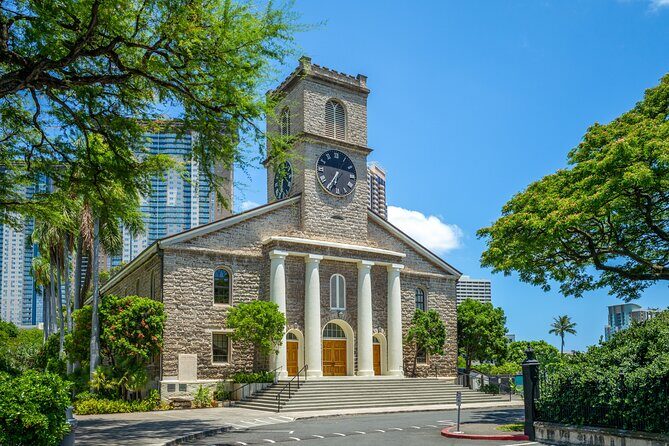
The route is about 1.6 miles and typically takes 1 to 2 hours. That’s a comfortable “downtown loop length” where you can keep walking without feeling punished—especially if you treat the stories like chapters, not chores.
You can start anytime during the day window shown in the listing (9:00 AM to 6:00 PM daily). Once you start, you can pause whenever you want. That’s handy in Honolulu because you’ll want breaks for water, shade, and photos.
One practical tip from the experience feedback: if you can, begin in the morning. Afternoon heat can be intense, and the route runs through a lot of outdoor city blocks where you may want to duck into buildings for shade.
Stop 1: King Kamehameha Statue to Set the Tone

You kick things off with the King Kamehameha Statue. It’s the kind of start that makes sense for Honolulu: you’re dropped into Hawaiian royal history immediately, not after a bunch of side detours.
The audio frames Kamehameha as a dramatic figure in the 1700s era of competing chiefs. That context helps because downtown Honolulu can look modern from far away. Starting with Kamehameha makes it clear you’re walking through layers of power, not just sightseeing scenery.
Why it’s worth your time: if you’ve never learned the timeline of island unification and conflict, the story gives you mental hooks right away. You understand why people fought, why leadership mattered, and why downtown landmarks still carry political weight.
You can also read our reviews of more guided tours in Oahu






Stops 2 and the Missionary-Period Museum: Faith, Transition, and Conflict in Context
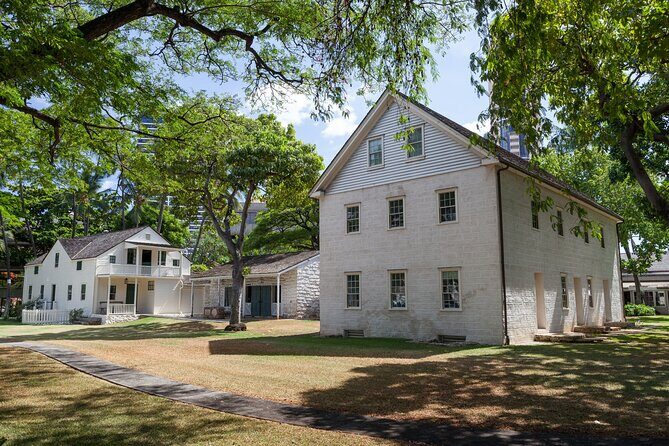
Next up is Kawaiahaʻo Church, identified as once being the national church of the Hawaiian Kingdom. That detail matters. It tells you this wasn’t only a local church—it was tied to the official structures of the kingdom.
Right after that, there’s a stop for a museum featuring Hawaii’s missionary period items (the listing doesn’t give a specific museum name in the text you provided). What I like about this placement is how it shifts from royal authority into cultural change. Missionary-era artifacts and stories can be emotional and complicated, so having it as a dedicated stop helps you process the topic instead of trying to absorb it while you’re speeding between photos.
If you’re the type who prefers a quick overview before going deeper, this is a good pacing choice: church context first, missionary period second.
Stop 3: Aliʻiolani Hale and the Shift from Palace to Government
Then you reach Aliʻiolani Hale. The key story here is the building’s purpose changing with rulers: it was built by Kamehameha V as a palace for Hawaiian monarchs, then King Kalākaua converted it to government offices.
That’s a powerful theme for downtown Honolulu. The city’s most important buildings weren’t static backdrops. They were repurposed as power centers shifted.
Practical note: because this tour is about walking, you’re mostly encountering the building as a scene. You’ll get the story even if you don’t go inside somewhere—so you can keep the flow moving without waiting in lines.
Stop 4: Honolulu Hale and the Return of Kalākaua

At Honolulu Hale (City Hall), the audio ties together Kalākaua’s return from a world tour at the end of 1881 and the celebrations around his arrival. Then it turns to the political undercurrent: while Hawaiians welcomed him home, others were plotting his downfall.
The stop also references the Reform Party and how it gained influence after the 1875 Reciprocity Treaty. If that name doesn’t mean much to you yet, don’t worry—this kind of tour works best when it plants those names early. Later, you’ll recognize them in other Honolulu reading.
A reason to slow down here: the topic is political, and it helps to let the story “settle” before you move on to statues and art.
Stop 5: Patsy Takemoto Mink Statue and Why Her Story Matters
Next is the Patsy Takemoto Mink Statue and Memorial. Mink is described as a third-generation Japanese-American who grew up in Hawaii, and the audio frames her as part of more recent Hawaiian history.
This stop is valuable because it broadens the time period. You’re not stuck only in the 1800s or early 1900s. You also get a reminder that Hawaiian and Asian American history are connected in very real, human ways.
If you like tours that connect past to more modern civic life, this one does that with this statue stop.
Stop 6: Sky Gate by Isamu Noguchi
Then you’ll hit Sky Gate by Isamu Noguchi. The listing leans into the ambiguity of the sculpture—bendy black tubes, spider-web-like ideas, or something animal-like. Noguchi’s own description is used in the story: an evocation to the skies of Hawaii.
I like this stop because it breaks the “big dates and monarchs” pattern for a moment. It’s art you can look at while the audio helps interpret it, so you’re not just walking to another historical plaque.
Stop 7: Hawaii State Capitol and the Government Shift Before the Capitol
Next, the Hawaii State Capitol stop connects back to earlier government centers. Before the current Capitol Building, Hawaiians used ʻIolani Palace as the seat of government.
This is the kind of reminder that makes downtown make sense. You start to see the city as a timeline of governance, not random landmarks spaced out by busy streets.
Stop 8: Eternal Flame Memorial for Pearl Harbor, December 7, 1941
Then you reach the Eternal Flame Memorial, marking those who died in the December 7, 1941 Pearl Harbor attack. The listing also references Franklin D. Roosevelt’s famous line about a date living in infamy.
This is a serious stop. The audio is short at each location (about 10 minutes listed per stop), but the emotional weight of the memorial doesn’t need extra ornament. It’s a “pause and take it in” moment that anchors Honolulu’s 20th-century history.
Stop 9: Washington Place and the Living Presence of Queen Liliʻuokalani
Next comes Washington Place, described as a two-story mansion set back from the road. This was the home of Queen Liliʻuokalani.
The story focuses on her later years: she retreated from public life and lived full-time in Washington Place, where Native Hawaiians visited her often. The audio also emphasizes that she remained their queen in spirit, and they continued to see her that way.
If you’ve only read the headlines about annexation and monarchy, this stop shifts the mood. It’s less about conflict and more about relationship—how people experienced leadership up close.
The Iolani Barracks Stop: Royal Guard Before the Coup
After Washington Place, the route includes the Iolani Barracks. The story explains that before Dole and the Annexation Club completed their coup against Queen Liliʻuokalani, the Barracks housed the Queen’s Royal Guard.
This is one of the moments where the tour’s “story chain” helps. You’ve just met Liliʻuokalani’s home-life context, and now you’re standing in a military-defense context tied to her fall from power.
If you want the most meaningful version of this stop, stand still long enough to hear the whole audio segment and let the timeline click.
Stop: Iolani Palace, the Only Royal Palace in the United States
Then you arrive at ʻIolani Palace. The listing says it dates back to 1879, and it’s described as the only royal palace in the United States.
This stop is a major payoff. Even if you don’t go inside anywhere, the story gives you a framework for what you’re looking at: a royal seat, a symbol of governance, and a physical reminder that Hawaii’s monarchy was not a footnote.
Why this works well on a self-guided audio format: you get a guided narrative without losing the freedom to linger or keep walking.
Stop 10: Queen Liliʻuokalani Statue to Close the Loop
Finally, the tour ends at the Queen Liliʻuokalani Statue. The audio frames her retreat from public life, her daily presence at Washington Place, and the way Native Hawaiians continued to see her as their queen.
The listing includes language from her memoir about giving everything for her people. You don’t need to know the full political history to feel what this ending is doing. It’s meant to bring your attention back to personhood, not just dates.
And practical bonus: ending at this statue means the tour finishes at a recognizable place rather than leaving you in the middle of traffic.
Value Check: Best Use Cases for This Audio Walk
This tour makes the most sense if you like:
- Self-paced history where you control pauses and skips
- Walking routes that stay under ~2 hours
- A mix of monarchy-era sites and more modern stops like Patsy Mink
- Offline access for when downtown signal is unreliable
It also fits well for couples. The listing notes that couples can share one tour by splitting headphones, which can reduce the total cost if you travel with someone who’s okay sharing audio.
When It Might Feel Annoying (and How to Prevent That)
The strongest negative theme in the feedback is app setup confusion. If you’re relying on mobile data or waiting to download until you’re already at the start, you could waste time.
Here’s how to prevent that:
- Do the download on strong Wi‑Fi or cellular before you begin walking
- Bring headphones/earbuds so you can hear clearly outdoors
- If your GPS is slow to lock, give the app a minute before moving fast
Also remember: it’s a walking tour. No paid-entry tickets are included, so you won’t magically “skip lines” at museums. You’re using the audio to make the outdoor scenes meaningful.
Should You Book This Downtown Honolulu Audio Tour?
Yes, I’d book it if you want a short, walkable way to connect the most important downtown symbols of Hawaiian political life—Kamehameha, Kawaiahaʻo Church, Aliʻiolani Hale, ʻIolani Palace, and Queen Liliʻuokalani—without committing to a guided group schedule.
I’d hesitate only if you know you’ll struggle with phone setup or downloading apps on your device. If you’re tech-comfortable and you start with a solid Wi‑Fi download, this is a good value: lifetime access, offline maps, and a focused route around major landmarks.
If you’re going in the heat, aim for the morning. It keeps the experience pleasant and gives you more energy to stop, listen, and look—without turning the tour into a endurance test.
FAQ
How long is the Downtown Honolulu self-guided walking audio tour?
It takes about 1 to 2 hours and the walking route is around 1.6 miles.
Where does the tour start and end?
It starts at Aloha Tower Marketplace in Honolulu and ends at the Queen Liliʻuokalani Statue.
How much does it cost?
The price is $9.99 per person.
Is the tour available in English?
Yes, the tour is offered in English.
Do I need cellular or Wi‑Fi during the walk?
You’ll be able to use offline maps after you download the tour. The instructions say you must download the tour while you have strong Wi‑Fi/cellular, then it works offline after download.
How do I start the audio while I’m on location?
Go to the starting point, open the audio tour guide app, launch the correct tour version for your starting location, and then the audio plays automatically based on your location.
Are any entrance fees included?
The tour does not include attraction passes, entry tickets, or reservations. That said, the stops listed include many areas marked Admission Ticket Free.
Is the experience private?
Yes. It’s described as a private tour/activity where only your group participates.
Can I get a refund if my plans change?
There is free cancellation, and you can cancel up to 24 hours in advance for a full refund.