REVIEW · OAHU
Honolulu Historic District a Smartphone Audio Walking Tour
Book on Viator →Operated by Tripvia Tours · Bookable on Viator
Downtown Honolulu speaks in stories and stone. This smartphone audio walking tour guides you through key landmarks in the Historic District with live GPS and automatically played narration, all from your phone.
What I like most is that it’s easy to use on the go, including offline download after you prep on Wi‑Fi. One thing to plan for: bring earbuds, because the audio can compete with sidewalk noise if you rely on your phone speaker.
In This Review
- Key Highlights You’ll Actually Feel on the Walk
- Start at Ali’iolani Hale: Offline GPS Audio in Downtown Honolulu
- Ali’iolani Hale and King Kalakaua: Start With the Hawaiian Kingdom
- Kamehameha I, Kanaina Building, and Patsy’s Statues: Monarchs You Meet on Foot
- Reading Rooms, Sailors, and Honolulu’s Oldest Church: Everyday History You Can Hear
- Lunalilo’s Burial Choice and the City Hall Dates Puzzle
- Frank Fasi Building, Seagull Schools Stone Folks, and the Bell of Nagasaki
- Queen Emma and the Queen’s Conference Center: Hawaii’s State Capitol Moment in 1969
- Pedestrian Mall Energy to Hawaii Theatre Center: Art, Stage, and Creative Change
- How Long It Takes, Who It Fits, and the Value of $10.99
- Should You Book This Honolulu Historic District Smartphone Audio Tour?
- FAQ
- How long is the Honolulu Historic District smartphone audio walking tour?
- Where does the tour start and end?
- Do I need data or a signal during the tour?
- Is the tour available in English?
- What do I need to bring?
- Are attraction tickets included?
- Is this tour guided by a person, or self-guided?
- Is the tour group limited to just my party?
- Can I cancel for a full refund?
- Are service animals allowed?
Key Highlights You’ll Actually Feel on the Walk
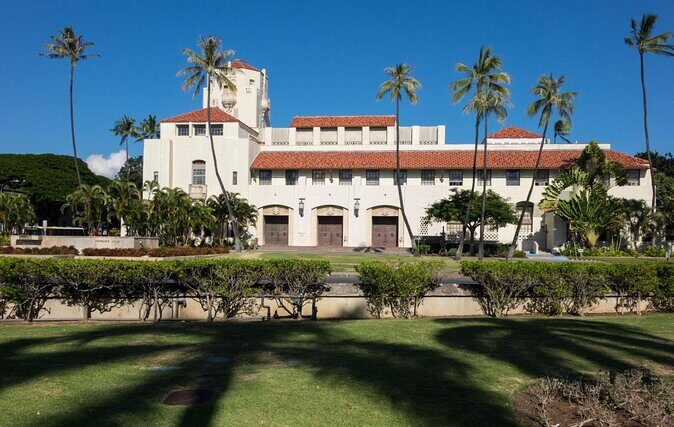
- Live GPS map shows where you are, so you’re not guessing downtown streets
- Auto-playing narration starts at each landmark, so you can keep walking
- Offline audio after a Wi‑Fi download means fewer stress moments while you roam
- Skip-and-continue flexibility lets you pace the day your way, not on a clock
- Lots of recognizable downtown landmarks packed into a short 1 to 2 hour outing
Start at Ali’iolani Hale: Offline GPS Audio in Downtown Honolulu
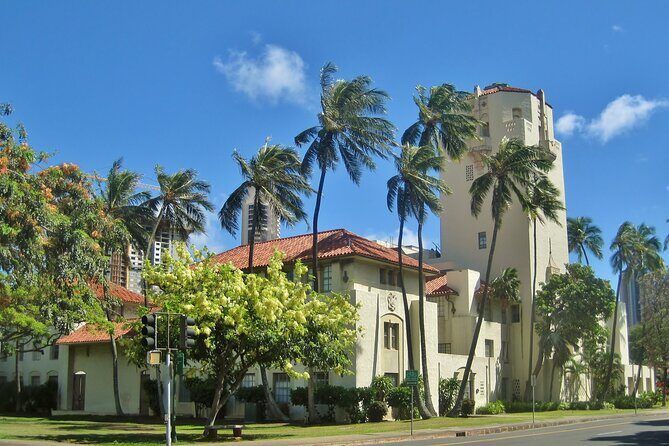
You begin at Ali’iolani Hale, 417 S King St, the kind of downtown starting point that makes sense fast. The tour is built so you can simply download the audio on Wi‑Fi before you go, then walk without needing a signal. That matters in Honolulu because cell coverage can be patchy depending on where you are and how busy the street gets.
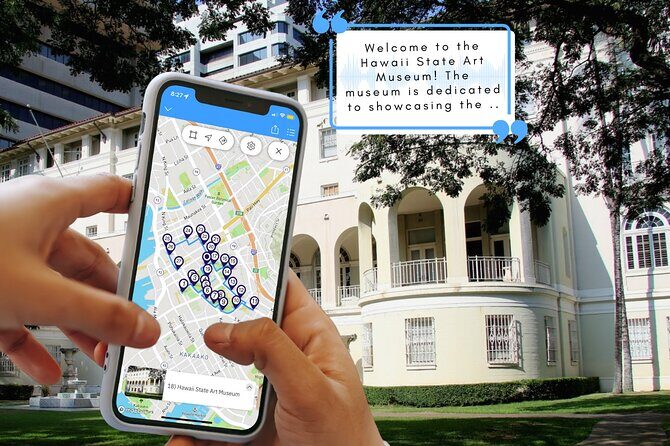
Once you’re outside, your phone acts like the guide: there’s a live GPS map showing your position along the route, and the commentary plays automatically as you reach each point of interest. This is a big deal if you hate “tour pressure.” You’re not waiting for a group. You’re not rushing to hit a schedule. You can take the route as slow or quick as you want.
One more practical note: this is a smartphone experience, but the device itself isn’t included. You’ll also want to think about sound. The narration can play from your device speaker, but if you’re walking near traffic and crowds, earbuds will help a lot.
You can also read our reviews of more walking tours in Oahu



Ali’iolani Hale and King Kalakaua: Start With the Hawaiian Kingdom
The tour kicks off with Ali’iolani Hale, known as the House of the Heavenly Kings. You’re not just looking at an old building here—you’re given the backstory that helps it make sense. Learning the name first is useful. It reframes the stop from a random government-looking structure into a symbol tied to Hawaiian leadership.
Right away, the audio context connects Ali’iolani Hale to King Kalakaua and the Hawaiian Kingdom. You’ll hear that this building dates to 1879 and was built for Kalakaua. That timeline helps, especially because downtown Honolulu has layers—older sites close to newer civic buildings. Once you understand the era, you’ll start noticing patterns in what was built, what was preserved, and what got replaced.
This is one of those tours where the physical walk and the story work together. Standing still for a minute lets the meaning land. Then you’re off again, with the next landmark already feeling more connected than isolated.
Kamehameha I, Kanaina Building, and Patsy’s Statues: Monarchs You Meet on Foot
After Kalakaua, the tour shifts into the legends and legacy you can literally point to. You’ll visit a statue connected to King Kamehameha I and hear the folklore tied to him. It’s the kind of storytelling that turns a monument into a memory of who mattered and why—without needing a museum ticket.
Next comes the Kanaina Building, listed on the National Register of Historic Places since 1978. The narration frames it as an important example of Victorian architecture in Hawaii. That detail is handy because it teaches you what to look for: style is a clue. You can spot the building’s character and understand it as more than just an attractive facade.
Then the tour gets personal and specific with Patsy. You’ll hear about her accomplishments and why the tour leads you to a statue honoring her. This part of the walk is valuable because it isn’t only about kings and queens. It shows how influential people shaped Honolulu in ways you may not expect if you’ve only heard the big royal names.
One caution: some of the stops are more visually dramatic than others. The audio helps bridge that gap, but if you’re the type who needs every stop to feel like a postcard, you might find a couple points less eye-catching while still interesting in story form.
Reading Rooms, Sailors, and Honolulu’s Oldest Church: Everyday History You Can Hear
Honolulu’s downtown isn’t just politics and royalty. One of the tour’s best strengths is how it brings everyday life into the conversation.
You’ll visit a place described as a haven for book lovers that started as a simple reading room in 1879. The narration gives it a practical, almost humorous reason: it was established to keep unruly sailors out of mischief. That twist makes history feel grounded. It’s not abstract. It’s a real social response to the port and the people moving through the city.
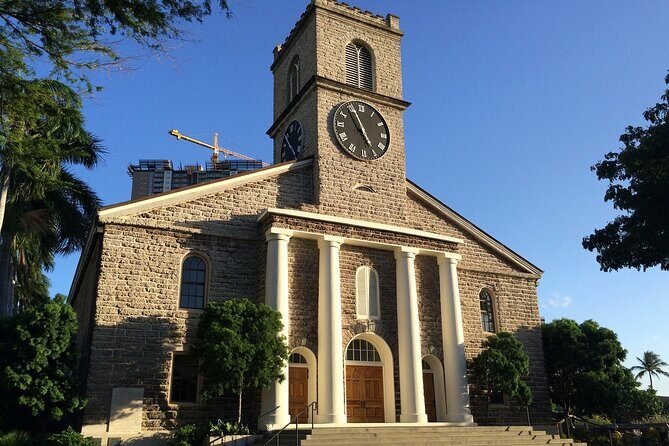
Then you’ll hear about Hawaii’s oldest church. Even if you don’t linger long, the audio turns a church stop into a timeline marker. It helps you understand that the city’s identity formed through worship, community, and shared spaces—often long before modern downtown development.
The emotional center here is that the tour doesn’t jump only between major figures. It also makes you aware of institutions—reading rooms, places of worship, civic spaces—that shaped daily routines. That’s the kind of context that makes future visits around town easier to interpret.
Lunalilo’s Burial Choice and the City Hall Dates Puzzle

Next, the tour explains why King Lunalilo refused to be interred in the Royal Mausoleum and instead is buried here. That’s a striking story, and it changes how you look at the site. Instead of reading it like a random memorial, you start thinking about personal choices, power, and the meaning of where someone’s story ends.
From there, the route moves into a city hall story with a built-in mystery. You’ll see years engraved on the front—1820 and 1915—even though the building was constructed in 1921. The narration covers what’s going on. If you like learning to read clues in architecture, this stop is a satisfying payoff.
The tour continues with another “look closer” moment: the weird-looking sculpture and the natural phenomenon connected to it. Even without seeing it as you walk, you’ll recognize the pattern of this part of downtown—things built to commemorate, warn, or explain what locals noticed in the world around them.
This section is where the self-guided format helps the most. You can stop, listen, and then decide how much time you need. If you’re tired from walking, you can keep moving. If you’re curious, you can linger right where the story is richest.
You can also read our reviews of more historical tours in Oahu




Frank Fasi Building, Seagull Schools Stone Folks, and the Bell of Nagasaki

As of 2006, Honolulu’s municipal Building is the Frank F Fasi Building, and the audio notes that its design is quite unique. This is a good moment to think about how Honolulu mixes old and new in a single downtown block. You can stand near modern civic architecture and still feel the earlier political and cultural layers nearby.
Then the tour becomes playful in a way that’s easy to miss if you’re only looking for big monuments. You’ll see relaxed-looking stone folks located on the grounds for Seagull Schools, an early childhood education center. The tone here shifts, but that’s the point. It keeps the walk human-sized.
You’ll also hear something unique with the Honolulu Police Department. The details aren’t meant to be dull. They help you understand how institutions in Honolulu carry history in their own ways.
And then comes a clearly meaningful symbol: the Bell of Nagasaki, presented as a symbol of peace and friendship between the United States and Japan. That’s one of those stops where the story gives your photo more weight. It’s not just a landmark; it’s a message.
This stretch of the walk works because it mixes civic life, education, and international memory. You’re not stuck in one lane.
Queen Emma and the Queen’s Conference Center: Hawaii’s State Capitol Moment in 1969

The tour reaches the Queen’s Conference Center, a historic and cultural landmark in Honolulu. You’ll learn it was the brainchild of Queen Emma and King Kamehameha IV, and you’ll get their vision behind the complex. When you understand who created it and why, the architecture starts to feel purposeful instead of simply old.
One of the key facts you’ll hear here: in 1969, this remarkable building officially became Hawaii State Capitol. That date matters because it bridges different eras of governance. It’s also a reminder that historic doesn’t mean stuck in the past. It means reused, reinterpreted, and kept in public life.
If you like your walking tours to explain why a place mattered at the time, this is a prime section. The audio doesn’t just say what you’re looking at—it frames how authority and community needs can change while still living inside the same walls.
At this point, you’ll likely feel the tour doing its job: turning a simple downtown stroll into a connected story about leadership, decision-making, and the city’s role as a hub.
Pedestrian Mall Energy to Hawaii Theatre Center: Art, Stage, and Creative Change

As the walk continues, it broadens out from government-centered landmarks into culture and public life.
You’ll hear about a regal manor built in 1842 by a clipper ship captain for his wife and young son. Then comes a museum dedicated to showcasing the art and culture of Hawaii, positioned as a must-see stop for anyone interested in island traditions. Even though you’re moving outside, the audio makes it clear that this part of downtown supports creativity, not just administration.
You’ll also encounter a church tied to dreams King Kamehameha and Queen Emma had for Hawaii. The narration then points you toward a small area originally named for Queen Emma, and as of 2016 it shares that honor with James and Abigail Campbell. These naming details matter because they show how Honolulu remembers people—and how remembrance can expand over time.
Next is a pedestrian-only street mall established in the 1960s to help revitalize downtown. This is a practical culture stop. You’ll see why foot traffic matters: it’s where people naturally pause, shop, and grab food without needing a long drive.
Finally, the tour ends with the Hawaii Theatre Center, opened in 1922, tied to vaudeville and silent film. The narration adds that the building was donated to the Kumu Kahua Theatre Company, formed to produce new works by Hawaii playwrights and pieces reflecting the diverse cultures and experiences of the people of Hawaii.
There’s also a neat detail about material choice—about substitutions for the bricks new-comers were accustomed to building with back home. The tour promises the answer right in this segment, and it’s exactly the kind of story that makes architecture feel like a local decision, not an imported one.
How Long It Takes, Who It Fits, and the Value of $10.99
The tour is listed as about 1 to 2 hours. In real life, that range is perfect for a slow afternoon plan. If you listen carefully at every stop, you may run closer to the longer end. If you’re the type to skip sections that feel less interesting, you can finish quicker—and the route design supports that.
Timing matters. One smart move is to start earlier in the day to avoid heat and sun. Downtown Honolulu can feel intense, especially if you’re walking under bright light with your phone in hand.
Now the value question. At $10.99 per person, you’re paying for a low-cost way to get guided context without paying separate admission tickets for each site. The tour includes the mobile ticket, downloadable audio, a live GPS map, and automatically played commentary. The catch is also important: attraction tickets are not included. So treat this as a walking-and-learning experience, not a substitute for paid entry where entry is required.
This tour fits best if:
- you want a guided-feel history walk but prefer doing it at your own pace
- you’re visiting downtown for a short window and want a structured route
- you like hearing the stories behind statues and civic buildings
- you’re traveling as a group and want something private just for you
Should You Book This Honolulu Historic District Smartphone Audio Tour?
Yes, if you want a budget-friendly, self-paced way to understand what you’re seeing in downtown Honolulu—especially if you like learning through the little details (dates, statues, naming stories, and the “why” behind landmarks). The combination of offline audio and live GPS makes it one of the more practical ways to explore the Historic District without getting lost or tied to a guide schedule.
Skip it or consider another option if you’re expecting to enter specific attractions as part of the experience. This tour is built around outdoor stops and narration, and attraction tickets are not included. Also, plan for sound: bring earbuds so you can actually hear the stories.
If you’re ready to turn a simple walk into something with meaning, this is a good bet for a couple hours in Honolulu.
FAQ
How long is the Honolulu Historic District smartphone audio walking tour?
It’s approximately 1 to 2 hours.
Where does the tour start and end?
It starts at Ali’iolani Hale, 417 S King St, Honolulu, HI 96813, USA, and ends back at the meeting point.
Do I need data or a signal during the tour?
No. The instructions say you can download on Wi‑Fi before, with no signal required or data used during the tour.
Is the tour available in English?
Yes, it’s offered in English.
What do I need to bring?
You’ll need your own smartphone or tablet. Headphones are optional, since audio can play from your device speaker too.
Are attraction tickets included?
No. Attraction tickets are not included.
Is this tour guided by a person, or self-guided?
It’s a private self-guided activity with tour guide commentary automatically playing at each point of interest.
Is the tour group limited to just my party?
Yes. It’s described as private, with only your group participating.
Can I cancel for a full refund?
Yes. You can cancel up to 24 hours in advance for a full refund.
Are service animals allowed?
Yes, service animals are allowed.