REVIEW · OAHU
Best Oahu Self-Guided Driving Audio Tour: Beaches, History & More
Book on Viator →Operated by History with Action · Bookable on Viator
Oahu by car can feel endless. This self-guided audio drive stitches the island together into one clear route, from Pearl Harbor all the way to Dole Plantation. I especially like the hands-free GPS playback that tells the story as you pass each spot, and I love that the download stays usable with offline maps once you set it up.
It also gives you real flexibility: you can pause for photos, skip anything you do not care about, and start again later without hunting down guides. The main drawback to plan for is that the audio depends on staying on the route and triggers; if you start in the wrong place or wander off too much, you can end up with cut-off or out-of-sync directions.
In This Review
- Key things to know before you go
- What This Oahu Audio Drive Really Gives You
- Route Basics: 88.5 Miles, 4–6 Hours, and Your Start-to-Finish Plan
- Pearl Harbor to Honolulu: USS Arizona Memorial and the Course of History
- Ala Moana to Diamond Head: Waikiki, Lookouts, and the Feeling of Place
- Southeast Oahu: Hanauma Bay Road to Halona Blowhole
- Waimanalo and Kailua: Windward Beaches and Heiau-Era Clues
- Byodo-in Temple to Kualoa Ranch: Japan-Inspired Faith and Movie-Set Oahu
- Gunstock Ranch to Waimea Bay: Wildlife, Turtle Sightings, and Sunset Beach Drama
- Ending at Dole Plantation: A Fun Finish Without Ending the Day
- Price and Logistics: How This Tour Compares in Real Life
- Practical Tips That Make the Audio Feel Smooth
- Who This Self-Guided Drive Suits Best
- Should You Book This Oahu Self-Guided Driving Audio Tour?
- FAQ
- How long does the Oahu self-guided driving audio tour take?
- What is the price for the tour?
- Where does the tour start and end?
- Does the tour include entry tickets or attraction passes?
- Is the audio tour available in English?
- Do I need internet during the drive?
- How do I start the tour once I arrive?
- Will the audio play automatically as I drive?
- How can I play the audio through my car?
- When should I download the app and tour?
Key things to know before you go
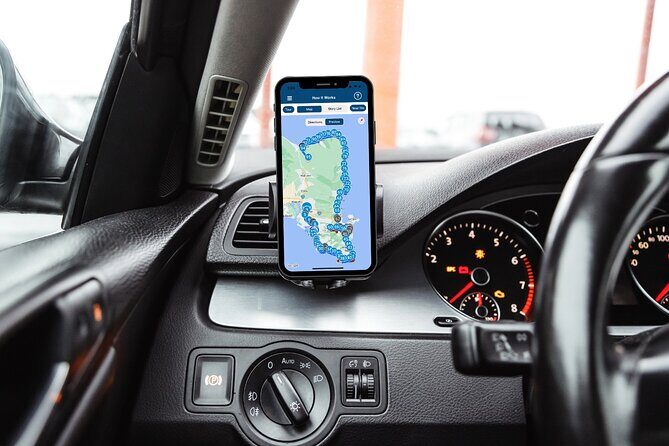
- 78+ GPS-triggered audio stories that play automatically as you drive
- Lifetime access, no expiry, so one purchase can cover multiple Oahu trips
- Works offline after download, which matters on the island
- Price per group (up to 4), so it can beat bus or guided tours if you have a car
- Turn-by-turn audio timing, so you will want to follow the route and speed limits closely
What This Oahu Audio Drive Really Gives You
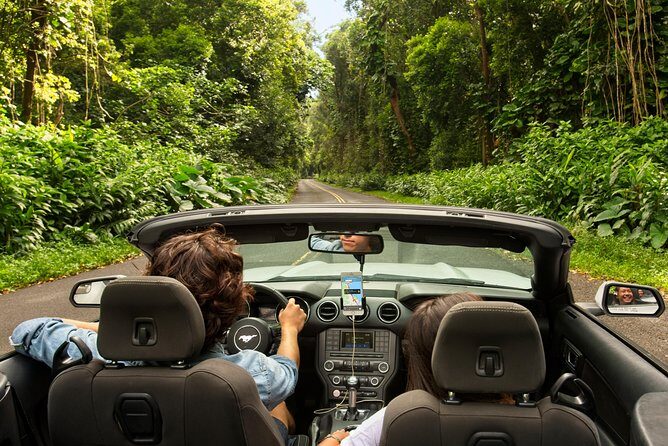
This tour is built for the way most people actually travel on Oahu: rent a car, follow a rough plan, then wing it at the beaches. The big win is that your phone turns into an on-demand storyteller. Once the tour is set up, the audio plays on its own as your location lines up with each stop.
You also get a practical kind of history. Instead of long museum-style lectures, the stories are short and focused, tied to what you can see from the road: memorials, royal-era landmarks, volcano scenery, and the kind of beach variety Oahu is famous for. The narration is designed to be easy to catch while driving, and that makes it work well even if you are not the history type.
Finally, the value is clear. It costs $16.99 per group (up to 4 in one car), and you do not pay extra for entry tickets through the tour. Add lifetime access and you have an easy “buy once, use again” situation.
You can also read our reviews of more guided tours in Oahu


Route Basics: 88.5 Miles, 4–6 Hours, and Your Start-to-Finish Plan
The route is about 88.5 miles and typically takes 4–5 hours to complete (the listed range is 4 to 6 hours). You start at the Pearl Harbor Historic Sites Visitor Center (1 Arizona Memorial Pl, Honolulu) and finish at Dole Plantation (64-1550 Kamehameha Hwy, Wahiawa).
You can start and pause whenever you want. One key detail: nobody meets you. You will be directed by the app to where the first story begins, then the rest follows through GPS cues. Also, you’ll want to respect the posted speed limits, because the app’s timing is tied to where you are.
Hours listed for the experience are 6:00 AM to 9:00 PM daily. If you want the drive to feel smooth, I’d plan to start earlier rather than later—Oahu traffic and parking are real, and you’ll want daylight for lookouts and beaches.
Pearl Harbor to Honolulu: USS Arizona Memorial and the Course of History

Stop 1 is the USS Arizona Memorial. This is where the story of modern Hawaii starts for most visitors. Even if you only take a short moment, the memorial context helps everything else later on your drive make more sense.
Right after that, Stop 2 is Pearl Harbor. The day-of-attacks context is the kind of background you can carry with you as you move through the Honolulu area.
Then you head into Stop 3: Honolulu. This is not presented as a flashy city introduction. Instead, you get the surprisingly humble origin story—how Honolulu became the hub you see today.
Stop 4 is Bishop Museum. You’ll pass it early, and the audio adds an extra layer: a love story behind the museum. It’s a good reminder that museums are also about people and motives, not just artifacts.
Stop 5 is Aloha Tower, the waterside symbol of arrivals. The tour notes it used to greet travelers arriving by boat, which makes it more than a photo stop—it becomes a timeline marker.
Stop 6 brings you to the King Kamehameha Statue, with the audio also referencing Iolani Palace as you pass. If you are into Hawaiian monarchy and identity, this stretch sets the tone early.
Ala Moana to Diamond Head: Waikiki, Lookouts, and the Feeling of Place
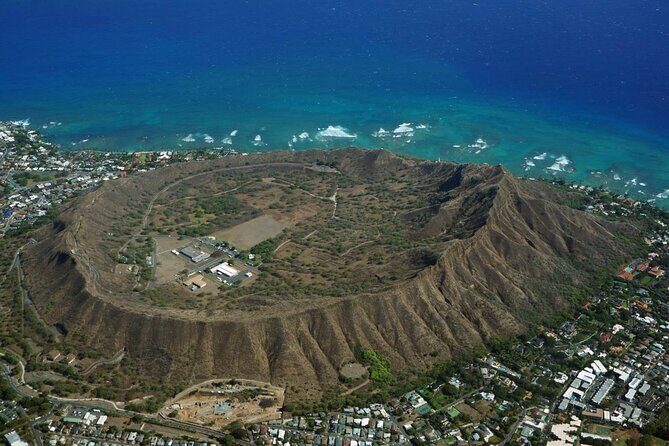
Stop 7 is Ala Moana Beach Park. The story twist here is how the area once functioned as a garbage dump—then how it became the clean swimming beach you see now. It’s a great example of how Oahu’s modern beauty came from serious change and work.
Stop 8 is King David Kalakaua Statue, and that matters because it keeps your head in the era of Hawaiian leadership while you drive through the city’s later layers.
Stop 9 is Waikiki Beach, famous through surfer Duke Kahanamoku. The tour uses him as a bridge from sport to culture—why this beach matters beyond the postcard.
Stop 10 is Kapiolani Park. The narration ties it to what the land used to be—marshland—so the green park you see becomes a “before and after” lesson.
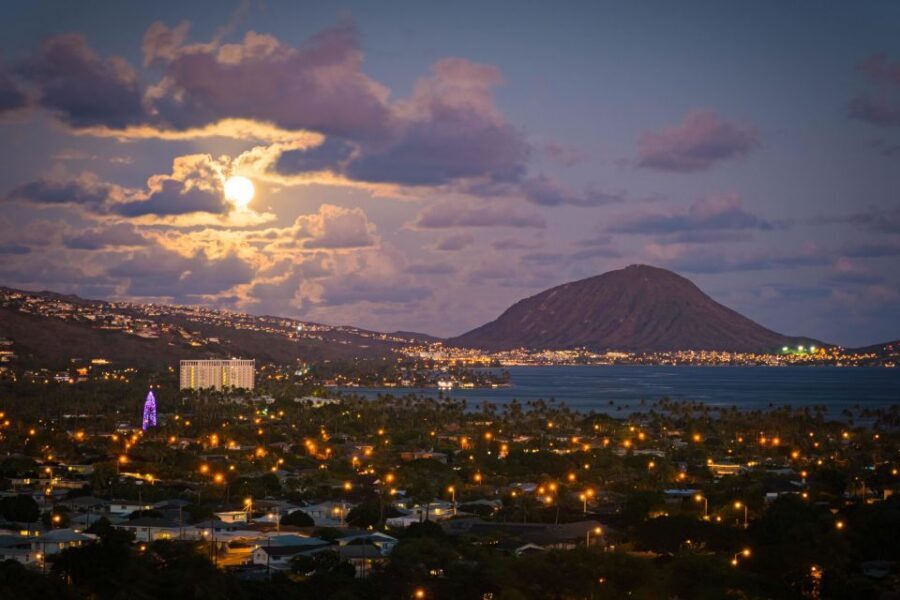
Stop 11 is Diamond Head State Monument, the crater left by volcanic explosion. Even from the road, it helps to know you are staring at a finished chapter of geology.
Stop 12 is Diamond Head Beach Park. Here the story gets fun: explorers once thought the sand’s calcite crystals were diamonds. The tour’s point is simple: Oahu’s scenery has always pulled people into mistaken wonder.
Stop 13 is the China Walls—natural rock formations that some compare to the Great Wall of China. You’ll likely understand why once you see the long, layered look from the roadside.
Southeast Oahu: Hanauma Bay Road to Halona Blowhole
Stop 14 is Hanauma Bay Lookout. Even if you do not go down into Hanauma Bay itself, the lookout gives you that “oh wow, this coastline is built for views” feeling.
Stop 15 is Lanai lookout. The narration frames it as a way to slip away from crowds. That matters because Oahu traffic and beach popularity can make “looking” feel like a job.
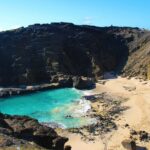
Stop 16 is Halona Blowhole Lookout, where waves force water up through a rock formation. This is one of those places where the audio helps you connect what you see with why it behaves the way it does.
Stop 17 is Pele’s Chair. The story here is mythology tied to volcanic formations. You’re not asked to treat it like science—you’re encouraged to treat it like meaning, which fits how many locals talk about land.
Stop 18 is Kaiwi State Scenic Shoreline. The tour keeps it simple: ocean views and a short stroll vibe. This is a good place to stretch your legs if you’ve been stuck in driving mode.
Stop 19 is Rabbit Island, once home to a rabbit farm and now mostly untouched by humans. It’s an easy stop to ignore if you are not into side stories, but it adds character to the coastline.
You can also read our reviews of more historical tours in Oahu




Waimanalo and Kailua: Windward Beaches and Heiau-Era Clues
Stop 20 is Waimanalo Beach. The narration emphasizes what you probably want most: less crowding than the big-name beaches, plus a white-sand setting sheltered by ironwood trees.
Stop 21 is Kailua, described as unassuming—except for the detail that Barack Obama spent winters here. It’s a small fact, but it makes the town feel less anonymous.
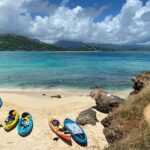
Stop 22 is Kailua Beach Park, which the audio frames as a favorite for kayakers and swimmers. This is a “choose your water mood” stop.
Stop 23 is Ulupo Heiau State Historic Site, an ancient Hawaiian temple called a heiau that’s described as almost 500 years old. This is where you get pulled back into the deep-time story of the islands, not just the modern visitor experience.
Stop 24 is Nuʻuanu Pali Lookout. The tour notes a nearby trail with sparkling waterfalls, so even if you do not commit to the hike, you at least get the cue that the Pali area is more than one viewpoint.
Stop 25 is Lulumahu Falls. The audio sets expectations for a more secluded feel, and that can be a nice contrast to the busier beaches you saw earlier.
Stop 26 is Hoʻomaluhia Botanical Garden. The tour calls out 400 acres of tropical plants from all over the world, plus the fact that there’s a campground within the garden. If you love gardens but hate the crowds, this is the kind of stop that can refresh your day.
Stop 27 is Heʻeia, with a wild legend behind the name. If you like myth as “how people explain nature,” this one will land well.
Byodo-in Temple to Kualoa Ranch: Japan-Inspired Faith and Movie-Set Oahu
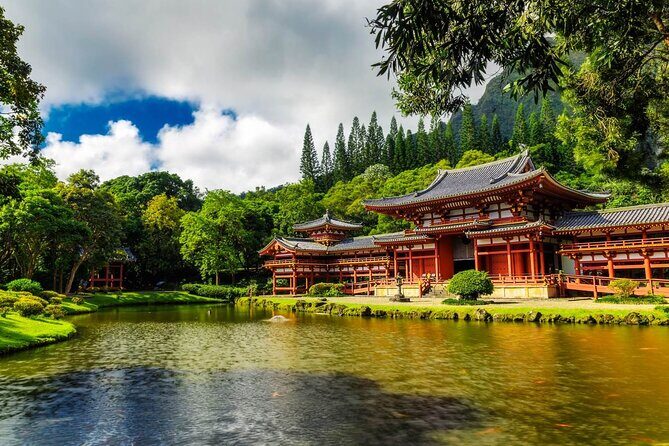
Stop 28 is Byodo-in Temple, described as an elaborate Buddhist temple built as an exact to-scale replica of temples in Japan. It’s a very specific kind of cultural stop, and the Japanese connection makes it easier to understand what you’re looking at.
Then comes a passing stop for Kualoa Ranch (not numbered in the route list). The audio connects it to film locations like Jurassic Park, Hawaii Five-O, and Lost. Even if you have seen these shows, it can be a jolt to realize the scenery is lived-in daily, not just a set.
Stop 29 is Kualoa Rock Beach. The narration points out lounge potential, with a practical warning: the rocky shore is uncomfortable to wade. That’s useful if you tend to assume every beach is beach-shaped.
Stop 30 is Kahana Bay Beach Park, and the audio adds the archaeological note: pre-contact relics found in the sand. It’s a good reminder to treat the shoreline as history, not just recreation.
Stop 31 is Ahupuaʻa ʻO Kahana State Park. The focus here is lush greenery and hikes for stretching your legs. If you want an excuse to get out of the car for longer than the usual pull-off photo, this is the kind of stop that fits.
Stop 32 is Hukilau Marketplace. The tour describes it as styled like a classic 1950s Hawaiian market. This is a sensible place for a snack or quick shopping without turning your driving day into a scavenger hunt.
Stop 33 is Malaekahana State Recreation Area, where beach campers can make mornings feel unforgettable. Even if you are not camping, it’s a good pause point if you want a calmer coastline stretch.
Gunstock Ranch to Waimea Bay: Wildlife, Turtle Sightings, and Sunset Beach Drama
Stop 34 is Gunstock Ranch, with the option mentioned for a horseback ride. If you have ever wanted to do something non-beachy on Oahu, this is a natural pivot.
Stop 35 is James Campbell National Wildlife Refuge. The audio tells a legend about how some of Oʻahu’s recognizable birds got their plumage. You might not spot every detail on the road, but it gives you a reason to notice birds if you do see them.
Stop 36 is Turtle Beach. The narration says that if you are here at the right time, you can see sea turtles. This is not a guarantee, but it is a solid “keep your eyes open” reminder.
Stop 37 is Kawela Bay Beach Park, framed as offering calm water thanks to an offshore reef. If you’re choosing beaches based on water conditions, this helps you do it on the fly.
Stop 38 is Sunset Beach Park, described as one of the best for a proper Hawaiian sunset. If you have flexible timing, this is your cue to save energy for the end-of-day light.
Stop 39 is Banzai Pipeline, one of Oahu’s infamous surf breaks. The audio emphasizes the danger—death-defying—and that not all surfers survive it. This is not a casual beach stop; treat it as a viewing moment.
Stop 40 is Shark’s Cove. The name comes from the way the cove looks from above, not from sharks in the water. That simple clarification helps you keep your expectations grounded.
Stop 41 is Waimea Bay Beach Park, with a nod to high-octane Hollywood like Point Break. It’s a fun connection, but the real point is that Waimea is a stage for ocean drama.
Stop 42 is Haleʻiwa Beach Park, the final beach stop with BBQs and picnic tables. This is a great place to regroup before the last stop.
Ending at Dole Plantation: A Fun Finish Without Ending the Day
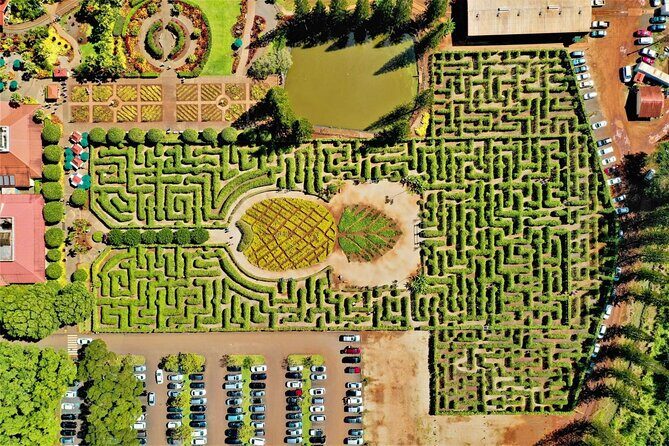
Stop 43 is Dole Plantation. The audio calls it a window back in time and mentions a train ride plus the world’s largest maze for family fun. It’s a satisfying way to land your drive because it gives you options besides just taking more photos.
If you still have energy after the audio ends, you can keep the momentum going here. If you are tired, this is at least an easy end point—one destination with a clear “done” feeling.
Price and Logistics: How This Tour Compares in Real Life
At $16.99 per group up to 4, the tour is priced like a value tool, not like a luxury guided experience. This matters if you are traveling as a pair or a family in one rental car. Instead of paying per person, you pay per car—so the math often works out quickly versus buses or paid guides.
Time also works in your favor. The drive is long enough to feel like a full day’s worth of highlights, but short enough that you can realistically split it. One of the most practical tips from the experience design is that you can divide it across days, then start where you left off.
The main “logistics” thing to take seriously is synchronization. The GPS triggers audio based on location, so you’ll want to:
- start from the designated beginning point
- stay on the route and stick to speed limits
- use the app on a stable setup (car audio via Bluetooth/USB/AUX)
If your car can connect cleanly, the whole thing feels smooth. If not, it can turn into a distraction—so plan your phone placement.
Practical Tips That Make the Audio Feel Smooth
Here’s how to make it easier on yourself from minute one:
- Download the tour on strong wifi/cellular before you rely on it offline.
- Once you arrive at the start, open the audio tour app and launch the correct Oahu version for your starting direction.
- For walking bits, use headphones if you want clearer audio without blasting the car.
- If you are the driver, set the volume so you can hear prompts without straining, and let a passenger handle the map.
Also keep expectations realistic about navigation. Some routes in Honolulu can be twisty and turn-heavy, and it can be hard if you are trying to drive and read at the same time. If you have a co-pilot, you’ll get a calmer experience.
Who This Self-Guided Drive Suits Best
This tour fits best if you:
- want history and nature in one road trip
- like the idea of beaches, lookouts, and short stops tied together in order
- have a car and want to keep costs down with group pricing
- prefer control over timing, meaning you can linger or skip
You might not love it if you need Google Maps-style turn-by-turn on your screen or if you strongly prefer a guide standing next to you clarifying every detour. The app is powerful, but it still assumes you will follow the route cues.
Should You Book This Oahu Self-Guided Driving Audio Tour?
If you want a one-purchase way to hit major Oahu highlights without paying guide rates, I think it’s a smart choice. The stories are short, tied to what you can see, and built for a driving day: memorials, royal landmarks, volcano scenery, gardens, temples, and the North Shore’s ocean energy.
Book it if you can commit to simple rules: start on time, download first, stay close to the route, and use a passenger for navigation when you can. Skip it only if you know you hate apps, hate following GPS triggers, or can’t manage turn prompts while driving.
FAQ
How long does the Oahu self-guided driving audio tour take?
The tour takes about 4 to 5 hours to complete, with a listed range of 4 to 6 hours.
What is the price for the tour?
It costs $16.99 per group for up to 4 people in one vehicle.
Where does the tour start and end?
The tour starts at the Pearl Harbor Historic Sites Visitor Center (1 Arizona Memorial Pl) and ends at Dole Plantation (64-1550 Kamehameha Hwy, Wahiawa).
Does the tour include entry tickets or attraction passes?
No. The tour does not include attraction passes, entry tickets, or reservations.
Is the audio tour available in English?
Yes, it is offered in English.
Do I need internet during the drive?
No. You’ll download the tour for offline use, and it works offline after download.
How do I start the tour once I arrive?
There is no meeting person. You’ll open the Action audio tour app onsite, start the correct tour version, then follow the first story’s point. The audio begins automatically.
Will the audio play automatically as I drive?
Yes. The tour uses location-based GPS cues so stories play on their own when you reach each stop.
How can I play the audio through my car?
You can connect your phone to your car stereo using Bluetooth, USB, or AUX. Audio playback is compatible with Apple CarPlay, and Android Auto support is listed as on the way.
When should I download the app and tour?
You should download the tour while you are in strong wifi/cellular, before you rely on offline use.