REVIEW · OAHU
Historical Honolulu Bike Tour
Book on Viator →Operated by Bike Tour Hawaii · Bookable on Viator
History moves faster on two wheels. This Honolulu tour strings together Waikiki, royal landmarks, and downtown sights with a guide telling you what you’d miss if you biked alone. I love the small-group feel (capped at 10) and the fact that you’re not just seeing big names like Iolani Palace—you’re also rolling past street art in Kaka’ako and learning about places with serious backstories. One thing to consider: it’s about 13.5 miles and you should expect regular stopping, so if you want a pure, nonstop workout, this is less your style.
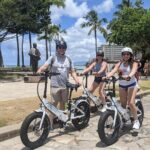
I also appreciate the practical side. You get a bike and helmet, plus bottled water and snacks, and you’ll keep moving on mostly flat routes with photo and rest stops built in. Do note that the tour runs in all weather, so you’ll want to dress for sun and rain and keep a steady pace through the full morning stretch.
In This Review
- Key highlights I think you’ll care about
- Starting at Kuhio Beach: Waikiki’s banyan, hula, and an easy first roll
- Waikiki to the Ala Wai: zoo sightings, golf-course edges, and the 1929 waterway story
- Neal S. Blaisdell Center and Elvis’s 1973 end-of-era moment
- Mission Houses, Kawaiaha’o Church, and the royal corridor you can actually feel
- Iolani Palace: the one royal palace on US soil
- Hawaii State Capitol (open-air) and Aloha Tower’s elevator views
- Kaka’ako murals, Magic Island, and the coastal parks that explain the city’s shape
- Chinatown fruit breaks and downtown riding you’ll remember for the food
- Practical ride reality: pace, safety, and what your morning will feel like
- Guides, photos, and how the narration makes the city stick
- Price and value: what $149 buys beyond just a bike
- Who this Honolulu historical bike tour is best for
- Should you book? My take on the Honolulu value call
- FAQ
- Where do I meet for the tour?
- What time does the tour start and how long is it?
- How far will I ride?
- What’s included in the price?
- What should I bring or wear?
- Is this tour good for families or kids?
- What’s the cancellation policy?
Key highlights I think you’ll care about
- A small-group ride (10 max) that keeps the narration and photo moments from turning into a traffic jam
- Helmets, bike, water, and snacks included so you start the day ready to roll
- Aloha Tower by elevator for sweeping harbor and city views without a long climb
- Royal Honolulu stops like Kawaiaha’o Church and Iolani Palace, tied to the guide’s storytelling
- Kaka’ako mural walls where you can snap pics in one of the most graphic parts of the city
- Fruit and street-market flavor in Chinatown as a break from sightseeing mode
Starting at Kuhio Beach: Waikiki’s banyan, hula, and an easy first roll
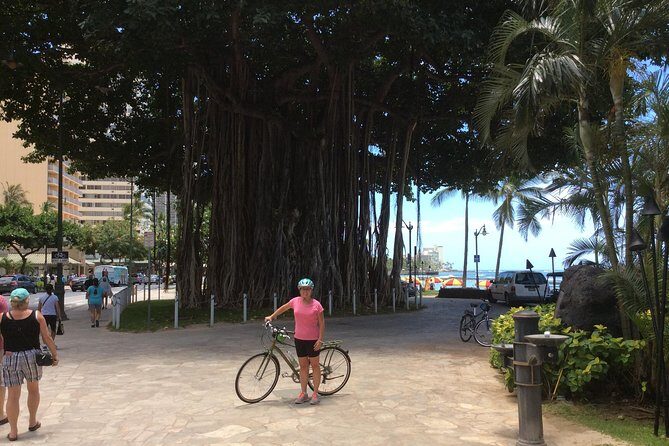
Your day begins at Kuhio Beach, at 2453 Kalākaua Ave, meeting your guide near the Kuhio Beach banyan tree area. With a 7:00 am start, you beat the worst of the heat and get to Waikiki while the morning still feels relaxed.
Stop-wise, you start at Kuhio Beach Hula Mound, a spot that matters because it’s tied to Waikiki’s long-running connection to free hula performances. The banyan canopy gives you a shady anchor for the tour’s opening context—history plus the lived-in beach vibe.
From there, the ride quickly shifts into “Honolulu, not just Waikiki.” You’ll learn how the shoreline and park areas got shaped into the city you see today, and you’ll get a guide who can point out what locals care about versus what’s purely tourist signage.
You can also read our reviews of more cycling tours in Oahu
Waikiki to the Ala Wai: zoo sightings, golf-course edges, and the 1929 waterway story
Once you roll past Waikiki Beach, you’re in the part of Honolulu that feels more like neighborhoods and landmarks than postcards. You’ll pass the Honolulu Zoo (the tour description calls it home to over 1,000 critters), and the narration is the point here: it’s less about the zoo itself and more about learning how this area developed alongside the city.
Next, you ride along the edge of a major golf course—one of the most popular courses in North America—and you get insider narration about what’s planned for the area, including the future addition of a Topgolf-style facility. Even if golf isn’t your thing, this kind of “what changed, what’s next” story helps you read Honolulu the way a local would.
Then you’ll hit the Ala Wai canals, described as a waterway developed in 1929. This is one of those segments that makes the bike tour worth it: it’s easy to zip past canals on foot, but on a bike you get the time to absorb the guide’s explanation of how the past, present, and future are tied together. I like this pacing because it’s still mostly easy pedaling while the story layer deepens.
Neal S. Blaisdell Center and Elvis’s 1973 end-of-era moment
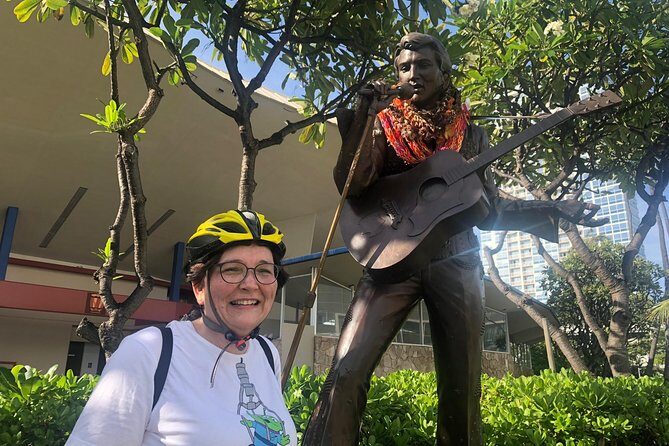
A key stop comes at the Neal S. Blaisdell Center. This is where the tour points you toward the King of Rock and Roll vibe, including Elvis Presley’s 1973 performance history and the statue there.
The useful part isn’t just celebrity trivia. When your guide explains why that venue matters, it helps you connect downtown Honolulu to global pop-culture moments—something you don’t get from simply walking past big buildings.
There’s also a practical reason this stop works on a bike tour. A short pause here gives your legs a breather while your brain switches from “views and motion” to “meaning and context.”
Mission Houses, Kawaiaha’o Church, and the royal corridor you can actually feel
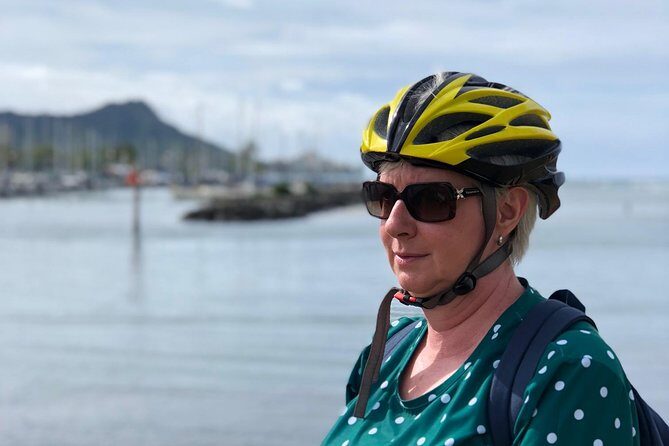
From downtown back toward the historic core, the tour leans hard into the royal and early contact-era story. Stop after stop, you’ll get specifics about what makes these places distinct.
At the Hawaiian Mission Houses Historic Site and Archives, you learn about Hawaii’s first western-style home—brought in by ship and constructed by the Hall Missionary family. The printing connection matters too: the site includes a printing press that printed the first Bible in Hawaiian language. This is one of those moments where you’ll see “history” in something more tangible than photos.
Then it’s Kawaiaha’o Church, where the tour highlights the use of over 14,000 coral stones. If you’re thinking architecture in general, this is your chance to understand why it’s not just pretty—it’s a physical record of materials, labor, and belief.
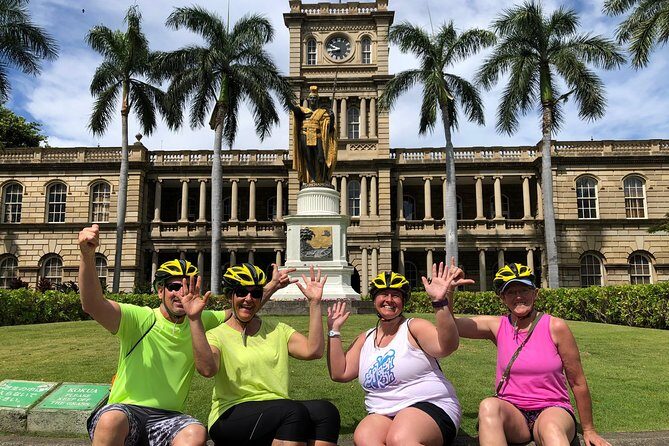
The ride keeps moving, and next you’ll stop at the King Kamehameha Statue. The tour description notes that the statue has been refurbished with real gold paint, framed as a way to show his power as a leader. Even if you’ve seen a Kamehameha image before, seeing it in context on a moving tour makes it feel less like a symbol and more like a landmark.
Iolani Palace: the one royal palace on US soil
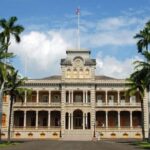
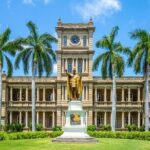
The tour’s biggest “wait, wow” stop is ʻIolani Palace. The description calls it the royal residence of the rulers of the Kingdom of Hawaii, and it emphasizes that it’s the only royal palace on US soil and a National Historic Landmark on the National Register of Historic Places.
Here’s what makes this stop click on a bike tour: you arrive at it with momentum behind you. You’re not just reading a sign; you’ve been rolling through Waikiki’s present-day scenes and downtown’s evolution. By the time you reach the palace, the city’s layers start to line up.
The tour stops are short, so don’t expect a deep, guided interior visit unless your exact tour time includes more time on-site. What you do get is the guide’s framing—why the place matters, what it represented, and how the surrounding civic landmarks connect.
You can also read our reviews of more historical tours in Oahu

Hawaii State Capitol (open-air) and Aloha Tower’s elevator views
Right after the palace corridor, you’ll roll toward the Hawaii State Capitol. The tour says it was constructed in 1969 and is the only open-air capitol in the entire USA. That open-air detail is more than trivia. It changes how you experience governance: you’re literally under the sky, surrounded by the city.
You’ll also get narration tied to Hawaii’s known natural powers, which helps turn the building from “another government structure” into a symbol of how the islands see themselves.
Then comes one of the most practical photo perks of the whole day: Aloha Tower Marketplace and the elevator ride up Aloha Tower. The tour description notes this is the first elevator in the Pacific, and it encourages you to imagine early 1900s arrivals by ship. The payoff is the harbor and skyline view—one of the best “I’m really in Honolulu” moments—without needing to climb for ages.
Kaka’ako murals, Magic Island, and the coastal parks that explain the city’s shape
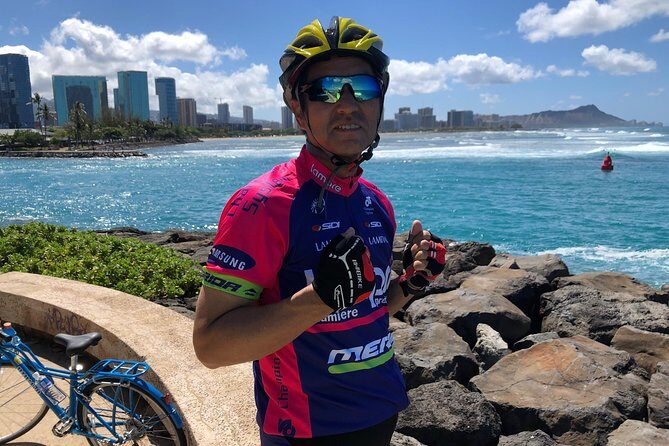
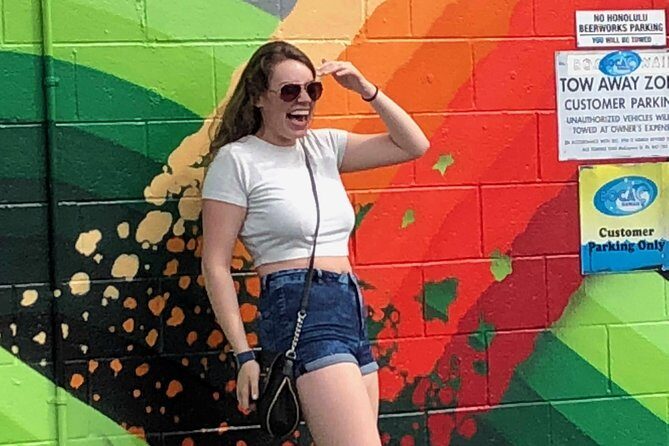
After the tower, you’ll head through Kaka’ako, a district known for street art. The tour highlights unique mural walls with dozens of paintings by local artists, and you’ll stop for photos here. This part matters because it gives Honolulu personality beyond monuments—color, creativity, and the kind of public art you usually miss unless you know where to look.
Next you’ll reach Magic Island, tied to Ala Moana Park. The tour description says the park was constructed in 1947 to make an unsightly landfill one of Honolulu’s most visited spots, and it describes Magic Island as reclaimed land with a history you should hear. On a bike, you can feel why this place draws people—open space, coastline views, and a sense of engineered coastline turned into leisure.
Near the end, you’ll ride along the final stretch past the Hawaii Convention Center, including a pathway lined behind it with ficus trees. This is a nice wrap-up segment because it’s visually pleasant and keeps the ride from feeling like a checklist of stops.
Chinatown fruit breaks and downtown riding you’ll remember for the food
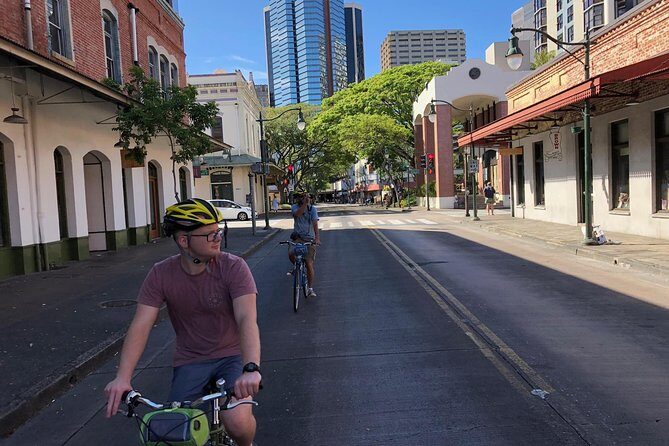
Even though the itinerary lists several major landmark stops, the tour experience includes time to ride through Chinatown and downtown, including a stop to sample exotic fruits. This is one of the best “small break, big payoff” ideas in the whole morning.
If you’re the kind of person who loves learning through taste, this segment gives you a more sensory take on Honolulu than photos alone. It also breaks up the emotional rhythm of royal sites and civic buildings with something lighter and local.
The smartest move here is to go in ready to try. When you have a bike tour guide telling you where the fruit is from and what to expect, you don’t need to guess or wander for long.
Practical ride reality: pace, safety, and what your morning will feel like
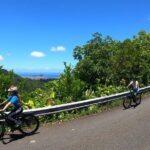
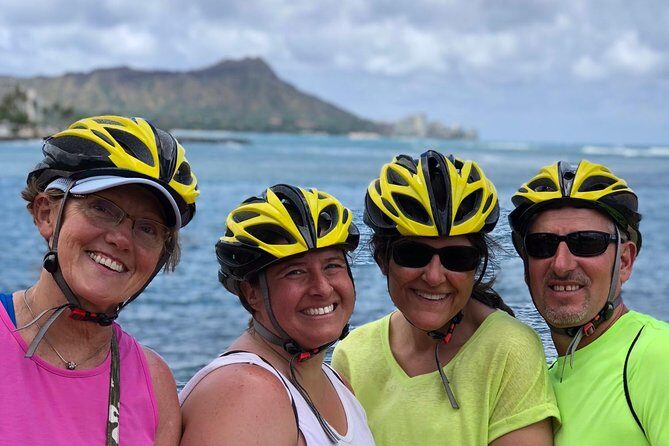
This tour is about 4 to 5 hours with an estimated 13.5 miles ridden. The route is described as mostly flat, and you’ll stop regularly for photo ops and rest stops, which keeps the effort from turning into a grind.
Bikes and helmets are provided, and the included bottled water and snacks are there for energy between stops. That matters in Honolulu mornings because the sun can still feel punchy, even around 7 am.
Safety and comfort are also part of the story. The tour is capped at 10 travelers, which generally means less jostling at turns and fewer arguments about who stops where. Still, keep in mind that one negative note in the feedback came from a time when the group felt larger than expected, making it harder to settle and enjoy the flow. If that kind of crowding would bother you, I’d pick the earliest time slot available and arrive a few minutes ahead so you start coordinated.
One more practical tip: since you’ll be stopping for photos and fruit, bring the mindset of “sightseeing with movement,” not “guided walking tour with breaks.” You’ll enjoy it more if you let the ride pace guide your day.
Guides, photos, and how the narration makes the city stick
The standout pattern in the feedback is the quality of the guiding—especially for the way the guide keeps things moving while sharing details. One guide name that comes up often is Kelly, and the notes praise him for helpful pacing, lots of photo-taking, and sharing those photos after the tour.
There’s also mention of audio support, including a speaker system that helps everyone hear the narration as you pedal. That’s a big deal on a bike tour. Wind and movement can make it hard to catch details, so if your tour run uses a clear audio setup, you’ll get more out of every stop.
I also like that this style is not just facts. You’re shown where to find great eats, beaches, and local favorites after the ride—small but useful guidance that helps you plan the rest of your trip without guessing.
Price and value: what $149 buys beyond just a bike
At $149 per person, you’re paying for more than the bike rental. You’re buying:
- a local guide who connects places into a story you can repeat later
- helmet, bike, water, and snacks included
- a route that strings together major sites and local areas without you needing to map every turn
What makes the price feel fair is the mix of high-recognition landmarks and “why this place matters” stops. If you were trying to DIY this route, you’d still have to solve the big problems: parking, safe navigation, figuring out where to stop, and paying for guide time to explain the layers of Honolulu.
Also, several stops are described as free admission areas on the tour schedule, meaning you’re mainly paying for the guided experience and transportation—not an expensive “ticket marathon.” One consideration: this tour includes entry-adjacent moments and short stops, so if you want long, inside-only access to every building, you might pair this with a separate ticketed visit later.
Who this Honolulu historical bike tour is best for
This is a smart fit if you:
- want a morning activity that combines exercise and sightseeing
- like learning street-level stories, not just big-name photos
- want a guided route through areas like Kaka’ako and Chinatown that you might skip on a quick visit
It’s also a good choice if you’re traveling with a partner or solo. The feedback includes multiple notes about how helpful photo support is when you don’t have someone to take pictures for you.
If you’re very sensitive to crowds, you’ll want to pay attention to the group cap and start time so you get the calmest ride possible.
Should you book? My take on the Honolulu value call
Book this tour if you want one efficient morning that turns Honolulu into a story—from Waikiki’s beach traditions, to downtown civic landmarks, to murals and harbor views. The combination of mostly flat riding, included gear and snacks, and a guide who makes stops feel connected is the reason it earns strong ratings.
Skip it (or consider a different style) if you want long museum-style hangs, or if you prefer to chart your own route without a structured set of stops. This tour is built for motion, not wandering.
If you can handle 13.5 miles at a steady pace with regular breaks, you’ll come away with more than photos—you’ll understand how the city’s pieces fit.
FAQ
Where do I meet for the tour?
You meet at Kuhio Beach, 2453 Kalākaua Ave, Honolulu, HI 96815, USA, at the Kuhio Beach banyan tree area (Kuhio Beach Hula Mound).
What time does the tour start and how long is it?
The tour starts at 7:00 am and runs about 4 to 5 hours.
How far will I ride?
The riding distance is listed as 13.5 miles.
What’s included in the price?
The tour includes a bike, helmet, bottled water, and snacks, plus National Park fees.
What should I bring or wear?
The tour operates in all weather conditions, so dress appropriately. The tour description also notes a moderate physical fitness level, so wear shoes and clothing suitable for riding.
Is this tour good for families or kids?
Children must be accompanied by an adult.
What’s the cancellation policy?
You can cancel for a full refund up to 24 hours in advance. If you cancel less than 24 hours before the experience starts, the amount paid is not refunded. The tour may also be rescheduled or refunded if canceled due to poor weather.