REVIEW · OAHU
1.5-Hour Guided Whale Watching Tour
Book on Viator →Operated by Ocean Outfitters Hawaii · Bookable on Viator
Whales don’t wait around. This fast North Shore whale-watching tour runs from Hale‘iwa and moves quickly between two prime areas, aiming right at the spots where wildlife shows up.
Two things I really like: the 18 passenger max keeps it personal, and the crew’s style stays practical so you can actually watch instead of getting lectured. One possible drawback is that this is a fast, sometimes choppy ride with a more open, Zodiac-style setup—so you’ll want the right expectations (and a light layer for wind).
In This Review
- Key Points If You’re Short on Time
- Why This 18-Seat North Shore Boat Finds Wildlife Faster
- Getting Oriented at Hale‘iwa Boat Harbor
- Waimea Bay Stop: Reddish-Water Country and Winter Swell Season
- North Shore: Surf-Warning Water and the Search Zone Between Hotspots
- What Wildlife You’re Most Likely to See
- Crew Style, Safety Moves, and the Captain’s Chairs Factor
- Comfort Tradeoffs: Fast, Windy, and Not Built for Everyone’s Back
- Price and Value: Is $99 Worth It for 1.5 Hours?
- Who Should Book This Whale Watch (and Who Might Skip)
- Should You Book?
- FAQ
- How long is the whale watching tour?
- How much does it cost?
- Where does the tour start?
- What’s the group size?
- What language is the tour offered in?
- What if the tour is canceled due to weather?
- Can I get a refund if I cancel?
Key Points If You’re Short on Time
- Small 18-seat boat: less crowding, easier viewing when wildlife appears
- Fast-moving Zodiac-style vessel: reaches hotspots quickly instead of drifting for long stretches
- Local experience from Kevin and crew: clear guidance and calm, safety-first handling on the sling steps
- Waimea Bay + North Shore surf zones: two different water “moods” that help keep the search focused
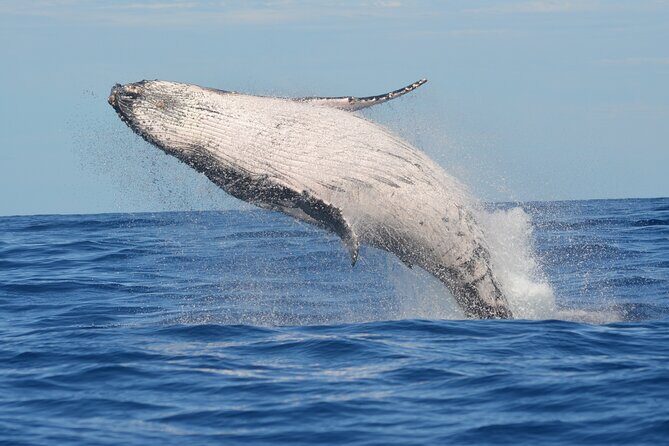
- Multiple species possible: humpbacks, dolphins, turtles, and sharks have all been seen
- Weather-dependent: when seas get rough, the ride is intense and motion sickness is a real factor
Why This 18-Seat North Shore Boat Finds Wildlife Faster
The biggest reason this tour feels good value for your time is the format: small group + quick movement. With only 18 people onboard, there’s less jostling when someone spots a spout or a fin cutting across the water. And because the vessel moves fast, you’re not stuck waiting in one place while the action slips by.
You also get a crew that balances hands-on help with letting you do the watching. The vibe is “we’re here to spot wildlife,” not “we’re here to fill every second with chatter.” That matters on a whale trip, because the best sightings often happen for a short window.
I also appreciate the “this is a working boat” feel. People report being able to take turns riding up top in the Captain’s Chairs, and the crew helps safely up and down the sling steps. It’s not just about speed—it’s about making the setup practical for real viewing.
You can also read our reviews of more guided tours in Oahu

Getting Oriented at Hale‘iwa Boat Harbor
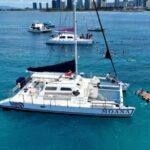
The tour starts and ends back at Hale‘iwa Boat Harbor (Haleiwa, HI 96712). From there, you’re on the water for about 1 hour 30 minutes, give or take.
This is also one of those tours where the basics you bring can make or break the comfort level:
- Sunscreen, hat, and water are a must in Hawaii wind and sun
- a light jacket helps when the breeze picks up
- if you’re sensitive to motion, pack motion sickness tablets rather than hoping for smooth water
The tour uses a mobile ticket and confirmation comes at booking. It’s offered in English, and it runs with a maximum of 18 travelers, so it stays structured without feeling like a mass event.
Waimea Bay Stop: Reddish-Water Country and Winter Swell Season
The first stop is Waimea Bay, located near Hale‘iwa at the mouth of the Waimea River. Locals note that Waimea means reddish water in Hawaiian, and that detail isn’t just trivia—it reminds you this is an active coastal environment where conditions shift.
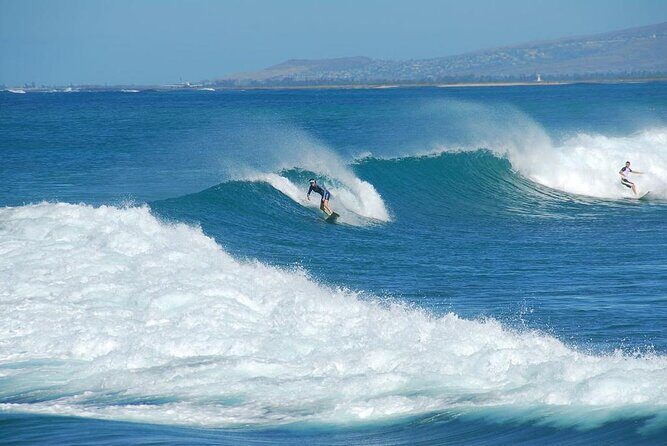
In the winter months, Waimea Bay is where some of the North Shore’s big, famous waves start showing their power. Even if you’re not there to surf, you’ll benefit from that context. Heavy surf areas often correlate with food movement in the water, and whales and dolphins tend to follow patterns created by currents and prey.
At this stop, the time is short—about 15 minutes—so think of it as a “position and scan” moment. You’re looking for signs like whale spouts, sudden surface activity, and changes in how birds or debris drift. The value here isn’t that you get a long sightseeing break; it’s that the crew uses the geography to set up the search.
One more thing: Waimea can be breezy and rough in season. If seasickness hits you fast, expect the first stretch to test your stomach. You’ll thank yourself for bringing the motion fix early.
North Shore: Surf-Warning Water and the Search Zone Between Hotspots
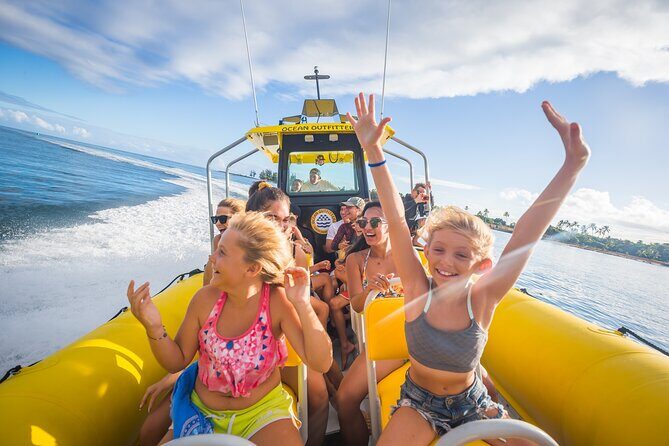
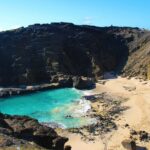
The second stop heads to the wider North Shore area, right in the belt of world-famous surf energy. This region includes places often mentioned alongside Sunset Beach and the Banzai Pipeline. It’s the kind of coastline pro surfers treat like a pilgrimage, and the ocean here has a way of changing quickly.
The tour notes that the fun tends to start when the National Weather Service issues high surf warnings for the North Shore. For your whale-watching experience, that matters because weather doesn’t just affect waves—it affects visibility, wind chop, and how often wildlife chooses to come close to the surface.
Again, the stop time is about 15 minutes, and that’s intentional. This tour is built around momentum: get to the right water, scan fast, then move if the scene isn’t there yet. If you’ve ever watched whales in a slow boat setup, you know how frustrating it can be to drift while the animals move on. Here, the goal is to reduce that gap.
A realistic expectation: some days the whales feel shy. People report “pre-season” days where guides spotted humpbacks from a distance rather than seeing full-time action. That’s still a win—just don’t plan your trip like every outing guarantees close whale blows.
What Wildlife You’re Most Likely to See
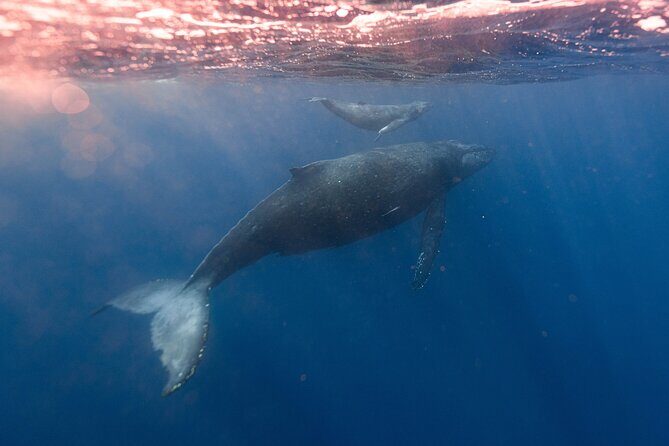
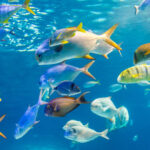
This tour’s mission is marine wildlife, and the strongest theme in the experience stories is variety. Many outings include multiple species, not just one big target.
Here’s what people have reported seeing:
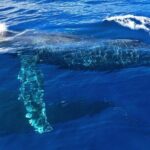
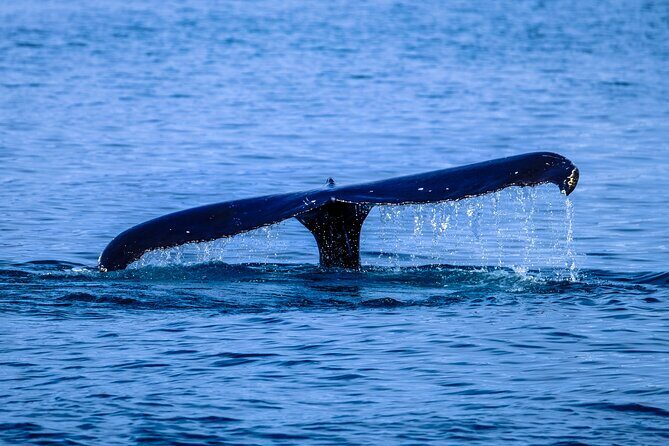
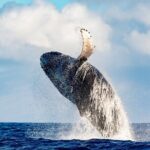
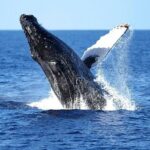
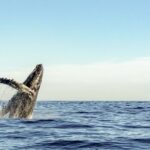
- Humpback whales (including several sightings on some trips)
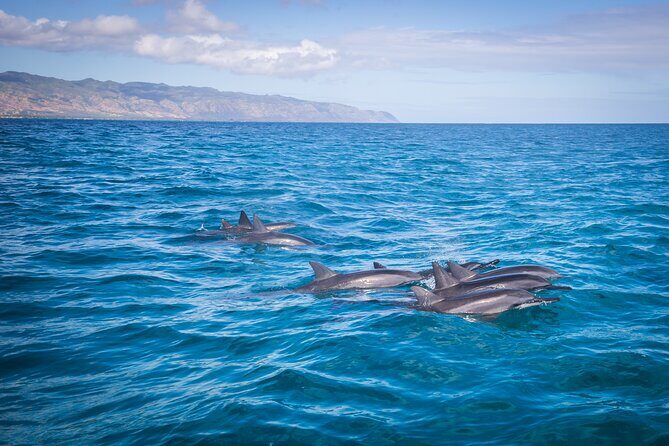
- Dolphins, often with fast, exciting surface behavior
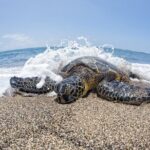
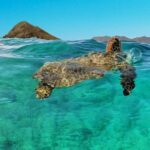
- Sea turtles
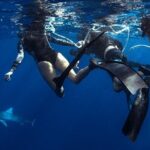
- Sharks, including Galapagos sharks
- Birds such as blue-footed boobies
- schools of smaller fish and other marine life
I like this mix because it makes the trip feel full even if whales don’t come right up close. One couple even had sharks and seabirds as the main wildlife, and still found the boat ride memorable. That’s a good sign for value: you’re not paying $99 only to hope for one perfect moment.
Still, be honest with yourself about odds. Some days you’ll see whales clearly—spouts, surfacing, maybe a closer pass. Other days you might see them briefly or only from farther out. That variability isn’t a scam. It’s ocean ecology and timing.
The crew’s approach helps. When wildlife shows up, they work to help everyone see it—fast. When wildlife doesn’t show up, they keep searching rather than calling it early.
You can also read our reviews of more whale watching tours in Oahu
Crew Style, Safety Moves, and the Captain’s Chairs Factor
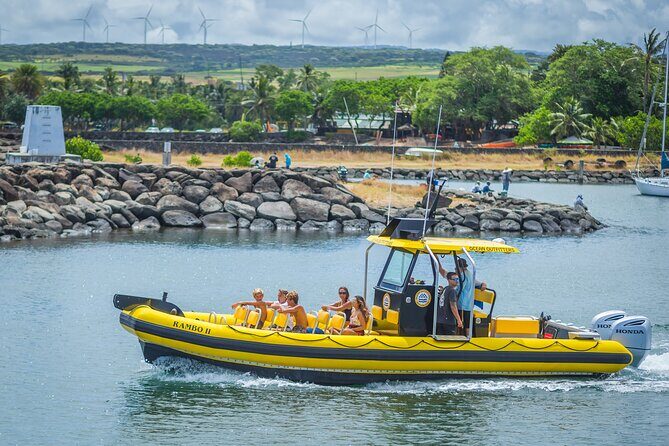
One of the most praised parts of this tour is how the crew manages people on a small boat without turning it into chaos. Safety is clearly taken seriously, especially with the movement around the sling steps and the turn-taking in the higher viewing spot.
You’ll hear a lot about Kevin, the owner/operator, who’s been doing this for years and grew up in the area. That kind of local continuity usually translates into two things you feel immediately:
1) the boat runs smoothly, because the staff knows the operational rhythm
2) the guidance stays useful, because they know what to watch for in this specific stretch of water
Another positive theme: the guides are informed but not nonstop. You can listen, then look, then ask questions when you actually spot something. That balance helps you enjoy the wildlife instead of spending the whole trip trying to track what the guide is saying.
If you want to maximize your odds of a good view, stay ready when the crew calls attention to something. Quick reactions matter on a fast-moving boat.
Comfort Tradeoffs: Fast, Windy, and Not Built for Everyone’s Back
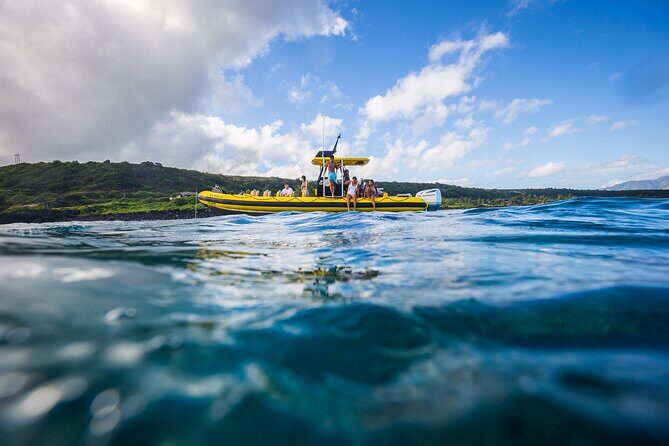
Let’s talk about the reality check part. This is a Zodiac-style setup with an open, active feel. People describe it as straddling-style seating rather than the kind of cushioned, shaded comfort you might expect on bigger charter boats.
That’s great for spotting wildlife because you’re closer to the action. But it comes with tradeoffs:
- the ride can feel like a roller coaster when the ocean is choppy
- you might get wet from spray
- there may not be much protection from sun or wind
- anyone with back issues should be cautious about the seating position
One review even called out the lack of the expected normal seating and shaded area. Another mentioned they needed motion sickness tablets when the boat was still and floating. So my practical advice is simple: plan for wind, plan for motion, and plan for a more physical boat experience than a “sit and relax” cruise.
If you do get queasy, don’t wait. Take medication before you feel bad. Bring layers you can tolerate getting damp.
Price and Value: Is $99 Worth It for 1.5 Hours?
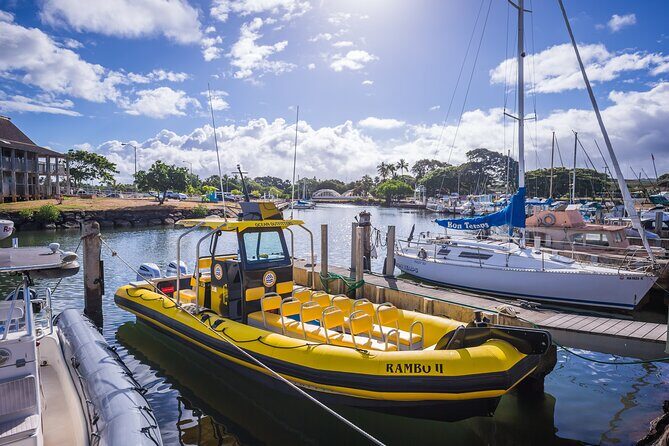
At $99 per person for about 1 hour 30 minutes, you’re paying for three things you can’t replicate on your own: a small group search, fast water access, and knowledgeable local guidance.
The value equation here is mostly about time and positioning. Whales and dolphins don’t schedule themselves around your itinerary. A tour that can reach hotspots quickly gives you more chances to match your outing with wildlife windows. That’s the core value.
The small group factor matters too. On larger boats, you can lose sightlines the moment everyone leans at once. Here, the 18-seat cap makes it easier for the crew to help you see what they see.
Also, the tour includes more than whales. When sharks, turtles, and dolphins show up on the same trip, the experience stops feeling like a gamble. Even on lower wildlife days, people describe the ride itself as fun and intense—so you still get something out of your money.
Is it guaranteed? No ocean tour is. But the combination of fast search + real animal variety + hands-on help is exactly what makes this price feel fair.
Who Should Book This Whale Watch (and Who Might Skip)
This tour fits best if you want:
- a close, active wildlife search rather than a slow scenic cruise
- a smaller group so spotting stays possible when the action happens
- a crew that helps you track behavior and where to look
- a chance at multiple marine species, not just one target
It’s also a strong pick for families and couples who can handle wind and motion. People have described it as fun and safe even in rougher conditions, and they liked the organization and friendliness.
I’d be more careful if you:
- have significant back problems (seating may be uncomfortable)
- get motion sick easily and haven’t used meds before
- need a shaded, fully sheltered boat environment
If you’re the type who gets cranky when the ocean is choppy, you may prefer a more comfort-focused tour style. But if you can roll with the North Shore vibe, this is a memorable way to spend a short chunk of your time.
Should You Book?
If your main goal is to maximize your odds of seeing marine wildlife off O‘ahu’s North Shore, this is a solid choice. The reasons are simple: small group, fast vessel, and a crew that clearly tries to make sightings work for everyone onboard. You’re also not locked into a single outcome—dolphins, turtles, and sharks often join the mix.
My call: book it if you’re prepared for a lively boat ride and you’ll pack for wind and motion. Pass if you need guaranteed calm seas or you’re very sensitive to the physical feel of Zodiac-style seating.
FAQ
How long is the whale watching tour?
The tour runs about 1 hour 30 minutes (approx.).
How much does it cost?
It costs $99.00 per person.
Where does the tour start?
The meeting point is Hale‘iwa Boat Harbor, Haleiwa, HI 96712, USA, and the tour ends back at the meeting point.
What’s the group size?
This activity has a maximum of 18 travelers.
What language is the tour offered in?
The tour is offered in English.
What if the tour is canceled due to weather?
This experience requires good weather. If it’s canceled because of poor weather, you’ll be offered a different date or a full refund.
Can I get a refund if I cancel?
Yes. You can cancel up to 24 hours in advance for a full refund. If you cancel less than 24 hours before the start time, the amount paid will not be refunded.