REVIEW · OAHU
Hawaiian Parasail Since 1977 from Waikiki Beach
Book on Viator →Operated by Hawaiian Parasail Inc · Bookable on Viator
Up over Waikiki, the air feels like a reset button. I love that Hawaiian Parasail has been flying since 1977, and I like the harness method that aims for a soft, dry start and finish on the boat. You’ll also get standout aerial views of Waikiki Beach and Diamond Head, with the chance of a water touch or a fully dry ride depending on conditions. The main thing to consider is that it’s not for everyone—health and mobility rules are strict, and there’s no photo service included.
This is a simple, powerfully scenic activity: harness on, boat pulls out, and you rise up to a maximum of about 500 feet for an airtime that depends on the length of the line. Weather matters, and the captain can call it a dry ride or add a brief water touch if the day allows it. It’s built for people who want big views without a complicated day plan.
If you’re hoping to carry valuables or camera gear up with you, plan carefully. And if you have a recent injury or medical condition that affects the nervous system, heart, or mobility, you’ll want to read the restrictions closely before you book.
In This Review
- Key things to know before you fly
- Waikiki parasailing that’s built for real views
- Meeting at Ala Moana: simple start, easy access
- How the takeoff and landing work with the harness method
- What you see from up to 500 feet over Waikiki
- Water touch or fully dry: what the captain can change
- The crew approach: helpful, calm, and focused
- Price and value: is $45 for an hour a fair deal?
- Who should book (and who should skip)
- Your ride flow: what happens during the flight time
- Weather reality: plan around the sea
- What to bring (and what to leave at home)
- Should you book Hawaiian Parasail from Waikiki?
- FAQ
- How long is the parasailing experience?
- Where does the experience start and end?
- What’s the minimum age to participate?
- Is photos service included?
- How high will we fly?
- Will the ride be dry or do we touch the water?
- What if the weather is bad?
Key things to know before you fly
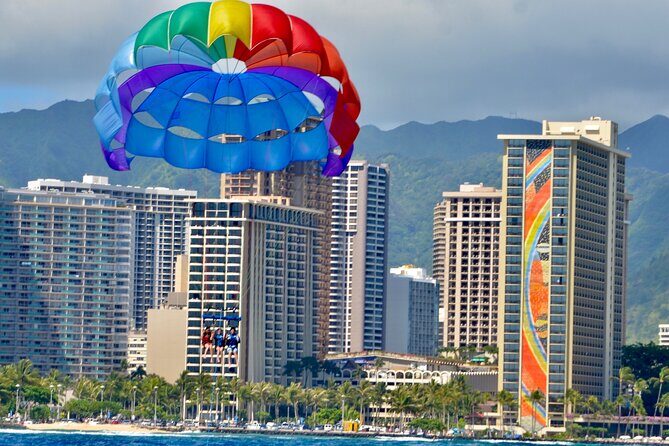
- Original operator since 1977: Long-running experience with parasailing in Waikiki.
- Harness method for soft dry takeoff and landing: Less splash, more comfort getting in and out.
- Up to about 500 feet: High enough for real perspective over Waikiki and Diamond Head.
- Captain decides water touch vs fully dry: Your ride can be kept dry or include a touch if conditions allow.
- Small group size (max 11): You’ll likely spend less time waiting around than on bigger operations.
- No photos service included: Bring your own plan if you want to document the flight.
Waikiki parasailing that’s built for real views
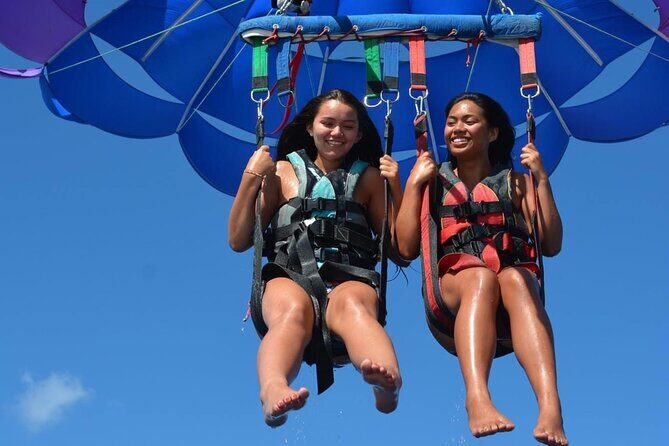
Parasailing in Waikiki is often sold as a thrill ride, but what you’re really buying is time up high with a clear view. Hawaiian Parasail has been doing this since 1977, which matters because it means the operation has had a lot of seasons to perfect the flow—how the boat moves, how they set up harnesses, and how they handle rider questions.
I also like that the flight is capped at a maximum altitude of about 500 feet. That’s high enough for a sweeping view, but it still feels like a controlled activity rather than something that turns into a major expedition.
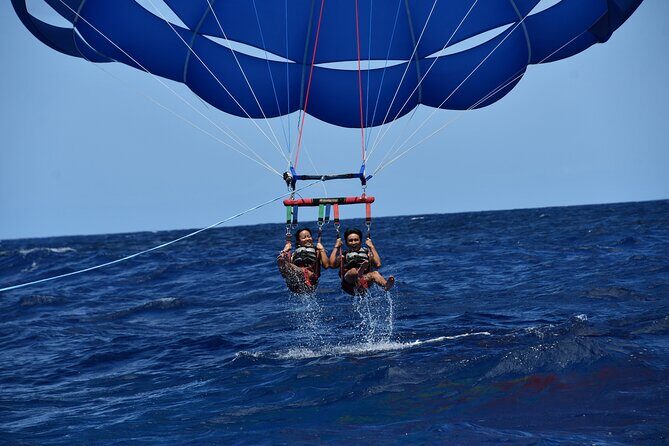
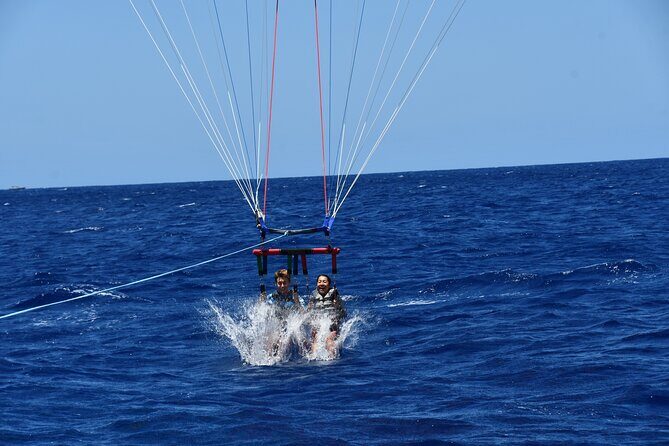
The other part I appreciate is the variety in how the ride feels at sea level. The captain has discretion, so depending on weather, you may get a completely dry ride or a water touch. Either way, the goal is a smooth start and finish using the harness method from the boat.
You can also read our reviews of more tours and experiences in Oahu.
Meeting at Ala Moana: simple start, easy access
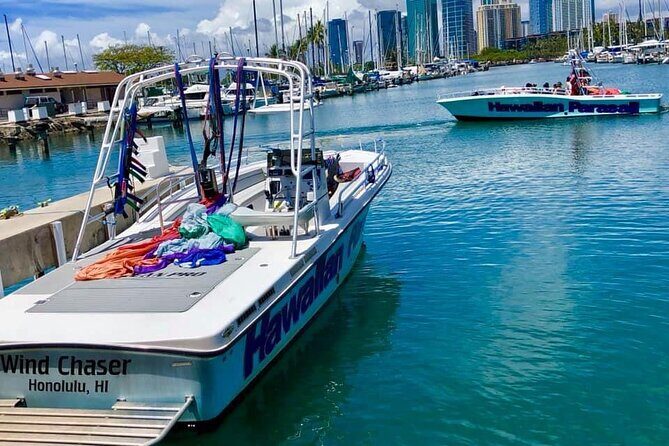
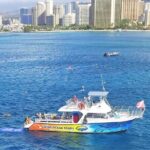
Your meeting point is at 1651 Ala Moana Blvd Parking in Honolulu. The activity ends back at the same place, so you aren’t left guessing how to get home after you’re finished.
They use a mobile ticket, and confirmation comes at booking time. That’s useful if you like to travel light and keep everything in your phone. They also note the location is near public transportation, which can help if you’re not driving.
In practice, you’ll want to show up with enough slack for check-in and harness time. Even if the whole experience is about an hour, parasailing runs on boat schedules and weather windows. Good days fill up fast, so plan to be on time.
How the takeoff and landing work with the harness method
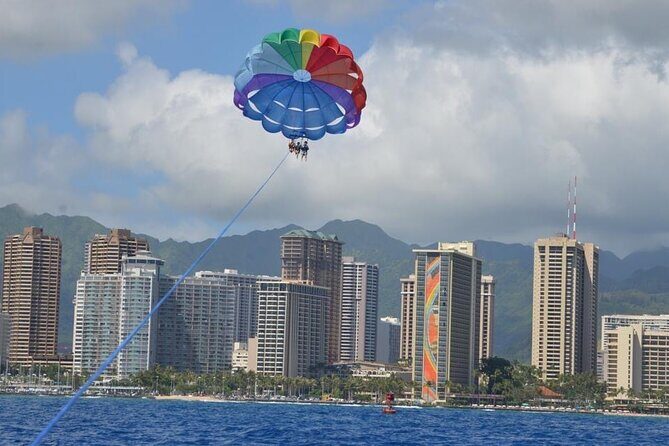
Here’s what makes this operation feel calmer than the horror-story version of parasailing. Instead of a chaotic splashy entry, Hawaiian Parasail uses a harness method for a soft, dry take-off and landing from and on the boat.
Once you’re harnessed, your experience shifts from “waiting” to “moving.” The boat pulls you into position, and the line lifts you upward. The tandem or triple flight airtime varies based on the length of the line. That detail matters because it changes how long you’ll get your best photos and best looking moments—so don’t assume every flight is identical.
Landing is the same story in reverse. You’re not bracing for a harsh stop or a complicated exit. The goal is a controlled return to the boat, then back to the meeting point.
What you see from up to 500 feet over Waikiki
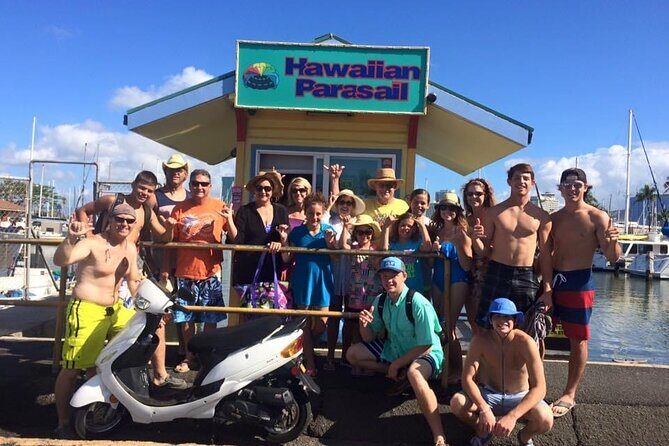
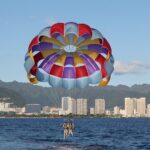
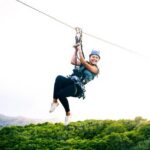
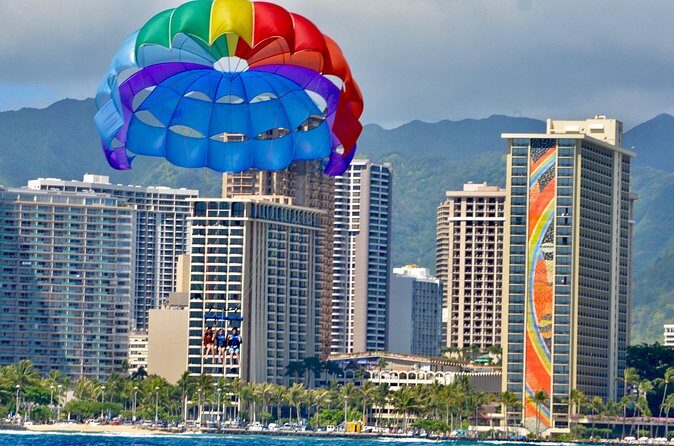
At a maximum altitude of about 500 feet, you’ll get a view that feels like it changes every second. Waikiki Beach isn’t just a long strip of sand from above. It’s the whole geometry of the coastline—water color, shoreline curves, and the way Diamond Head rises and turns the view into something more dramatic than a typical beach day.
Diamond Head is the headline. You get to see how it anchors the skyline, and you can spot how Waikiki wraps around it. The aerial angle also makes it easier to understand where you’ve been walking and where you’ll go next. It’s one of those experiences that turns your mental map from fuzzy to clear.
If you’re the type who loves photos, you’ll want to plan your stance before you’re up there. Think simple: hold steady, listen to instructions, and avoid trying to juggle bags or awkward items during the ride. The goal is less fuss and more clean shots.
Water touch or fully dry: what the captain can change
One of the coolest things here is that the captain can choose between a water touch and a completely dry ride. It’s not a gimmick you can count on every time, though. It depends on weather conditions and what’s safest and most comfortable for that day.
This is a smart setup for riders who want different experiences:
- If you want the classic “I got a little wet” memory, the captain may add a touch.
- If you prefer comfort and keeping everything dry, you may get a dry ride instead.
Either way, listen for the guidance before launch. They’ll help you understand what to expect so you’re not surprised when you’re at height and trying to figure out what happens next.

The crew approach: helpful, calm, and focused
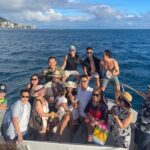
The overall tone I’d look for in a parasailing crew is simple: competent and relaxed. That’s what people highlight when they talk about Hawaiian Parasail’s team. The captain and first mate are described as awesome, helpful, and really good at calming the group.
That matters because parasailing is half thrill and half nerves. Even if you’re excited, you’re still strapping into harness gear and trusting a boat and line system. A crew that explains what to do and what not to do helps your body stop doing the panic math.
I also like that they give practical reminders. One piece of advice stands out: don’t bring items you wouldn’t want dropped in the water. That’s exactly the kind of guidance you want before you’re out there at height, where reaching for things is not an option.
Price and value: is $45 for an hour a fair deal?
At $45 per person for about an hour, this is priced for people who want a signature Waikiki activity without paying “private tour” money. You’re also paying for the operator itself—this is Hawaiian Parasail Inc., operating since 1977, with harness method handling and a flight experience that reaches up to about 500 feet.
What I consider good value here:
- The included gear: life jackets and harness.
- The big-view payoff: Waikiki Beach and Diamond Head from above.
- The structure: harness on the boat with a soft, dry start and finish.
What can make it feel less perfect:
- Photos service is not included. If you want professional images, you may need to plan for that separately.
- Your ride type (dry vs water touch) can change with weather, so you shouldn’t lock your expectations to one specific outcome.
Still, if your goal is a high-impact view for a reasonable price in a limited time window, $45 can be a strong match.
Who should book (and who should skip)
This activity lists a moderate physical fitness level, and it’s not recommended for people with recent or rehabilitating injury or surgery in the last 6–8 months. It also flags concerns for those with neurosurgery (heart, brain, or spinal cord) and outlines other conditions that make participation unsafe.
They also discourage participation for people with fragile conditions, mobility issues, or existing back and leg/hip/knee problems. There’s also a limit related to harness fit: people over 250 lbs should fit into the belt of the harness to fly.
On the age side, it’s open to ages 5 and up. Parents sign a liability waiver for minors 17 and under, and kids 15 and under must be accompanied by a parent or guardian.
If you’re generally healthy and comfortable with harness gear and being out on the water, this is a great “big view” activity. If you’re dealing with a medical situation that affects mobility, the nervous system, or cardiovascular stability, don’t treat those warnings as fine print.
Your ride flow: what happens during the flight time
Even without a minute-by-minute schedule posted, you can picture the experience flow because it’s how parasailing operations work on the ocean.
1) Meet and check in at Ala Moana Blvd Parking
You’ll handle the basics first, then get ready for harnessing.
2) Harness and life jacket
They include life jackets and harnesses. Listen to instructions before you get on board and before the line starts moving.
3) Boat setup and launch
The takeoff uses the harness method with an emphasis on soft, dry transitions.
4) The climb to max altitude
You rise to a maximum of about 500 feet. Airtime varies by line length, so the “best view” window might feel shorter or longer depending on your exact setup.
5) Captain’s call: dry ride or water touch
If conditions allow, you might get a touch of water. If not, you’ll stay dry.
6) Return to the boat and head back to the meeting point
The activity ends where you started at 1651 Ala Moana Blvd Parking.
For most people, the “wow” happens quickly once you’re up. So treat the flight like a moment to focus on the view, not a moment to multitask.
Weather reality: plan around the sea
Parasailing here requires good weather. If the activity is canceled due to poor weather, you’ll be offered another date or a full refund. This is normal at sea, and it’s also why booking ahead matters.
If your schedule is tight, I’d still book with realistic expectations. Waikiki weather can change. When it does, the captain and crew prioritize safe conditions over timing promises.
What to bring (and what to leave at home)
You’re given harness gear and a life jacket, so you don’t need to pack equipment. But you should still pack smart.
Bring:
- A small, simple item you can hold safely.
- Anything you need for personal comfort that you can keep secure on the boat.
Leave or avoid:
- Anything you wouldn’t want dropped in the water. The crew emphasis here is very clear: don’t bring items you’re not okay losing.
If you want photos, remember photos service isn’t included. That means plan to use your own phone or camera if you’re hoping for pictures, and be prepared that you won’t have the freedom to handle gear during key moments.
Should you book Hawaiian Parasail from Waikiki?
Book it if you want a straightforward Waikiki icon that delivers big views quickly, with a crew that focuses on calm instructions and harness setup. The combination of soft, dry handling, up to about 500 feet, and the Diamond Head + Waikiki viewpoint makes it a strong match for first-time visitors and for anyone who wants something more memorable than a beach walk.
Skip or rethink it if you’re dealing with a recent injury, recent surgery, mobility limitations, or certain medical conditions listed in the safety guidance. And if having professional photos matters to you, plan ahead since photos aren’t included.
If you fit the requirements and you can be flexible with weather, this is one of those activities that turns your Waikiki day into a story you can point to later.
FAQ
How long is the parasailing experience?
It’s listed as approximately 1 hour.
Where does the experience start and end?
It starts at 1651 Ala Moana Blvd Parking in Honolulu and ends back at the same meeting point.
What’s the minimum age to participate?
Participants must be 5 years old and over.
Is photos service included?
No. Photos service is not included.
How high will we fly?
Tandem or triple flights have a maximum altitude of about 500 feet.
Will the ride be dry or do we touch the water?
The captain decides based on weather. You may have the option of a water touch or a completely dry ride.
What if the weather is bad?
If it’s canceled due to poor weather, you’ll be offered a different date or a full refund.