REVIEW · HONOLULU
Honolulu: SUP (Standup Paddleboard) Yoga Class
Book on GetYourGuide →Operated by Yoga Floats · Bookable on GetYourGuide
A paddleboard can turn yoga into a whole new sport. This Honolulu SUP yoga class blends classic poses with ocean balance work, then ends with a calming savasana rocked by the waves. The setting at Ala Moana’s Magic Island also helps: it’s a familiar Honolulu beach vibe, just with boards and breath instead of crowds and chaos.
Two things I’d really prioritize: the instructor-led pose adaptations (seated, kneeling, and reclining options) and the fact that you stay in waist-deep water with an anchor dropped, so it’s not a survival test. My one consideration is the class is not for everyone: it’s not suitable for kids under 12 or for pregnant women, and you will be doing balancing moves that can be wobbly at first.
In This Review
- Key highlights worth your attention
- Magic Island SUP yoga: the beach-to-board setup
- The 75-minute flow: what happens from start to finish
- Seated meditation on the board: the calm before the wobble
- Adapting poses for water: how they keep it doable
- Standing balance and core work: your body learns fast
- The anchor detail: why this class feels safer than it sounds
- Savasana with ocean rocking: the best “worth it” moment
- Price and value at $53: what you’re actually paying for
- Who should book this SUP yoga class
- What to bring: your small checklist for an easy morning
- Booking decision: should you try Honolulu SUP yoga at Magic Island?
- FAQ
- Where do I meet for the SUP yoga class?
- How deep is the water during the class?
- How long is the class?
- What’s included in the price?
- What should I bring?
- Is it suitable for kids or pregnant people?
- Are there any rules about cancellations and timing?
Key highlights worth your attention
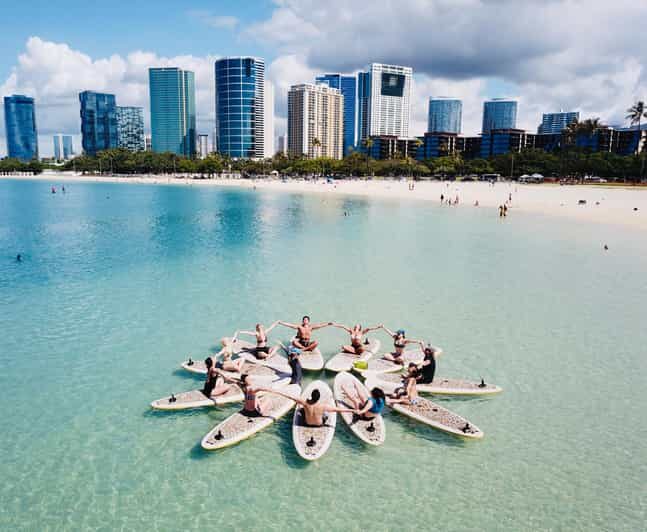
- Small group (up to 10): you get real hands-on coaching when your stance starts wobbling
- Anchor + shallow water: the whole class runs at waist-deep depth for extra comfort
- Meditation on the board: you’ll lie back and let the ocean’s rocking do the work
- Standing balance challenges: you’ll try firmer poses as you build comfort
- Options for every level: seated, kneeling, and reclining variations keep beginners included
Magic Island SUP yoga: the beach-to-board setup
You meet at the south end of the Magic Island parking lot at Ala Moana Beach Park. The location is easy to picture once you’re there: it’s a classic Honolulu waterfront scene, with the ocean right there and the vibe more relaxed than most big-city tours. Look for white and gray boards in the grass or the colorful Yoga Floats van.
Before you even touch the water, the instructor explains the key rules for getting comfortable on a paddleboard. The big idea is learning how to stay balanced and centered while the board floats under you. You’ll also get a quick grounding in how paddleboard yoga is different from yoga on land: tiny body adjustments matter more, and your core has to work continuously.
Then it’s wading time. You’ll go out with your board to waist-deep water, where the team drops an anchor so the board doesn’t drift away from your session. If you’re not a strong swimmer, this detail matters. You’re not being taken into deep water, and the routine is built around staying in a controlled, shallow area.
Storage is also handled. You’re provided with a safe place to store belongings, which keeps the pre-class scramble down. In a setting like the beach, that’s not glamorous, but it’s genuinely helpful.
You can also read our reviews of more tours and experiences in Honolulu
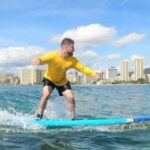
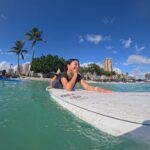
The 75-minute flow: what happens from start to finish
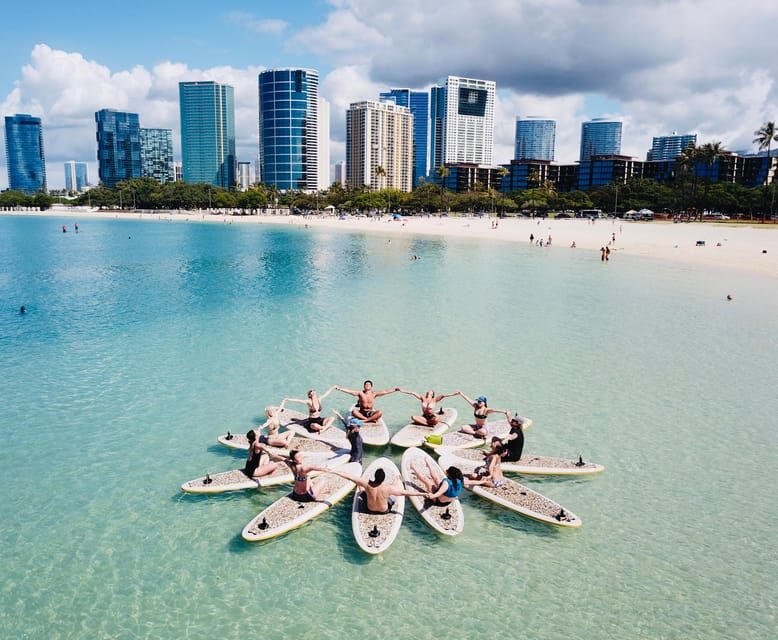
This is a 75-minute class, so it moves. You get a full session without it dragging into an hour-and-a-half of waiting for the next cue. The structure is straightforward: meditation to start, movement and balance work in the middle, then recovery at the end.
Here’s the typical rhythm:
- You begin with a seated meditation while still on the board
- The instructor leads you through a series of yoga poses adapted for water
- You’ll get chances to try standing and balancing positions as you feel ready
- There’s free time to revisit poses you want to practice or refine
- The class closes with savasana while the board gently rocks with the ocean waves
What makes this format feel good for real people is the built-in flexibility. During the guided portion, the instructor offers different options for different ability levels. That means you don’t need to be an advanced yogi to join, and you also won’t feel stuck doing only “beginner” versions if you’re more experienced.
Also, because you’re anchored and staying shallow, the class can focus on balance technique instead of turning into panic management. You still have to work, but it’s purposeful work.
Seated meditation on the board: the calm before the wobble
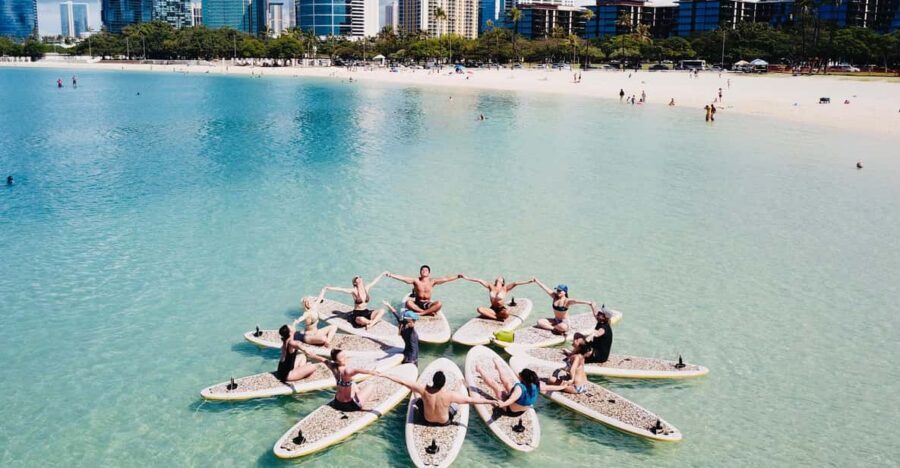
Starting with seated meditation sounds like a small detail, but it’s one of the smartest parts of the experience. Before your legs have to do anything dramatic, you practice being steady while your board floats. Your job is simple: find a comfortable seat, breathe, and learn how to stay centered.
When the ocean is moving, your body learns through sensation. That’s the point. You’re teaching yourself balance as a feeling, not as a concept. Even if you’ve done yoga for years, the board changes the physics. The board might tilt slightly, the water might nudge, and your core will notice.
One reason I like this approach: it makes the rest of the class less intimidating. You’re not thrown into standing first thing. You’re given time to get used to the motion, then the instructor gradually asks for more stability challenges.
And there’s a payoff later, too. When you finally lie back into savasana, you’ll already understand how the rocking works instead of treating it like random chaos.
Adapting poses for water: how they keep it doable
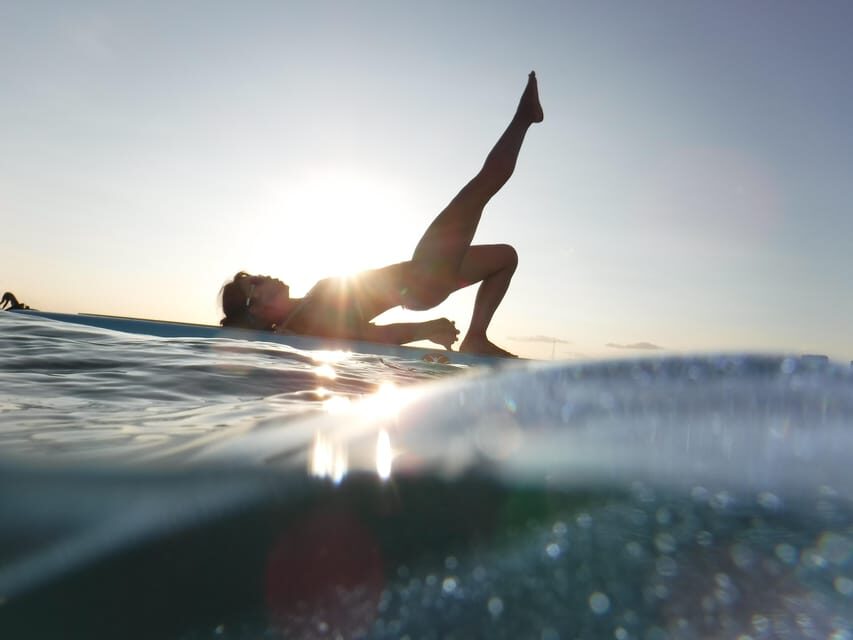
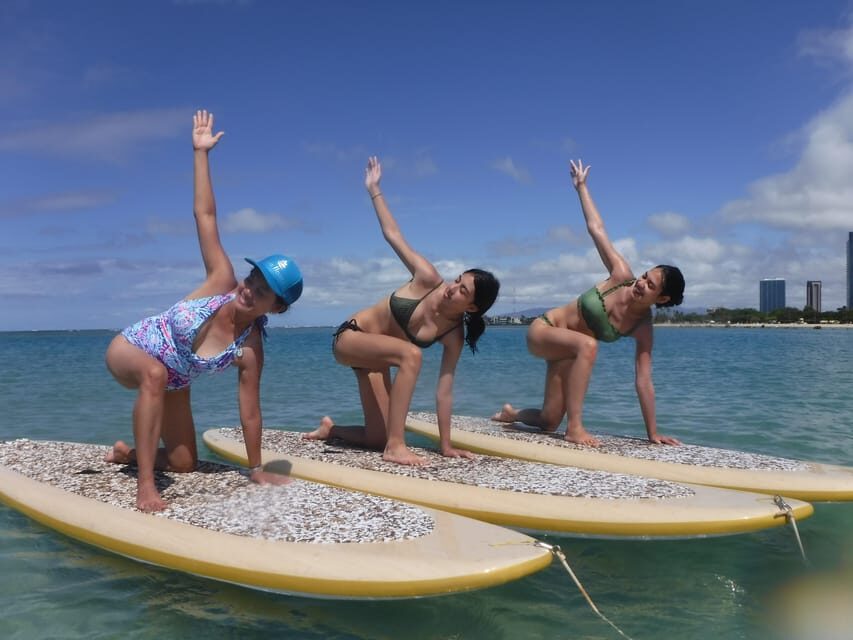
The class focuses on adapting familiar yoga moves to a moving, balancing surface. You’ll work through poses that can be done seated, kneeling, and reclining, then progress into standing and balance as you gain confidence.
This matters for two reasons. First, it keeps the class welcoming. The instruction style is designed so beginners can participate without feeling like they’re failing at yoga. Second, it keeps it challenging for experienced practitioners. Water balance turns even simple shapes into a “wait, my core is awake” kind of workout.
You also get personalized attention thanks to the group size. With a small group limited to 10 participants, the instructor can spot what’s going wrong. If your stance is too narrow, if you’re leaning the wrong way, or if your posture needs tweaking, you’re not just hoping the instructor sees you. The teaching is direct.
In the feedback, people repeatedly highlighted that the class feels both unique and still manageable across levels. One person called it chill and good-humored even when people fell, which tells me the teaching approach includes a safety-first mindset and a positive tone.
Standing balance and core work: your body learns fast
The standing poses are where paddleboard yoga starts to feel like a real balancing challenge. Expect to use your core constantly, not just for “a few reps,” but as ongoing stabilization. You’ll be working to keep your center of gravity over the board as the ocean shifts.
The best advice here is mental: don’t fight the movement. Use the movement. Think in small corrections—ankles, knees, hips, and ribs all adjusting in tiny ways. If you go rigid, the board will feel harder. If you stay flexible and responsive, you’ll look (and feel) calmer.
The instructors build in options as your confidence grows. That means you might start with seated or kneeling versions, then switch to a standing variation when it feels right. There’s also room to experiment during the free time. You can linger with a pose you want to get better at, instead of rushing through a one-size-fits-all flow.
And yes, there’s always the possibility of a slip. One of the class impressions described people falling in a good-natured way. Translation: treat it like part of the experience. If you fall, it’s not humiliation. It’s a reminder that you’re learning balance in real ocean conditions.



The anchor detail: why this class feels safer than it sounds
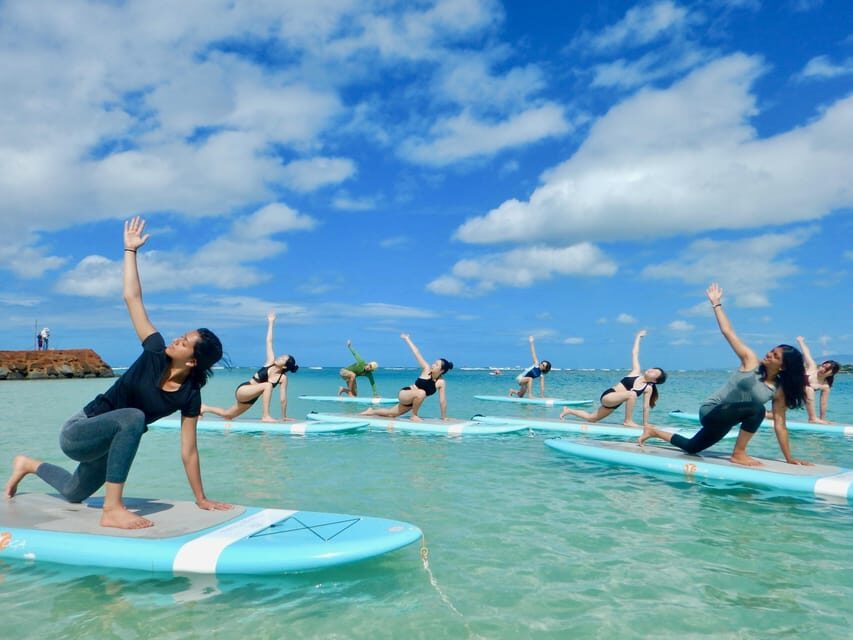
The most comforting logistics detail is that you drop an anchor in waist-deep water. That turns ocean yoga from “floating around” into “station-keeping while you practice.” Your board shouldn’t drift away during the session, so the instructor can guide you without constantly re-positioning.
This helps you focus on technique: how to hold your posture, where to place your weight, and how to breathe through the wobble. It also reduces stress. When you know you’re not drifting into deeper water, you can commit to the experience with less worry.
If you’re considering this class mainly because you want to try SUP yoga but you’re nervous about water, the setup is clearly designed for you. The whole class stays shallow.
Just note the practical angle: you’re still on a board with an ocean underneath you. So even with the anchor, balance is still the main challenge. You’re not signing up for a walk-in-the-park meditation. You’re signing up for a calm workout.
Savasana with ocean rocking: the best “worth it” moment
The class ends with savasana—lying down while your board gently rocks with the waves. This is the moment where paddleboard yoga becomes more than a challenge. It becomes a sensory reset.
Because you’re already anchored and in shallow water, savasana is likely to feel secure and supported, not scary. Your toes and fingers are free to trail in the water, which adds a satisfying, slightly playful touch to the closing relaxation.
This part is valuable even if you’re not a “deep yoga person.” It gives you a clear contrast between effort and ease. You spend the earlier part training balance and core stability, then you literally let the ocean move you while you recover.
And since the class is only 75 minutes, you leave with that post-practice calm still intact. It’s not a long grind that drains you. It’s a focused session that usually leaves you feeling energized and oddly serene.
Price and value at $53: what you’re actually paying for
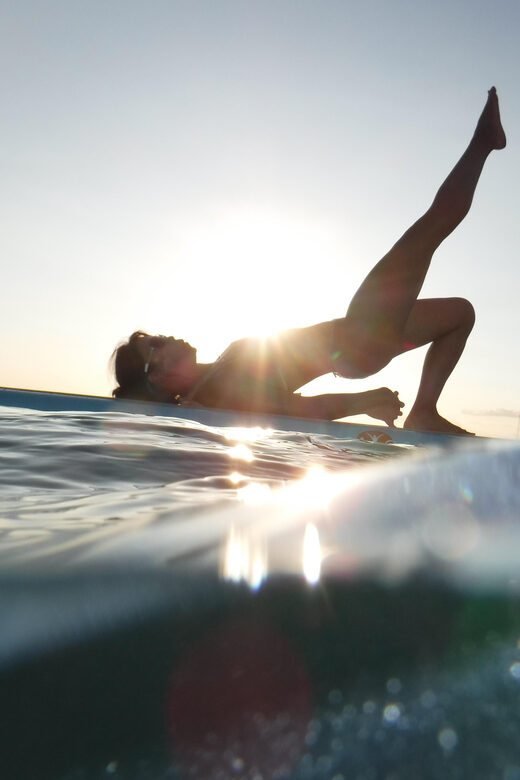
At $53 per person for 75 minutes, this is priced like a guided activity, not a casual beach hangout. The value comes from a few specific things you don’t get with DIY SUP practice.
You’re paying for:
- A professional guide who adapts poses and keeps you safe in the water
- All necessary equipment (so you’re not renting boards plus scrambling for a lesson)
- A small group size that allows individualized help
- A structured session from meditation to flow to savasana
If you tried to do this on your own, you’d need at minimum: the right equipment, a plan for safe practice, and enough knowledge to adapt yoga moves to balance conditions. This class bundles all that into one guided session.
There are extras you might consider, like a photo package for $10 per person, but that’s optional. If you want photos, plan for it early. If you don’t, you can keep your head clear and just practice.
Transportation isn’t included, so you’ll want to build that into your time. But once you’re there, the experience is very “hands-on” in the best way: you show up, get suited up, and get coached.
Who should book this SUP yoga class
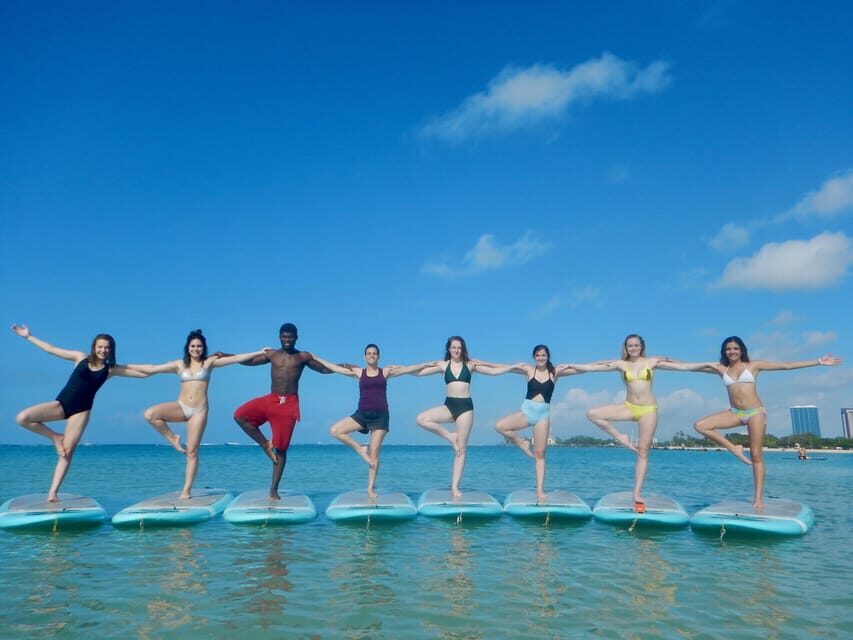
This is a strong fit if you want a Honolulu activity that’s active but not all sweat. You’ll work your core and balance, but it’s guided, options are offered, and the class stays in shallow water.
It’s also a good choice if you like learning from an instructor rather than figuring everything out by trial and error. Feedback specifically mentions that instructors are friendly, informative, patient, and helpful, even for people who hadn’t practiced yoga in a while.
Where it may not fit:
- If you’re looking for a kids’ activity, it’s not suitable for children under 12
- If you’re pregnant, it’s not suitable for pregnant women
- If you hate the idea of being in the ocean at all, this probably won’t feel like your kind of calm
If you’re traveling solo or as a couple, the small group dynamic can be a plus. You’re not swallowed by a big crowd. You get coaching, and the vibe stays relaxed.
What to bring: your small checklist for an easy morning
Bring the basics and don’t overthink it. The class asks for:
- Swimwear
- Towel
- Sunscreen
- Water
A practical tip: plan to be comfortable getting a little wet, and bring a towel that you actually want to use afterward. After savasana on a board, you’ll be near water the whole time, so drying off is part of the experience.
You also should follow the rules: no smoking and no alcohol or drugs. That keeps things safe and focused, especially when you’re balancing on moving water.
Booking decision: should you try Honolulu SUP yoga at Magic Island?
If you want something different from the usual beach routine, I think you should strongly consider booking this class. The best reasons are simple: waist-deep water with an anchor, a patient instructor who adapts poses, and a closing savasana that feels genuinely special because the ocean is part of the relaxation.
If you’re nervous about balance, start with the seated and reclining options first. The class is set up for you to build confidence, not to throw you into a full-on standing routine immediately.
If you can’t handle wobbly movement or you’re in a group with someone who needs a low-mobility experience, you might look at other activities. But for most people seeking an active, calming, Honolulu-in-the-real-world experience, this is a smart use of time.
FAQ
Where do I meet for the SUP yoga class?
Meet at the south end of the Magic Island parking lot at Ala Moana Beach Park. Look for white and gray boards in the grass or the Yoga Floats van.
How deep is the water during the class?
The boards go into waist-deep water, and the class stays shallow the entire time.
How long is the class?
The class lasts 75 minutes.
What’s included in the price?
A professional guide, all necessary equipment, and a safe place to store belongings are included.
What should I bring?
Bring swimwear, a towel, sunscreen, and water.
Is it suitable for kids or pregnant people?
No. The class is not suitable for children under 12 or for pregnant women.
Are there any rules about cancellations and timing?
Free cancellation is available up to 24 hours in advance for a full refund. You can also reserve now and pay later, depending on availability. If you have questions, call 808-585-1917 (they don’t receive text messages at that number).