REVIEW · HONOLULU
Oahu: Surf Lesson
Book on GetYourGuide →Operated by The surfing sensei LLC · Bookable on GetYourGuide
Surfing in Oahu, minus Waikiki noise. This beginner-friendly lesson runs at Ala Moana near the volleyball courts, and the whole vibe is more local than tourist-packed beaches.
What I love most is the small ratio (2 students per instructor), so you get real coaching instead of waiting your turn. I also like the fact that you’re learning on familiar Hawaii surf conditions without the Waikiki crush.
The biggest consideration: this is rain or shine, and it’s still an ocean session. If you hate getting wet, or you’re not comfortable being in cold spray and surf conditions, plan for that up front.
In This Review
- Key Things I’d Plan Around
- Ala Moana Surf Lesson: A More Relaxed Oahu Start
- The 90-Minute Game Plan: What You Actually Do
- Beach Review: Get Your Bearings First
- Learn the Basics: Paddling, Foot Placement, Balance
- Surf for One Hour: Time to Build Muscle Memory
- GoPro Cameras Included: Turn Learning Into Proof
- Small Group Coaching: 2 Students to 1 Instructor
- Surf in Hawaii Without the Waikiki Crowd: Why It Matters
- Gear and Fit: What’s Provided and What You’ll Feel
- Water Safety and “Respect the Ocean” in Real Terms
- Who This Lesson Suits Best
- Price and Value: Is $125 Reasonable for 90 Minutes?
- Rain or Shine: Plan for the Day You’re Actually Getting
- Should You Book This Oahu Surf Lesson?
- FAQ
- Where is the meeting point?
- How long is the surfing lesson?
- Is GoPro footage included?
- What’s included with the lesson?
- How big is the group?
- What languages are instructors able to speak?
- Will the lesson run if it rains?
- Who should not book this experience?
Key Things I’d Plan Around
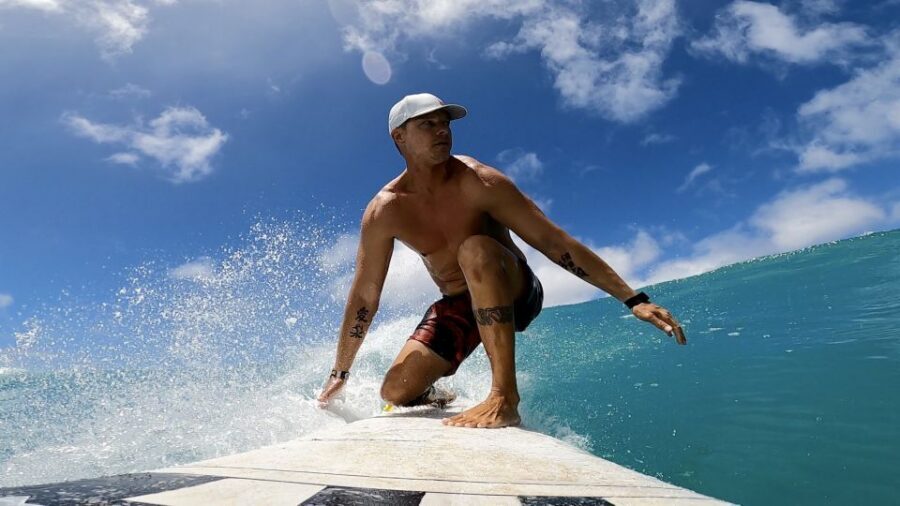
- 2-to-1 instructor focus means quicker corrections when your paddling or stance is off.
- GoPro cameras are included, so your lesson ends with actual footage, not just memories.
- One hour in the water is long enough to feel progress, especially for first-timers.
- Safety and wave respect are taught early, not tacked on at the end.
- North end Ala Moana meeting spot keeps logistics simple and cuts down on tourist crowds.
Ala Moana Surf Lesson: A More Relaxed Oahu Start
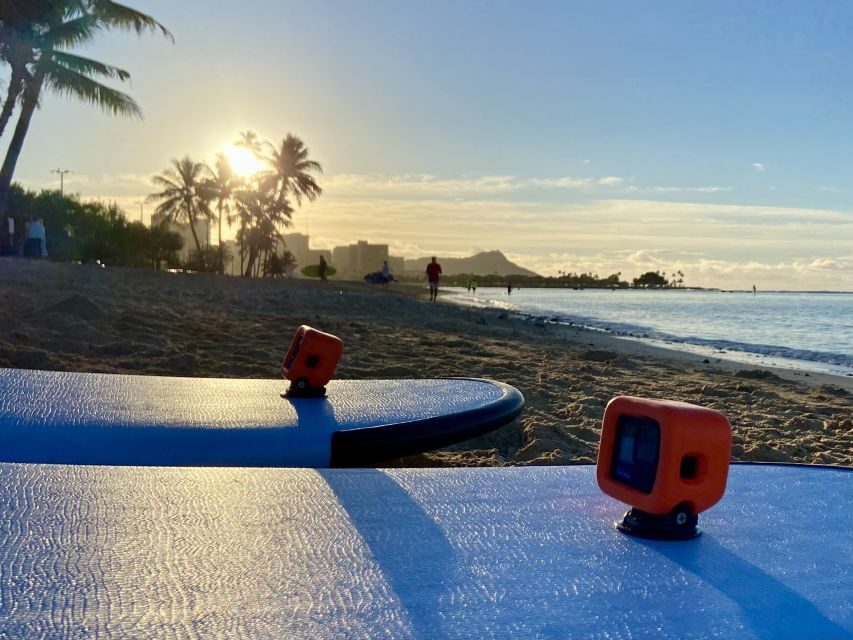
If you’re trying to learn surf in Hawaii, location matters. The North End of Ala Moana Beach Park is a smart choice if you want to experience real ocean fun without spending your whole day dodging beach chaos. You’re meeting near the volleyball courts and showers, so it’s easy to find the group and get suited up quickly.
This is also a great fit for beginners. The lesson is built around basics: how to get into position, how to stand (with foot placement and balance), and how to move around waves with good ocean sense. The tone is practical. You’re not just playing in the water; you’re learning a repeatable set of skills that makes your next attempt easier.
Now, a quick note on where this lesson sits in the spectrum. It’s not sold as a gentle “sit on the board and hope” experience. It’s still real surfing time, and the ocean does what the ocean does. That’s why the included gear and instructor attention matter so much.
You can also read our reviews of more tours and experiences in Honolulu
The 90-Minute Game Plan: What You Actually Do
The full session runs 90 minutes. The structure is simple: prep on the beach, then a solid block of surfing time.
Beach Review: Get Your Bearings First
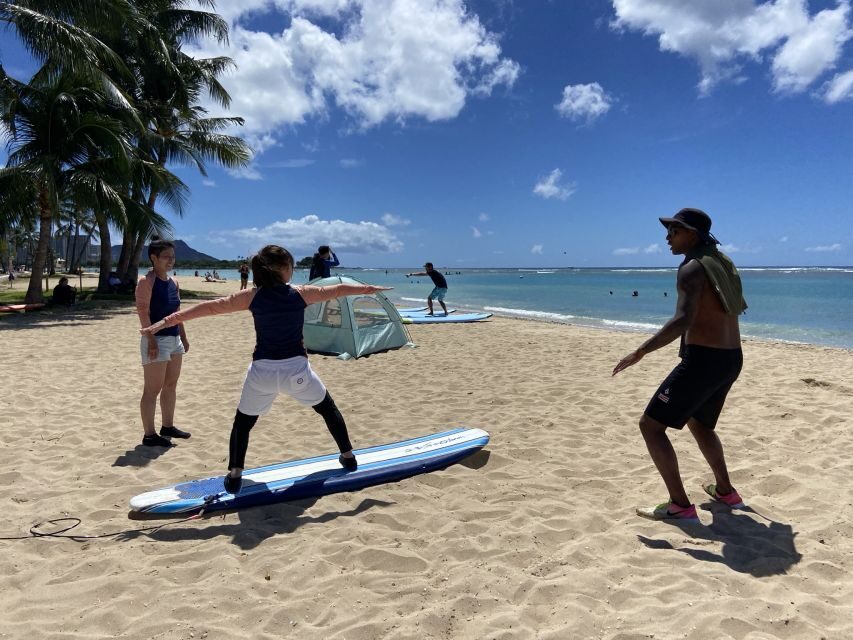
You start with a beach review of surfing basics. You’ll cover the foundational moves before you’re in the water—especially the parts that usually cause first-timer frustration. Think paddling technique, how to position yourself, and the basic rules for water safety and wave handling.
This part matters more than it sounds. Most beginners don’t fail because they lack courage; they fail because they’re fighting the board placement and the wave flow at the same time. By tightening up technique early, you’ll spend more time riding and less time just starting over.
Learn the Basics: Paddling, Foot Placement, Balance
You’ll work on three core skills:
1) Paddling
You learn how to paddle efficiently and get into the right position. That means less wasted energy and fewer awkward board angles.
2) Standing up
You practice how to stand on your board, including where your feet go and how to keep balance. This is where coaching really pays off. Small corrections can make a big difference between wobbling and standing.
3) Water safety
You get essential safety tips for navigating waves and respecting the ocean. This isn’t just for legal-style coverage. Surf is social and physical, and knowing what to look for keeps you safer and helps everyone share the water.
Surf for One Hour: Time to Build Muscle Memory
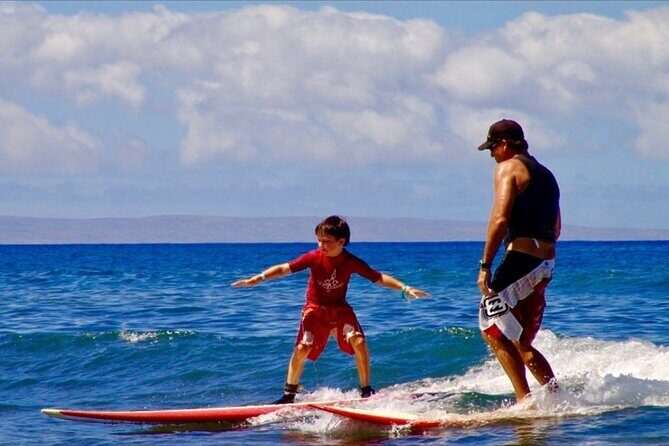
After the beach prep, you get an hour of surfing in the water. For a beginner lesson, one hour is a meaningful chunk. You’re not doing “one wave then done.” You’ll get multiple attempts, and that repetition helps your body figure out what your brain learned on shore.
And because your group is small, you won’t spend the whole time watching others. The coaching attention plus frequent attempts is what turns this from a fun photo op into actual skill-building.





GoPro Cameras Included: Turn Learning Into Proof
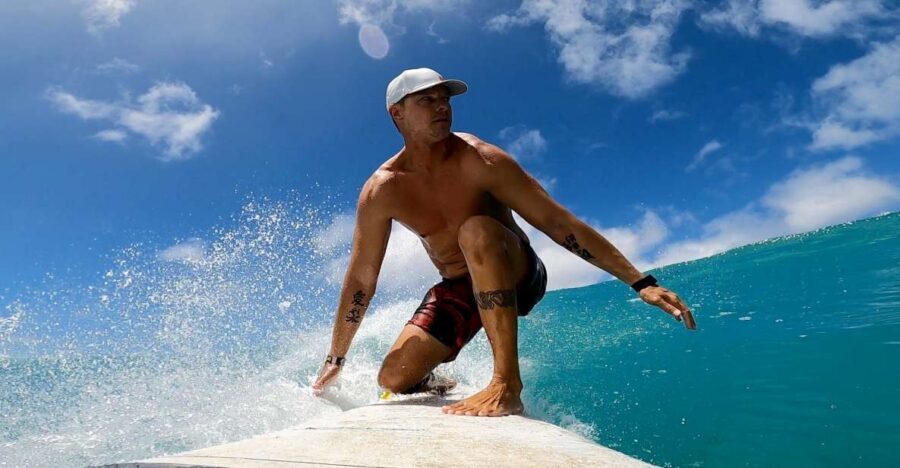
One of the most praised parts of this experience is the GoPro footage. The activity includes GoPro cameras, so you can capture your surfing moments instead of relying on blurry phone shots or hoping someone in your group gets the angle right.
For you, this has two big advantages:
- You can review your form later. When you watch yourself, you start noticing the tiny things: foot placement timing, paddle rhythm, and how you react as the wave lifts the board.
- You get a real memory. Surfing is fast. A single session can feel like a blur—video makes it feel real again when you’re back home.
Just manage expectations: GoPro footage is great, but it won’t magically fix technique. It does, however, turn the lesson into something you can learn from right away.
Small Group Coaching: 2 Students to 1 Instructor
The instructor-to-student ratio here is 2 student to 1 instructor. That’s the kind of detail that changes everything when you’re learning.
In a bigger group, you often get:
- one instruction,
- a long wait,
- and then you try again without much feedback.
With a small group, you’re more likely to get targeted corrections—especially for paddling and standing. It also makes the lesson calmer. You hear the directions, you see what the instructor is pointing out, and you can reset quickly between attempts.
Instructor languages listed are Japanese, Korean, and English. Even if you’re not fluent, having multiple languages available is a practical advantage for clear safety and technique coaching.
Surf in Hawaii Without the Waikiki Crowd: Why It Matters
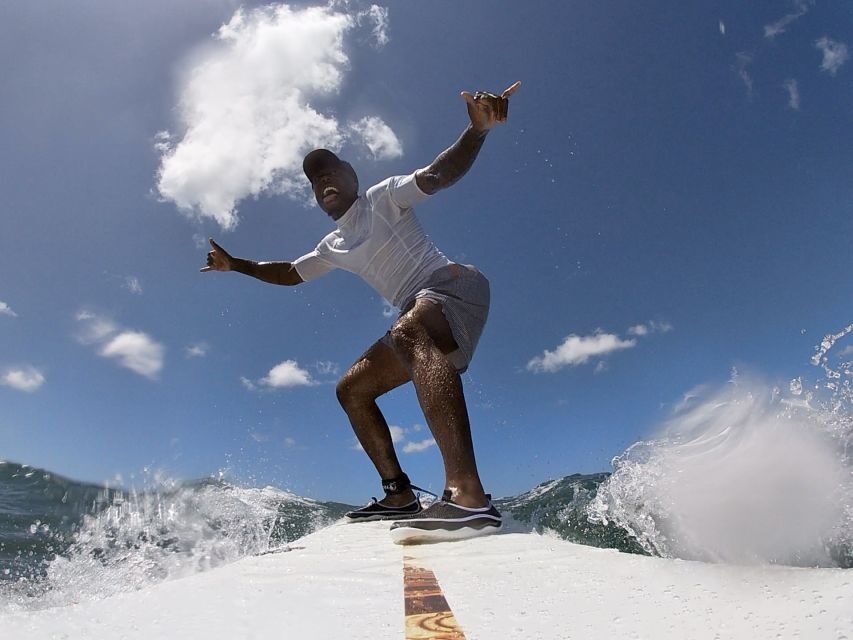
The highlight about avoiding the Waikiki crowd isn’t just marketing fluff. Crowded areas can change your experience in very real ways: more people in the water, more competition for wave space, and more noise while you’re trying to focus on learning.
When you learn surf, focus is everything. You need to:
- listen for cues,
- read the set of waves,
- and coordinate your timing without second-guessing.
A less crowded vibe helps you concentrate. It also makes the experience feel more like “surfing in Hawaii” and less like an attraction where you’re one of many.
Gear and Fit: What’s Provided and What You’ll Feel
This lesson includes the key gear you’ll want for comfort and safety:
- surfboards
- leashes
- rashguards
- reef shoes
- GoPro cameras
Why this matters for you: surfing is a contact sport with the ocean. Reef shoes help your feet handle rocky or rough spots. Rashguards help with friction and sun exposure. Leashes keep your board attached so you can focus on riding and balance instead of chasing gear.
There’s one more practical piece: you’ll be in the water actively. Even if you’re new, the ocean demands balance and stamina.
Water Safety and “Respect the Ocean” in Real Terms
Safety in surf isn’t only about not getting hurt. It’s about doing the right thing so waves and space stay predictable.
You’re taught essential safety tips that cover:
- how to navigate waves,
- and how to respect the ocean.
That typically translates into things like where to enter, how to position yourself, and how to respond when a wave hits differently than you expected. The good coaching goal here is confidence. You don’t want fear running the show. You want a clear set of rules you understand before you’re in the lineup.
Also, since the session happens rain or shine, you’re not getting a perfect-weather fantasy version of surfing. The safety teaching becomes even more important because conditions can change fast.
Who This Lesson Suits Best
This surf lesson is positioned for beginners and for people who want to refine basics. It’s a solid choice if you want structured instruction, a real chance to stand up, and video memories included.
It’s not suitable for everyone. Based on the rules for this activity, don’t book if any of these apply:
- children under 10
- pregnant women
- people with mobility impairments
- non-swimmers
- people prone to seasickness
- people over 230 lbs (104 kg)
- people with low level of fitness
I’d also add a common-sense check for you: if you’ve never been comfortable in open water, treat that as a serious signal. This isn’t a pool lesson. It’s the ocean, with waves, effort, and exposure.
Price and Value: Is $125 Reasonable for 90 Minutes?
At $125 per person for 90 minutes, you’re paying for two things that matter more than fancy extras:
1) Instruction intensity
The 2-to-1 ratio means you’re paying for time with an instructor who can correct you while you’re practicing.
2) Included gear plus GoPro
You’re not buying a bunch of rental items separately. Rashguards, reef shoes, leashes, and surfboards are part of the price. The GoPro cameras are included too, which is a real value add for a learning experience where your payoff is progress you can see later.
So is it worth it? For most first-timers who want a guided path and want video proof of what they learned, it’s priced like a practical activity. If you’re hoping for a long, leisurely beach hangout or a purely observational experience, you may feel it’s too structured.
Rain or Shine: Plan for the Day You’re Actually Getting
The session runs in rain or shine. That means you should be ready for wet conditions and ocean time even if the sky isn’t cooperating.
What I’d do before you go:
- wear sun-appropriate layers if it’s bright, and be ready to get wet if it’s not
- think about how you’ll dry off afterward
- keep your expectations focused on learning, not weather perfection
The upside is consistency. You’re not waiting for perfect conditions to learn the basics that work in most surf environments.
Should You Book This Oahu Surf Lesson?
Book it if you fit the target: you’re a beginner (or close), you want structured basics like paddling and standing, and you like the idea of getting GoPro footage as part of the experience.
Skip it if you’re outside the stated limits—especially if you’re a non-swimmer, prone to seasickness, or you have mobility or fitness concerns that match the activity’s restrictions. This is ocean learning with real physical demands.
If you want a surfing day on Oahu that feels more local and less crowded, with coaching that’s close enough to matter, this one makes sense. The mix of small group attention and surf time plus video is the reason it stands out.
FAQ
Where is the meeting point?
You meet at the North End of Ala Moana Beach Park by the volleyball courts and showers.
How long is the surfing lesson?
The total duration is 90 minutes.
Is GoPro footage included?
Yes. GoPro cameras are provided so you can capture your surfing moments.
What’s included with the lesson?
Surfboards, leashes, rashguards, reef shoes, and GoPro cameras are included.
How big is the group?
It’s a small group with a maximum of 5 participants, with a 2 student to 1 instructor ratio.
What languages are instructors able to speak?
Instructors use Japanese, Korean, and English.
Will the lesson run if it rains?
Yes. The tour takes place rain or shine.
Who should not book this experience?
It’s not suitable for children under 10, pregnant women, people with mobility impairments, non-swimmers, people prone to seasickness, and people over 230 lbs (104 kg). It’s also not suitable for people with low level of fitness.