REVIEW · OAHU
Immersive Luau Experience
Book on Viator →Operated by Oahu Experiences · Bookable on Viator
Food cooks underground, and you help. This Hauula luau from Oahu Experiences pairs a real family welcome with hands-on cultural making, including Imu rock oven prep right with you. The one thing to factor in: it runs outdoors and depends on good weather, plus Hauula is a drive from Honolulu.
What I like most is how the night teaches with your hands, not just your eyes—ti leaf lei weaving and pounding kalo into poi. I also like the way the entertainment is tied to cultural practice, including Samoan fireknife dance and fireknife drumming. A “chill show only” night might not be your best match, since you’ll be participating.
You meet at 53 Puhuli St, Hauula at 4:00 pm, and plan for about 2 hours 30 minutes back at the same spot. The group is capped at 50 people, and you get a mobile ticket.
In This Review
- Key Things You’ll Actually Do (Not Just Watch)
- Entering Hauula’s Luau World: Start With Oli Aloha and Ohana Energy
- Imu Rock Oven Up Close: The Most Memorable Hands-On Part
- Ti Leaf Lei Weaving: A Simple Skill With Cultural Weight
- Pounding Kalo Into Poi: Food Culture, Not Just Dinner
- Fireknife Dance and Fireknife Drumming: Performance With Teaching Built In
- The Meal: Imu-Style Food Plus Catering From Fat Poi
- Price and Timing: Is $175 Worth It?
- Getting There From Oahu’s Main Areas: The Hauula Drive Factor
- Practical Tips to Get the Most Out of the 2.5-Hour Schedule
- Should You Book This Hauula Luau Experience?
- FAQ
- How much does the experience cost?
- How long is the experience?
- Where do we meet for the luau?
- What time does it start?
- What activities are included?
- Is there a ticket option?
- How big is the group?
- What happens if the weather is poor?
- What is the cancellation policy?
Key Things You’ll Actually Do (Not Just Watch)
- Prepare a traditional Imu rock oven and then help open it for the meal
- Make ti-leaf lei with guidance you can use right away
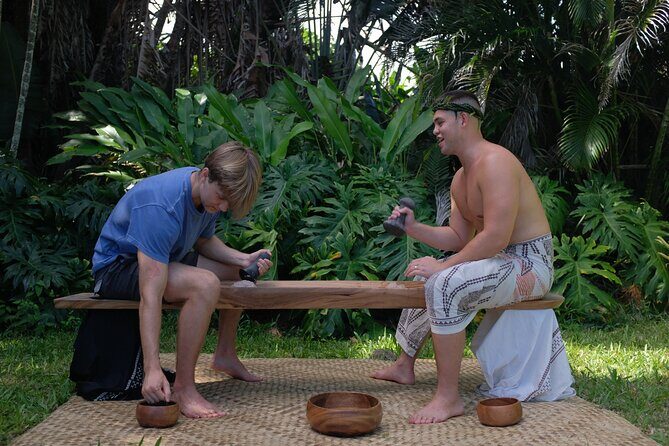
- Pound kalo into poi, learning what makes this Hawaiian staple special
- Learn themes of Malama Aina and Aloha Aina tied to caring for land
- Practice Samoan fireknife dance and fireknife drumming as part of the program
- Eat Imu-style food plus catered bites from Fat Poi
Entering Hauula’s Luau World: Start With Oli Aloha and Ohana Energy

The first minutes set the tone. You arrive and you’re greeted as part of the group with an opening Oli Aloha chant, and that matters more than people expect. It signals you’re not just buying a ticket to a performance—you’re stepping into a hosted cultural moment.
Then comes the ohana feel. “Ohana” here isn’t just a word on a sign. It shows up in how the experience keeps pulling you into the process: hands-on tasks, simple explanations, and a relaxed pace that still feels structured. The reviews back this up in a consistent way, with people talking about instant warmth and a family-style vibe.
One practical note: since this is in Hauula, you’ll want to budget drive time from where you’re staying. If you only want something close to central Waikiki, you may find the location adds friction.
You can also read our reviews of more tours and experiences in Oahu.



Imu Rock Oven Up Close: The Most Memorable Hands-On Part
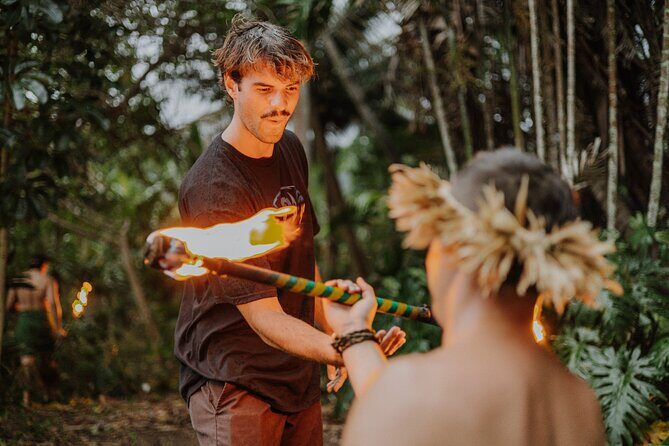
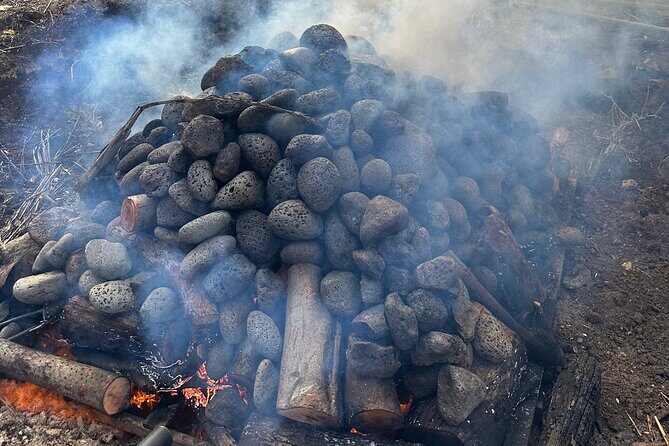
An Imu rock oven isn’t just a cooking method—it’s a way of bringing people together around food. Here, you don’t just watch it happen from a distance. You help prepare the Hawaiian-style rock oven with the group, then later the experience opens the Imu and the meal gets served.
This is the kind of activity where your brain pays attention in a different way. Instead of treating dinner like a generic end point, you’ll understand that the evening’s “why” is tied to the process. You’ll see the oven approach, then you’ll experience the payoff when it opens. That makes the food feel earned, not handed to you.
The potential downside is also obvious: because the cooking and meal timing depend on the outdoor process, weather matters. The good news is the program is designed around that reality and has a weather-based contingency (more on this in the FAQ).
Ti Leaf Lei Weaving: A Simple Skill With Cultural Weight
Then you shift into making something you can take home: a ti leaf lei. The experience teaches you how to weave and make it, which is important for two reasons.
First, it gives you a usable memory. Photos are nice, but a lei becomes a small physical reminder of the night. Second, the activity is paced so you’re not stuck in a long lecture. You learn by doing, with an emphasis on understanding what the practice represents.
Lei-making also pairs well with the theme of land care and respect. The program doesn’t treat the craft as just decorative. It connects the actions to Hawaiian values like Malama Aina (taking care of the land) and Aloha Aina (love for the land). That framing helps you see the cultural context behind the materials, rather than just collecting an item.
Tip for getting the best results: treat the weaving like a skill session, not a craft contest. Even if yours looks imperfect, the value is in learning the motion and the meaning behind it.
Pounding Kalo Into Poi: Food Culture, Not Just Dinner
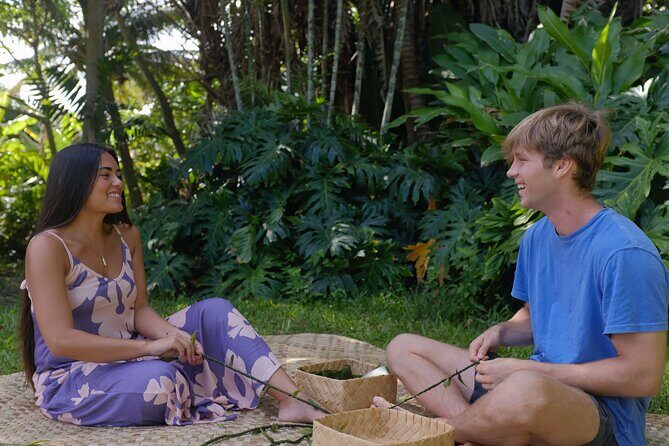
Next up is one of the most “you can’t fake this” experiences: you learn to pound kalo (taro) into poi. This is a Hawaiian staple, and in many luau-style shows it’s treated as an afterthought. Here, it’s a real activity you participate in.
Why this is valuable for you: poi is one of those foods that people recognize, but many don’t understand the work behind it. When you pound kalo, you understand why the texture and flavor have a process behind them. That turns the meal into a lesson you can taste.
There’s also a respectful pacing to this part of the evening. The program ties the making back to Malama Aina and Aloha Aina, so it’s not only about producing a bowl of poi. It’s about why the food system exists in the first place—how land stewardship connects to what lands on your plate.
If you’re traveling with kids, this is often a highlight because it’s hands-on and physical. Just be ready for a bit of mess and plan to wear something you wouldn’t mind getting a little dirty.
Fireknife Dance and Fireknife Drumming: Performance With Teaching Built In
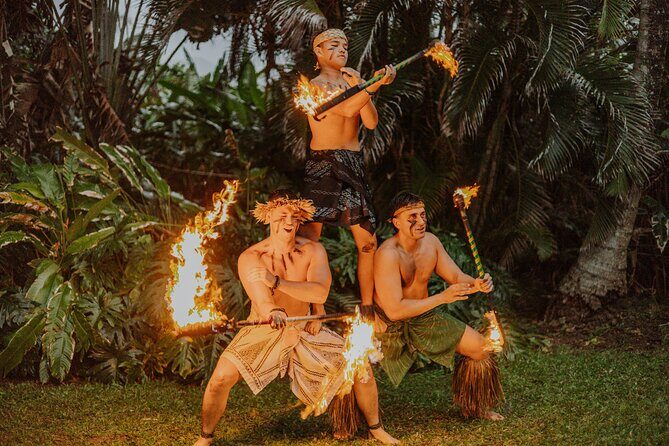
After the food-making and craft activities, you move into the entertainment portion with an added layer: you learn. The experience includes the Samoan fireknife dance and fireknife drumming.
This is a good match if you want more than a seated show. The fireknife arts are dramatic and intense to watch, but learning the basics (as structured by the program) makes you pay attention to rhythm, timing, and the effort required—not just the final moment.
I also like that this is presented as part of a broader cultural education rather than a standalone spectacle. When a night pairs skills, values, and performance, it usually feels more grounded. And for many families, that creates a sense of participation instead of passive consumption.






The Meal: Imu-Style Food Plus Catering From Fat Poi
Now for the part your stomach will remember. After the Imu is opened, the ohana serves traditional Hawaiian food. You’ll also get catered food from the locally famous Hawaiian food truck Fat Poi.
This combination is smart for you if you like variety. The Imu-style food anchors the evening in the oven cooking tradition, while the catered additions make sure your plate doesn’t feel one-note. In the reviews, people specifically mention enjoying the food a lot—often with language like ono, which signals tasty, satisfying eating.
One practical consideration: since this is a shared meal tied to the opening of the Imu, timing matters. Come hungry and plan for the main meal to land after the cooking sequence, not right when you arrive.
Price and Timing: Is $175 Worth It?
At $175 per person for about 2 hours 30 minutes, the price looks steep at first glance. The better question is what you’re actually getting.
You’re paying for:
- Hands-on activities (Imu prep, lei weaving, poi pounding)
- Cultural framing around Malama Aina and Aloha Aina
- Cultural performance elements (Samoan fireknife dance and fireknife drumming)
- A meal that’s more than a snack stop (Imu food plus Fat Poi catering)
That’s not the usual model of a basic luau where you mostly watch. This is closer to a guided skills-and-food night where the entertainment is one piece of a bigger program.
The other piece is demand. It’s commonly booked well in advance (on average 151 days), which usually means the experience fills up and the host team has a rhythm that depends on attendance. If you’re going in peak season or during school breaks, booking earlier gives you a better shot at fitting it into your plan.
Timing-wise, the 4:00 pm start gives you a good evening block. It also helps avoid the hottest mid-day hours, which can make the outdoor parts more comfortable.
Getting There From Oahu’s Main Areas: The Hauula Drive Factor

Your biggest logistical choice is transportation. The meeting point is 53 Puhuli St, Hauula, and the tour ends back at the same location. That’s easy if you have a car or a pickup plan, but it can be a mild hassle if you’re depending on limited transport options.
The good news: it’s listed as near public transportation, and it allows service animals. Most people can participate, and the program is capped at 50 people, so you’re unlikely to feel crushed or herded.
My practical advice: plan to arrive a little early so you can settle in before the Oli Aloha opening. If you’re running late, the early flow can move quickly since there are multiple hands-on steps planned.
Practical Tips to Get the Most Out of the 2.5-Hour Schedule
This night is structured, and it moves through several activity modes: outdoor prep, craft-making, food making, then performance. Here’s how to set yourself up for a smoother time.
- Wear comfortable clothes you don’t mind getting a little worn (poi pounding and craft work can be hands-on).
- Bring a light layer if you get cooler evenings in the area.
- Think about your shoes. You’ll likely be standing and moving, so skip anything too delicate.
- If you’re sensitive to weather changes, keep your schedule flexible. The experience depends on good weather, and it can be offered on a different date if conditions don’t cooperate.
Also keep in mind the group size limit of 50 people. That usually means there’s room for you to participate, ask questions, and not feel lost in a huge crowd.
Should You Book This Hauula Luau Experience?
If you want a luau that’s more than a stage show, I’d say this is a strong pick. The standout advantage is the hands-on sequence—Imu cooking prep, ti leaf lei, and poi pounding—followed by Samoan fireknife dance and fireknife drumming. That mix gives you both understanding and a story you can carry home.
Book it if:
- You like learning by doing
- You want a cultural night where values like Malama Aina and Aloha Aina are actually part of the program
- You’re traveling with family and want kids to have active roles
Skip it (or think twice) if:
- You only want passive entertainment and prefer to watch from start to finish
- You’re staying far from Hauula and don’t have an easy way to get there
- You’re locked into one evening and can’t handle possible weather adjustments
FAQ
How much does the experience cost?
The price is $175.00 per person.
How long is the experience?
It lasts about 2 hours 30 minutes.
Where do we meet for the luau?
You meet at 53 Puhuli St, Hauula, HI 96717, USA.
What time does it start?
The start time is 4:00 pm.
What activities are included?
You’ll be greeted with Oli Aloha, help prepare a Hawaiian-style Imu rock oven, make a ti leaf lei, pound kalo into poi, learn about Malama Aina and Aloha Aina, and learn the Samoan fireknife dance plus fireknife drumming. You’ll also have a traditional meal served after the Imu is opened, including food from Fat Poi.
Is there a ticket option?
Yes, you receive a mobile ticket.
How big is the group?
The tour/activity has a maximum of 50 travelers (people).
What happens if the weather is poor?
This experience requires good weather. If it’s canceled due to poor weather, you’ll be offered a different date or a full refund.
What is the cancellation policy?
You can cancel for free up to 24 hours in advance for a full refund. If you cancel less than 24 hours before the start time, the amount you paid will not be refunded.