REVIEW · OAHU
Oahu: High Ropes Adventure, Climbing, & Rappel Experience
Book on GetYourGuide →Operated by Coral Crater Adventure Park · Bookable on GetYourGuide
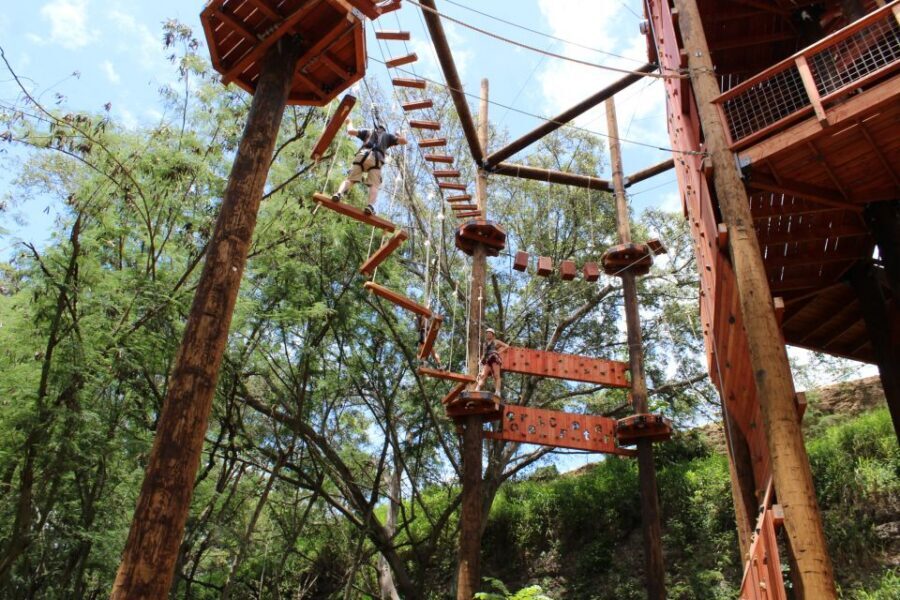
One tower, a lot of rope time. At Coral Crater Adventure Park on Oahu, you work your way through a 60-foot Adventure Tower and a high ropes course packed with 18 obstacle elements. You’ll climb, abseil/rappel, and even jump when it’s time, so the whole experience feels active instead of sit-and-watch. My favorite part is how you’re constantly doing something physical; the workout comes built in. The one drawback is also the truth of it: this is a challenge if you’re not ready to support your own body weight and move with control.
What makes it especially appealing is that the park puts you in the hands of an instructor and provides the safety gear, so adrenaline doesn’t mean guesswork. You’ll be there about 90 minutes, and it runs rain or shine, so it’s a dependable activity day plan. Just note that you’ll need your own transportation from Waikiki, since there’s no hotel pickup.
In This Review
- Key things I’d center in your decision
- Coral Crater Adventure Park: the Oahu ropes course you can’t fake
- Getting there from Waikiki: plan for the drive, not the calendar
- Your 90 minutes: what you do from check-in to final clip-out
- The Adventure Tower and climbing wall: train for control, not speed
- High Ropes course with 18 obstacles: why it feels like a workout
- Rappel/abseil and the 50-foot freefall: choose calm before commitment
- Instructors and safety gear: the reason this works for real people
- What to bring and wear: the shoe rule is stricter than you think
- Who should go: the weight, height, and health limits that keep it fair
- Price and value: is $104 worth 90 minutes of ropes stress?
- Should you book Coral Crater’s High Ropes Adventure?
- FAQ
- How long is the High Ropes Adventure experience?
- What’s included in the $104 price?
- Do I need to bring food or drinks?
- Is this activity indoors, and does it run in bad weather?
- What are the weight requirements?
- Do I need a minimum height?
- What shoes are allowed?
- Is hotel pickup available from Waikiki?
- Can I cancel for a refund, and do I pay right away?
- Is it suitable for kids and people with health concerns?
Key things I’d center in your decision
- 60-foot Adventure Tower with real climbing and a big-drop moment
- 18 obstacle elements that keep you moving through the high ropes course
- Rappel/abseil plus a 50-foot freefall for a full range of thrill levels
- Instructor-led safety and tips while you’re clipped in to the course
- Weight (40–275 lbs) and height (4’6”) limits that shape who can do it comfortably
Coral Crater Adventure Park: the Oahu ropes course you can’t fake
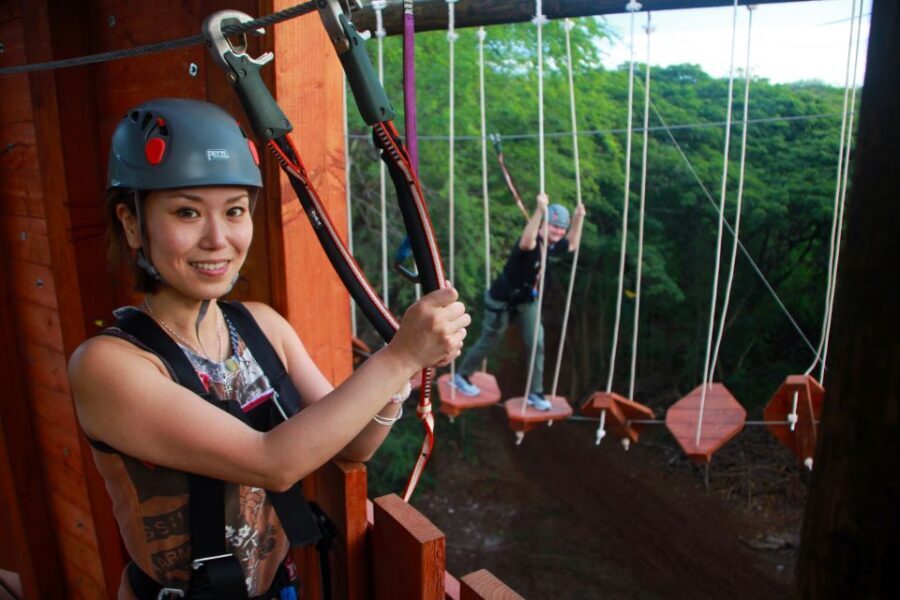
If you’re looking for an Oahu activity that feels like a true challenge, High Ropes Adventure at Coral Crater is one of the more direct ways to get it. You’re not just trying something once. You’re switching between rope-based obstacles, climbing, and rappelling tasks, so you build real confidence fast.
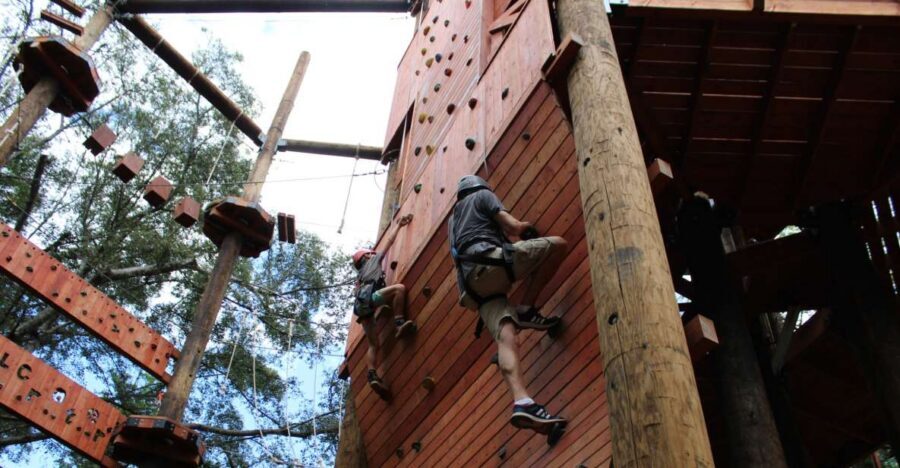
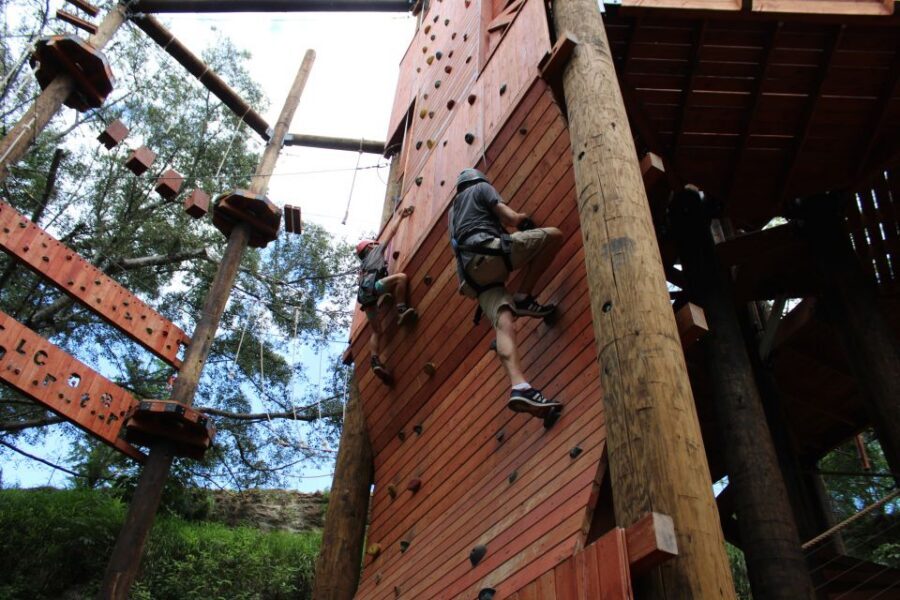
The Adventure Tower is the centerpiece. Sixty feet sounds big on paper, but the effect is physical: you feel height in your body, you practice balance, and you learn how to move when you’re clipped in. Then the high ropes course extends that into something longer and more varied than a single stunt.
You can also read our reviews of more tours and experiences in Oahu.
Getting there from Waikiki: plan for the drive, not the calendar
Coral Crater is about a 40-minute drive from Waikiki with no traffic. In real life, afternoon weekday traffic can stretch that past an hour, so treat it like a variable you manage, not a detail you hope for.
There’s no hotel pickup or drop-off, so you’ll be in charge of the car ride (or arranging your own transport). If you’re driving yourself, use the route provided for the park:
- From Waikiki, take H1 West
- Connect with I-H-201 W and I-H-1 W to Makakilo
- Take exit 2 from I-H-1 W toward Makakilo/Kapolei/Kalaeloa
- Pass Kapolei High School on your left
- Turn left on Roosevelt Ave
- The next right is Midway St, and the Coral Crater parking lot is on the corner
If you’re staying in Waikiki and you don’t want stress, leaving a little earlier than you think helps a lot. One reason: you’ll already feel the nerves and focus you need for the course—arriving rushed doesn’t help.
Your 90 minutes: what you do from check-in to final clip-out
This is a 90-minute experience, so you should expect an efficient run: gear up, get briefed, do the main tower and high ropes tasks, then wrap up. Because the course is rain or shine, you won’t get a soft day where you take it slow. You’ll be moving.
At a high level, the flow is:
- Check-in and getting weighed (required)
- Instructor safety guidance and getting fitted with the provided safety gear
- Climbing and tasks on the climbing wall and the Adventure Tower
- Working through the high ropes course and its obstacle elements
- Rappel/abseil segments and the big finish: the 50-foot freefall
The time commitment is short enough that it doesn’t dominate your whole day, but long enough that it feels like a real activity, not a quick photo stop.
The Adventure Tower and climbing wall: train for control, not speed
The 60-foot Adventure Tower is where the experience starts to feel intense in a good way. You’re not just passively “standing near something tall.” You’re doing the work—moving along structures while staying aware of your grip points and body position.
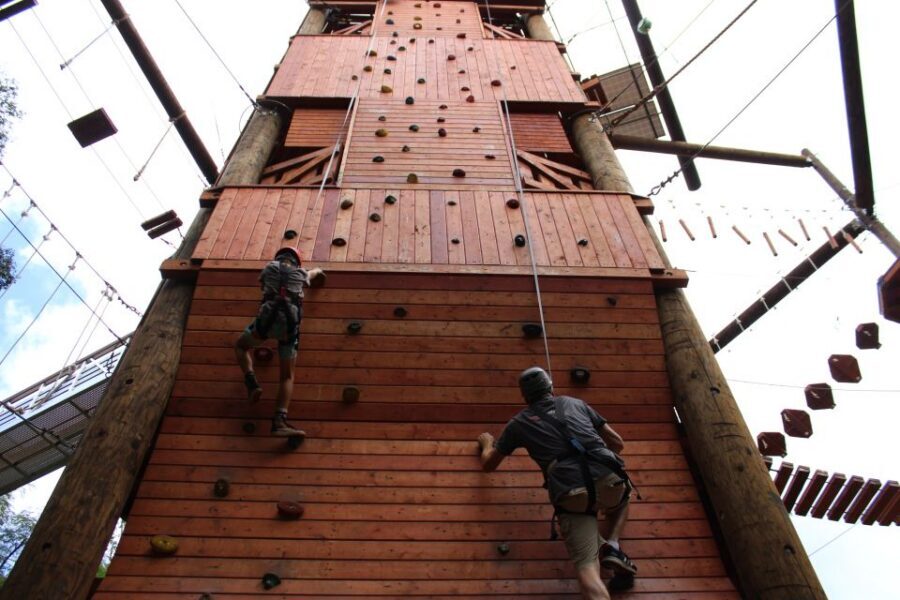
There’s also a climbing wall moment, where you can show off your “ninja” skills and work toward being the fastest to the top. You’ll get pointers from instructors, including help with how the ropes and safety system work, plus tips for getting going. Even if you’ve climbed before, this kind of guided coaching helps because the equipment and body positioning matter.
What I like about this part is the shift from thrill to technique. Yes, it’s high. But you’re also learning how to move safely and efficiently, which pays off when you transition to the high ropes obstacles.
High Ropes course with 18 obstacles: why it feels like a workout
The high ropes portion is built around 18 challenge elements, and that number matters. It means you don’t just do a single obstacle and call it good. You’ll keep making decisions: where to place your hands, how to shift your weight, when to pause, and how to keep your balance while you’re moving between platforms.
Expect the course to test:
- Grip strength and forearm control
- Core stability (your body has to stay aligned even when you’re tired)
- Balance and timing
- Comfort with height while staying focused
This is also the segment where your mindset matters. If you try to rush, you’ll feel it. If you take the tips the instructors give you, you’ll likely find the rhythm quicker. The reward is that by the later obstacles, you usually feel more “in control” than you did at the start.
And yes, it’s adrenaline, but it’s adrenaline with a job to do—moving, climbing, and staying clipped in properly.




Rappel/abseil and the 50-foot freefall: choose calm before commitment
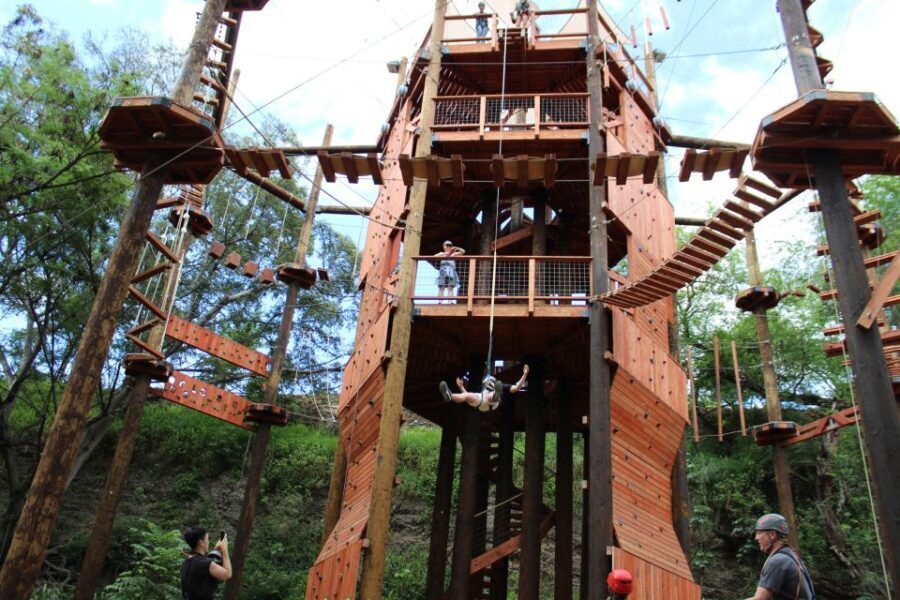
Two of the headline moments are the abseil/rappel and the 50-foot freefall. These are the points where most people’s hearts spike, and that’s normal. The key is to treat them like skills you execute, not scary surprises you wrestle with.
For the rappel/abseil, the “feel” is controlled movement down using the rope system. You’re learning to trust your setup and follow the instructors’ guidance for your own safety and rhythm. That matters because good technique turns something intimidating into something you can manage.
Then comes the freefall from the tower. The important thing is that it’s a planned jump, tied to the course and your safety gear. If you go in thinking about the steps you’ll follow—check, position, commit—you’ll probably handle it better than if you get stuck mentally arguing with the height.
Instructors and safety gear: the reason this works for real people
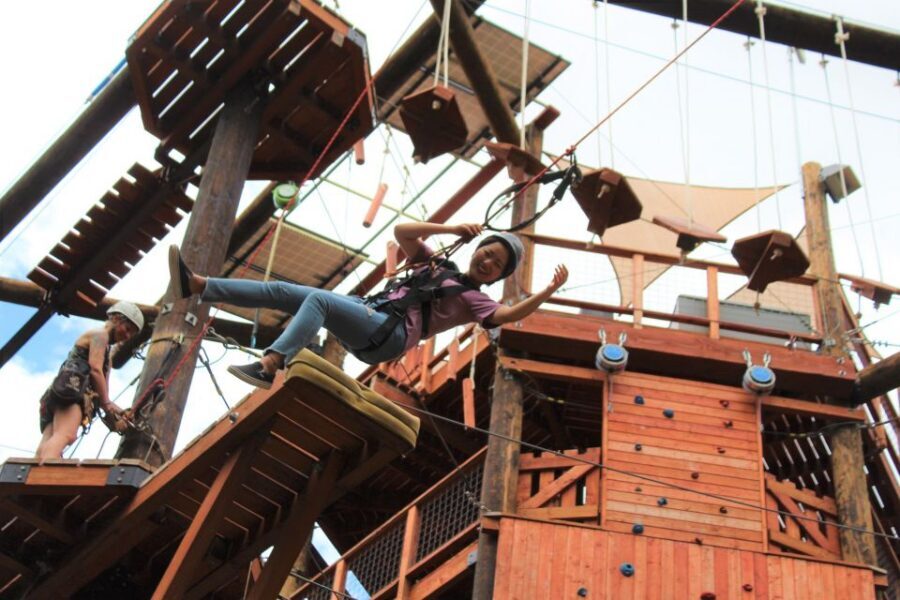
This experience includes an instructor and safety gear, and that’s not a throwaway detail. A ropes course lives or dies on how you’re set up and how quickly you understand what to do.
You’ll be given safety guidance and tips, including help with how you’ll be roped in and how to start confidently. That sort of coaching is especially helpful on the tower and when you’re learning the feel of being clipped into the course.
A big plus: you’re not doing this alone with vague instructions. You’re learning as you go, and the gear is there to keep the experience within the course’s safety boundaries.
What to bring and wear: the shoe rule is stricter than you think
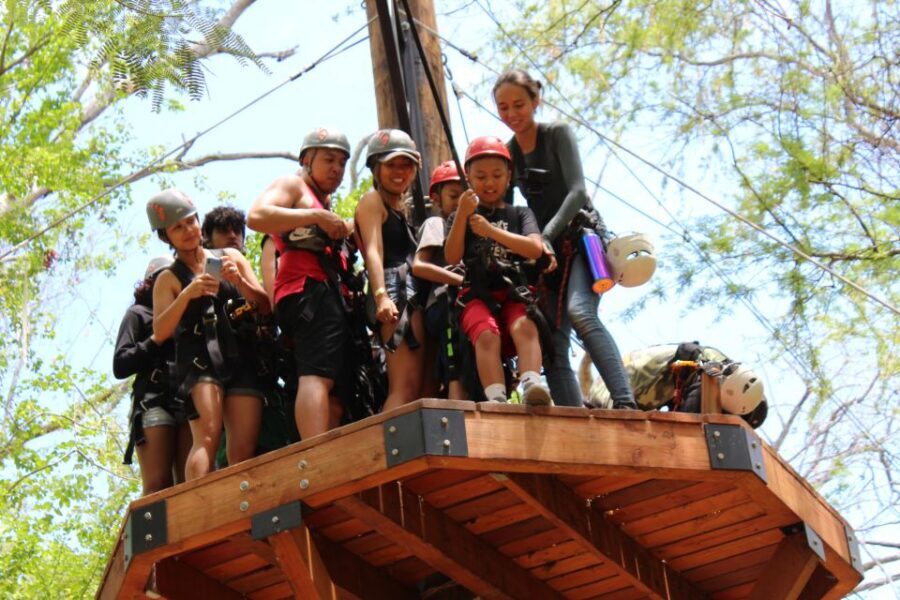
Wear comfortable clothes you don’t mind getting a little sweaty. You’ll also want sports shoes or, even better, any closed-toe option that stays secure on your feet.
Bring:
- Passport or ID card
- Comfortable shoes (sports shoes recommended)
- Comfortable clothes
- Closed-toe shoes
Don’t bring:
- Open-toed shoes
The ID item is worth planning for, since the park requires it for check-in. And if your footwear isn’t stable, you’ll feel it immediately when you’re climbing and moving between obstacles.
Also, know that the activity takes place rain or shine. That means you’ll benefit from clothing you can handle in wet conditions and still move in comfortably.
Who should go: the weight, height, and health limits that keep it fair
This experience has clear limits, and I’m glad they do. It helps protect you and helps the course run safely for everyone.
You must meet:
- Weight between 40 lbs and 275 lbs (124 kg limit; 275 lbs is explicitly stated)
- Height of at least 4’6” to independently navigate the course
If you’re shorter than 4’6” (but at least 6 years old), you’re still encouraged to participate, but you’ll need an adult participant to lead you through the course or hire guides to help with safety tasks.
Not suitable for:
- Children under 6 years
- Pregnant women
- People with back problems
- People with mobility impairments
- People with heart problems
- People over 275 lbs / 125 kg
The park is also described as stroller accessible, which is a nice practical note if you’re going with a family, as long as the child meets the age requirement. Service animals are allowed.
Before you book, double-check these constraints. It’s not just a policy thing; it affects whether the course can actually work for your body and safety needs.
Price and value: is $104 worth 90 minutes of ropes stress?
At $104 per person for about 90 minutes, this isn’t a casual “buy and forget” activity. But you’re also getting several things baked in:
- Instructor support
- Safety gear
- A full tower + climbing wall segment
- High ropes course with 18 obstacle elements
- Rappel/abseil and the 50-foot freefall experience
Where the value can drop slightly is what’s not included. Food and drinks aren’t included, and you’ll handle transport yourself (hotel pickup and drop-off are not part of the package). If you’re already renting a car, the transport piece usually feels easy. If you’re relying on rideshare, budget more time and plan your return.
Still, compared to many “thrill” activities that are single stunts, this one stacks multiple challenge formats into one session. If you’re the kind of person who likes moving your body and earning the adrenaline, it tends to feel like good value.
Should you book Coral Crater’s High Ropes Adventure?
Book it if you want:
- A true physical challenge in a structured, instructor-led setting
- A mix of climbing, high ropes navigation, rappel, and a freefall moment
- A short (90-minute) activity that’s actually doing something the whole time
Skip it (or at least be cautious) if:
- You’re not confident you can support your body weight safely on rope-based obstacles
- You fall outside the weight/height requirements
- You have heart, back, or mobility issues that make climbing risky
- You’re pregnant
If you’re a thrill seeker with decent fitness and you don’t mind the drive from Waikiki, this is one of those Oahu activities that feels memorable for the right reasons: you do the work, you learn control, and you leave with that very real sense of accomplishment.
FAQ
How long is the High Ropes Adventure experience?
It lasts about 90 minutes.
What’s included in the $104 price?
The experience includes an instructor and safety gear.
Do I need to bring food or drinks?
Food and drinks are not included.
Is this activity indoors, and does it run in bad weather?
It takes place rain or shine.
What are the weight requirements?
Participants must weigh between 40 lbs and 275 lbs (124 kg). You’ll be weighed during check-in, and those who don’t meet the requirement aren’t permitted to participate and won’t receive a refund or rescheduling.
Do I need a minimum height?
Participants must be 4’6” or taller to independently navigate the course. Those shorter than that (and at least 6 years old) can still participate with an adult leading them or with guide help for safety tasks.
What shoes are allowed?
Open-toed shoes aren’t allowed. Bring comfortable closed-toe shoes (sports shoes are listed).
Is hotel pickup available from Waikiki?
No. Hotel pickup and drop-off aren’t included, so you’ll need your own transportation to the park.
Can I cancel for a refund, and do I pay right away?
You can cancel up to 24 hours in advance for a full refund. There’s also a reserve now & pay later option, so you can book without paying today.
Is it suitable for kids and people with health concerns?
Children under 6 years aren’t suitable. It’s also not suitable for pregnant women, people with back problems, people with mobility impairments, and people with heart problems.