REVIEW · OAHU
Stand-Up Paddle Yoga on the North Shore of Oahu
Book on Viator →Operated by Yoga Kai · Bookable on Viator
Stand-up paddle yoga is weirder than it sounds.
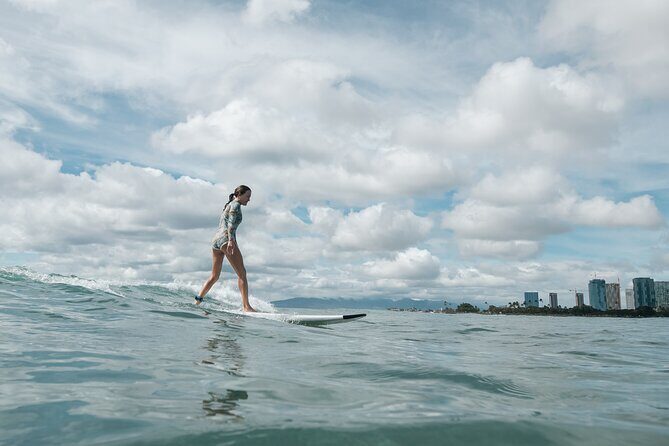
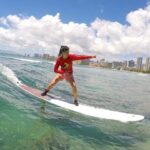
On Oahu’s North Shore, you start on the beach, gear up with SUP boards and paddles, then head out to practice in the bay-area waters before anchoring down near the Anahulu River. I like that it’s taught for real humans—beginners and experienced yogis—and I also like that everything you need is provided, from the anchors to the yoga-ready boards. One thing to keep in mind: you need moderate physical fitness, and the activity depends on good weather.
Yoga Kai runs the session with a steady, beginner-friendly approach (and in the feedback, the instructor named Julie comes up again and again for being patient). You’ll start slowly with breath and balance, build into standing poses, then end with restorative work that’s meant to lead you into a long, comfortable Savasana. The main consideration? Because you’re on water, you should expect some balance challenge—like one rider who fell once and said it was no big deal because the water was shallow and warm.
In This Review
- Key Things to Know Before You Go
- Price and What You’re Really Paying For ($65 for 1.5 Hours)
- Where You Meet in Haleiwa and How the Session Starts
- Paddle Out: Boards, Anchors, and Getting Comfortable
- The Guided Yoga Flow: From Breath to Standing Poses
- Restorative Postures and a Savasana on Water
- Instructor Quality: Why Julie’s Name Shows Up
- Who This Tour Fits Best (and Who Might Want Something Else)
- Timing on the North Shore: Why a 5:00 pm Start Works
- What’s Included in the Experience (Gear and Setup)
- Weather, Safety Feel, and What to Expect if You Slip
- Quick, Practical Tips That Help You Enjoy SUP Yoga More
- Cancellation and Weather Reality (Keep This in Mind)
- Should You Book Stand-Up Paddle Yoga on Oahu’s North Shore?
- FAQ
- How long is the stand-up paddle yoga session?
- Where does the tour meet?
- What time does the activity start?
- Is equipment included?
- Do I need to know yoga or how to paddle?
- Is this a private tour?
- What if the weather is bad or I need to cancel?
Key Things to Know Before You Go
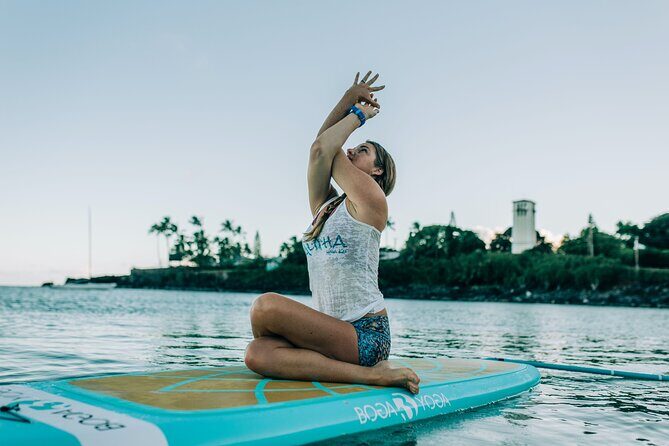
- SUP yoga for all levels: you can learn both yoga flow and paddle basics if it’s your first time
- Anchored practice: you paddle out, then anchor down to reduce drifting while you move through poses
- Everything included: SUP boards, paddles, and anchors are part of your $65 session
- Guidance matters: instructors pace the class from easy breath work to standing variations
- A focused end stretch: restorative postures aim for a very relaxed Savasana
- Private session: only your group participates, so it feels less like a packed class
Price and What You’re Really Paying For ($65 for 1.5 Hours)
At $65 per person for about 1 hour 30 minutes, this isn’t a bargain in the way of a free beach workout—but it also isn’t overpriced for what you get. You’re paying for three big things: instruction, on-water gear, and a guided route/anchor setup that makes the practice doable.
Most yoga classes assume you’ll show up with your own mat and already know how to balance. Here, you’re handed the tools: SUP board, paddle, and anchor. That shifts the value from just “yoga time” to a full experience: you learn how to move on a board, then you use that balance in actual yoga postures.
If you’re comparing this to a standard studio class, it’s more active and more “teach-me-how-to-do-this” than “stretch and breathe.” If that’s your vibe, the price feels fair. If you want a totally low-effort, dry-land yoga class, you may find the water element adds extra work.
You can also read our reviews of more tours and experiences in Oahu
Where You Meet in Haleiwa and How the Session Starts
The meeting point is at 62-490 Kamehameha Hwy, Haleiwa, HI 96712, and the class begins at 5:00 pm. The activity ends back at the same meeting spot.
What I like about this setup is the clarity. You’re not hunting around for a dock or guessing which beach access point the tour uses. You meet on the beach, get an introduction to your “floating yoga studio,” and then you all walk out with the gear.
The session pacing matters because you’re learning two skills in sequence:
1) how to be stable on a board, and
2) how to do yoga movements while your balance shifts with the water.
Starting with that intro means you don’t spend the whole time figuring things out alone.
Paddle Out: Boards, Anchors, and Getting Comfortable
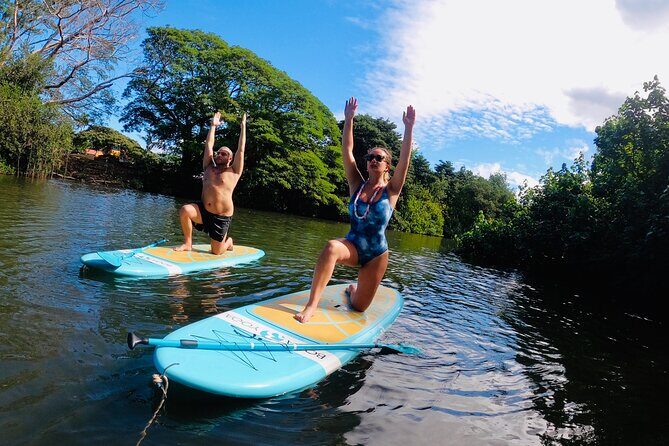
After your intro, you walk out with your SUP boards, paddles, and anchors. You then paddle through the bay into the Anahulu River area where you’ll anchor down for practice.
Anchoring is a quiet detail that makes a big difference. Without it, a SUP yoga class can feel like you’re trying to do a slow yoga flow during a gentle drift. With an anchor, you get a more stable “home base,” which lets you focus on breath, posture, and alignment instead of constantly correcting your position.
You’ll get time at the beginning to tune in to the floating surface. The class starts slow, and that’s exactly what you want when you’re balancing on moving water. Even if you’ve done yoga on land before, your center of gravity is working overtime on a board.
The Guided Yoga Flow: From Breath to Standing Poses
Once you anchor down, the instruction shifts into a real yoga sequence. You’ll start with breath awareness and slower movements designed to help you get used to the sensation of the board under you.
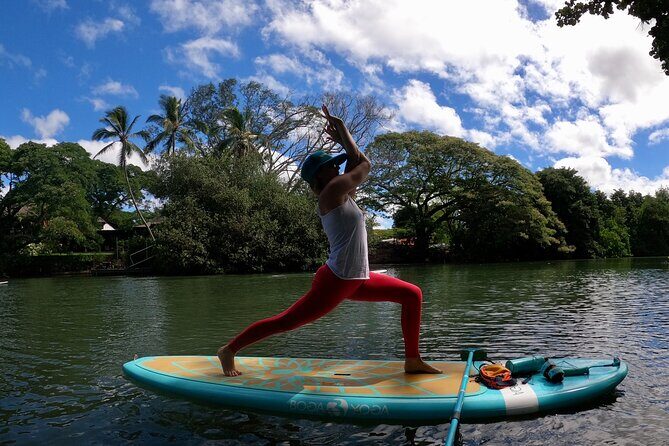
Then comes the part most people are excited about: the class moves into a more active flow with different variations of standing postures. Think of this as balance training disguised as yoga—your body has to steady itself while your arms and legs work through positions that are already challenging on a mat.
Why this matters: SUP adds a moving surface and subtle motion, so even standard yoga shapes turn into a “use your core and breathe” workout. If you’re a beginner, the variations are likely meant to keep you from feeling stuck—rather than throwing you into the hardest version immediately.
And if you’ve got experience, this can feel like a fresh twist on familiar poses. The water element changes the feedback your body gives you, which often makes you pay attention in a new way.
Restorative Postures and a Savasana on Water
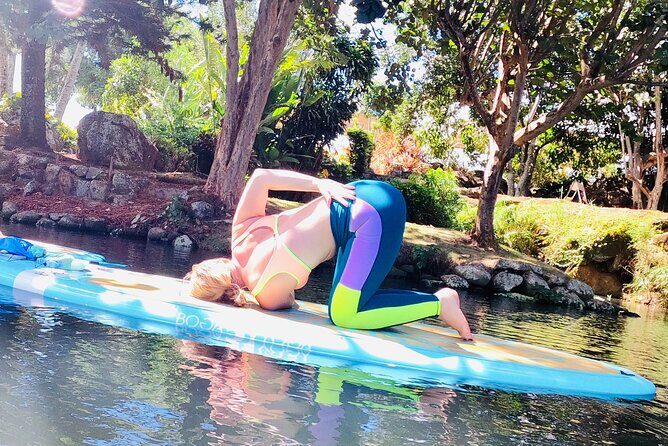
The ending is built for decompression. After the standing work, the class slows down with restorative postures intended to reset your body and nervous system.
This is where SUP yoga can feel different from a regular class. When your practice finishes on land, you step off the mat and your body has to transition back to gravity. Here, you’re still connected to the water environment, and that can make the relaxation feel extra grounded.
Your final “sweet Savasana” is the payoff. If you’ve never had the experience of lying into stillness on water, I think you’ll enjoy how unusual it is—calm, quiet, and a little magical, even if you’re not trying to be “spiritual” about it.
Instructor Quality: Why Julie’s Name Shows Up
The feedback is consistent on one point: the teaching matters. Julie comes up in multiple mentions for being a great instructor—specifically for being patient and helpful, especially for people who are new to either paddling or yoga on a board.
That’s a strong sign you won’t be left on your own with a paddle and good luck. It also suggests the class likely has clear coaching cues for balance and safe movement.
One review mentioned special boards that made it easier than expected, and another included a fall—but the key detail was that it didn’t become a scary moment. The water was described as shallow and warm, so one stumble didn’t derail the experience.
That combination—supportive instruction plus a setup that prevents minor mistakes from turning into a big deal—makes a huge difference for first-timers.
Who This Tour Fits Best (and Who Might Want Something Else)
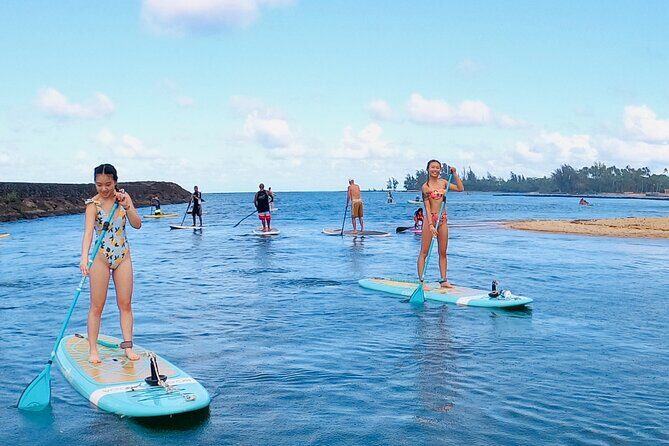
This experience is ideal if you:
- want a yoga class with a physical challenge that’s still guided
- are curious about learning stand-up paddling alongside yoga
- enjoy being outdoors on Oahu’s North Shore
- like the idea of a slower start and a calm, restorative finish
It also fits if you’re traveling with a teen who wants something active but structured—one set of feedback described going with a 15-year-old daughter and noted the instructor’s help for a first-time paddle boarder.
You should take a close look at the requirements if you:
- don’t have moderate physical fitness
- get uncomfortable on open water in general
- want a purely seated yoga class with no balance work
To be fair, SUP yoga is still yoga. You can likely move at your own pace within the guided flow, but balance on water is the whole point.
Timing on the North Shore: Why a 5:00 pm Start Works
A 5:00 pm start places you in the late-afternoon slot on the North Shore. Practically, that gives you daylight for setup and for the “float and breathe” part of the class.
It also often works well for travel days because you don’t have to burn your whole afternoon. You can do other North Shore exploring earlier, then end with something active and calming.
The one timing-related catch is weather. This experience requires good weather, so if conditions aren’t right, it may get rescheduled or you’ll get a full refund.
What’s Included in the Experience (Gear and Setup)
You don’t need to bring your own paddle setup. The tour provides:
- SUP boards
- paddles
- anchors
They also guide you through the process: meet on the beach, get the intro, paddle out to the area for practice, then anchor down.
That “full gear” approach matters for value. If you had to rent a board on your own, figure out anchoring, and teach yourself posture changes for a yoga sequence, the experience would become stressful fast. Here, you’re paying for the human guidance and the organized water logistics.
It’s a simple equation: fewer things to manage = more energy for the actual practice.
Weather, Safety Feel, and What to Expect if You Slip
This isn’t about chaos and hard falls. It’s about learning balance on a gentle water setting with instruction.
Your best indicator of how it feels is the feedback detail about a student who fell once and said it was fine because the water was shallow and warm. That kind of outcome is exactly what you want for your first attempt—an honest moment that doesn’t turn into a big emergency.
Still, you should go in knowing that balance mistakes happen. If you treat this as a “learn by doing” session, you’ll have a better time.
The tour also notes it requires moderate physical fitness. That’s likely because you’ll be getting on and off the board, paddling, and moving through poses without the full support of a studio floor.
Quick, Practical Tips That Help You Enjoy SUP Yoga More
These are based on how this kind of class is designed to run, plus the beginner-friendly coaching style implied in the instructor notes.
- Arrive ready to move. You’re not just watching yoga—you’re balancing and paddling.
- Listen early in the intro. Those first minutes on the board tend to set the tone for the whole session.
- Expect some wobble. Even when you feel steady, water adds tiny adjustments.
- Take restorative seriously. The end is designed for comfort, so don’t rush it.
And if you’re nervous, remember: the coaching is part of the product. The whole point is that you’re guided through the hard parts.
Cancellation and Weather Reality (Keep This in Mind)
The experience runs only when weather is good, and if it’s canceled due to poor weather, you’ll be offered a different date or a full refund.
Also, you can cancel for a full refund up to 24 hours before the start time. If you’re booking close to your travel dates, it’s smart to keep an eye on conditions so you’re not surprised by a late change.
Should You Book Stand-Up Paddle Yoga on Oahu’s North Shore?
I’d book this if you want something more memorable than a basic workout, but still structured enough that you’re not guessing. The standout value for me is the combination of SUP gear included and a teacher-led sequence that moves from breath work to standing poses and then down into restorative postures.
It’s also a strong choice if you’re new to paddling or yoga. The course design is clearly built for beginners, and the teaching style described for Julie signals you’ll be supported rather than pushed.
Skip it if you want a purely land-based yoga class, or if the idea of balancing on water feels like more stress than fun. Otherwise, for $65, 1 hour 30 minutes, and a calm finish on water, this is a very solid North Shore activity—one you’ll likely remember long after you step back onto the sand.
FAQ
How long is the stand-up paddle yoga session?
It’s approximately 1 hour 30 minutes.
Where does the tour meet?
You meet at 62-490 Kamehameha Hwy, Haleiwa, HI 96712, USA.
What time does the activity start?
The start time is 5:00 pm.
Is equipment included?
Yes. SUP boards, paddles, and anchors are provided.
Do I need to know yoga or how to paddle?
No. The class is designed to help you learn yoga and stand-up paddling if you’re a beginner.
Is this a private tour?
Yes. It’s private, and only your group participates.
What if the weather is bad or I need to cancel?
The experience requires good weather. If it’s canceled due to poor weather, you’ll be offered a different date or a full refund. You can cancel for a full refund up to 24 hours before the start time.