REVIEW · OAHU
Honolulu Haunts and Hauntings Ghost Tour
Book on Viator →Operated by Honolulu Haunts By Us Ghost Adventures · Bookable on Viator
Honolulu at night turns spooky fast. This 1-hour Honolulu Haunts and Hauntings Ghost Tour sends you past Iolani Palace and the state’s oldest cemetery, with a guide linking scary tales to real landmarks across Oahu.
I love that it stays tight and practical: you get a focused loop, not a long bus ride, and the stops are chosen for their blend of politics, daily life, and folklore. I also like that the guides (for example Jade, Lon, Terry, and Hope) are praised for friendly pacing and answering questions, which matters when you’re listening to stories in the dark.
One drawback to keep in mind: the “how haunted?” level varies by guide and by what you expect. A few people wanted more verifiable, historical detail and felt some stories sounded like secondhand information.
In This Review
- Key highlights to notice before you go
- Why this Honolulu ghost tour is worth $32 for an hour
- Starting at 447 S King St: the easy night-walk logistics
- Iolani Palace grounds: the coup legend and the lingering “royal” feeling
- Kaua’nona’ula intersection: rain with a red rainbow and modern sightings
- The old building stop: white kimono stories and the tragedy rumor
- Supreme Court grounds: orphanage echoes, banyan trees, and criminal hauntings
- Oldest cemetery in Hawaii: whispers, strange smells, and a young boy sighting
- Missionary homes museum: Protestant origins and ghostly women in long dresses
- The guides matter: how Jade, Lon, Terry, and Hope shape the vibe
- Who should book (and who might want a different type of tour)
- Should you book Honolulu Haunts and Hauntings?
- FAQ
- How long is the Honolulu Haunts and Hauntings Ghost Tour?
- How much does it cost?
- Where is the meeting point?
- What language is the tour offered in?
- What is the maximum group size?
- Is food or drink included?
- Can I get a full refund if I cancel?
Key highlights to notice before you go
- A compact 1-hour route built around famous Honolulu sites rather than random stops
- Iolani Palace + the cemetery: two of the most discussed places for Hawaiian ghost lore
- Easy walking pace with a flat-feeling route that works well for many people with moderate mobility
- Storytelling that’s interactive when your guide asks about your own experiences and keeps things conversational
- Spooky moments are subtle—think atmosphere and narration more than big jump scares
- Small group energy has shown up in past tours (some groups were four or around eight)
Why this Honolulu ghost tour is worth $32 for an hour
At $32 per person for about an hour, you’re paying for two things: access to key downtown/near-downtown sites after hours and a guide who strings the stories together so it all makes sense. You’re not buying a theme park. You’re buying local perspective, plus a reason to look closely at places you might otherwise walk right past.
This tour’s format also helps your money go further. It doesn’t include motorized transportation, so you’re not paying for a bus you won’t use. That means your time stays on foot and in conversation—listening, asking questions, and seeing the buildings as the night light hits them.
And even if you’re skeptical, the historical framing is part of the payoff. The stops aren’t just “scary spots.” They’re sites tied to monarchy, law, churches, and missionary-era Hawaii—so you get plenty of context alongside the hauntings.
You can also read our reviews of more tours and experiences in Oahu.



Starting at 447 S King St: the easy night-walk logistics
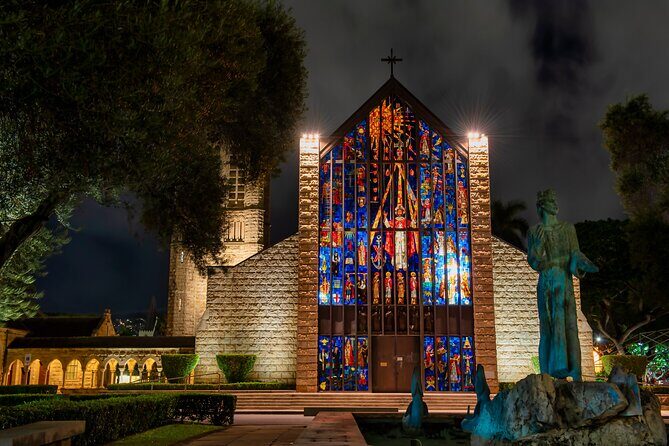
You meet at 447 S King St, Honolulu, HI 96813, and the tour ends back at the same place. That keeps things simple: you can plan dinner afterward without a complicated transit hunt.
The route is designed for night walking, and the tour includes no food or drink. Wear shoes you’re comfortable in for sidewalks and uneven pavement. It’s also smart to bring layers—Honolulu nights can feel different once you’re standing still at a quiet spot listening.
Also note the practical stuff: it’s offered in English, the group can be up to 35 travelers, and it’s generally pitched for travelers with moderate physical fitness. One review specifically noted the walking felt easy and fairly flat, which is what you want for a short ghost tour.
Iolani Palace grounds: the coup legend and the lingering “royal” feeling
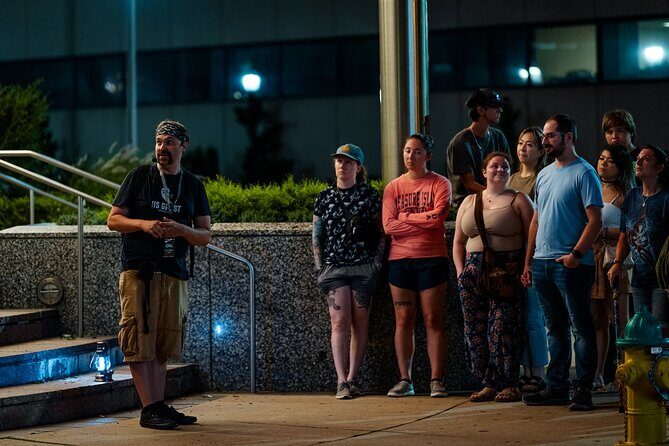
The tour opens around the grounds of Iolani Palace, built around 1879. This is where the experience leans into high-drama history, and it’s a great starting point because it instantly gives the tour its mood: sacred place, royal power, and a moment of political shock.
You’ll hear about Iolani Palace being connected to Hawaiian royalty and the site of a historic coup—described as the only coup of a sitting monarchy in American history. Then the story shifts to the last queen, and the idea that her spirit is said to linger, watching over Honolulu.
Even if you treat the haunting claims as lore, this stop works because it encourages you to look differently at what you’re seeing. I like that the story is anchored to real symbolism and real events: it’s easier to feel the atmosphere when you know why people historically viewed the place as important.
Kaua’nona’ula intersection: rain with a red rainbow and modern sightings
Next comes a street intersection tied to the name Kaua’nona’ula, meaning rain with the red rainbow. The tour’s hook here is different from the big landmark history: it’s about reported ghost sightings and unexplained encounters.
The interesting part isn’t that there’s a famous event documented at the exact intersection—it’s that the lore is still alive. The tour treats the intersection like a thread in Honolulu’s everyday ghost map, where people notice odd things, remember details, and share stories over time.
If you’re the type who likes eerie “small-scale” stories, this stop is a good fit. If you want only major historical facts, you might wish the guide spent more time on sources versus storytelling here. Either way, it’s a nice palate cleanser between heavier sites.
The old building stop: white kimono stories and the tragedy rumor
One of the more talked-about stops is an old building where staff and customers have shared creepy tales over the years. The headline rumor is a ghost in a white kimono, tied to a dramatic-sounding moment when the host reveals herself to you—followed by a tragedy as the story goes.
This stop is classic ghost-tour material: it uses a specific image (the kimono) and a recurring “story shape” that people pass along. That said, it’s also the sort of stop where you should calibrate expectations. Not every haunting story you’ll hear will come with the same level of hard, documented proof.
A practical way to enjoy this: treat it like cultural storytelling and local legend, not courtroom evidence. Then you’ll get the most from the atmosphere and the guide’s craft.






Supreme Court grounds: orphanage echoes, banyan trees, and criminal hauntings
The tour then moves to the grounds of Honolulu’s Supreme Court, opened in 1871. This stop is one of the best examples of the tour’s “two-layer” approach: law and punishment on one side, childhood and confinement on the other.
You’ll hear that the grounds once held an orphanage, and the tour includes a specific rumor about the banyan trees near the edge of the lot—where people claim they can hear the laughter of children playing. Then the story flips again toward the darker side, with mentions of lost souls connected to criminals sentenced to death in the early 1900s.
What makes this stop work for me is that it explains why multiple kinds of spirits would show up in the story ecosystem. Places like this accumulate layers: authority, tragedy, and human suffering—so it’s easy for ghost lore to form and stick.
If you’re sensitive to heavy themes, you may want to mentally pace yourself. The tour can be spooky, and this is one of the places where that emotional weight is part of the narration.
Oldest cemetery in Hawaii: whispers, strange smells, and a young boy sighting
One of the strongest storytelling stops centers on the first Christian church built in Hawaii, along with the oldest cemetery in the state. The tour notes that there are 296 gravestones, but the lore claims many more bodies lie beneath the surface than the markers suggest.
Then the haunting claims become sensory: people report strange smells, quiet whispers, and seeing the ghost of a young boy who wanders the cemetery.
This is a stop where the guide’s tone really matters. If the guide keeps it respectful (and several reviews specifically call out guides emphasizing respect for sacred places), you’ll likely find it moving rather than goofy.
Practical tip: if you can, step back and watch how your group behaves at this stop. Being quiet, walking slowly, and giving yourself a moment helps you catch the mood the guide is aiming for.
Missionary homes museum: Protestant origins and ghostly women in long dresses
The final set of stops focuses on two of the oldest homes in Hawaii, built by missionaries from New England to spread Protestant beliefs. This part of the tour shifts the “haunting” from legal and religious sites into the domestic and daily-life angle.
You’ll hear reports of ghostly missionary women dressed in long dresses, plus sounds of children. And because these are historic homes in a museum setting, the stories land differently. They feel like they’re describing what daily life might have sounded like, not just what happened in major public events.
If you enjoy seeing how places were used and why communities formed around them, this is a satisfying closer. It gives your brain a gentler landing after the cemetery and court grounds.
The guides matter: how Jade, Lon, Terry, and Hope shape the vibe
The biggest variable on a ghost tour is always the person leading it. From the feedback you shared, names keep showing up: Jade, Lon, Terry, and Hope.
What gets praised most often:
- Guides who are friendly and personable, with a conversational feel
- People who take their time and handle questions without rushing
- Guides who mix history and paranormal stories in a way that feels respectful rather than sensational
One extra detail I’d file away: some tours have been described as very small—like four people—or around eight. Smaller groups usually mean more attention, better hearing, and more back-and-forth questions. Even within a max group size of 35, your experience can feel different depending on who’s on your specific night.
One caution from the feedback: in a couple cases, people said the guide was too soft or that some stories felt less well-grounded. If you’re booking with a partner or group where you really want historical sourcing, you might prefer a guide known for clarity and pacing.
Who should book (and who might want a different type of tour)
This tour is a strong match if you want:
- A short evening activity that mixes Hawaiian and Honolulu history with ghost lore
- A guided route that helps you focus on specific sites like Iolani Palace and the oldest cemetery
- Subtle spooky atmosphere rather than a heavy scare-a-thon
- A chance to ask questions and learn context while you walk
It may be less ideal if you strongly prefer:
- Only tightly documented, verifiable history with minimal legend
- Big supernatural effects or theatrical “events” during the tour
- A louder, high-energy presentation if you already know you struggle hearing in street noise
Also, it can work well for people who have visited Honolulu before and want to avoid the standard checklist. Several reviews highlighted the appeal of getting off the most obvious tourist path and seeing another side of the city at night.
Should you book Honolulu Haunts and Hauntings?
Yes, if you’ll enjoy a history-forward ghost walk that takes 60 minutes and doesn’t waste your time with complicated logistics. I think it’s especially worth it when you want an easy way to learn why certain downtown landmarks carry so much lore.
I’d also book it if you can go in with the right mindset: treat the hauntings as stories tied to real places and real eras. When the guide leans into respect and clear storytelling, the “spooky” part feels like part of the culture of place.
Skip or rethink it if you need only hard documentation and you find softer, legend-based narration frustrating. A couple of people wanted more solid, verifiable history, so if that’s your top priority, look for a different kind of tour.
If you do book, choose comfortable shoes, bring patience for a few subtle chills, and come ready to listen closely. Honolulu at night is made for that.
FAQ
How long is the Honolulu Haunts and Hauntings Ghost Tour?
It runs for about 1 hour (approx.).
How much does it cost?
The price is $32.00 per person.
Where is the meeting point?
You meet at 447 S King St, Honolulu, HI 96813, USA, and the tour ends back at the meeting point.
What language is the tour offered in?
The tour is offered in English.
What is the maximum group size?
The tour has a maximum of 35 travelers.
Is food or drink included?
No. Food and drink are not included.
Can I get a full refund if I cancel?
Yes, you can cancel up to 24 hours in advance for a full refund. If you cancel less than 24 hours before the start time, the amount paid is not refunded.