REVIEW · OAHU
Oahu: Waikiki Trolley Hop-on Hop-off All-Line Pass
Book on GetYourGuide →Operated by E NOA Corporation · Bookable on GetYourGuide
A trolley day can save you a car. This hop-on hop-off pass is built for getting around Honolulu without the stress of driving, parking, or rerouting. I like how the open-air ride turns a simple transportation plan into a moving viewpoint, with guides such as Big Tony often bringing both jokes and useful context as you pass by the sights.
My other favorite part is the stop-and-photo rhythm—especially on the coastal routes—so you can actually see things instead of just cruising past them. On the Blue Line, you’ll likely catch scenic breaks and guided commentary; in past rides, people have praised guides like Turk and Oli for making the time feel worth it. One drawback to keep in mind: your pass covers the trolley ride, but it doesn’t include museum or attraction admission, and the Red Line can feel shorter than the others depending on timing.
In This Review
- Key Things to Know Before You Ride
- Four Lines Across Honolulu: How the Pass Lets You Build Your Own Day
- Blue Line: Coast Views, Sea Life Park, and Local Stops That Save You Time
- Green Line: Diamond Head and KCC Farmers’ Market Without the Guesswork
- Red Line: Kings, WWII, and the City/Art District for an Evening Story
- Pink Line: Ala Moana Center Shopping Shuttle and Waikiki Easy Mode
- How I’d Build a 1 to 4 Day Plan (Without Feeling Rushed)
- Price and Value: Does a $62 Pass Make Sense?
- Getting On and Getting Off: What to Expect on the Trolleys
- Who Should Book This Pass, and Who Might Skip It
- Should You Book the Waikiki Trolley All-Line Pass?
- FAQ
- What’s included in the Oahu Waikiki Trolley pass?
- How long is the pass valid?
- Can I hop on and off anywhere along the route?
- Does the pass include admission to attractions or museums?
- Where does the Green Line take you?
- What’s the Blue Line focused on?
- What’s special about the Red Line?
- What’s the Pink Line best for?
- Is the trolley wheelchair accessible, and what language do drivers speak?
Key Things to Know Before You Ride
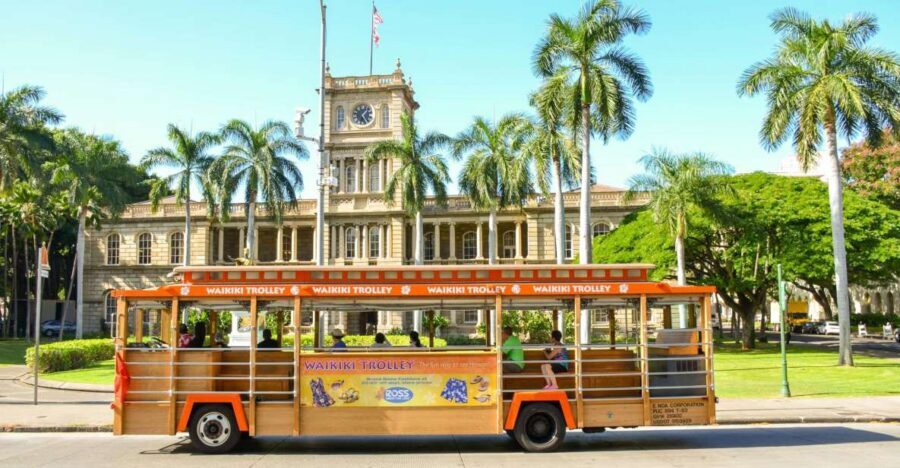
- Four lines, one pass: Blue, Green, Red, and Pink all use the same ticket, so you can mix beach, landmarks, history, and shopping.
- Diamond Head is the headline on Green: You get a direct way to reach this iconic viewpoint area from Waikiki.
- Sea Life Park is the payoff on Blue: It’s part of a longer coastal sweep with stops around the way.
- Ala Moana Center is the shopping magnet on Pink: A mall that locals actually use is a big reason to ride.
- Guides turn transit into a story: Names like Big Tony, Turk, and Oli show up often in feedback for the way they pace the ride.
- Watch your day length on Red: Some people felt the Red Line ended earlier than other lines.
Four Lines Across Honolulu: How the Pass Lets You Build Your Own Day
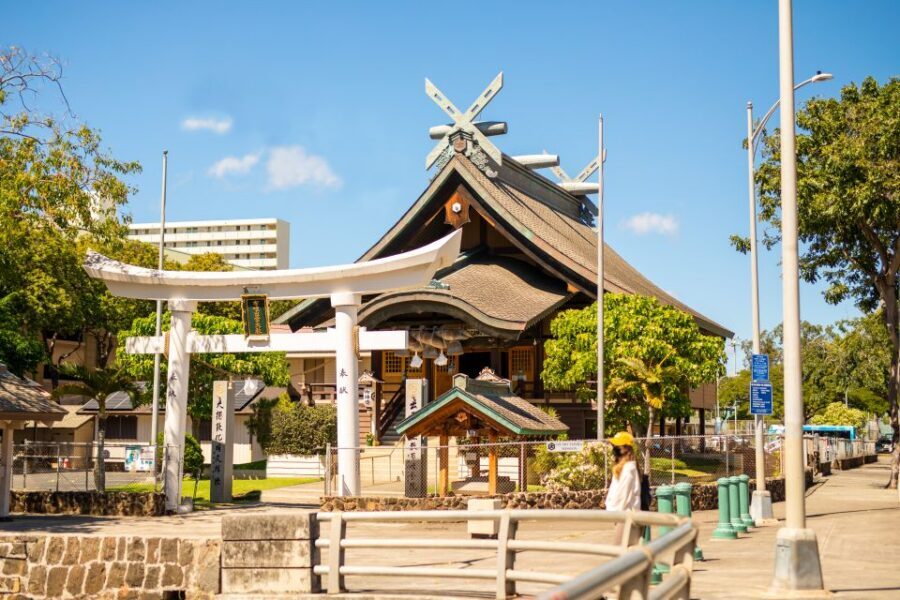
This is the kind of pass that makes sense if you’re staying in Waikiki and want options. You don’t have to commit to one pre-set tour. Instead, you can use the trolley like a flexible backbone: ride, hop off when you want, then get back on when you’re ready to keep going.
The smart part is the variety. The trolley company focuses each line on a theme, so you’re not repeating the same scenery over and over. Think of it as four different “takes” on Oahu—coast and food, Diamond Head and markets, cultural history, and shopping and dining.
Also, it’s easy on logistics. You’re not coordinating multiple services or timing rides with traffic. Just check the schedule on WaikikiTrolley.com, plan for a few hops, and let the trolley do the heavy lifting.
You can also read our reviews of more tours and experiences in Oahu.

Blue Line: Coast Views, Sea Life Park, and Local Stops That Save You Time
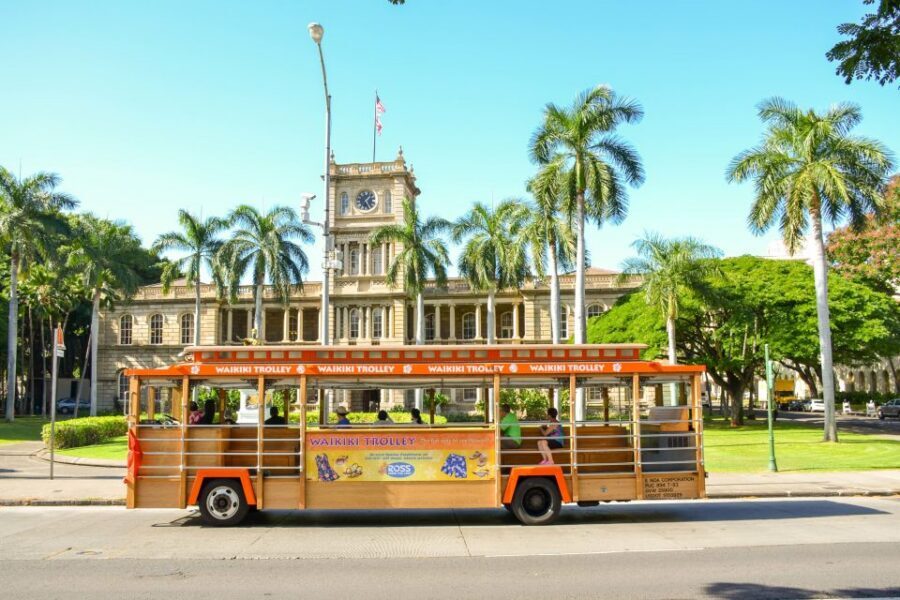
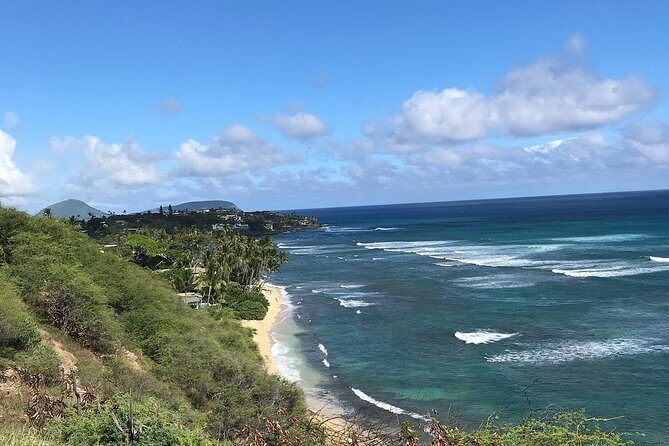
If you want a classic Oahu “drive along the water” feeling, start with the Blue Line. It’s positioned as a sights-and-tastes route, and that matters because it’s not only about pretty views—it also nudges you toward places where you can actually eat or browse.
The big destination tied to this line is Sea Life Park. Admission is not included, so you’ll need to pay if you want to get in. But the advantage is that you’re not trying to figure out how to reach it on your own in a busy area.
What makes the Blue Line especially useful for a short trip is the “coastal plus errands” approach. Along the way, you can hop around for local picks such as Kahala Mall and Diamond Market & Grill. Even if you don’t do a full meal, the ability to stop for a snack or a quick bite helps you avoid the trap of spending your whole day hunting for food.
A practical tip from the vibe of the rides: guides often pause so you can photograph and grab water. That’s not guaranteed every time, but it’s a clear pattern in feedback. Bring sunscreen anyway. Oahu sun doesn’t care how good the storytelling is.
Green Line: Diamond Head and KCC Farmers’ Market Without the Guesswork
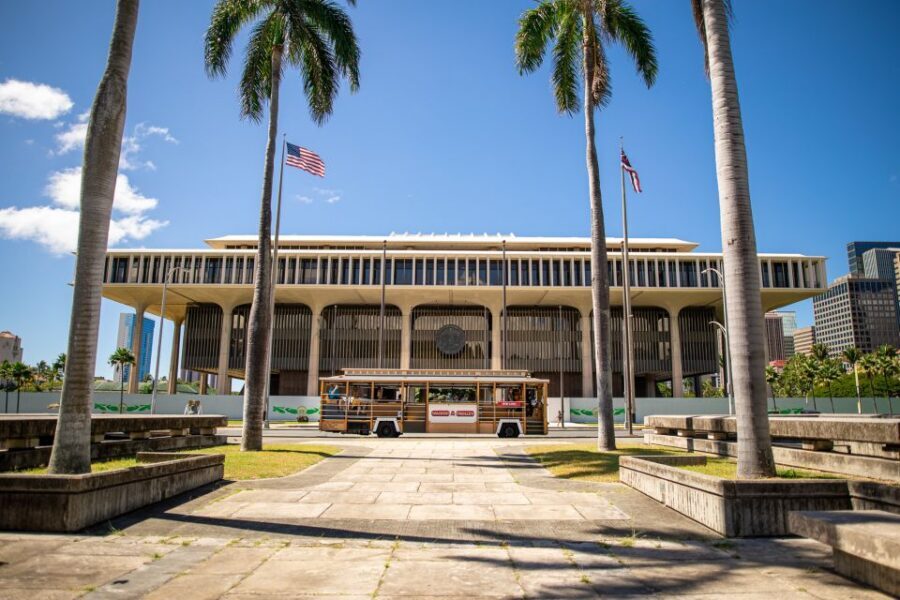
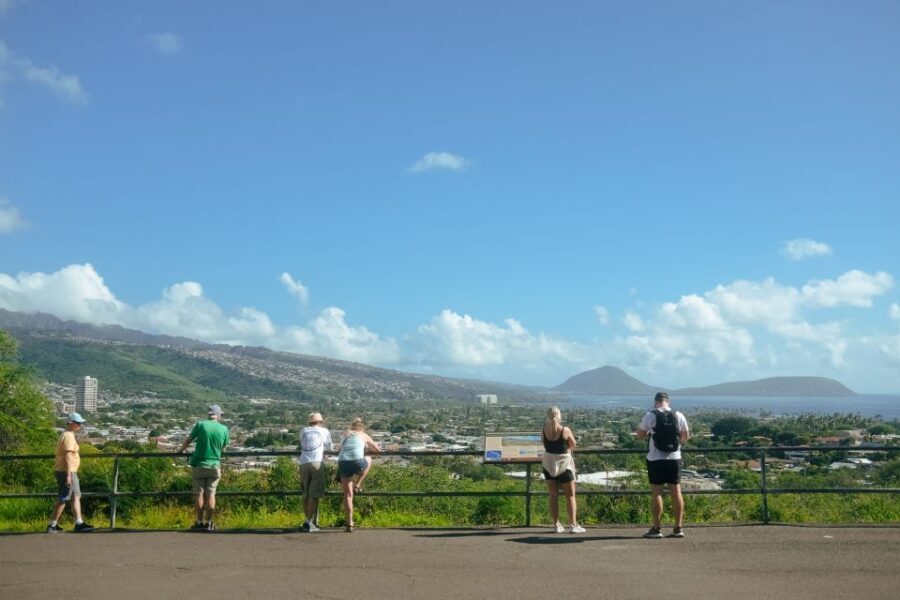
The Green Line is your landmark route. It’s designed for the area around Diamond Head and also connects to KCC Farmers’ Market.
Why this matters: Diamond Head is the kind of place where timing and logistics can make or break your morning. Instead of figuring out bus transfers or trying to drive yourself, the trolley gives you a straightforward way to get there from the Waikiki area.
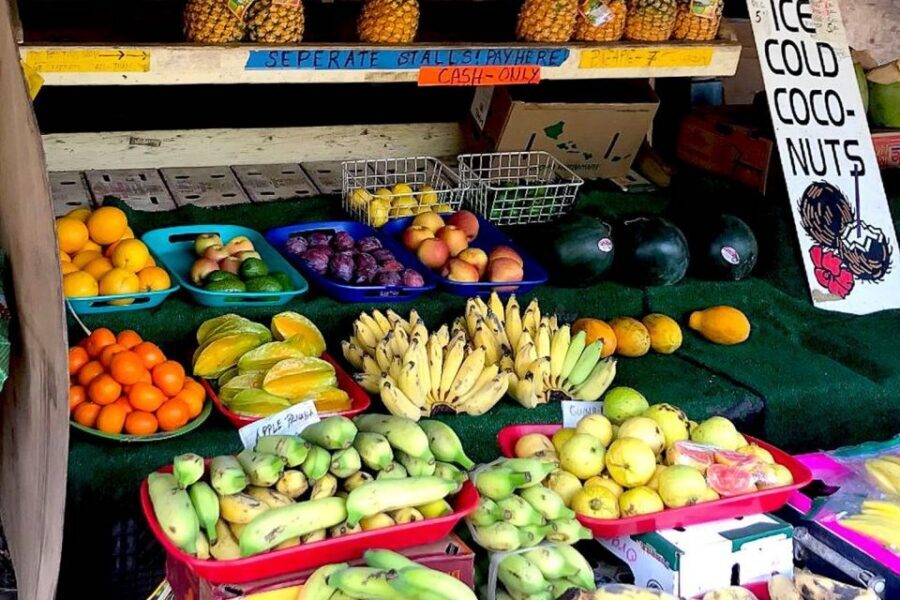
Then you’ve got the market option. Even if you don’t plan to eat a full breakfast there, a farmers’ market can be a great way to break up the day with something local and low-pressure. It’s also a good place to pick up snacks and fruit if you’re spending the rest of the day hopping around other stops.
The Green Line is ideal if you like to do one “big wow” landmark and then spend the rest of the day strolling. Hop off, explore at your pace, and re-board when you’re ready to move on.
Red Line: Kings, WWII, and the City/Art District for an Evening Story
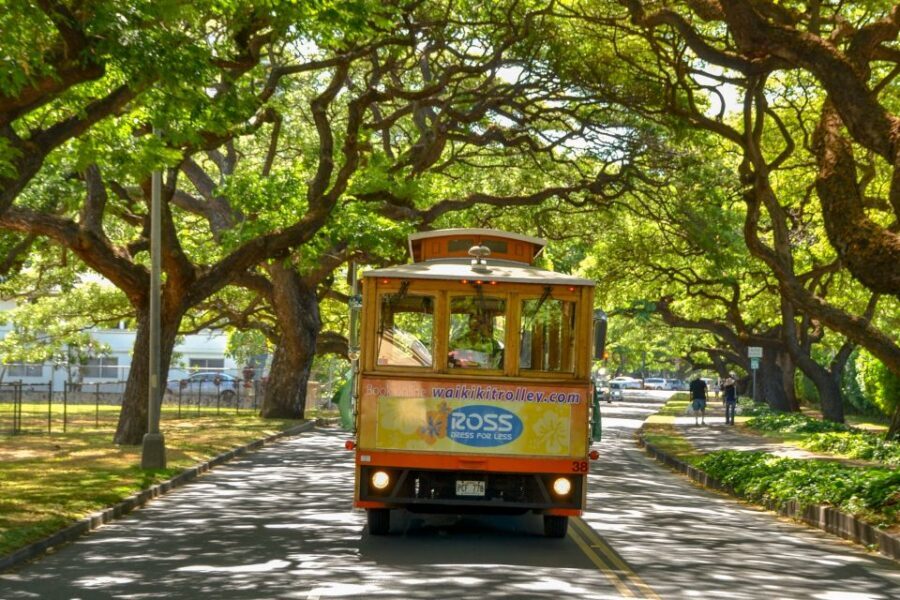
The Red Line is the history track. It focuses on the cultural past and how it connects to the present—starting from the time of kings and queens, moving through the importance of WWII, and then reflecting how influences show up today.
It also includes the City/Art District component, which is a nice balance if you’ve spent the morning on beaches or shopping. You’re not just looking at buildings. You’re getting a guided narrative of what you’re seeing and why it matters.
One consideration: people have noted the Red Line may end earlier than other lines. That doesn’t mean it’s bad—it means you should plan your “flex time” accordingly. If you’re the type who hates rushing, put the Red Line earlier in your timeline and don’t assume you can roll it late into the evening.
Pink Line: Ala Moana Center Shopping Shuttle and Waikiki Easy Mode
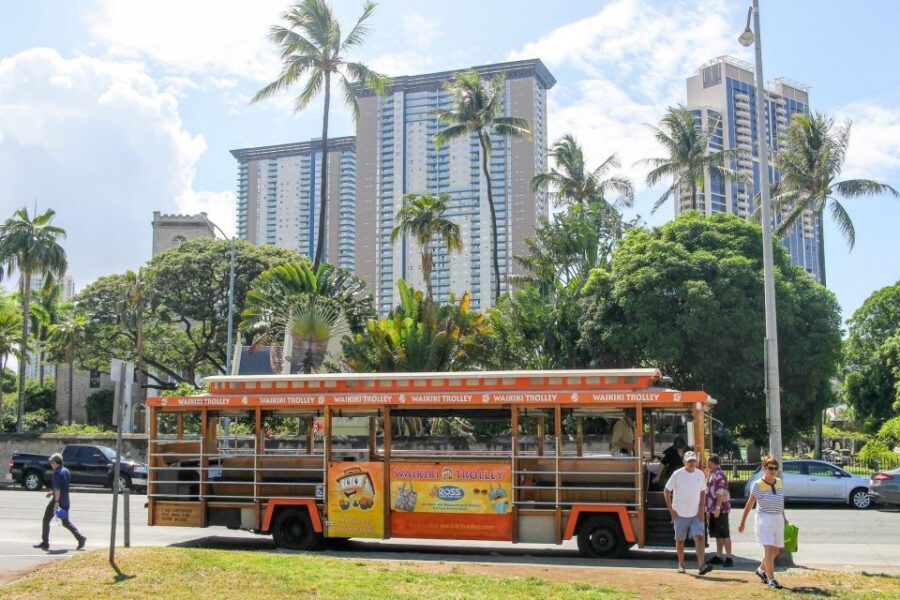
For many people, the Pink Line becomes the daily default because it’s all about shopping and dining convenience. It’s described as a route that shows Waikiki and works as a shopping shuttle, and the anchor stop is Ala Moana Center.
Ala Moana is one of those places that feels built for visitors, but it’s also popular with locals. That’s useful: you’ll see more of the real day-to-day rhythm of Waikiki, not only the tourist strip.
Practical advice: if you’re trying to do laundry, grab groceries, pick up snacks, buy sunscreen, or handle any shopping that you don’t want to squeeze into limited time, Ala Moana is where you’ll likely solve multiple tasks at once.
Also, the Pink Line tends to be frequent. One rider reported the trolley came about every 15 minutes, which is the kind of interval that makes hopping feel effortless. Add in the fact that people have mentioned stops around hotel areas like the Hilton village area, and the Pink Line can fit nicely into almost any schedule.
If you’re hungry or ready for air-conditioned breaks, this is your line.






How I’d Build a 1 to 4 Day Plan (Without Feeling Rushed)
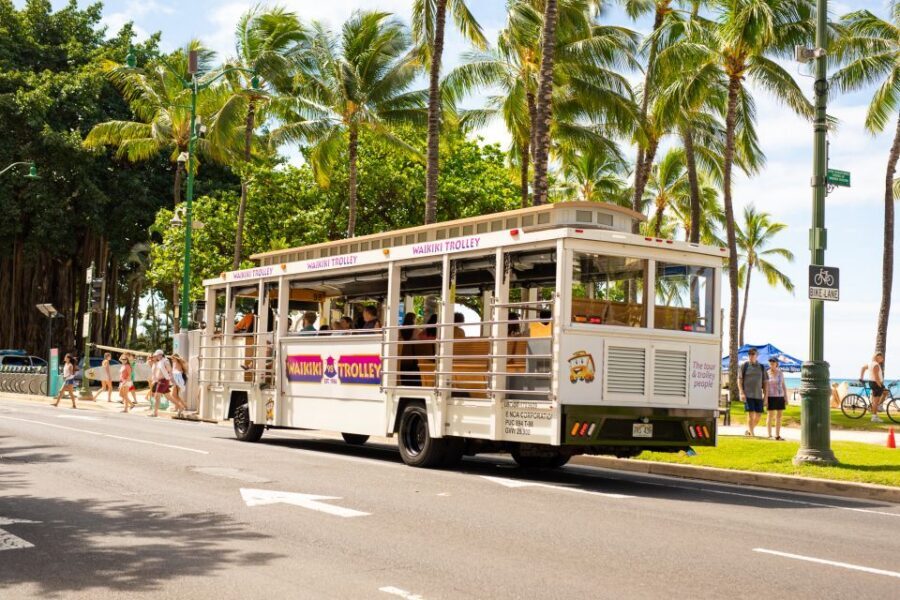
This pass shines when you stop treating it like a one-time attraction and start treating it like your transport system.
If you have 1 day:
Pick one main theme and one secondary stop. A common winning combo is Blue Line for Sea Life Park area plus a stop at a local spot like Kahala Mall or Diamond Market & Grill. Then use Pink Line later for Ala Moana shopping and dinner.
If you have 2 days:
Do Green Line for Diamond Head first, then pivot to either Red Line for the cultural story in the evening or Blue Line for the coastal sweep and Sea Life Park. Add Pink Line time to handle shopping and food breaks.
If you have 3 to 4 days:
This is where value starts to feel obvious. You can ride different lines on different days, revisit stops you liked, and adjust when weather or energy changes. People with the 4-day pass have described it as a strong deal because you can keep using the trolley rather than paying for multiple separate tours.
The key mindset: don’t try to “finish Oahu.” Use each line to create one good chunk of your day, then build the rest around what you feel like doing.
Price and Value: Does a $62 Pass Make Sense?
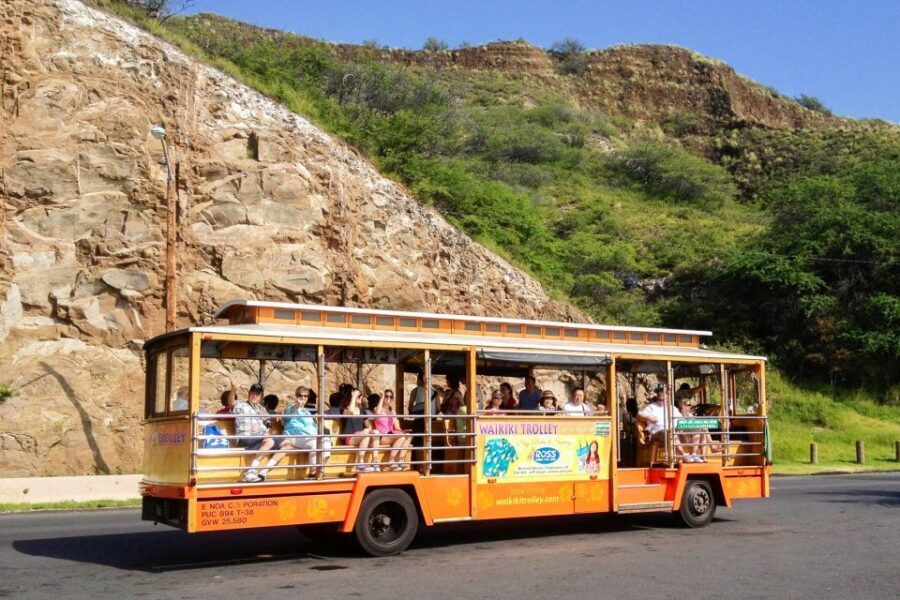
At about $62 per person, you’re buying convenience and time savings more than you’re buying admission to attractions. That’s fine, as long as you plan like a smart visitor.
Here’s the value math that usually works:
- If you’ll ride only once, you may wish you’d paid for something more specific.
- If you’ll ride across multiple lines—especially the Blue/Green for scenery and landmarks plus Pink for shopping—that’s when the pass starts to look like a bargain.
- People specifically describe the 4-day option as best value, mainly because the same ticket keeps paying off as you reuse it over and over.
Also, your meals and attraction tickets aren’t included. So budget for food and admission separately. But you’ll often save money by using trolley access to stop at places that are easier and cheaper than booking “one-off” guided transport.
Getting On and Getting Off: What to Expect on the Trolleys
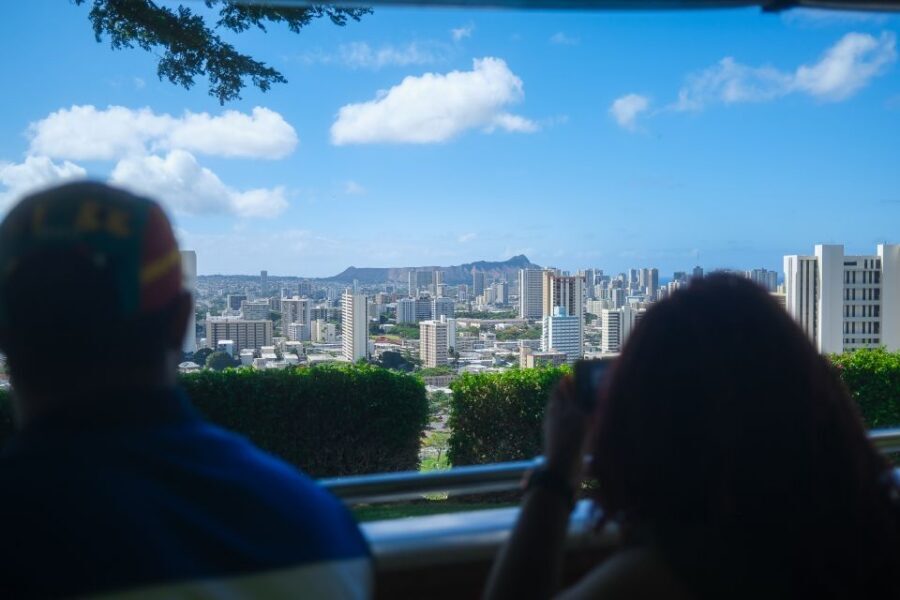
This system is designed around easy hopping. You can board and leave at stops around Waikiki, then pick up later at another stop when you’re ready.
A few ride traits matter for comfort:
- The trolleys are open-air, and people have said they felt cool and well-ventilated.
- Feedback also includes comments that seats aren’t the most comfortable, and rides can feel a bit bumpy—but not to the point of being unmanageable for most.
Guides are a big part of the experience. Multiple names show up in feedback—Big Tony, Turk, Tanner, Dino, Dirk, Kai, Kimo, Oli, and Chico—often praised for humor plus practical context. Your best bet is to sit where you can hear the audio and pay attention on the segment where the line’s theme comes up.
One more practical note: there are restrictions. You can’t bring oversize luggage or large bags, and smoking isn’t allowed.
Who Should Book This Pass, and Who Might Skip It
This pass fits best if:
- You’re staying in Waikiki and want an easy way to get around.
- You don’t want to deal with traffic, parking, or rental-car logistics.
- You like having a plan but still want flexibility to hop off and roam.
You might skip it if:
- Your schedule is so tight that you only need transport to one single place.
- You want a tour with included attraction entry and guided walking at every stop (this pass covers trolley rides, not admission).
For most first-timers, though, it’s a strong way to get your bearings fast and see how different parts of the island connect.
Should You Book the Waikiki Trolley All-Line Pass?
If you’re doing more than one “type” of day—landmarks one day, shopping another, a coast ride another—then yes, this pass is worth serious consideration. The price feels fair when you use the full strength of the system: multiple lines, lots of hop-off options, and guides who keep the trip lively.
If your priority is one attraction with a fixed timetable, you might find a simpler ticket works better. But if you want a low-stress way to string together Honolulu highlights over 1 to 4 days, the all-line pass is one of the most practical choices in Waikiki.
FAQ
What’s included in the Oahu Waikiki Trolley pass?
The pass includes access to all four Waikiki trolley lines: Blue, Red, Green, and Pink.
How long is the pass valid?
It’s valid for 1 to 4 days, depending on the option you choose and availability.
Can I hop on and off anywhere along the route?
Yes. You can hop on and hop off at any of the trolley stops around Waikiki. You’ll want to check schedules at WaikikiTrolley.com.
Does the pass include admission to attractions or museums?
No. Admission to museums and attractions isn’t included, and meals and snacks aren’t included either.
Where does the Green Line take you?
The Green Line is for Diamond Head and KCC Farmers’ Market with convenient stops around the Waikiki area.
What’s the Blue Line focused on?
The Blue Line is built around coastal views and local stops, including Sea Life Park and places like Kahala Mall and Diamond Market & Grill.
What’s special about the Red Line?
The Red Line focuses on Hawaiian culture and history, including the time of kings and queens, WWII, and later cultural influences, plus it connects to the City/Art District.
What’s the Pink Line best for?
The Pink Line is mainly for shopping and dining, including easy access to Ala Moana Center, and it also helps you get around Waikiki.
Is the trolley wheelchair accessible, and what language do drivers speak?
Yes, the trolley is wheelchair accessible, and the driver provides commentary in English.