REVIEW · OAHU
Waikiki Ghost Tour: Torches & Terrors
Book on Viator →Operated by Honolulu Haunts By Us Ghost Adventures · Bookable on Viator
Waikiki at night can get spooky. This 1-hour Waikiki Ghost Tour mixes five real Waikiki landmarks with Hawaiian legends and evening atmosphere, from the Stones of Life to a memorial tied to burial history. It’s the kind of walk where the city sounds fade just enough to let the stories land.
I especially love two things: the way the guide connects the eerie moments to Hawaiian history, and the friendly, question-ready style praised in guides like Jax and Terry. One review note that Terry kept the pace engaging and storyteller-style, while another credited Jax for making the tour fun without losing the historical thread.
One drawback to weigh is the setting: you’re moving through well-known Waikiki streets, not a remote, isolated route, and the experience depends on finding your guide promptly at the Stones of Life start.
In This Review
- Quick hits on Waikiki Ghost Tour: Torches & Terrors
- Why a late-night ghost walk works in Waikiki
- Price and value: what $32 buys you in 1 hour
- Getting your bearings: meeting point, pace, and group size
- Stop 1: The Stones of Life and the 1400s story
- Stop 2: Duke Paoa Kahanamoku statue and the Night Marchers
- Stop 3: ESPACIO The Jewel of Waikiki and the “new” haunting
- Stop 4: St. Augustine by the Sea and its neo-Gothic chill
- Stop 5: Kāhi Hāli’a Aloha Memorial, remains, and a respectful ending
- The guide’s role: history-first scary, not just spooky talk
- Logistics that actually matter for this walk
- Worth it? Who this Waikiki ghost tour fits best
- Should you book Waikiki Ghost Tour: Torches & Terrors?
- FAQ
- What time does the Waikiki Ghost Tour start?
- How long is the tour?
- How much does the tour cost?
- Where does the tour start and end?
- Is the tour offered in English?
- Do I need to tip my guide?
- Is it a mobile-ticket experience?
- Is the tour accessible for most people?
Quick hits on Waikiki Ghost Tour: Torches & Terrors
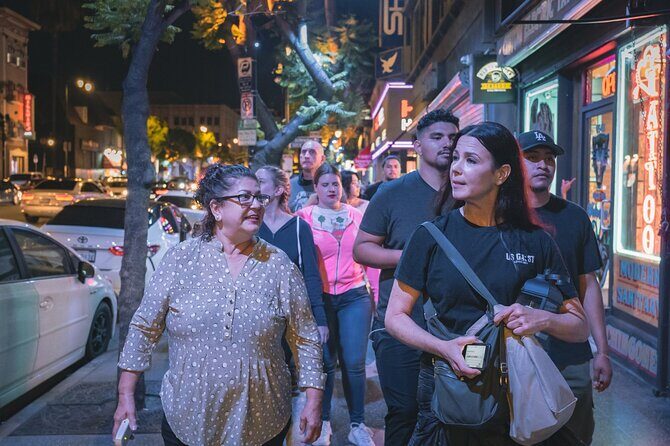
- 8:00 pm start means you’ll catch Waikiki after the day crowds thin out
- Five landmark stops cover spiritual legends, famous statues, church architecture, and a memorial
- Talk-while-you-walk guide style is part of the format, with named guides like Jax and Terry getting credit for conversation
- Hawaiian legends included, including the Night Marchers idea tied to the Duke Paoa Kahanamoku statue
- Respect-first ending at Kāhi Hāli’a Aloha Memorial adds weight to the final stretch
Why a late-night ghost walk works in Waikiki
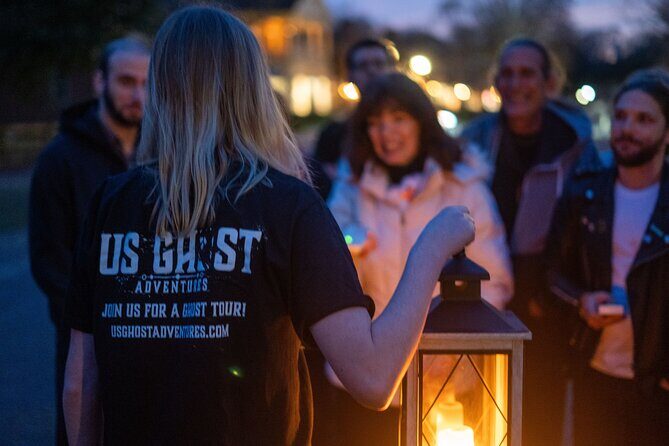
Waikiki is famous for daytime energy, but at night the area turns into something else. That’s when a guided ghost walk makes sense: less sun glare, fewer distractions, and more time to focus on the stories being told right where you’re standing.
This tour also leans on the “Torches & Terrors” promise in a practical way: you’re seeing Waikiki under evening light while a guide threads the spooky tone through real places. Even if you’re not a hardcore ghost-story person, the timing helps you pay attention.
You can also read our reviews of more tours and experiences in Oahu.



Price and value: what $32 buys you in 1 hour
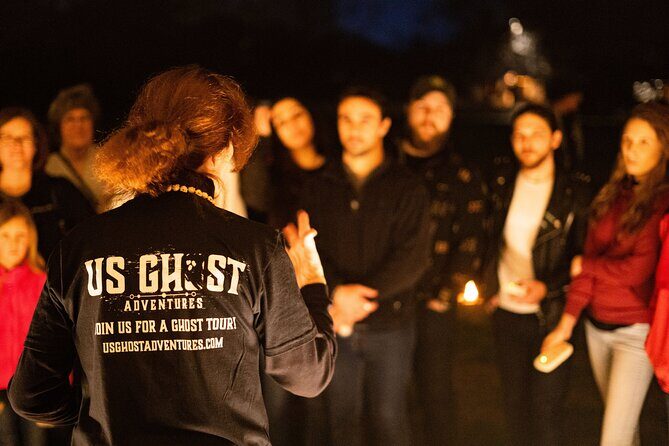
At $32 per person for about an hour, you’re paying for one main thing: a professional guide who ties the ghost tales to local context. The tour includes the guide, researched and accurate history, and authentic local ghost stories—plus the actual walk between five landmarks.
You don’t have to budget extra for admissions at the listed stops, since the tour notes admission ticket Free. And with a maximum group size of 35, the pace should feel like a guided stroll rather than a loud stampede.
If you’re already doing the usual Waikiki sightseeing loop by day, this is a different use of time. You get a structured nighttime experience that gives you something to talk about later—without needing to drive, hunt for locations alone, or piece together legends from scraps.
Getting your bearings: meeting point, pace, and group size
The tour starts at the Stones of Life in Honolulu (Honolulu, HI 96815). It ends at Kāhi Hāli’a Aloha Memorial (also in Honolulu, HI 96815). That means you’ll be walking from one side of the story to the next—rather than going back and forth.
You should expect a steady pace with about 12 minutes per main stop, which keeps the hour moving. With a maximum of 35 people, you may still get a mix of viewpoints depending on where you stand, so I’d stay alert early and keep an eye on your guide.
Also note it’s near public transportation, and it uses a mobile ticket. So you’ll want your phone accessible and charged enough for an evening start.
Stop 1: The Stones of Life and the 1400s story
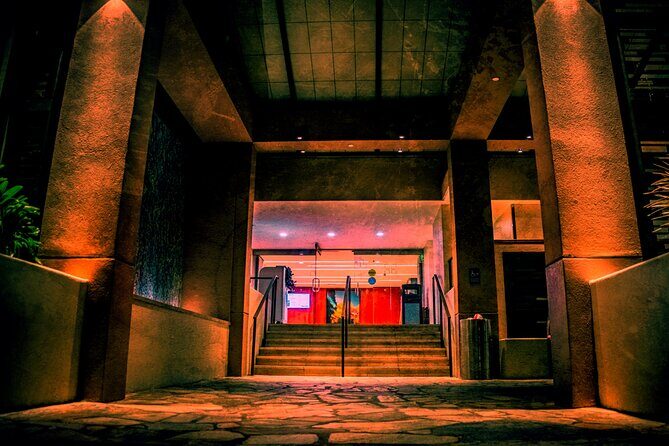
Your first stop sets the tone fast: the Stones of Life. This is where the guide frames the area as far older than the modern Waikiki you see during the day, with the tour pointing to history reaching back to the 1400s.
Then comes the part that makes people pause. The stones are described as a place where visitors often come to pay homage, with a belief that these stones still have healing powers. Whether you think the healing claim is literal or symbolic, the point is that this spot anchors the tour in Hawaiian spirituality, not just generic spooky vibes.
Practical takeaway: since this is the opener, listen closely. It’s the stop where the guide usually teaches you how to interpret the rest of the walk—what’s legend, what’s cultural memory, and what’s meant to be respected.
Stop 2: Duke Paoa Kahanamoku statue and the Night Marchers
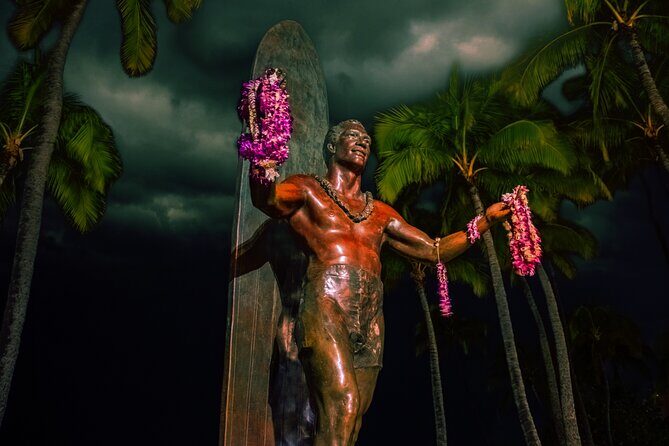
Next you’ll visit the Duke Paoa Kahanamoku statue, one of Waikiki’s best-known icons. The tour links him to the global spread of surfing, and you’ll also hear additional stories tied to the area’s traditions.
Most importantly, this is where the Night Marchers enter the conversation. The guide explains the legend and, in the tour’s own framing, teaches you to look out for what they call to your attention while you’re there. You may not see anything supernatural. But you will learn a way of thinking about movement, warning, and the meaning of seeing something at the wrong time.
Practical takeaway: take the time to stand where your guide points out details. Statues and street corners can feel identical if you rush, and the Night Marchers part depends on noticing the small cues the guide highlights.






Stop 3: ESPACIO The Jewel of Waikiki and the “new” haunting

Then you move to ESPACIO The Jewel of Waikiki, described as a newer hotel. The interesting twist here is that the tour doesn’t treat the paranormal as only belonging to ancient ruins. Instead, it frames the hotel as a place where a few paranormal entities are believed to have moved in.
Even if you don’t buy the claims, I like the logic of this stop because it keeps the ghost story from feeling like a history museum. It suggests that people carry energy, emotion, and memory into built spaces—especially when those spaces cover older layers of land and life.
Practical takeaway: this stop is a good reminder not to only trust your eyes. The guide’s job is to get you thinking about what the land might have been before it became the hotel you’re looking at now.
Stop 4: St. Augustine by the Sea and its neo-Gothic chill
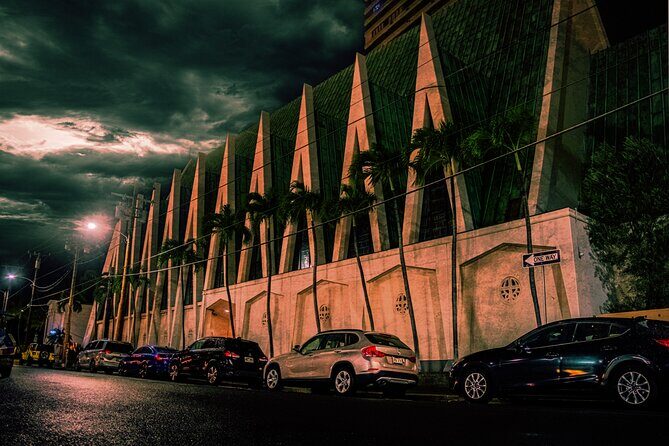
After that, you’ll visit St. Augustine by the Sea. The tour calls out its neo-Gothic design, and that architecture matters for a ghost walk because it naturally creates shadow lines, height, and dramatic shapes.
Here, the guide adds more ghost stories plus fun facts. The mix of design details and story makes this stop work even if you’re skeptical. You don’t have to believe in ghosts to appreciate how the building’s style supports the mood.
Practical takeaway: if you’re sensitive to spooky tone, this is also the stop where you can control how far you want to play along. Ask questions if you want cultural context, or keep it simple and just enjoy the setting and design.
Stop 5: Kāhi Hāli’a Aloha Memorial, remains, and a respectful ending

The final stop is the most serious in tone: Kāhi Hāli’a Aloha Memorial. The tour explains that as Waikiki developed and buildings were constructed, human remains were excavated from different areas. This burial mound was created to give those uncovered remains a respectful and proper burial.
Because of that, the site is described as active for paranormal activity. Still, the bigger point is respect. This is a place tied to real human history, not a random spooky prop. The stories you hear here land differently because they’re wrapped in a cultural duty to honor what came before.
Practical takeaway: keep your volume down and your attention up. The point isn’t to “win” the scariest moment—it’s to understand why the story matters.
The guide’s role: history-first scary, not just spooky talk
The included guides are described as professional and courteous, with thoroughly researched and accurate history. That matters because Waikiki has a lot of layers, and a good guide helps you avoid turning cultural sites into simple entertainment.
The tour also encourages interaction. One of the highlights is that you can ask your guide questions as you walk. That’s a big deal in a ghost tour, because it turns the experience into a real conversation instead of a lecture with dramatic pauses.
And the repeated mentions of named guides—Jax and Terry—suggest the company puts effort into the storytelling style. In the reviews, both are credited with friendly conversation and spooky-but-focused delivery, with Terry also singled out for lots of spooky stories along Kalākaua Ave.
Logistics that actually matter for this walk
This is designed to be manageable: around an hour, a single direction route, and about 12 minutes at each main stop. With English offered, you won’t be stuck decoding accents or translating on the fly.
The walk is also capped at 35 people, so you should be able to hear the guide without screaming over everyone’s phone cameras—if you position yourself reasonably. If you’re bringing a service animal, note service animals are allowed.
And because the tour is popular enough that it’s often booked about 22 days in advance on average, I’d plan ahead if your schedule is tight.
Worth it? Who this Waikiki ghost tour fits best
This tour fits best if you want a nighttime Waikiki activity that does more than say, “Look at that building.” You’ll get a guided walk tied to legends, landmarks, and cultural meaning—plus a chance to ask questions while moving.
I’d also recommend it if you’ve already seen the beach and want a different angle on Honolulu. Waikiki at night can feel like the same place, just with the volume turned down. This tour gives that quiet a reason.
On the flip side, if you want a remote, isolated “no one else around” kind of spook, you might feel underwhelmed. The tour is in central Waikiki, so you’ll be in a real urban environment while the guide keeps the tone spooky.
Should you book Waikiki Ghost Tour: Torches & Terrors?
Book it if you want an hour-long Waikiki evening that blends Hawaiian legend and landmark storytelling with a respectful ending at Kāhi Hāli’a Aloha Memorial. It’s also a good choice if you like conversations on the walk—guides such as Jax and Terry have a reputation for friendly, engaging delivery.
Skip or reconsider if you’re expecting a completely secluded haunting with no urban noise, or if you’re the type who needs absolute certainty about what you’ll see. This is a story-led tour, and the value comes from listening well and asking smart questions.
If you do book, aim to arrive early at the Stones of Life meeting point, keep your mobile ticket ready, and bring a calm, respectful attitude for the final stop. You’ll get the most out of the experience that way.
FAQ
What time does the Waikiki Ghost Tour start?
The tour start time is 8:00 pm.
How long is the tour?
The duration is approximately 1 hour.
How much does the tour cost?
The price is $32.00 per person.
Where does the tour start and end?
It starts at the Stones of Life in Honolulu, HI 96815 and ends at Kāhi Hāli’a Aloha Memorial in Honolulu, HI 96815.
Is the tour offered in English?
Yes, it is offered in English.
Do I need to tip my guide?
Guide tip is not included.
Is it a mobile-ticket experience?
Yes, it includes a mobile ticket.
Is the tour accessible for most people?
Most travelers can participate, and service animals are allowed.
![Pearl Harbor [Early Access], USS Arizona & Historic Honolulu Tour - The USS Arizona Memorial boat ride: how tickets work and how to plan your photos](https://l.insideoahu.com/wp-content/uploads/pearl-harbor-early-access-uss-arizona-historic-honolulu-tour.jpg)