A helicopter ride over active volcanoes grabs your attention. This day trip from Oahu to Hilo strings together Blue Hawaiian Helicopters and Hawaii Volcanoes National Park into one long, packed outing. You’re not just looking at Hawaii from the ground—you get the views from above, too.
I especially like how the day mixes big-ticket sights with very practical pacing. You’ll get guided narration in an air-conditioned vehicle, plus admission coverage for the major park stops (including Kilauea and the steam-and-lava highlights). And you’ll also get Akaka Falls State Park, which is a nice change of pace after the volcanic areas.
One big consideration: weather can change what you see from the air. A Kilauea fly-over is not guaranteed, and the operator notes lava sightings aren’t guaranteed either—so you should plan for the possibility of seeing more smoke than fountains.
In This Review
- Key highlights worth planning for
- The Oahu to Hilo setup: why this day feels like two islands in one
- Blue Hawaiian Helicopters: the part you remember later
- Hawaii Volcanoes National Park: Kilauea and Mauna Loa without the guesswork
- Chain of Craters Road: the drive that helps you read the terrain
- Kilauea on the ground: short stop, big meaning
- Steam vents and Thurston Lava Tube: the stops that feel physical
- Steam Vents (about 20 minutes)
- Nahuku–Thurston Lava Tube (about 20 minutes)
- Akaka Falls State Park: the payoff waterfall after volcano intensity
- Hilo Town and the Hilo Walk of Fame: a gentle finish
- Price and value: what you’re really paying for at $987.82
- Who should book this (and who should pause)
- Quick practical tips that matter on the day
- Should you book this Oahu-to-Hilo Volcano and Helicopter Day Trip?
- FAQ
- FAQ
- How long is the whole day trip?
- What’s included in the helicopter tour?
- Is a Kilauea fly-over guaranteed?
- Which volcano-related stops are included at Hawaii Volcanoes National Park?
- Is lunch included?
- Does the price include flights between Oahu and Hilo?
- How do weight restrictions work for the helicopter?
Key highlights worth planning for
- Kilauea fly-over and lava sightings depend on weather (so keep expectations flexible)
- Mandatory 45-minute safety briefing before a real 45-minute helicopter portion
- Hawaii Volcanoes National Park stops are admission-included with time built in for Kilauea and Mauna Loa area viewing
- Steam vents + Thurston Lava Tube add a feeling-based stop, not just photos
- Akaka Falls State Park gives you a quick, low-effort payoff waterfall stop
- Small group size (max 12 travelers) helps the day feel more controlled than big bus trips
The Oahu to Hilo setup: why this day feels like two islands in one
This is built as a full-day interisland outing, about 12 hours from start to finish. You’ll fly round-trip between Oahu and Hilo, then spend your time on the Big Island with a guided vehicle tour and dedicated stops.
What makes it feel efficient is the mix of “time-sensitive” and “stay-here-and-look” moments. The helicopter portion is the time-sensitive piece; the volcano and waterfall stops are the “stay focused and actually absorb it” pieces. If you’re used to Hawaii day trips that bounce around endlessly, this one at least has a clear theme: active geology, then lush payoff.
Also, the group size matters. With a maximum of 12 travelers, it’s easier to keep track of the schedule, and you’re less likely to get lost in a crowd at viewpoints.
You can also read our reviews of more tours and experiences in Oahu


Blue Hawaiian Helicopters: the part you remember later
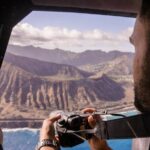
Your helicopter portion starts with a mandatory 45-minute safety briefing at Blue Hawaiian Helicopters. After that, you’ll have the main helicopter flight time listed as 45 minutes, with sightseeing over volcano areas, lava fields, and waterfalls when conditions allow.
Here’s the truth you should plan around: the operator says a Kilauea fly-over is not guaranteed and depends on existing weather conditions. That’s not a minor detail. If you book this mainly hoping to see specific active areas from above, build in the possibility that your flight route could be adjusted for safety and visibility.
Another practical thing: the operator follows FAA procedures by weighing passengers and bags at check-in. If you’re over 240 pounds, you’ll be contacted about a comfort seat charge for an additional seat, paid directly to the tour operator. This is one of those details that can create surprises if you ignore it—so I’d treat accurate weight reporting as part of planning, not paperwork.
I also like that the helicopter segment is scheduled as a real experience, not a token “look at the coastline for 5 minutes” add-on. People tend to leave this kind of ride remembering the aerial angles—especially the way lava and terrain forms patterns you can’t see from pull-offs.
Hawaii Volcanoes National Park: Kilauea and Mauna Loa without the guesswork
Once you’re on the ground, you get Hawaii Volcanoes National Park with admission included and about 2 hours set aside for the main park time. This is the core reason to do a guided day trip instead of winging it: someone else handles the route logic and you get to focus on what you’re actually seeing.
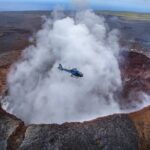
The park is where Hawaii’s active volcano system is on full display. The day’s focus includes Kilauea and the Mauna Loa area. You’ll also hear context about recent activity; for example, Kilauea’s latest eruption in June 2023 included lava fountains reported up to 50 feet high. Even if the current day isn’t erupting at that same intensity, the park tells you how fast things can change.
Chain of Craters Road: the drive that helps you read the terrain
There’s time for a key driving route inside the park: Chain of Craters Road, a 19-mile (31 km) paved stretch through the East Rift and coastal areas. Not every section is always accessible, but when it is, this road helps you connect viewpoints into a bigger story of where lava moved and how the coastline and rift system developed.
Why this matters for you: reading volcano terrain is like reading a map. A guided day makes it far easier to connect “this is what I’m seeing now” to “this is where it all fits.” Without that guidance, it’s still beautiful—but your photos can end up feeling like separate stops instead of one theme.
Kilauea on the ground: short stop, big meaning
After the broader park time, you’ll have a more focused moment at Kilauea with about 20 minutes scheduled. Admission is included here, and you’ll be in the right zone for the sights connected to recent activity—like the June 2023 vents that spewed lava from within Halema‘uma‘u, a pit crater in the summit caldera.
A short stop is still worth it when you’re paying for time in a place this intense. You don’t come here to wander for hours without context—you come to hit the main viewing points and then move on, because the rest of the day also has “you can’t skip this” content.
You can also read our reviews of more tours and experiences in Oahu


Steam vents and Thurston Lava Tube: the stops that feel physical
Not every volcano stop is about distance. Some are about sensation.
Steam Vents (about 20 minutes)
You’ll see and even feel the power of volcanic heat at the steam vents, where groundwater seeps into volcanic rock. The listing specifically calls out this “see and feel” idea, and that’s exactly why this stop works. It’s one thing to look at volcanic features; it’s another to stand near the active geothermal process and understand it with your senses.
Nahuku–Thurston Lava Tube (about 20 minutes)
Next up is Nahuku–Thurston Lava Tube, in a tropical forest setting. This is a long, subterranean cave created by ancient flowing lava. The time here is short, but it’s the kind of stop that changes how you picture the volcano. A lava tube is less about current drama and more about the engineering of how lava travels and cools.
Akaka Falls State Park: the payoff waterfall after volcano intensity
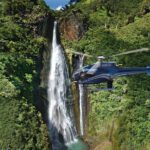
After hours of volcano sights, Akaka Falls State Park gives you a clean, easy win. The waterfall is viewable from a lookout point, and the area around it is described as jungle-like—close, green, and perfect for switching gears mentally.
The stop is about 20 minutes, which is just long enough to enjoy the view and take photos without turning the day into a slow crawl. If your group is feeling volcano-fatigued by then (it happens), this is the moment that makes the whole schedule feel balanced.
Hilo Town and the Hilo Walk of Fame: a gentle finish
Before heading back to where you started on Oahu, you’ll drive through Hilo Town. The day includes cruising along Banyan tree-lined streets near the coastline, described as the Hilo Walk of Fame.
This isn’t the main draw, but it’s a smart way to end the day. You’re already tired; you don’t need another big hike. A scenic drive keeps the vibe local and gives you a last chance to notice how Hilo sits in its geography.
Price and value: what you’re really paying for at $987.82
At $987.82 per person, this is not a “cheap and cheerful” Hawaii day. You’re paying for three expensive ingredients bundled together:
- Interisland round-trip airfare between Oahu and Hilo (with possible overage charges depending on flight availability)
- A helicopter flight (45 minutes), plus the time-consuming safety process that comes with it
- Guided logistics plus admission for key park areas and stops, and lunch
Where the value can fall apart is the weather factor. Since the operator says a Kilauea fly-over isn’t guaranteed and lava sightings aren’t guaranteed, you’re buying a day that can be “amazing” or “just good” depending on conditions. Also, if you’re over 240 pounds, there may be a comfort seat surcharge that’s not included in the base price.
Still, compared to cobbling together flights, rental transport, park admissions, and a helicopter separately, a packaged day can make sense—especially if you only have one shot at the Big Island and you want a helicopter with it.
Who should book this (and who should pause)
This is a strong fit if you:
- Want active-volcano access without spending your entire limited time driving yourself
- Like the idea of seeing Kilauea from both above (helicopter) and on the ground (park stops)
- Are comfortable with a full day timeline—about 12 hours
- Prefer small group size (max 12)
You should think twice if you:
- Really need a specific aerial outcome like a Kilauea fly-over. Weather can change routes and visibility.
- Have asthma or other respiratory problems, since the info warns to consider other offerings due to exposure to fumes.
- Don’t want to deal with the helicopter’s FAA weight process and possible comfort seat fees.
If you’re a planner who can roll with uncertainty (and bring patience), you’ll likely get your money’s worth. Volcano days reward flexibility.
Quick practical tips that matter on the day
- Bring accurate ID. Your name must match your government ID photo exactly, and you’ll need a valid government-issued ID on travel day.
- Expect the helicopter check-in process to take time. The safety briefing is 45 minutes before flight.
- Wear layers. Volcano areas and helicopter air can feel different from each other fast, and you’ll be outside near viewpoints.
- Plan your expectations around weather. If the day gives you smoke instead of dramatic lava, it’s still a real look at active geology—just not the specific show you pictured.
Should you book this Oahu-to-Hilo Volcano and Helicopter Day Trip?
If your dream is to pair Hawaii Volcanoes National Park with a real 45-minute helicopter ride, this is one of the most direct ways to do it without turning the day into a DIY logistics test. The sequence is well-chosen: aerial views (when possible), park viewpoints, then the steam vents and Thurston Lava Tube, followed by a calming Akaka Falls finish.
I’d book it if you can handle weather uncertainty and you’re okay paying a premium for convenience and coverage. I’d skip (or at least consider alternatives) if respiratory sensitivity is a concern or if you’re set on a specific Kilauea aerial outcome that may not happen that day.
FAQ
FAQ
How long is the whole day trip?
It runs about 12 hours (approx.).
What’s included in the helicopter tour?
You get a 45-minute helicopter tour with Blue Hawaiian Helicopters, after a mandatory 45-minute safety briefing. Helicopter sightseeing is subject to weather conditions.
Is a Kilauea fly-over guaranteed?
No. The tour notes that a Kilauea fly-over is not guaranteed, depending on existing weather conditions.
Which volcano-related stops are included at Hawaii Volcanoes National Park?
You’ll have time at Hawaii Volcanoes National Park and includes stops such as Kilauea, Steam Vents, and the Nahuku–Thurston Lava Tube. Chain of Craters Road driving is also part of the park experience.
Is lunch included?
Yes. Lunch is included.
Does the price include flights between Oahu and Hilo?
Yes, interisland R/T airfare is included, but airline overage charges may apply if needed based on availability.
How do weight restrictions work for the helicopter?
Passengers and bags must be weighed at check-in. If you weigh over 240 pounds, you may be assessed a comfort seat charge for an additional seat, paid directly to the tour operator.