REVIEW · OAHU
“Tour de Honolulu” Foodie Bike Tour
Book on Viator →Operated by Bike Tour Hawaii · Bookable on Viator
A bike tour is a fast way to understand Honolulu. This one blends food tastings with real neighborhood landmarks, from a 1929 canal to the grandeur of Iolani Palace. You also get live commentary as you roll, so the ride feels like a guided story instead of just a loop around Waikiki.
I especially like how the tour covers ground without feeling rushed, then slows down at stops that explain how Honolulu grew. And you’re not left to hunt for meals on your own—your menu includes local favorites like fish taco, Hawaiian-style pizza, Kalua pork sliders, and iconic shave ice. One thing to consider: it’s about 4.5 hours with moderate cycling, so you’ll want comfortable ride legs before you sign up.
In This Review
- Key points before you pedal
- Why this bike foodie tour beats sticking to one neighborhood
- From Kuhio Beach to a story-based ride
- Waikiki’s turning points: the 1929 canal, Ala Wai, and Elvis history
- Iolani Palace and the Hawaii State Capitol: power, design, and identity
- Hawaiian Mission Houses and the shift from old to new Honolulu
- The food you’ll actually taste: fish taco, Hawaiian-style pizza, Kalua pork, shave ice
- Safety and pacing: a ride that works even for nervous cyclists
- Price value: $189 for bikes, guide-led history, and a real tasting lineup
- Weather and timing: the part you should plan around
- Should you book the Tour de Honolulu foodie bike ride
- FAQ
- How long is the Tour de Honolulu Foodie Bike Tour?
- How much does it cost?
- Where does the tour start?
- What time does the tour start?
- Is the tour private?
- What’s included with the tour?
- What foods are on the sample menu?
- What kind of fitness level do I need?
- Is the tour offered in English?
- What’s the cancellation and weather approach?
Key points before you pedal
- Private tour feel: only your group rides, with a guide and escort.
- All the basics included: bicycle and helmet provided, plus water and coffee or tea.
- Food tastings you can plan around: fish taco, Hawaiian pizza, Kalua pork sliders, and shave ice.
- Big landmarks, short stops: quick looks at the 1929 canal, Iolani Palace, and the open-air state capitol.
- Kaka‘ako is where it gets modern: murals and development in Honolulu’s “future” neighborhood.
Why this bike foodie tour beats sticking to one neighborhood
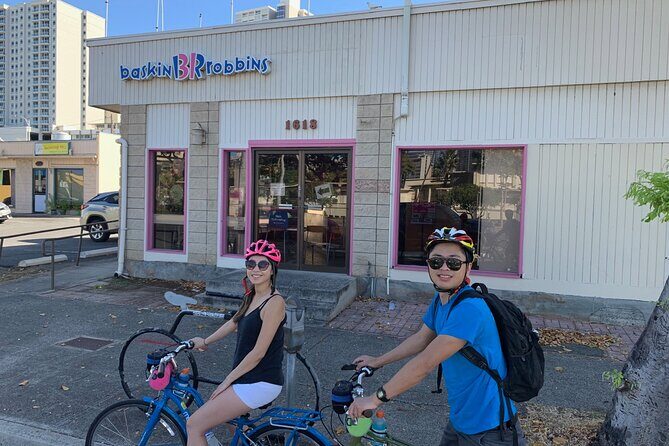
Honolulu can be oddly split. Waikiki looks walkable, but it can still take forever to go from one “must-see” to the next—especially in heat and traffic. A bike tour fixes that. You cover more distance than you would on foot, then you still get brief, meaningful stops to connect the scenery to history and daily life.
What makes this outing work well is the pacing. You’re not just biking past postcard views. You’re learning why each place matters, and then you’re rewarded with food tastings that match the neighborhoods you’re riding through. It’s a smart way to get your bearings fast—then use the rest of your trip to wander with more confidence.
And the guide matters. Reviews highlight guides like Kally and Kelly for keeping things friendly, informative, and safe, which is a big deal if your group includes less-experienced riders.
You can also read our reviews of more tours and experiences in Oahu

From Kuhio Beach to a story-based ride
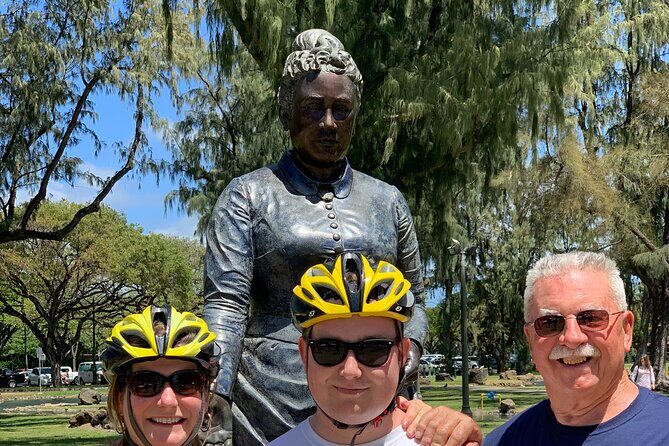
The tour starts and ends at Kuhio Beach, 2453 Kalākaua Ave in Honolulu, with a 1:00 pm departure. Meeting near a central beach area helps you arrive without long taxi runs, and it also makes it easy to plan your day afterward.
Right away, you’ll be in motion. The format is built around short scenic rolls between stops, with live commentary along the route. That “on-bike narration” is part of the value: you don’t just hear facts at one location, you get context as the city changes around you.
Also, you’re given the essentials—helmet, bicycle, bottled water, and coffee or tea. So you can focus on enjoying the ride instead of figuring out what to bring.
Waikiki’s turning points: the 1929 canal, Ala Wai, and Elvis history
The first landmark is the Historic Canal built in 1929. This isn’t just a pretty piece of infrastructure. It’s a major feature of the Waikiki neighborhood, and seeing it early helps you understand how Honolulu shaped land use and water flow over time. It gives the tour a sense of “where the neighborhood came from,” not just “what it looks like today.”
Next, you roll past the Ala Wai Driving Range. The stop here is quick, but the point is clear: this is the spot where leisure culture meets local geography. Even if you’re not into golf, it’s one of those recognizable signals that Waikiki has always balanced tourism with everyday recreation.
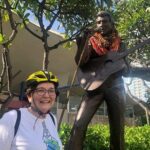
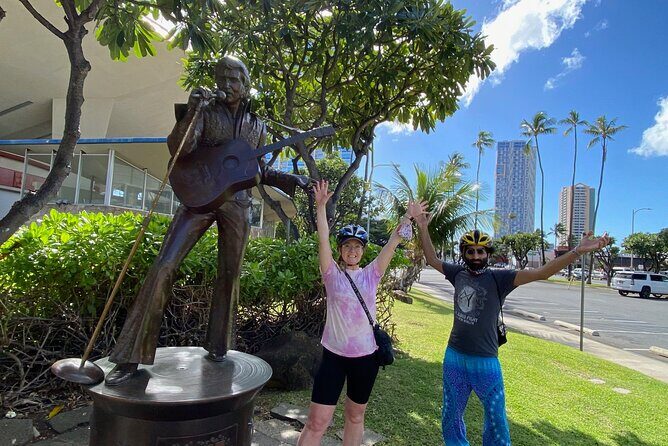
Then the tour heads to the Neal S. Blaisdell Center area, where you’ll visit Elvis Presley’s statue tied to his last concert in 1973. This stop is short, but it’s a reminder that Hawaii’s pop-cultural influence is bigger than the typical souvenir story. Honolulu has been a destination long before most people booked flights on a phone.
Practical note: these are brief stops. That’s good if you want variety, but if you like long museum-style time, think of this tour as a sampler that points you toward what to explore later.
Iolani Palace and the Hawaii State Capitol: power, design, and identity
One of the best reasons to do this tour is the presence of heavyweight landmarks that you can’t fully appreciate while rushing around on your own.
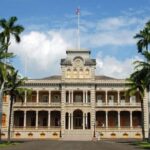
You’ll stop at Iolani Palace, described as the only Royal Palace in the United States. Even with a short stop time, this is the kind of site that anchors the whole story of governance and cultural identity. It’s not just an attractive building; it signals how Hawaii’s leadership and architecture have shaped what visitors and locals recognize today.
After that comes the Hawaii State Capitol, with a focus on its open-air design and out-of-the-box architecture. The idea here isn’t only to admire the structure—it’s to notice how public institutions in Honolulu feel different from many mainland capitals. A quick look can still make the rest of your driving or walking feel more intentional, because you’ll start spotting design cues and civic spaces more easily.
If your trip goal is learning, these two stops are high payoff. If your goal is pure food, they still matter because they help explain why the flavors and traditions you eat connect to a real place.
Hawaiian Mission Houses and the shift from old to new Honolulu
The tour also includes the Hawaiian Mission Houses Historic Site and Archives, where you’ll learn about the first western-style home built in Hawaii, brought from Massachusetts in 1820–1821. This stop gives you a different angle on the islands’ history—less about a single event, more about how early houses and institutions influenced daily life and long-term culture.
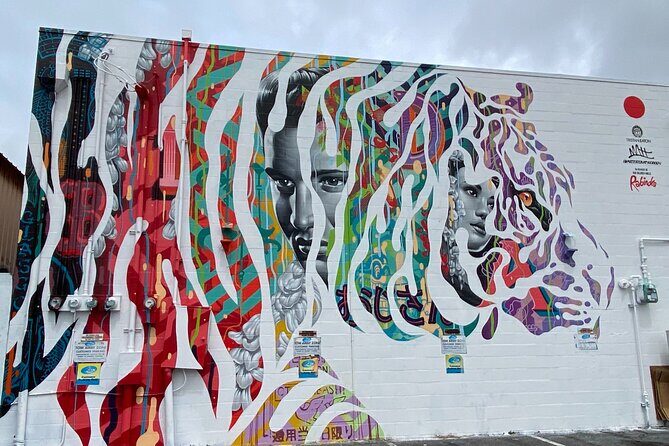
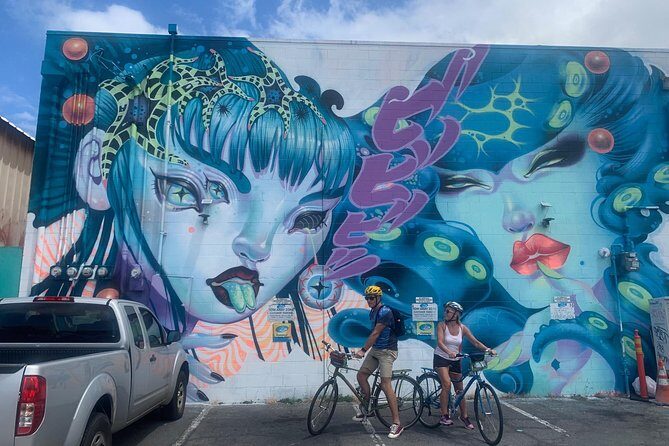
From there, you move toward the present with Kaka‘ako. This part of the ride is about what’s next for Honolulu—mural-filled streets and new development. Kaka‘ako is often where you see creativity and change happening side by side, and the tour’s short stop time works well because the main point is atmosphere. You’re meant to roll through, take it in, and understand why locals talk about this neighborhood as the future.
Then you head to Ala Moana Beach Park, Hawaii’s park for the people. It’s a 100-acre space built in 1948, and the quick stop lets you feel the scale without drowning in details. You’ll see a place built for everyday use—relaxed recreation, beach life, and a lot happening in a single wide public area.
You can also read our reviews of more cycling tours in Oahu
The food you’ll actually taste: fish taco, Hawaiian-style pizza, Kalua pork, shave ice
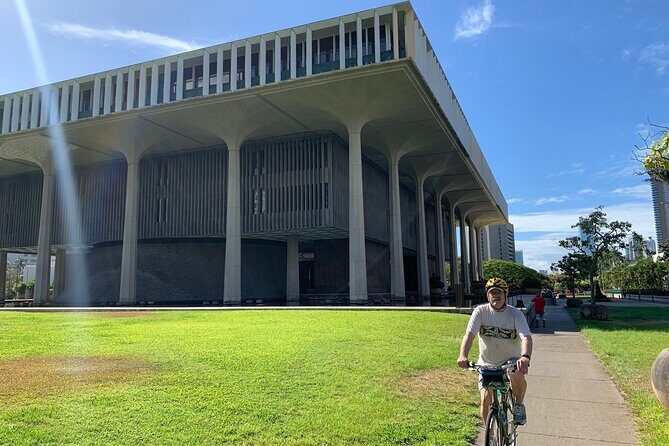
Here’s where the tour earns its name. The menu is built around local comfort foods and classic island treats, and it’s structured like a sequence you can remember.
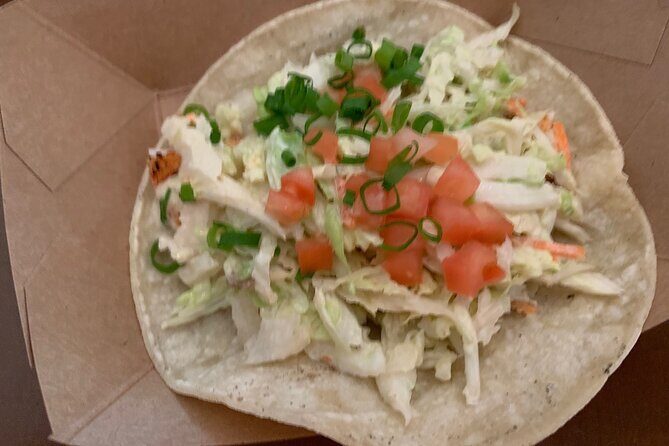
You start with a fish taco served with corn tortilla. That matters because corn tortillas and fish are a common harmony in Hawaii, and the simplicity helps you taste the real flavors without masking them.
Next comes Hawaiian pizza. It’s one of those foods people argue about at home, but that argument misses the point. On the ground in Honolulu, it’s part of everyday island eating—salty-sweet, familiar, and meant to be shared.
Then you’ll try Kalua pork sliders, described as local pork sliders. Kalua-style pork is one of those flavors that feels deeply Hawaiian, and sliders make it easy to sample without committing to a full entrée.
For dessert, you’ll get shave ice from a locally owned iconic spot. One review specifically calls out Obama’s favorite shaved ice, which is the kind of local lore that turns dessert into a mini story. The key is texture: shave ice should be soft and cold, not just sugary. One person also noted they managed only one of the local doughnut buns before adding more—so plan room for extras if your guide sends you off-menu.
Beverages are included too, with bottled water and coffee or tea available during the tour. That’s practical for a bike ride where your thirst can sneak up on you.
Safety and pacing: a ride that works even for nervous cyclists
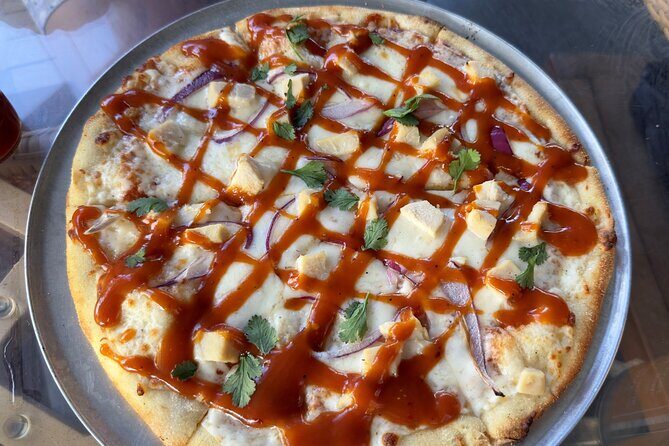
A bike tour only feels fun if you feel safe. Reviews repeatedly mention that guides like Kally keep things controlled and that the bikes and helmets remove a lot of friction. In one account, a family with five included two kids who weren’t avid bike riders, and the guide kept everyone comfortable enough to enjoy the experience.
So if you’re thinking you might be rusty, don’t assume this is only for hardcore cyclists. You’re still doing a moderate ride for about 4.5 hours, so you shouldn’t pick it if you know you dislike biking at all—but it doesn’t come across as a “show off your biking skills” activity.
Also, the stop rhythm helps. You’re not stuck cycling for long stretches without a break. Short windows at each landmark keep energy up, and the live commentary gives your mind something to hold onto besides the mechanics of riding.
Price value: $189 for bikes, guide-led history, and a real tasting lineup
At $189 per person, this isn’t a cheap snack-and-stroll tour. But when you compare it to the cost of renting bikes plus paying for guided cultural stops plus buying food, the pricing starts to make sense.
What you’re getting for the money:
- Bike and helmet provided, so you don’t add rental fees.
- A live escort and live commentary so you’re not learning from a map.
- Food tastings that include multiple savory items plus shave ice, not just one bite.
- Bottled water and coffee or tea.
The private tour angle also has value. If you’re traveling with family or friends, private time can mean less waiting and a better chance to ask questions that fit your interests. And one review mentions the guide took lots of photos and even put together a short video of the tour—an unexpected memory boost.
My only caution on value is subjective: if you hate biking or you only want food with zero history, you might feel like you paid for more than you’ll use. But if you want both, the package is well-matched.
Weather and timing: the part you should plan around
This experience is dependent on good weather. Honolulu can change fast, so it’s smart to keep the day flexible and be ready for a different date or a refund if conditions aren’t right.
The start time is 1:00 pm, and the total duration is about 4 hours 30 minutes. Midday is warm, which matters even with included water. Wear breathable clothing and plan for sun—especially if you’re sensitive to heat.
Should you book the Tour de Honolulu foodie bike ride
I’d book this if you want a Hawaii-focused afternoon that mixes culture and calories. It’s a strong choice when:
- You want to get out of Waikiki just enough to see how other neighborhoods feel.
- You like guided history but still want the day to stay relaxed.
- Your group includes a mix of riders, including people who aren’t confident cyclists.
- You value tasting several local foods instead of buying one meal on your own.
I would hesitate if:
- You can’t do moderate biking for around 4.5 hours.
- You prefer long stops and deep museum time over quick, story-based snapshots.
- You’re only chasing food and aren’t interested in Iolani Palace, the state capitol, or the mission-house history.
If your goal is a memorable first look at Honolulu—beyond beaches and resort streets—this tour does that job well. It gives you a route, a context, and a set of flavors you can build on for the rest of your trip.
FAQ
How long is the Tour de Honolulu Foodie Bike Tour?
It runs about 4 hours 30 minutes.
How much does it cost?
The price is $189.00 per person.
Where does the tour start?
It starts at Kuhio Beach, 2453 Kalākaua Ave, Honolulu, HI 96815, USA.
What time does the tour start?
Start time is 1:00 pm.
Is the tour private?
Yes. It’s a private tour/activity, and only your group participates.
What’s included with the tour?
You get a bicycle and helmet, a tour escort/host, live commentary, food tasting, bottled water, and coffee and/or tea.
What foods are on the sample menu?
The sample menu includes fish taco, Hawaiian pizza, Kalua pork sliders, and shave ice.
What kind of fitness level do I need?
Travelers should have a moderate physical fitness level.
Is the tour offered in English?
Yes, it’s offered in English.
What’s the cancellation and weather approach?
You can cancel for a full refund up to 24 hours in advance. The tour requires good weather, and if it’s canceled due to poor weather, you’ll be offered a different date or a full refund.