REVIEW · OAHU
Waikiki Surf Lesson (Hawaiian Boy Surf School)
Book on Viator →Operated by Hawaiian Boy Surf School · Bookable on Viator
First-wave fears fade fast. Waikiki’s south-facing shoreline gives beginners the kind of shallow, sandy-bottom water where you can focus on learning instead of fighting the ocean, and the lesson starts with on-land basics that make the water part click. I also like that you’re working toward real wave-riding skills in a one-hour format instead of a vague, hands-off “good luck” session.
What I really like is the teaching style. You get personalized, one-on-one coaching once you’re in the water, with the instructor positioned close enough to help you stand and adjust as you go. People specifically call out instructors like Preston as calm and patient, and that matters when you’re trying something new.
One drawback to consider: there can be occasional operational hiccups. In at least one case, the instructor didn’t show at the meeting point, and the company later explained it was tied to securing required beach permits and a temporary issue reaching customers through the booking system.
In This Review
- Key things that make this Waikiki lesson work
- Waikiki’s south shore: why beginners get a fair shot
- The 1-hour flow: from Kuhio Beach to standing on a wave
- Stop 1: Waikiki Beach (where it all starts)
- What makes this pacing valuable
- On land: safety, paddling, and board control that actually transfers
- Why this on-land start is a big deal
- In the water: one-on-one coaching that keeps you from guessing
- What success can look like
- Boards, gear, and what you should bring
- Price and value: what $100 buys you in Waikiki time
- Who this lesson is best for (and who should think twice)
- Getting there in Waikiki: find the Duke statue and arrive early
- A heads-up on that permit-related incident
- Should you book Hawaiian Boy Surf School in Waikiki?
- FAQ
- FAQ
- Where is the lesson meeting point?
- How long is the Waikiki surf lesson?
- What does the price include?
- What is not included?
- Is this a private experience?
- What language is the lesson in?
- Will I receive a ticket on my phone?
- What happens during the lesson?
- Is it appropriate for beginners?
- Can service animals attend?
- What is the cancellation policy?
Key things that make this Waikiki lesson work
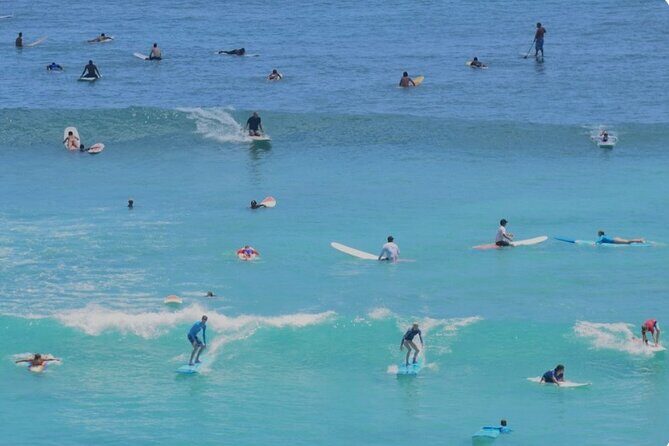
- South-facing, beginner-friendly water: gentle conditions with sandy bottoms and shallow water are built for first-timers.
- Land training first: safety, paddling, board control, and wave-riding basics before you’re on the board.
- One-on-one coaching in the ocean: your instructor stays with you as you learn to stand and ride.
- Local, patient instruction: Preston is highlighted as calm, with attention to safety and learning pace.
- Board choice can be tailored: smaller boards are used when appropriate, especially for kids.
- Meet at Kuhio Beach near the Duke statue: an easy Waikiki landmark for finding the group.
Waikiki’s south shore: why beginners get a fair shot
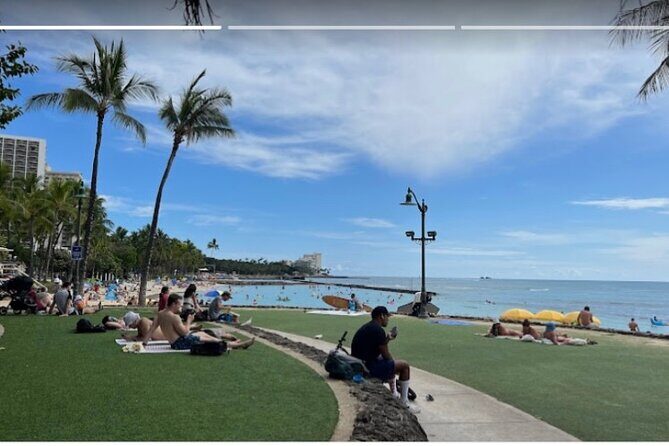
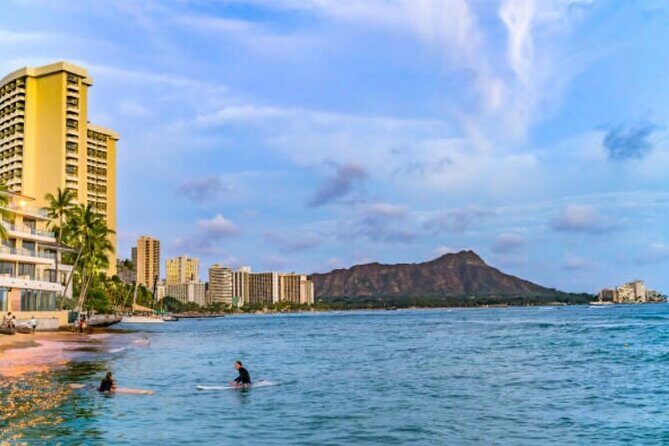
Waikiki surf lessons have a lot in common, but the conditions matter. This one takes advantage of Waikiki’s south-facing coastline, which is the kind of setup you want when you’re learning. The ocean here is described as having gentler waves, plus sandy bottoms and shallow water. That means your first attempts aren’t immediately swallowed by deep water, strong currents, or sudden rocky surprises.
For you, that translates to less time panicking and more time practicing the core moves: paddling out, controlling your board, and getting your balance. Beginners don’t need complexity. You need repeat chances. The setting is built to give you those chances.
And it’s not just the water. The lesson begins on the beach, so you’re not thrown into the ocean cold. You get the safety and mechanics upfront, which helps your brain stop scrambling once you’re wet and salty.
You can also read our reviews of more tours and experiences in Oahu
The 1-hour flow: from Kuhio Beach to standing on a wave
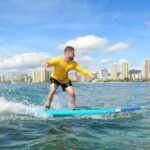
Your lesson runs about one hour. It starts at Kuhio Beach, at 2453 Kalākaua Ave, Honolulu, HI 96815, and it finishes right back at the meeting point. This matters because Waikiki logistics can eat your time fast, and you don’t want to spend your short lesson hunting for your crew.
Here’s the practical rhythm you should expect:
Stop 1: Waikiki Beach (where it all starts)
You meet at Kuhio Beach, a spot people recognize because it’s near the Duke statue. That’s helpful if you’re arriving on your own. Once you’re gathered, the instructor starts with what you need most: safety and simple technique.
Then you do the on-land part. It’s not a lecture. Think of it as a warm-up that teaches you what to do with your arms, where to stand, and how to control the board before the ocean adds speed and motion.
After that, you head into the water for the one-on-one coaching phase—where the main goal is catching waves and learning to stand and ride with your instructor close by.
What makes this pacing valuable
A one-hour lesson has a limit: you can’t spend half the time correcting problems you could prevent. By front-loading basics on land, you save time later. When you’re in the ocean, you’re working on execution, not figuring out what paddling even feels like.
Also, the promise from the school is direct: they guarantee you’ll be surfing by the end of the lesson. No guarantee means you should expect miracles, but it does tell you they’re structured around getting you to a first success—not just participation.
On land: safety, paddling, and board control that actually transfers
The on-land session is where you build the foundation. The lesson format focuses on four key skill areas before you go past the breakers:
- Water safety essentials
- Paddling technique
- Surfboard control
- Wave riding basics
If you’re brand new, this section is the difference between one good attempt and a whole session of wipeouts. Most first-timers don’t lose because they aren’t trying. They lose because they don’t yet know what their body is supposed to do when the board is moving.
The instructors walk you through the “how” in a way that’s quick enough to keep you focused. And because you’re in Waikiki, the water conditions are meant to match your skill level—gentle and shallow enough that you can practice rather than just survive.



Why this on-land start is a big deal
Surfing is fast once it starts moving. If you wait until you’re out there to learn, you’re stuck making corrections at the exact moment the wave is already happening.
With this lesson, the instruction comes first. That’s why people mention results like getting up quickly—because the first attempts aren’t random. They’re based on the mechanics you rehearsed on the sand.
In the water: one-on-one coaching that keeps you from guessing
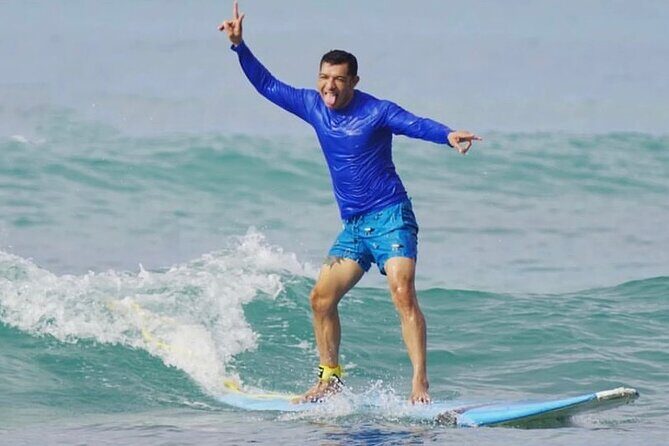
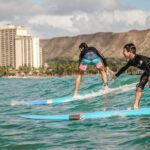
This is the main event. After the beach session, you move into the ocean for personalized one-on-one instruction. Your instructor guides you as you work on:
- getting to your feet
- balancing while the board is moving
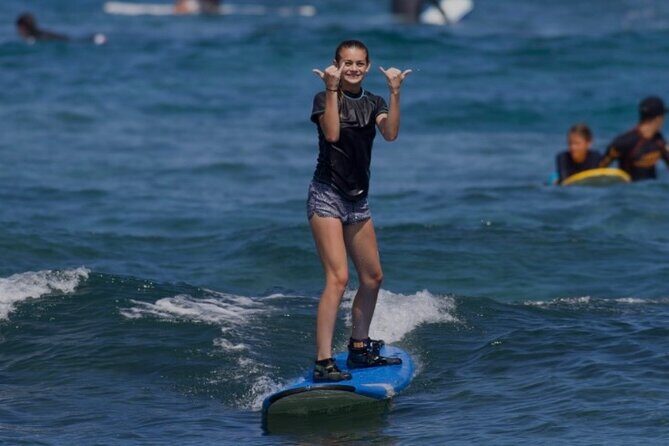
- riding the waves with support nearby
The big win here is the level of attention. When you’re learning, you need real-time cues, not generic advice shouted from shore. The instructor being by your side helps you respond quickly—especially when you feel the board tilt or when a wave starts to carry you.
People have specifically highlighted how instructors like Preston stay calm and patient, and how that shows up during the coaching. If you’re nervous, that tone matters. It keeps you from tensing up and it helps you follow instructions with less hesitation.
There’s also mention of instructors using smaller boards for kids or when it helps you get results. That’s practical. A board that’s easier to control can shorten the path from trying to standing.
What success can look like
The most enthusiastic outcomes described are pretty clear:
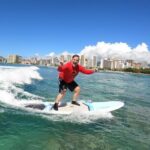
- getting up on the first try (for some people)
- catching wave after wave with guidance
- a kid standing and surfing on their own after one lesson
I wouldn’t promise you’ll match those exact results, but I can tell you this lesson structure is built to create that kind of momentum.
Boards, gear, and what you should bring
Good news: you don’t have to worry about bringing surf gear. The lesson includes surfboards and a licensed guide. That removes the biggest beginner friction point: buying or renting equipment and hoping you get the right size.
Two small practical notes for your comfort:
- Bottled water isn’t included, so bring your own if you like to stay hydrated.
- The lesson is offered in English, so if you want to practice your basics and understand instructions clearly, you’re set.
Beyond that, Waikiki can get sunny fast. Plan for sun and salt. Even if you’re only in the water for an hour, you’ll feel it.
Price and value: what $100 buys you in Waikiki time
The price is $100.00 per person for about one hour. On paper, that can sound steep, until you zoom out and compare what you’re really paying for:
- A private experience: only your group participates. That’s a meaningful value factor when you’re learning; it usually means more attention per person.
- A structured progression: on-land safety + technique first, then coaching in the water.
- A licensed guide: not just someone with a board and a playlist.
- Goal-driven instruction: the lesson is built around getting you surfing, not just standing near the surf.
If you’re traveling with a partner or your kid and you want maximum learning per minute, this format makes sense. It’s also a solid choice if you’ve tried a lesson before and want more direct coaching.
If you’re on a super tight budget, you might look for cheaper group lessons. But if you care about speed to progress, $100 can be a reasonable price when you consider the one-on-one support and the private setup.
Who this lesson is best for (and who should think twice)
This lesson says most travelers can participate, and the setting supports beginners with shallow water and gentle conditions. If you:
- have never surfed before,
- are traveling with kids,
- want a clear plan for learning fast,
- and like the idea of coaching close by,
…then this is a strong fit.
It’s also a good choice if you want a guided activity that still feels “local.” The instruction is delivered by a Hawaiian-owned school, and the overall vibe—patient coaching, safety focus, wave-riding goals—matches what you’d hope to find in Waikiki.
When to think twice:
- If you’re very sensitive to operational changes, keep some buffer time. There was at least one situation where an instructor didn’t show on time due to permits and system access issues. That’s rare, but it’s the kind of thing you can manage by arriving early and staying reachable.
- If you hate the idea of one-on-one coaching (some people do, for awkwardness), you might find the close attention uncomfortable.
Getting there in Waikiki: find the Duke statue and arrive early
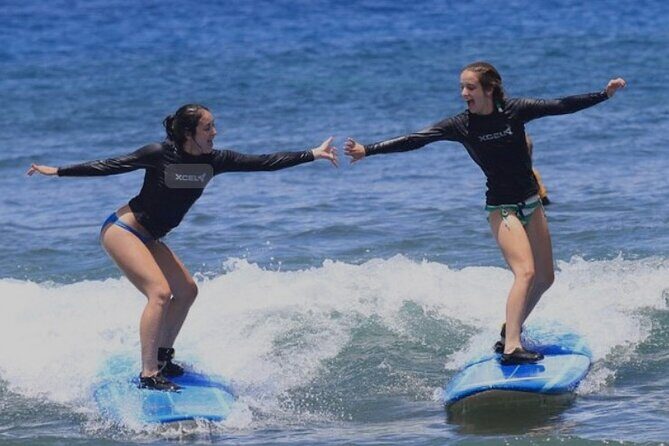
You’ll meet at Kuhio Beach, 2453 Kalākaua Ave. People use the Duke statue as a landmark, which is a big help in a crowded place.
Because the lesson begins on the beach, aim to arrive with time to get settled before your group gets called in. Waikiki sidewalks can be busy, and you don’t want to show up late right when instruction is starting.
A heads-up on that permit-related incident
In one documented case, the instructor was a no-show and the company later explained it was tied to securing beach permits and a temporary inability to contact customers directly through their booking system. If this happens to you, the best move is simple: contact them using their provided number, (808)970-2046, and ask for live updates.
Should you book Hawaiian Boy Surf School in Waikiki?
If your goal is to go from zero to standing on a surfboard with an instructor nearby, I’d say yes, book it—especially if you like structured teaching and you’re traveling with someone who needs extra support. The combination of a beginner-friendly shoreline, on-land instruction, and one-on-one coaching is exactly what makes first lessons work.
Book it if you:
- want a private feel for your group
- care about safety and clear technique
- want a real chance to surf within an hour
- are drawn to instructors like Preston, known for patience and calm coaching
Skip it (or at least keep your expectations grounded) if you’re looking for a long, half-day adventure. This is tight and focused: one hour to learn, practice, and ride.
FAQ
FAQ
Where is the lesson meeting point?
It starts at Kuhio Beach, 2453 Kalākaua Ave, Honolulu, HI 96815, USA, and it ends back at the same meeting point.
How long is the Waikiki surf lesson?
The duration is about 1 hour (approx.).
What does the price include?
The lesson includes a surfboard and a licensed guide.
What is not included?
Bottled water is not included.
Is this a private experience?
Yes. This is described as a private tour/activity, with only your group participating.
What language is the lesson in?
The lesson is offered in English.
Will I receive a ticket on my phone?
Yes. The tour offers a mobile ticket.
What happens during the lesson?
You start on the beach with water safety, paddling technique, surfboard control, and wave riding basics, then you go into the water for one-on-one instruction focusing on standing and riding waves.
Is it appropriate for beginners?
Yes. The south-facing Waikiki coastline is described as having gentle, sandy-bottom, shallow water that’s suited for beginners.
Can service animals attend?
Yes. Service animals are allowed.
What is the cancellation policy?
You can cancel for a full refund up to 24 hours before the experience’s start time.