REVIEW · OAHU
North Shore Beginner Surf Lesson, Hawaii
Book on Viator →Operated by Surf N Sea · Bookable on Viator
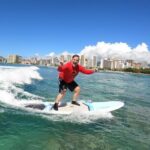
First-timer waves can happen fast. This beginner surf lesson on Oahu’s North Shore is built around a tight, instruction-heavy format: land practice first, then real water time at Waialua Bay with all gear provided.
Two things I like a lot: the focus on getting the basics right (falling safely, ocean etiquette, and moving from laying to standing), and the small group setup that keeps the attention where it belongs. A small-group lesson is a huge help when you’re learning by feel.
One thing to think about first: there’s no transportation provided, so you’ll need to drive to the meeting point and then your group drives to the surf area.
In This Review
- What You’ll Actually Do in This 2-Hour Lesson
- Quick Key Points to Know
- Price and Logistics: What $104 Buys You (and What It Doesn’t)
- The 2-Hour Rhythm: From Ocean Etiquette to Standing Up
- Stop 1: Waialua Bay—The Place You Build Confidence
- Stop 2: Haleiwa—Staying Grounded in the North Shore Vibe
- Instructors Matter: Names You’ll Hear and Skills You’ll Feel
- Gear and Boards: What’s Provided and What You Might Add
- Who This Surf Lesson Is Best For
- Weather and Conditions: When the Ocean Doesn’t Cooperate
- Final Call: Should You Book This North Shore Beginner Lesson?
- FAQ
- Where does the lesson start, and where does it end?
- How long is the North Shore beginner surf lesson?
- How much does the lesson cost?
- Is transportation provided to the surf spot?
- What’s included in the lesson price?
- Do I need to know how to swim?
- What age is the group lesson for?
- How big is the group?
- What surf spots are included in the itinerary?
- Is the lesson offered in English?
- Is there a cancellation option if weather is bad?
What You’ll Actually Do in This 2-Hour Lesson
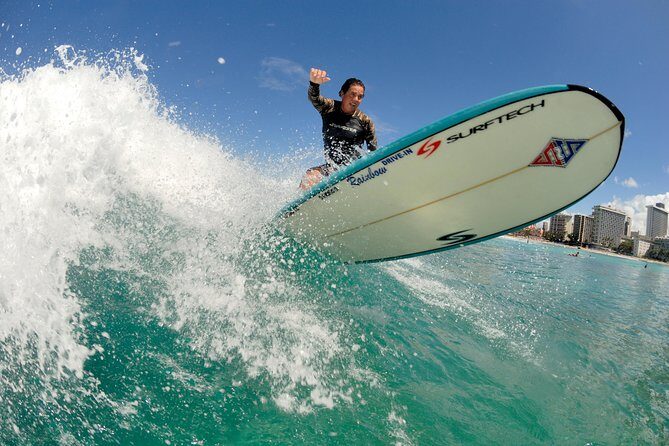
Plan on about 2 hours total. The lesson starts with an on-land intro, then you head out to practice paddling, etiquette, and standing up for beginner waves.
You’ll also choose a morning or afternoon lesson time. The exact surf conditions vary, and if weather doesn’t cooperate, you can expect the operator to work with you on a different date or a refund.
Quick Key Points to Know
- Small group size (up to 4 travelers): more hands-on attention when you’re brand new
- Land instruction first: falling safely and ocean etiquette before you paddle out
- Gear included: surf board and all needed equipment are provided
- North Shore learning focus: beginner-friendly coaching on where to surf and what to look for
- Age rule matters: group lessons are for kids 13+; younger kids need a private lesson
- No transportation: you’ll drive from Surf N Sea to the surf spot area
You can also read our reviews of more tours and experiences in Oahu
Price and Logistics: What $104 Buys You (and What It Doesn’t)
At $104 per person for about 2 hours, you’re paying for coaching time, safety instruction, and the gear. What makes this feel like good value is that you’re not just renting equipment and hoping for the best. The structure is built to help you get on the board, understand ocean behavior, and learn how to surf without turning every wave session into guesswork.
Here’s what you should budget for besides the lesson: transportation to and from the meeting point. The lesson ends back where you start, but you still have to do your own driving to the surf area.
Also note the practical constraints. You’ll need to know how to swim, and the lesson is not recommended if you have back or knee problems or if you’ve had recent surgeries. “Moderate physical fitness” is the stated target, which makes sense because paddling out and then standing attempts are physical work.
Lastly: it’s a mobile ticket experience and the lesson is in English. You’ll get confirmation at booking time.
The 2-Hour Rhythm: From Ocean Etiquette to Standing Up
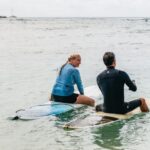
This lesson runs on a simple idea: you learn the right habits early, so your time in the water is more productive. The day starts with an introduction on land, then you practice key skills so you don’t spend your first session only learning how to fall.
On land, you should expect:
- A safety intro that covers falling safely
- Ocean etiquette so you understand how to move around other surfers
- A way to think about waves and your approach, not just react
Then you move to the water for the hands-on part. The core goal for beginners is getting from laying to standing in the easiest way possible. In practice, that usually means a lot of repetition and quick coaching cues while you’re in the action.
The instruction also covers beginner essentials like:
- How to catch waves at the right moment
- What type of board makes sense for beginners
- Where the best surf spots are for beginners
That’s the value: the lesson is organized around the specific steps that separate struggling from actually riding waves.
Stop 1: Waialua Bay—The Place You Build Confidence
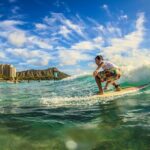
Waialua Bay is your first surf spot stop. This is where the lesson shifts from “learning the plan” to “doing the plan.”
The best part of having this as your first stop is that you get your coaching while you’re still fresh. You start with basics like paddling out and ocean rules, then you practice catching and riding beginner waves with real-time help.
A detail I find reassuring is that the lesson emphasizes safety first, especially for kids. The operator also has a clear rule: children under 13 require a private lesson. That’s not just policy. It reflects the reality that young beginners often need more one-on-one supervision to learn safely.
In the water, you’ll be coached on timing and technique. Some instructors even spot waves you might be able to surf and help you position so you’re not just guessing. That makes a huge difference when you’re brand new and don’t yet know how wave sets behave.
Stop 2: Haleiwa—Staying Grounded in the North Shore Vibe
The second stop is Haleiwa. You’re still part of the same beginner lesson flow, but the location adds something practical: it’s a reminder you’re on the North Shore, not some random shoreline.
Haleiwa is where the North Shore feeling shows up fast—surf culture, people watching, and that sense that everyone around you understands the ocean. Even though the lesson time is mostly about instruction and the water, being in Haleiwa can make the experience feel more real and less staged.
What you’ll likely take from this stop is a better sense of the area and how your session fits into a North Shore surf day. When you’re learning, context helps. It’s easier to remember cues when you know where you are and how the session is being managed.



Instructors Matter: Names You’ll Hear and Skills You’ll Feel
This is one of those lessons where the teaching style can be the difference between “I tried” and “I want to do this again.”
From what I’ve seen in instructor notes and consistent student feedback, the best sessions have a few patterns:
- Patient coaching that keeps you calm when you’re failing at standing up
- Clear, direct instructions that make technique simple
- Wave selection help, including steering you toward waves you can actually ride
- Encouragement that doesn’t rush you
You may work with instructors like Henry, Travis, Eric, Tanner, or Mark. Across names, the theme stays the same: instructors focus on safety, then quickly move into helpful coaching so you get up more than once.
One stand-out detail: multiple people describe getting real help with paddling out, and even getting their timing tuned while they’re waiting. That kind of attention is exactly why this lesson is limited to a maximum of 4 travelers.
Gear and Boards: What’s Provided and What You Might Add
The lesson includes:
- Surf board
- All the equipment you need
That’s important because a good beginner lesson uses gear that matches your skill level. On your surf session, you’ll also get guidance on what type of board to use as a beginner. That matters because board choice affects stability, paddling effort, and how quickly you can get standing.
One practical note from a first-timer experience: some people find it helpful to wear a wet shirt because the surfboards are foam. If you’re sensitive to rubbing or friction, this is a small fix that can make the whole session feel more comfortable.
Safety-wise, remember the core requirement: must be able to swim. This isn’t optional. Surfing involves wipeouts, and even beginner waves are still the ocean—cold water, currents, and time spent in the water are all part of the deal.
Also, avoid this lesson if you have back or knee problems or recent surgeries, since the paddling and getting in and out of the water is physical.
Who This Surf Lesson Is Best For
This is a strong fit if:
- You’re a true beginner who wants structured coaching
- You’re traveling solo, as a couple, or with a small group and want focused attention
- You’re comfortable meeting safety requirements like swimming
- You’re okay with a 2-hour active water session (paddling, standing attempts, and time waiting for sets)
It’s also a good pick for families with teens, because the group lesson format is set for children 13 and older. If you’re traveling with younger kids, you’ll need a private option instead, since kids under 13 are required to do private lessons.
Where you should be cautious: if you’re dealing with back or knee issues, or if you’re recovering from surgery, this may not be the right activity. The physical demands are part of learning how to surf, and the lesson is designed for general moderate fitness, not rehab-level needs.
Weather and Conditions: When the Ocean Doesn’t Cooperate
Surf lessons live and die by conditions. This experience is described as requiring good weather, and if it’s canceled due to poor weather, you’ll be offered either a different date or a full refund.
That matters for your planning on Oahu. If you’re trying to pack a tight itinerary, keep some flexibility. A beginner lesson can still be fun even when waves aren’t perfect, but the operator needs safe conditions to run it.
Final Call: Should You Book This North Shore Beginner Lesson?
If you want a beginner surfing experience that’s organized, safety-focused, and built to help you stand up, I’d book it.
Do it if:
- You want gear included
- You value small-group attention
- You’re ready for real ocean practice, not just a theory session
- You can drive yourself and meet the swim requirement
Consider holding off (or choosing a different option) if:
- You need transportation handled for you
- You can’t swim
- You’re under 13 and need a private lesson plan
- You have issues with your back or knees or have had recent surgery
In short: for first-timers on Oahu’s North Shore, this is one of the cleaner ways to learn. You get the basics, you get coached through the hard parts, and you leave with skills you can build on instead of just memories.
FAQ
Where does the lesson start, and where does it end?
The lesson starts at 62-595 Kamehameha Hwy, Haleiwa, HI 96712, USA and ends back at the meeting point.
How long is the North Shore beginner surf lesson?
It runs for about 2 hours (approx.).
How much does the lesson cost?
The price is $104.00 per person.
Is transportation provided to the surf spot?
No. No transportation is provided, and you’ll drive from Surf N Sea to the surf spot location.
What’s included in the lesson price?
You get a surf board and all the equipment you would need.
Do I need to know how to swim?
Yes. You must be able to swim for this experience.
What age is the group lesson for?
Group surf lessons are for children 13 years old and above. Children under 13 require a private lesson.
How big is the group?
This activity has a maximum of 4 travelers.
What surf spots are included in the itinerary?
The lesson includes stops at Waialua Bay and Haleiwa.
Is the lesson offered in English?
Yes, the lesson is offered in English.
Is there a cancellation option if weather is bad?
The experience requires good weather. If it’s canceled due to poor weather, you’ll be offered a different date or a full refund.