REVIEW · OAHU
Semi-Private Surf Lesson for 2 or 3 people on Waikiki Beach
Book on Viator →Operated by Big Wave Dave Surf & Coffee · Bookable on Viator
First waves come fast. This semi-private surf lesson turns world-famous Waikiki into a doable first step, with a small group and clear coaching from the crew at Big Wave Dave. I like that the format is built for first-timers, walking you from land basics to the ocean with safety guidance.
My other big plus is the teaching style. Names like Derek, Pauly, Cody, Rae, Paul, and Sione show up in the feedback, and the common thread is patience plus technique. The only real consideration is extra costs once you’re there: a rash guard rental is $5, and you may still want water shoes depending on conditions and instructor advice.
In This Review
- Key things to know before you go
- Waikiki surf, but with real first-timer support
- Price and what $139 really buys you
- Meeting at Big Wave Dave Surf & Coffee: quick setup, then ocean time
- Land demo: the “get your feet under you” moment
- In the water: paddling, wave-catching, and safety guidance
- Why semi-private feels better than big-group lessons
- Gear details: lockers included, rash guards and locks are not
- Who should book this Waikiki lesson?
- Potential snags: extra charges and weather reality
- Should you book it?
- FAQ
- How long is the semi-private surf lesson?
- Where do I check in for the lesson?
- What group size should I expect?
- What’s included in the price?
- What gear costs extra?
- Is photography included?
- What should I bring for my belongings?
- What happens if weather is bad?
- Is there a physical fitness requirement?
Key things to know before you go
- Small-group coaching: maximum of four people for more individual attention.
- Check in 20 minutes early at Big Wave Dave Surf & Coffee for your demo and setup.
- Lockers are included, but you bring (or rent) the lock.
- Rash guard is extra ($5), and photography costs extra if you want it.
- Weather-dependent session: good surf weather is required, with a reschedule or refund option if canceled.
Waikiki surf, but with real first-timer support
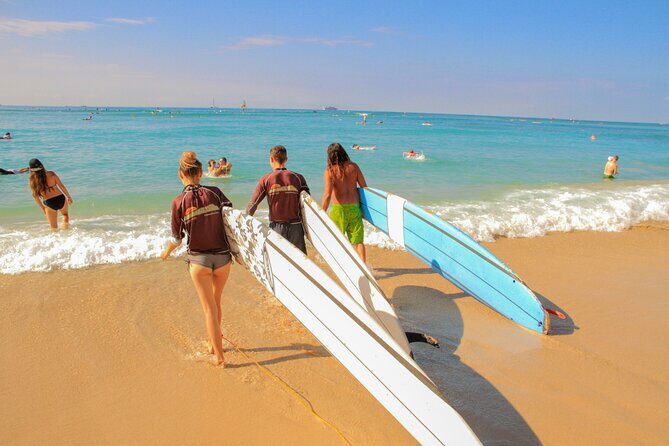
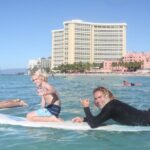
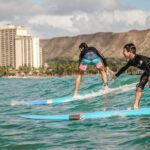
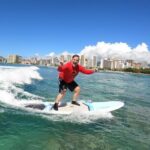
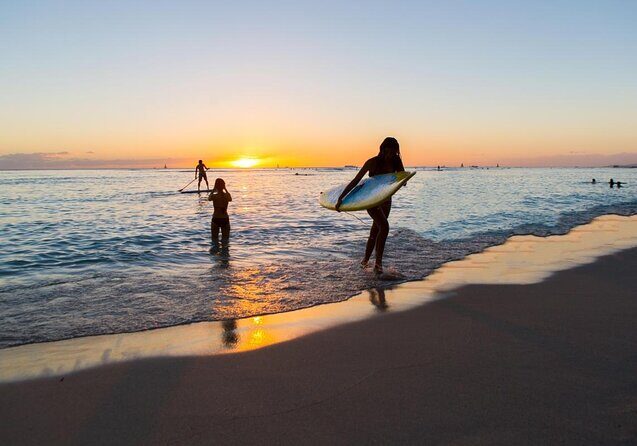
Waikiki is famous for a reason. The beach is active, the sand is easy to find, and the whole area screams “surfing is for everyone.” What makes this lesson worth your time is that it’s not just drop-in enthusiasm. You get a structured path: board basics on land, then paddling and wave-catching in the water.
This is designed for the moment when your brain says, I should not be doing this, and your arms say otherwise. The coaching helps you focus on the fundamentals first, not on flashy tricks. You’ll learn how to handle the surfboard, how to paddle with purpose, and how to catch waves safely.
Also, your setting matters. Waikiki is often chosen for beginner instruction because it gives instructors room to teach and students room to try. You’re not building your skills in a vacuum. You’ll be guided to the right approach for the conditions that day.
You can also read our reviews of more private tours in Oahu
Price and what $139 really buys you
At $139 per person for about 1 hour 30 minutes, you’re paying for two things: time in the water with instruction and the semi-private structure.
This isn’t a giant group demo where you watch from shore. The lesson is capped at a maximum of four travelers, and it’s explicitly “semi-private,” which matters for beginners. When there are fewer people, instructors can spot the issue you’re making—paddling too shallow, popping up too early, losing balance on the way up—and adjust you faster.
That’s where value shows up. A surf lesson isn’t just about getting one good wave. It’s about getting enough tries with feedback to make standing up feel possible. The feedback you get for this lesson often points to instructors pushing the group to keep moving so you get multiple attempts, not just one.
One more value angle: the price includes taxes and multiple fees (taxes/fees/handling, fuel surcharge, landing and facility fees). That means fewer surprises when you book.
Two costs to plan for:
- Rash guard rental is $5 (not included).
- Optional lockers and photography have add-ons. Lockers exist, but you’ll still need a lock (bring your own or rent one for $5).
Meeting at Big Wave Dave Surf & Coffee: quick setup, then ocean time
Your day starts at Big Wave Dave Surf & Coffee, 226 Lewers St #154, Honolulu. Plan to arrive early. Check-in is 20 minutes prior to your lesson start time. That early window isn’t for busywork. It’s for getting geared up, listening to your briefing, and letting the group organize before you head to the beach.
You’ll also be dealing with the practical side of beach sports:
- You’ll want a place for your stuff during the lesson.
- You’ll likely want extra comfort for your skin and feet.
Here’s the good part: lockers are included, so you’re not balancing your bag on a towel. Bring a lock or rent one. If you already own a small padlock, you can keep this simple and avoid an extra $5 rental.
Also, this location is near public transportation, so you don’t have to fight parking if you’re staying in Waikiki.
Land demo: the “get your feet under you” moment
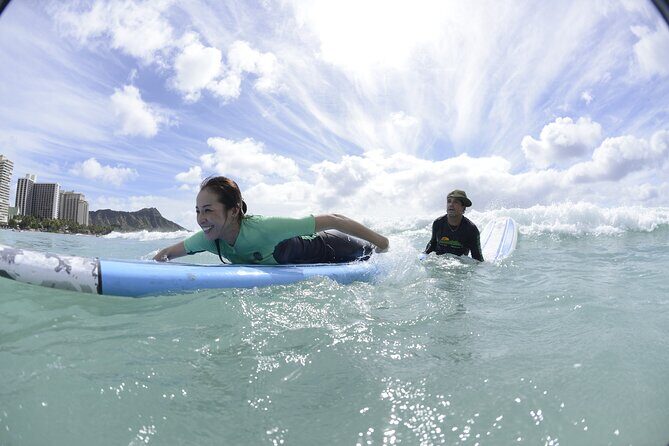
The lesson starts with a land demonstration, then transitions into ocean safety and instruction. This part is underrated. For most first-timers, the biggest challenge isn’t waves—it’s coordination.
On land, you’re taught the basics of:
- How to stand on the board
- What your body should do as the wave approaches
- How paddling fits into the sequence (not just random arm flailing)
- The safety rules you need before you go out
In the feedback, instructors are praised for being patient and for talking people through technique. Names like Derek and Cody are mentioned specifically for taking time with form and technique. Rae gets credit for a positive attitude that helps first-timers stay calm when the ocean feels like it’s doing whatever it wants.
A tip for you: listen closely to the cues on land. If the instructor says to focus on a certain part of the movement—where your feet go, how you shift weight, how you time your pop-up—try to repeat it mentally when you’re standing in the water. Surfing rewards memory. Not talent.
In the water: paddling, wave-catching, and safety guidance
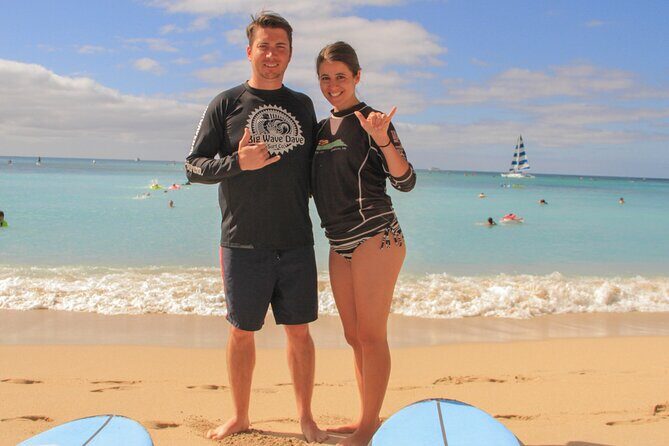
Once you finish the land demo, you’ll get into the ocean. The staff leads you in after ocean safety is covered. This matters in Waikiki, where conditions can change during the day.
Your instruction in the water usually centers on three things:
- Paddling technique: setting yourself up so you can actually move when a wave arrives.
- Timing: getting ready before the wave, not after it’s already gone.
- Catching waves safely: learning how to commit to the wave instead of freezing at the last second.
The lesson structure is built for repetition. Multiple chances matter. Several people highlight that instructors help students catch good waves and give enough tries so you’re not done after one attempt.
You should also expect “real beginner conditions.” One of the recurring notes is that the waves are often small but consistent—great for learning balance, timing, and reading the next opportunity. If you’re looking for dramatic barrels, this is not that. If you want to learn how to surf without feeling overwhelmed, it fits the assignment.
And yes, surfing is work. One account jokes that shoulder endurance is no joke. That’s real. Expect paddling to feel like a workout, even when the waves are gentle.
You can also read our reviews of more tours and experiences in Oahu

Why semi-private feels better than big-group lessons
This is the part that most affects your experience.
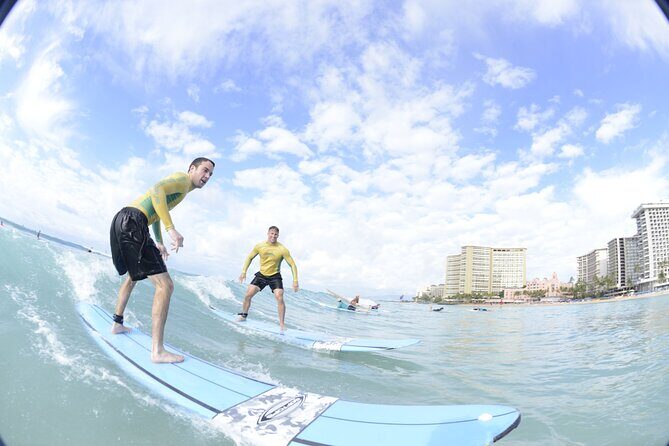
With a cap of four travelers, your instructor can watch you instead of scanning a crowd. That means:
- You’re more likely to get quick corrections.
- You’re more likely to try again after a missed pop-up.
- You’re less likely to feel like you’re waiting your turn.
If you book for 2 or 3 people, you’re getting the intended semi-private setup. The extra layer is that the operation can still run with small groups, keeping things tight for instruction.
Instructors are also praised for keeping the group moving—getting multiple runs for each person. That matters because early surfing is a feedback loop. Try, fail, adjust, try again. When you’re stuck waiting, your momentum disappears.
So if you’re traveling with a partner or a small family unit, you’ll likely appreciate this pacing. It also helps if you’re bringing kids who need encouragement. One instructor, Pauly, is specifically noted for teaching two boys ages 10 and 13, with support that helped them keep going.
Gear details: lockers included, rash guards and locks are not
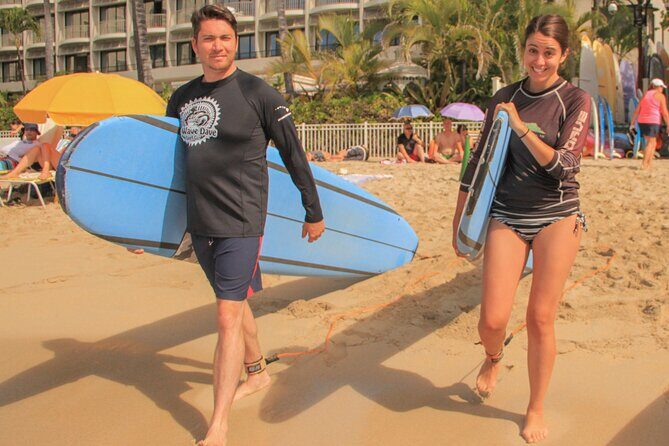
Let’s talk gear, because this is where surf lessons either feel smooth or feel like an obstacle course.
What’s included:
- Lockers for your belongings
What’s not included:
- Rash guard rental is $5
- Photography (optional; requires advance reservations)
- Lock rental is $5 if you don’t bring your own lock
There’s one caution worth taking seriously: you might hear advice about water shoes. One negative experience complained about being charged for gear and mentioned that the coach suggested water shoes are advisable because of reef-area conditions during instruction.
Even though not every lesson will pressure you the same way, the safe bet is simple:
- Bring your own water shoes if you have them.
- If you don’t, plan to at least consider them when conditions look rocky or the shoreline feels rough.
You don’t need to overbuy, but you also don’t want to hobble around the beach in flimsy sandals and then hope your feet cooperate.
If you’re sensitive to sun or wind, the rash guard rental can also be worth it. At $5, it’s a low-stress choice.
Who should book this Waikiki lesson?
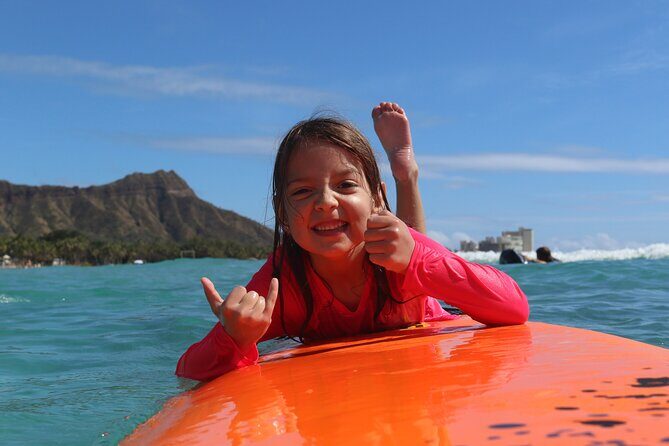
This lesson makes the most sense if you’re:
- A true beginner or close to it
- Traveling as a couple, or with a small group of friends or family
- Interested in focused coaching, not just being thrown into the water
- Visiting Honolulu and want a classic Waikiki activity that still feels instructional
It’s also a good fit for families that want an organized, staff-guided experience. The format is described as a great Honolulu activity for traveling families, and the instruction style is often praised as friendly and patient.
You should have moderate physical fitness. Surfing uses muscles you might not use daily—especially shoulders and core. If you’re generally active, you’re in the right zone.
Potential snags: extra charges and weather reality
Let’s keep it honest. The main complaints in the mix aren’t about teaching quality. They’re about money details.
One critical note labeled the experience a rip-off and objected to add-on charges for gear and water sport shoes. The key lesson for you is not to panic—it’s to plan. Before you go, decide what you’ll bring:
- Lock (or budget $5 for a lock rental)
- Rash guard (or budget $5 for a rental)
- Water shoes (recommended if your feet are easily irritated)
If you show up prepared, the lesson tends to feel like the smooth, friendly setup many people describe.
The other snag is beyond anyone’s control: weather. The activity requires good weather. If conditions aren’t right, you’ll be offered another date or a full refund. That’s standard for surf lessons, but it can matter if you’re on a tight schedule.
Should you book it?
Yes—if you want a beginner-friendly Waikiki surf lesson with small-group attention and coaching that prioritizes technique and confidence.
Book this if:
- You like the idea of semi-private teaching (max four people)
- You want step-by-step guidance from land demo to ocean practice
- You’re okay with small add-ons like a rash guard rental and a lock
Skip or rethink if:
- You’re extremely cost-sensitive and hate surprise add-ons, even small ones
- You’re hoping for a long, advanced surf session instead of a fundamentals lesson
- Your schedule is inflexible and you can’t absorb weather changes
Bottom line: at $139 per person, you’re paying for the structure that helps first-timers make progress. If you go in prepared with basic gear, you’ll get the best version of the experience—more coaching, more attempts, and a much better shot at standing up and feeling in control.
FAQ
How long is the semi-private surf lesson?
The lesson runs for about 1 hour 30 minutes.
Where do I check in for the lesson?
Check in is at Big Wave Dave Surf & Coffee, 226 Lewers St #154, Honolulu, HI 96815, and you should check in 20 minutes prior to your start time.
What group size should I expect?
This is a semi-private lesson with a maximum of four travelers. Also, semi-private reservations require a minimum of 2 people.
What’s included in the price?
The price includes all taxes, fees, and handling charge, plus a fuel surcharge, and landing and facility fees. Lockers are also included.
What gear costs extra?
A rash guard rental is $5. Lock rental is $5 if you don’t bring your own lock. Photography is also not included and requires advance reservations.
Is photography included?
No. Photography is not included, but you can reserve it in advance.
What should I bring for my belongings?
Bring a lock for the included lockers, or rent one for $5.
What happens if weather is bad?
The lesson requires good weather. If it’s canceled due to poor weather, you’ll be offered a different date or a full refund.
Is there a physical fitness requirement?
You should have moderate physical fitness for this activity.