REVIEW · OAHU
The East Waikiki Walking Tour
Book on Viator →Operated by Hawai'i Walks · Bookable on Viator
Waikiki turns into a classroom on foot. This East Waikiki walk turns a quick beach area into a story you can follow—war history, surf culture, and local nature, all on a comfortable timeline. I love how the guides are experts in Hawaiian flora and fauna, and I also like the free mochi ice cream pause that hits right when you need a little reset.
One thing to plan for: it’s a small group tour, so timing matters. There’s also a weather dependency—so if the day is gray and rough, your walk may get rescheduled.
In This Review
- Key highlights before you lace up
- Why this 2-hour walk hits harder than you expect
- Meeting at Surfer on a Wave: timing and practical logistics
- Stop 1: Waikiki War Memorial Natatorium and the WWII story in plain sight
- Stop 2: Kaimana Beach, first surf schools, and a monk seal wild-card
- Stop 3: Kapi‘olani Park photos and the local ice cream break
- Circling the zoo: animal stories you can connect to the landscape
- Walking the base of Diamond Head (Le‘ahi) for visible geology
- What you actually get for $14: value that feels real
- Sustainability and local social issues: how the guide frames Waikiki
- Who should book the East Waikiki Walking Tour
- Should you book this tour?
- FAQ
- How long is the East Waikiki Walking Tour?
- Where does the tour start?
- What is the price, and what do I get for it?
- Is bottled water provided?
- Does the tour run in any weather?
- What is the cancellation window for a full refund?
Key highlights before you lace up
- Small group max of 4 means you get more back-and-forth and less crowd noise.
- Sustainability lens: you’ll connect Waikiki’s development to real impacts and smarter ways to visit.
- War history at a natatorium: an abandoned WWII-era memorial sits in an Olympic-sized pool.
- Surf-club history at Kaimana Beach: early surf school roots plus Outrigger vs Hui Nalu.
- Monk seal possibility: Kaimana is a known haul-out spot for these rare animals.
- Diamond Head geology at walking speed: learn how Le’ahi formed and why it looks the way it does.
Why this 2-hour walk hits harder than you expect
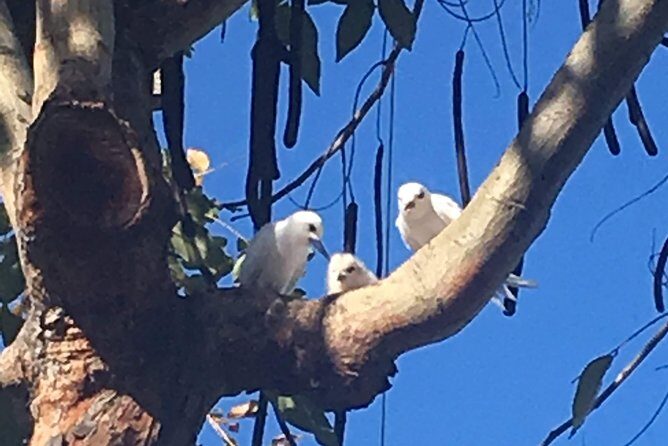
This tour is short on paper—about 2 hours—but it’s built to make Waikiki feel like more than a beachfront strip. The route is designed to move you between themes: ocean life and animals, human history during big world events, and the geology that underpins the whole island. You’re not just watching Waikiki happen around you. You’re learning how it got that way.
The pace also helps. You’ll get regular stops (none of them are long), photo breaks, and a snack moment that’s timed to keep you from fading. For $14, that matters: you’re paying mostly for a guide’s interpretation and the structure that keeps you from wandering off with only half the story.
If you like travel days that feel active but not exhausting, this fits. If you’re the type who enjoys history with a specific place attached—rather than a general lecture in the air—you’ll likely get a lot out of the way each stop connects.
You can also read our reviews of more walking tours in Oahu


Meeting at Surfer on a Wave: timing and practical logistics
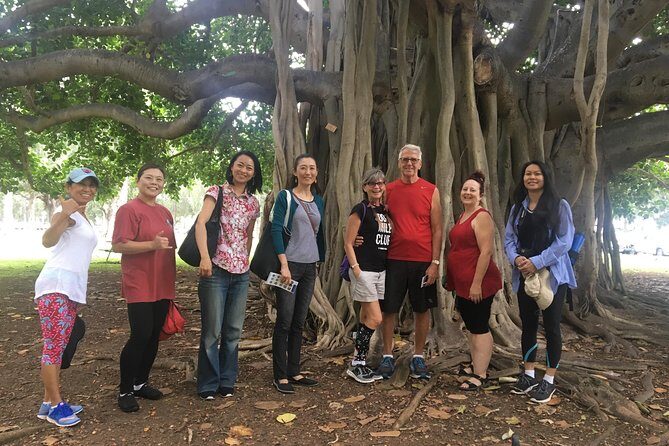
You’ll meet at the Public Art called Surfer on a Wave on Kalakaua Ave + Monsarrat Ave (Honolulu). The start time is 9:00 am, and it’s the kind of tour where arriving on time makes your whole day smoother.
This experience is near public transportation, which is useful if you’re building a day around bus or rides. Service animals are allowed, so you’ll see an appropriate range of visitors. The tour also lists moderate physical fitness as the expectation. That’s a nice way of saying: you’ll be walking enough to care about your shoes, but it’s not marketed as a hike.
One more practical note: you’ll need good weather. That doesn’t just affect comfort—it affects whether the tour runs at all. If skies are unsettled, expect the operator to handle rescheduling or refunds as needed.
Stop 1: Waikiki War Memorial Natatorium and the WWII story in plain sight
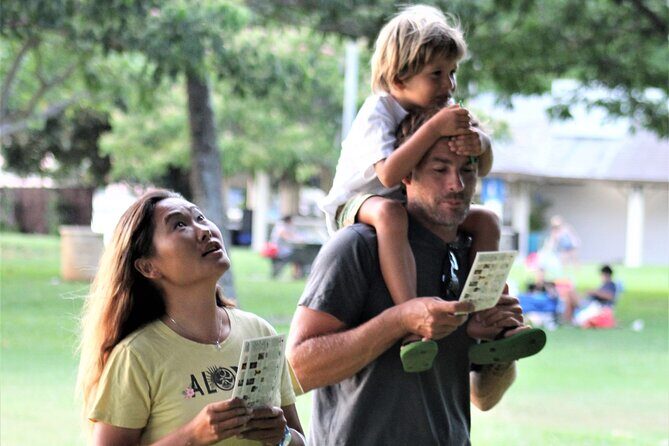
The first stop is Waikiki War Memorial Natatorium, where you’ll learn Hawaiian history tied to the world wars. The setting is striking: an abandoned war memorial with an Olympic-sized swimming pool in the water.
What makes this place work on a walking tour is how it forces you to notice the unusual. Waikiki can feel like it’s all present-tense—towels, surfboards, sunshine. But this natatorium pulls your attention backward to a different era, and the guide’s job is to connect the physical site to the human story around it.
You’ll spend about 15 minutes here. It’s long enough to hear the context and look around, but short enough that you don’t end up stuck in one spot while the rest of the tour passes you by. Also, admission is listed as free for this stop, so you’re not paying extra to access the core moment.
If you’re sensitive to heat or bright sun, consider bringing a hat. This kind of pool-side stop can be exposed even when the rest of the neighborhood feels breezy.
Stop 2: Kaimana Beach, first surf schools, and a monk seal wild-card
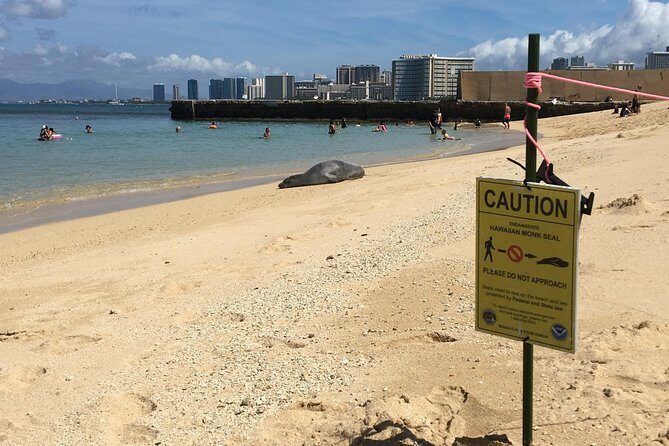
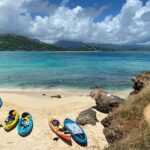
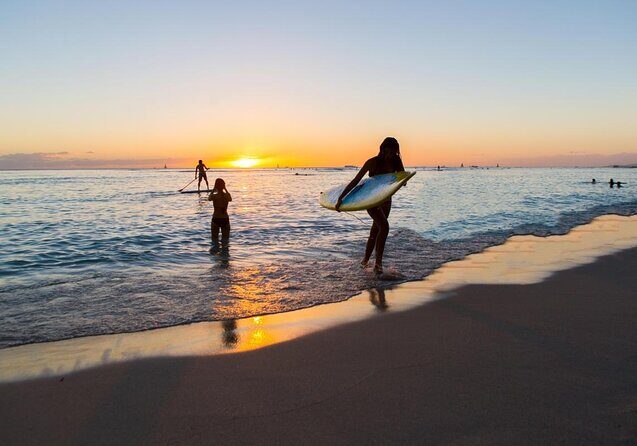
Next up is Kaimana Beach, and this isn’t treated like just another sand-and-sun stop. You’ll get basic surf history tied to the place where early surf schools were established. That’s a smart approach for beginners, because it turns the idea of surfing from a vague sport into a local cultural thread with geography attached.
The guide also covers a specific conflict: Outrigger and Hui Nalu, the two original surf clubs, and how their rivalry shaped the image of surfing and Hawai‘i abroad. That angle matters. It’s not only about who won. It’s about how organizations helped decide what the outside world thought Hawai‘i looked like.
Then there’s the monk seal element. The tour notes that Kaimana Beach is one of their favorite haul-out spots, and the guide will encourage you to keep your eyes open for these rare animals. You’re not guaranteed to see one, but you are being taught where to look and why that spot is special to them. That turns a quick beach stop into a nature moment.
Time here is about 10 minutes, with free admission noted for the stop. It’s brief enough that you won’t feel rushed, but short enough that you’ll likely want to linger after the tour if you’re into wildlife.
Stop 3: Kapi‘olani Park photos and the local ice cream break
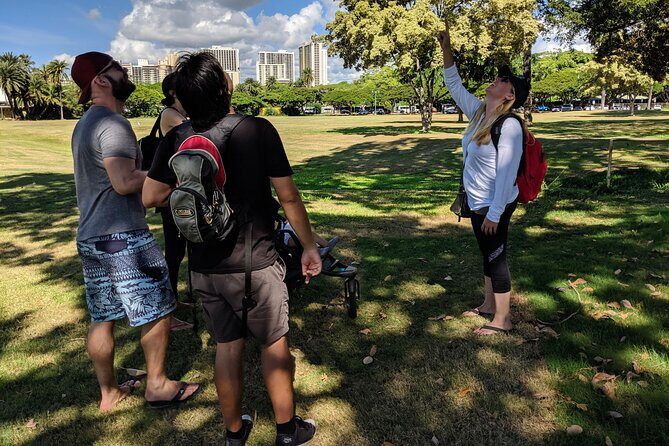
Kapi‘olani Park is where the tour slows down slightly and lets you breathe. You’ll pause for photos and enjoy locally made ice cream. This stop is listed for about 15 minutes.
Why include a park and snacks? Because you’re walking through a lot of context fast. WWII history, surf-club politics, animal ecology—those are heavy topics in small doses. The park break gives your brain a place to reset without abandoning the theme.
Also, Kapi‘olani Park is a useful stage for Waikiki-area exploration. Even if you don’t linger after your tour, it helps you orient yourself visually. You start recognizing the space between beach, zoo area, and the Diamond Head backdrop.
This part of the walk is also a good chance to check your phone’s battery if you’re using a mobile ticket. (The tour uses a mobile ticket system, so you’ll want your screen ready and your brightness turned down if you’re trying to conserve power.)


Circling the zoo: animal stories you can connect to the landscape
After the park, the route circles the zoo and shifts into animal stories. The wording is simple: you’ll hear compelling stories about the animals that have called this their home over the years.
Even without a minute-by-minute species list, this stop has real value if you pay attention to what you’re being taught. A zoo can feel like a static building for some visitors. On a good guide-led walk, it becomes a way to talk about habitats, adaptation, and conservation challenges—especially when you’re also learning about local ecosystems around Waikiki.
For you, the takeaway is to treat this as a story stop, not a browsing stop. Listen for why the guide chose certain animals and what that reveals about the wider island environment. If you’re the type who likes learning how institutions handle animal care and public education, you’ll likely enjoy this segment.
Time isn’t specified in the info you provided, but plan to stay present here. You’ll be moving soon afterward, and it’s the kind of stop where your memory will matter more than your photos.
Walking the base of Diamond Head (Le‘ahi) for visible geology

The final stretch is along the base of Diamond Head (Le‘ahi) State Park. This part focuses on geological history—how the island formed and how this iconic volcanic cone came to be.
Diamond Head is famous, but it can also become background scenery. A guide helps you read it like a diagram. You’ll likely notice how the shape of the cone relates to volcanic processes, and how that geology influences the broader island environment.
This is where the tour’s big-picture framing comes in: you’ve heard human history and nature stories, and now you’re getting the deep time explanation that ties the whole place together. It’s also a very practical way to end a walking tour because it gives you a landmark. Once you’ve learned the cone’s formation story, you’ll look at it differently for the rest of your trip.
If you want a memorable photo, aim for after you’ve heard the explanation. Knowing what you’re looking at makes the picture better, not just prettier.
What you actually get for $14: value that feels real
At $14 for about 2 hours, this tour is priced like a budget-friendly way to get serious context. The best part isn’t just the low cost—it’s how the tour reduces add-on expenses.
Many stops are listed with free admission (the natatorium, Kaimana Beach area, and Kapi‘olani Park). You also get a snack: free local mochi ice cream about 45 minutes into the tour. That timing is key. You’re not hit with sweets immediately after starting, so it doesn’t feel like a gimmick. It’s positioned like a mid-walk reset.
Bottled water isn’t included. The tour notes that if you forgot your own bottle, you can use sterilized hydroflasks with cold water provided by the operator. That’s convenient and more sustainable than buying plastic for a short walk.
So for your wallet, you’re paying mainly for the guide’s expertise and the structure that links each location to a theme. If you’re visiting Waikiki and want more than the usual beach-carousel sightseeing, this is a good match.
Sustainability and local social issues: how the guide frames Waikiki
This isn’t a tour that treats sustainability like a poster. The guide is set up to discuss impacts of industry in Waikiki and to share information that helps you be a better consumer while visiting the islands.
You’ll hear sustainability tied to what you see—animals and plant life, how the region has changed, and why that matters. The company describes guides as advanced-degree experts in Hawaiian flora, fauna, and history, and that shows up in how the tour connects facts to context rather than tossing out random trivia.
The tour also mentions local social issues and a wider Pacific lens on geological and human history. That matters because Waikiki is a place shaped by many forces at once: nature, migration, trade, tourism, and global attention. A good guide helps you understand the trade-offs behind what you’re enjoying today.
For you, the practical payoff is mindset. When you know the impacts of industry and how people try to manage them, you’ll make different choices—things like how you interact with natural areas and how you treat local culture as living, not staged.
Who should book the East Waikiki Walking Tour
This tour suits you if:
- You want a short walking experience with multiple story themes in one morning.
- You like history and nature tied to specific places, not general facts.
- You prefer a small group for a calmer experience.
You might skip it if:
- You’re looking for a long, flexible beach day with no structure.
- You don’t handle walking well at all, since moderate fitness is the stated requirement.
- You travel on days when weather is unpredictable and you can’t be flexible.
Also, because the tour is built around walking and short stops, it can work well for first-timers in Waikiki who want orientation fast—especially if you’re planning to spend the rest of your day doing your own exploring.
Should you book this tour?
I think it’s worth booking if you want to turn Waikiki from scenery into story. The price is low, the stops include both human history and island nature, and the guide-led interpretation is clearly the point. The mochi ice cream break and the free admission listed for key stops add real value.
My only caution is about reliability and conditions: it’s weather-dependent, and since it’s a small group, you’ll feel the effect if anything goes wrong at the start. I’d suggest arriving a bit early at the Surfer on a Wave meeting point, and if weather looks bad, keep an eye on updates so you don’t waste your time.
If you’re ready to see Waikiki with fresh eyes—war memorials, surf-club history, monk seals, and volcanic geology—this is a smart use of a morning.
FAQ
How long is the East Waikiki Walking Tour?
The tour lasts about 2 hours.
Where does the tour start?
You meet at the Public Art Surfer on a Wave at Kalakaua Ave + Opp, Monsarrat Ave, Honolulu, HI 96815, and the tour ends back at the meeting point.
What is the price, and what do I get for it?
The price is $14. Snacks are included, including free local mochi ice cream about 45 minutes into the tour. Bottled water is not included.
Is bottled water provided?
Bottled water is not provided. If you forgot your own, the tour notes sterilized hydroflasks with cold water for your use during the tour.
Does the tour run in any weather?
The tour requires good weather. If it’s canceled due to poor weather, you’ll be offered a different date or a full refund.
What is the cancellation window for a full refund?
You can cancel up to 24 hours in advance for a full refund. If you cancel less than 24 hours before the start time, the amount paid is not refunded.