REVIEW · OAHU
Private Surfing Lessons on the North Shore of Oahu
Book on Viator →Operated by Catch'a Wave · Bookable on Viator
Learning to surf sounds simple. The ocean rarely agrees with you. This private North Shore lesson is built to help you progress anyway, with one-on-one coaching and a lesson plan that moves from safety to the pop-up to your first small-wave rides. Two things I like a lot are the hands-on focus on surf fundamentals (paddling, standing, wave selection) and the quick dry-land practice that makes the first attempts in the water feel less random. The main drawback to consider is that North Shore surf depends on conditions—if waves aren’t workable, you may have a weather-related cancellation.
In This Review
- Catch’a Wave: Key things to know before you go
- North Shore Surf Lesson That Actually Teaches the Basics
- Where You Meet at Puaʻena Point Beach Park (And Why It Matters)
- What You Get Included: Gear That Reduces Stress
- The Lesson Flow: Safety, Etiquette, and Surf Basics
- Warm-Up and Dry-Land Pop-Up Practice
- Catching Your First Wave: Paddling, Standing, Success
- From Short Rides to Better Control: Timing and Turns
- Why This Private Format Is Great Value for Two Hours
- The North Shore “Real Talk”: Conditions Can Change
- Who Should Book This Lesson (And Who Might Want Another Option)
- Quick Tips Before Your North Shore Lesson
- Should You Book This Private Surf Lesson?
- FAQ
- What’s included in the surfing lesson?
- How long is the lesson?
- Where do we meet for the lesson?
- What happens if it rains?
- Is this a private experience?
- Is there a cancellation refund?
Catch’a Wave: Key things to know before you go
- Private, one-on-one instruction so you get corrections in real time
- Dry-land pop-up practice so you walk into the water with a plan
- Beginner-friendly wave selection based on your skill and goals
- Safety + etiquette first, including how to read ocean conditions
- All core gear included: board, leash, fins, and rash guard
North Shore Surf Lesson That Actually Teaches the Basics
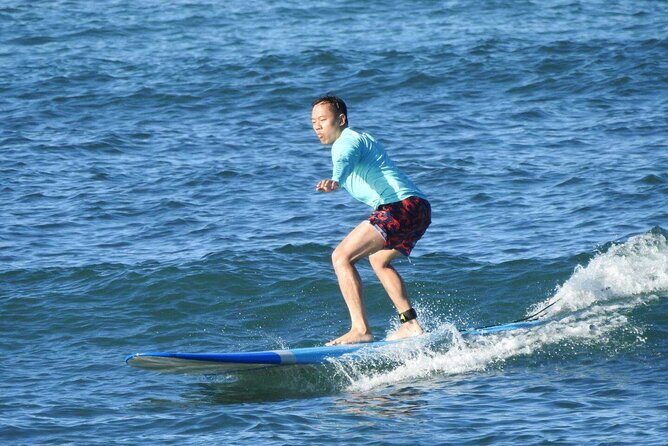
Oahu’s North Shore has a reputation for big, dramatic surf. Even if you’re not chasing barrels, the ocean there can still feel intense. That’s exactly why a private lesson matters. You’re not out there hoping for good luck with random waves and a crowd. You’re working with an instructor who can adjust the lesson for your experience level and your goal—whether that’s standing on your first wave or stringing together a few more rides with better timing.
I also like how the lesson is structured so you’re not jumping straight into chaos. You start with an introduction and safety overview, you drill the pop-up on land, then you ease into the water on smaller sets. The result is less guessing, more doing. And for the North Shore, “less guessing” is basically the secret to feeling confident fast.
One more practical note: this experience is weather-dependent. It runs rain or shine unless conditions are too dangerous, and if surf is off, you may need to switch dates or get a full refund. That’s not a dealbreaker—just plan with the expectation that Mother Nature is the boss here.
You can also read our reviews of more private tours in Oahu
Where You Meet at Puaʻena Point Beach Park (And Why It Matters)
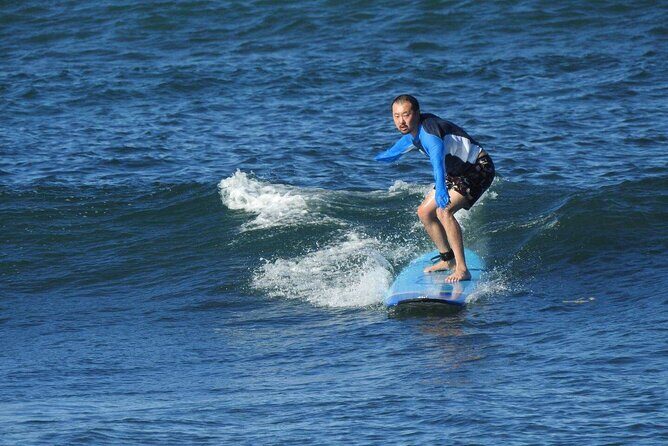
Your lesson starts at Puaʻena Point Beach Park, on Kahalewai Pl, Haleiwa. This is a smart starting point because you’re not scrambling across the island to chase the “right spot.” When a lesson is designed for learning (not just showing up near waves), the meeting location and the local approach matter.
You’ll also want to know how the tour wraps up: it ends back at the meeting point. That simplifies your day. You can plan lunch, sunscreen, and recovery around one fixed time and one nearby starting area.
One small upside: the activity is described as near public transportation. If you’re not driving, that can make planning easier, especially in the Haleiwa area.
What You Get Included: Gear That Reduces Stress
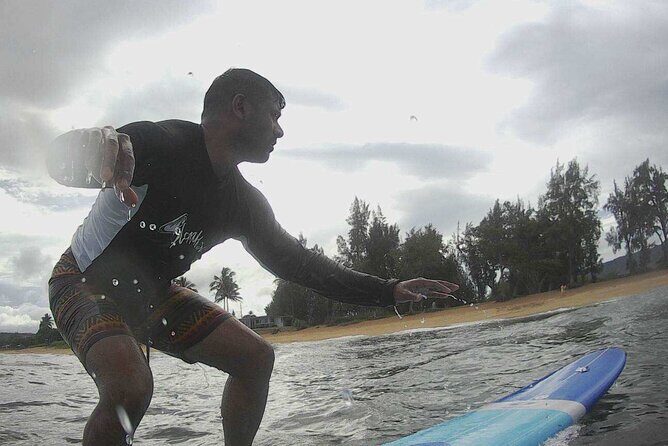
For a $150 per person, you get the essentials that usually slow down first-time surf days.
Included gear:
- Surfboard
- Leash
- Fins
- Rash guard
You’ll also get a professional surf instructor. That matters because gear without coaching is just equipment. Coaching is what turns the waves from scary into learnable.
Here’s the practical value: if you’re new to surfing, you don’t want your “pre-lesson time” spent figuring out board choice, leash basics, or what a rash guard actually prevents. With this setup, you can focus on the lesson plan—paddling, popping up, and reading what the ocean is doing.
Two things you should plan for that aren’t included:
- Souvenir photos (optional, available to purchase)
- Transportation to and from the meeting area
If you’re budgeting your day, those are the only obvious add-ons mentioned.
The Lesson Flow: Safety, Etiquette, and Surf Basics
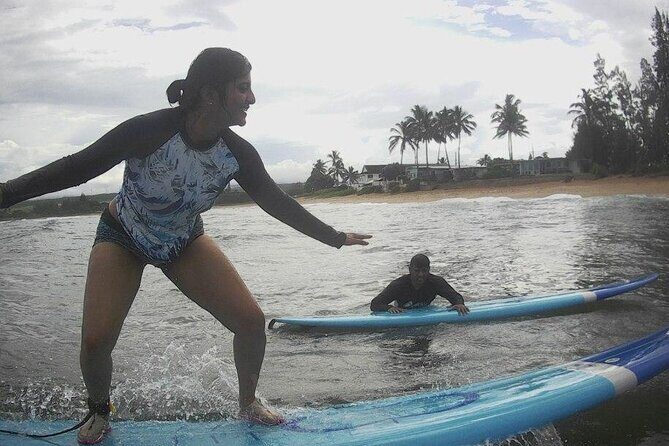
A good first surf lesson doesn’t start with standing. It starts with understanding the ocean and how to not get in everyone else’s way.
At the beginning, your instructor greets you, provides gear, and gives an overview of the session. Then you move into a safety briefing and surf fundamentals. You’ll cover ocean conditions and surf etiquette, and you’ll learn the key building blocks:
- Paddling properly
- Standing effectively
- Choosing waves that match your level
For beginners, wave selection is huge. Picking waves that are too big or breaking too fast is the fastest way to feel defeated. Here, the instruction is tailored to your experience and goals, so you’re more likely to spend time on attempts that have a chance to work.
Also, etiquette matters more than people expect. In crowded water, the difference between a smooth session and a frustrating one is often communication, spacing, and timing. Getting that taught upfront saves headaches later.
Warm-Up and Dry-Land Pop-Up Practice
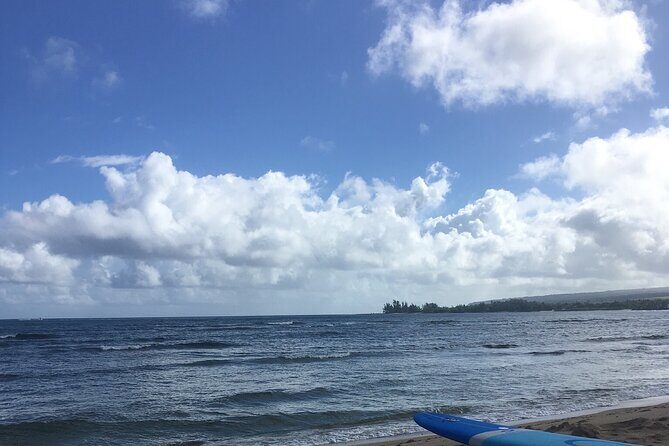
Before you hit the water, you’ll do a warm-up and then practice the pop-up technique on land. This is one of my favorite parts of the lesson structure because it tackles the biggest beginner problem: your body does not naturally know what to do at the exact moment you need it.
On land, you focus on:
- Foot placement
- Balance
- The sequence from lying down to standing
That dry-land step is the bridge between learning and actual success. It means that when you finally get in the ocean, you’re not starting from scratch. You’re applying something you already tried in a controlled setting.
It’s also a confidence builder. Even if you don’t feel coordinated on day one, you can at least feel the motion and understand what your instructor is correcting.
You can also read our reviews of more tours and experiences in Oahu

Catching Your First Wave: Paddling, Standing, Success
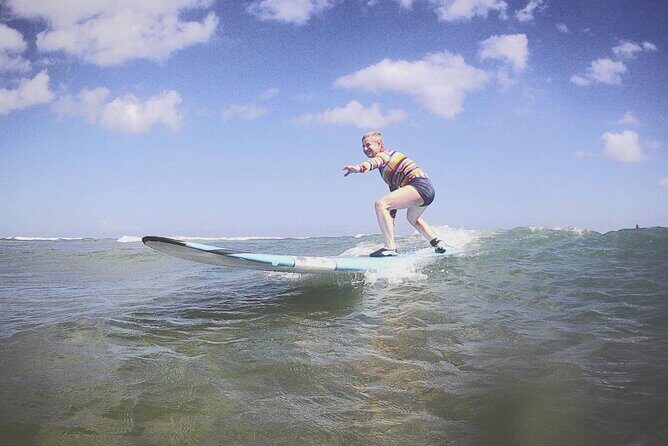
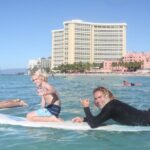
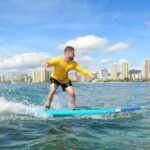
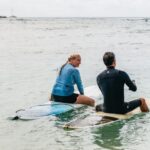
Once you’re ready, you go into the ocean to catch smaller waves. The instructor guides you through paddling and standing, with attention on what will actually help you catch a ride.
The lesson emphasizes applying the pop-up technique so your first ride has a real chance to happen. That’s the goal: get you on your first wave early enough that the rest of the session has a purpose.
When people struggle at the start, it’s often because they’re thinking too much while the wave is already rolling. A good private instructor helps you narrow your focus to just a few cues, like:
- Paddle with intention
- Pop up quickly and safely
- Keep your balance and let the wave carry you
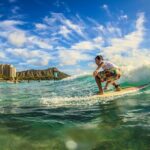
The thrill of riding on Oahu’s North Shore is real, even with beginner-sized surf. You get the feeling of riding waves in a place famous for surfing—without having to “perform” like a pro on day one.
From Short Rides to Better Control: Timing and Turns
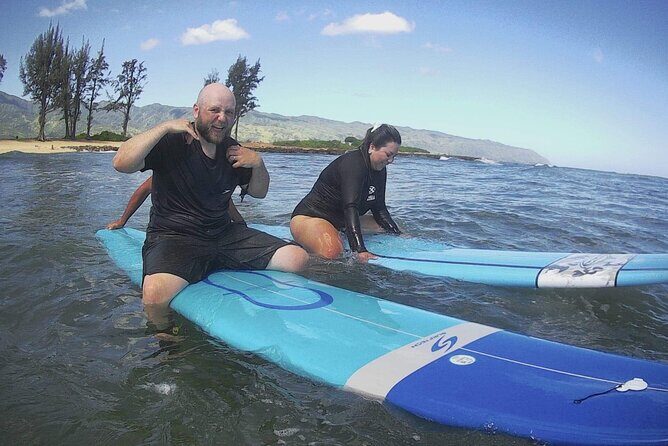
As you gain confidence, the lesson doesn’t stop at standing once. It moves into refinement. Your instructor helps you work on:
- Balance
- Turning
- Wave timing
This is where private instruction earns its keep. In a group setting, you might get a general tip and then hope it sticks. With one-on-one coaching, you can get corrections that match what went wrong in your last attempt.
Longer rides and more control usually come down to timing—when you paddle, when you stand, and how you align yourself on the wave. Turning also helps because it teaches you how to manage direction instead of simply surviving the wave.
You’ll finish with the sense that you understand the ocean a little better. That’s not just fun for the day—it sets you up to enjoy future surf sessions more.
Why This Private Format Is Great Value for Two Hours
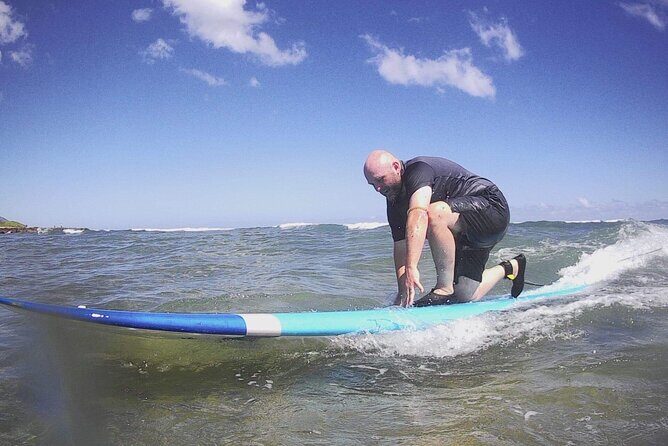
Two hours can feel short until you see how the time is used. This lesson doesn’t waste it with long lectures or waiting around. The plan is built around a progression:
- Intro + safety
- Dry-land pop-up practice
- Small-wave work in the ocean
- Continued skill refinement
At $150 per person, the value comes from the fact you’re paying for coaching that’s tailored. If you’re learning surf for the first time (or coming back after a long break), you can burn a full day trying to figure things out on your own. Here, you’re compressing the learning curve.
And because it’s private, you get the instructor’s attention without having to compete with a larger group’s pace. For most people, that’s worth more than it sounds, especially for beginners who need frequent feedback.
One tradeoff: private lessons are more expensive per person than rentals or group classes. If you’re already comfortable paddling, popping up, and reading waves, you might find a smaller or less coached option fits your style better. But if you want real instruction, this structure is built for you.
The North Shore “Real Talk”: Conditions Can Change
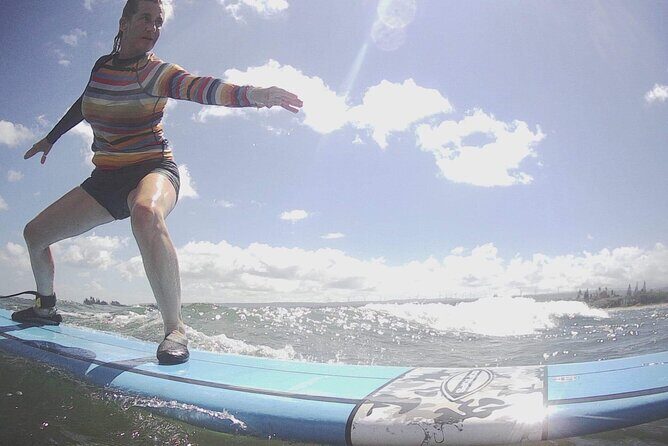
This is the practical thing people should expect on Oahu’s North Shore: surf conditions can shift. This lesson runs rain or shine unless conditions are too dangerous, and if it’s canceled due to poor weather, you’ll be offered a different date or a full refund.
In other words, plan like the ocean might have other ideas. If your schedule is flexible, you’ll handle this easily. If your calendar is tight, make sure you leave breathing room.
Who Should Book This Lesson (And Who Might Want Another Option)
This private lesson is a strong fit if you:
- Are a first-timer or returning after time away
- Want coaching that matches your skill level and goals
- Like the idea of a structured progression from land practice to ocean attempts
- Prefer learning with fewer distractions than a crowded class
It may be less ideal if:
- You need a guaranteed surfing session regardless of conditions (North Shore surf can’t be controlled)
- You already have advanced surf skills and only want a broad “go ride” experience
Kids are welcome, but they must be accompanied by an adult. You should also have a moderate physical fitness level, since paddling and getting up repeatedly in the water is real work—even when it looks casual.
Quick Tips Before Your North Shore Lesson
These are the small things that help you get more out of the session:
- Wear swimwear you’re comfortable getting wet and rubbing in
- Bring something to rinse off afterward if you can
- Don’t overthink your first pop-up attempt. The plan starts with basics for a reason
- If you’re prone to tight calves or sore shoulders, consider doing gentle stretching before you arrive
And because the instructor will cover surf etiquette and conditions, listen closely during that safety briefing. It sets the tone for how smooth your time in the water feels.
Should You Book This Private Surf Lesson?
If you want a guided, learn-focused experience on the North Shore, I’d say yes—especially if you’re new or you want faster improvement with fewer guesswork moments. The biggest strengths are the private coaching, the step-by-step flow from land to water, and the way the lesson is designed to help you actually catch waves instead of just watching others surf.
The only reason I’d pause is if your schedule is inflexible and you can’t absorb a weather-related change. Surf is never fully guaranteed on the North Shore. But when conditions cooperate, this lesson format is exactly what you want: gear provided, safety taught, skills built in order, and a clear path toward your first rides.
FAQ
What’s included in the surfing lesson?
You’ll get a professional surf instructor plus the key gear: a surfboard, leash, fins, and a rash guard. Souvenir photos are not included (they’re available to purchase), and transportation to and from the meeting point isn’t included.
How long is the lesson?
It’s about 2 hours.
Where do we meet for the lesson?
You meet at Puaʻena Point Beach Park, Kahalewai Pl, Haleiwa, HI 96712, USA. The activity ends back at the same meeting point.
What happens if it rains?
The lesson is scheduled to run rain or shine, unless conditions become too dangerous. If it’s canceled due to poor weather, you’ll be offered another date or a full refund.
Is this a private experience?
Yes. This is a private tour/activity, and only your group participates.
Is there a cancellation refund?
Yes. You can cancel up to 24 hours in advance for a full refund. If you cancel less than 24 hours before the start time, the amount you paid won’t be refunded.
If you tell me your group size and experience level (total beginner, some experience, or returning after years), I can suggest what to focus on going in so you get the most from the 2 hours.